
Pressure Tank Lifespan: When to Replace Your Tank
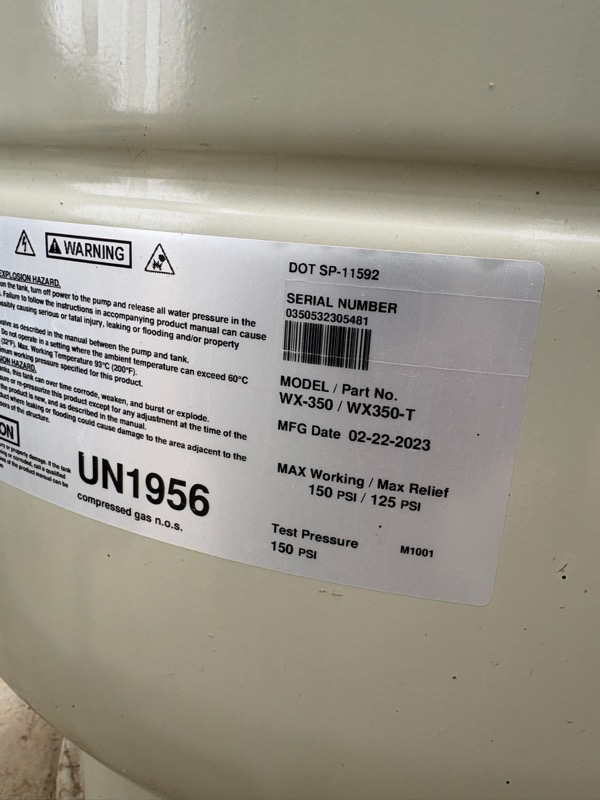
Your pressure tank does more than just store water—it protects your well pump from excessive cycling, maintains consistent water pressure, and provides a reserve for immediate demand. When a pressure tank fails, it's not just an inconvenience—it can destroy your pump within months if not addressed. Understanding how long tanks last and recognizing failure signs helps you replace proactively rather than reactively.
📋 In This Guide
This guide covers pressure tank types, expected lifespans, failure symptoms, maintenance tips, and replacement costs.
Pump cycling constantly? Your pressure tank may be failing. We can diagnose the issue and replace if needed.
Call (760) 440-8520How Pressure Tanks Work
Modern well pressure tanks use a flexible membrane to separate air and water:
- Air (typically nitrogen) is pre-charged in the tank, usually to about 2 PSI below the pump's cut-in pressure
- When the pump runs, water fills the tank and compresses the air
- When you open a faucet, the compressed air pushes water out
- When pressure drops to the cut-in setting, the pump turns on to refill
This system provides instant water without the pump having to start for every glass of water, and ensures the pump runs long enough each cycle to operate efficiently.
Why Tank Size Matters
A properly sized tank means:
- Less pump cycling: Pump starts fewer times per day
- Longer pump life: Starting is hard on motors
- Stable pressure: More "drawdown" capacity between cut-in and cut-out
The "drawdown" is the usable water between when the pump shuts off and when it turns back on. A 44-gallon tank provides approximately 12-14 gallons of drawdown; an 85-gallon tank provides 25-27 gallons.
Types of Pressure Tanks
Bladder Tanks
Water is contained in a flexible bladder; air surrounds the bladder:
- Pros: Water never contacts tank walls (no corrosion), bladder replaceable in some models
- Cons: Bladder can rupture, water quality can affect bladder life
- Lifespan: 10-15 years typically
Diaphragm Tanks
A permanent diaphragm divides the tank horizontally:
- Pros: Simple design, durable diaphragm
- Cons: Diaphragm not replaceable, water contacts tank (potential corrosion)
- Lifespan: 10-15 years typically
Old-Style Galvanized Tanks
Air and water in direct contact (no membrane):
- Require an air volume control to maintain air charge
- Prone to waterlogging if air charge lost
- Water contacts steel (rust and scale issues)
- Still found in older installations
Recommendation: If you have an old galvanized tank, consider upgrading to a modern bladder tank when it needs service.
Expected Lifespan
| Factor | Effect on Lifespan |
|---|---|
| Quality brand, good water | 15-20 years possible |
| Average conditions | 10-15 years typical |
| High chlorine water | 8-12 years (chlorine degrades bladder) |
| Sediment in water | 8-12 years (abrasion damage) |
| Incorrect pre-charge | 5-10 years (over-flexing damages bladder) |
| Excessive cycling | Shortened life (more flexing = faster wear) |
| External corrosion | Variable (humid locations cause rust) |
Signs of Pressure Tank Failure
1. Rapid Pump Cycling (Short Cycling)
What you notice: Pump turns on and off every few seconds when water is running
Why it happens: When the bladder ruptures or pre-charge is lost, the tank loses its air cushion. Water (which doesn't compress) fills the tank. With no air buffer, pressure drops almost instantly when water is used, triggering the pump. Pressure rises quickly (tank is full of water), shutting the pump off. This cycle repeats rapidly.
The danger: A pump rated for 300 starts per day might cycle 10,000+ times with a waterlogged tank. This destroys the pump within weeks to months.
2. Pressure Fluctuation
What you notice: Water pressure surges and dips during use; shower temperature changes
Why it happens: Without proper air cushion, there's nothing to smooth out pressure variations
3. Waterlogged Tank
How to check:
- Turn off power to well pump
- Open a faucet to drain pressure
- Tap the tank at different heights
- Sound should change from solid (water) at bottom to hollow (air) at top
- If solid all the way up—tank is waterlogged
4. Air Spurting from Faucets
What you notice: Spitting, sputtering water; air in the lines
Why it happens: A ruptured bladder allows air to mix with water
5. Visible Problems
- Rust or corrosion on tank exterior
- Water leaking from tank
- Tank feels constantly cold/sweating (full of water)
- Cannot hold air pre-charge
Protect Your Pump
A $500 tank replacement prevents a $2,500+ pump failure. If you're seeing signs of tank problems, address them quickly.
Call (760) 440-8520Maintaining Your Pressure Tank
Check Pre-Charge Annually
The air pre-charge should be set 2 PSI below your pressure switch's cut-in setting:
- 30/50 switch → 28 PSI pre-charge
- 40/60 switch → 38 PSI pre-charge
How to check:
- Turn off pump power
- Drain all water from tank (open faucet until water stops)
- Check pressure at Schrader valve with tire gauge
- Add air if needed (standard bicycle pump or compressor)
Important: Always check pre-charge with tank empty of water. Checking with water in tank gives false reading.
Protect from Elements
- Keep tank dry (humidity causes exterior rust)
- Insulate if in freezing location
- Ensure good ventilation (prevents condensation)
Address Water Quality
- Filter sediment before tank
- Treat acidic water (attacks bladder and fittings)
- Consider carbon filter if heavily chlorinated city water backup
Choosing a Replacement Tank
Size Selection
Match tank size to pump capacity and household demand:
| Pump GPM | Minimum Tank Size | Recommended |
|---|---|---|
| Under 10 GPM | 20 gallon | 44 gallon |
| 10-15 GPM | 32 gallon | 44-62 gallon |
| 15-20 GPM | 44 gallon | 62-85 gallon |
| Over 20 GPM | 62 gallon | 85+ gallon |
Our recommendation: For most residential wells, a 44-gallon tank is the minimum. An 85-gallon tank provides better pump protection and more stable pressure for modest additional cost.
Quality Brands
- Well-X-Trol (Amtrol): Industry standard, excellent track record
- Flexcon: Good quality, competitive pricing
- Pentair: Solid performer
- Wessels: Commercial grade option
Features to Consider
- Replaceable bladder: Some tanks allow bladder replacement, extending service life
- Stainless steel connections: Resist corrosion
- Longer warranty: Indicates manufacturer confidence
- NSF/ANSI 61 certification: Safe for potable water
Replacement Process
What's Involved
- Turn off pump power
- Drain old tank completely
- Disconnect plumbing
- Remove old tank (can be heavy—44 gallon tank full of water = 400+ lbs)
- Install new tank with appropriate fittings
- Set pre-charge to correct pressure
- Connect plumbing
- Restore power and test
DIY Considerations
Replacing a pressure tank is sometimes a DIY project, but consider:
- The old tank may be extremely heavy
- Plumbing modifications may be needed
- Incorrect pre-charge setup causes problems
- Professional installation typically includes testing and adjustment
Costs
| Item | Typical Cost |
|---|---|
| 20-32 gallon tank installed | $300-500 |
| 44 gallon tank installed | $400-700 |
| 62 gallon tank installed | $500-900 |
| 85 gallon tank installed | $700-1,200 |
| Tank only (44 gallon) | $200-350 |
| Tank only (85 gallon) | $350-500 |
Costs include tank, fittings, and labor. Special situations (difficult access, plumbing modifications) may increase price.
Frequently Asked Questions
How long does a well pressure tank last?
Quality pressure tanks typically last 10-15 years with proper maintenance. Factors affecting lifespan include water quality (chlorine, sediment, and mineral content can degrade bladders faster), maintaining correct pre-charge pressure, and how frequently the pump cycles. Undersized tanks that cause frequent cycling tend to fail sooner due to increased bladder flexing.
How do I know if my pressure tank is bad?
Signs of a failing pressure tank include: pump cycling on and off rapidly (short cycling—every few seconds), water pressure fluctuating during use, tank feeling heavy or full of water when tapped (waterlogged), air spurting from faucets, and visible rust or leaks on the tank. A waterlogged tank—where the bladder has failed and the tank is full of water—is the most common failure mode.
What causes a pressure tank to fail?
Most failures are bladder/diaphragm ruptures caused by: age and normal wear, running with incorrect pre-charge pressure (causes over-flexing), water quality issues like chlorine, sediment, or acidic water attacking the bladder, and excessive cycling from an undersized tank. External tank corrosion from humidity or interior rust from water contact (in diaphragm tanks) can also cause failure.
How much does it cost to replace a well pressure tank?
Replacement costs vary by tank size and installation complexity. A 44-gallon tank typically costs $400-700 installed. Larger 85-gallon tanks run $700-1,200 installed. Premium brands or situations requiring plumbing modifications may cost more. The tank itself represents about 50-60% of the installed cost.
Can I replace just the bladder in my pressure tank?
Some bladder tanks are designed with replaceable bladders, which can extend tank life at lower cost than full replacement. However, not all tanks have this feature, and by the time a bladder fails, the tank itself may be showing age. Consult with a professional to determine if bladder replacement is worthwhile for your specific tank.
What size pressure tank do I need?
Tank size should match your pump's flow rate and household demand. For most residential wells with pumps producing 10-15 GPM, a 44-gallon tank is minimum; we typically recommend 85 gallons for better pump protection. Larger tanks mean less pump cycling, longer pump life, and more stable pressure.
Pressure Tank Replacement
Southern California Well Service provides same-day pressure tank replacement in most cases. We carry common sizes on our trucks and can have your system running again quickly.
Call (760) 440-8520Licensed C-57 Contractor. CSLB License #1086994.| San Diego, Riverside & San Bernardino Counties
Related Articles
Continue learning about well maintenance and troubleshooting
Low Water Pressure From Well: Complete Fix Guide
Diagnose and solve low pressure problems
Well Pressure Switch: Settings, Adjustment & Replacement
Everything about pressure switches
Pressure Tank Maintenance: Complete Guide
Keep your pressure tank working properly