
Waterlogged Pressure Tank: Symptoms and How to Fix

Diagnose a failed bladder tank. Signs of waterlogging and replacement guidance.
📋 In This Guide
How Pressure Tanks Work and Why Air Matters
Your pressure tank serves a critical function: storing water under pressure so you have immediate supply without waiting for the pump to start. Inside the tank, pressurized air pushes against water, maintaining system pressure. When you open a faucet, air pressure forces water out while the pump remains off. As water depletes, pressure drops until reaching the cut-in point, triggering the pump to refill the tank. This buffer means your pump cycles only a few times per hour rather than every time someone washes their hands. Modern bladder tanks use a rubber bladder to separate air from water—when this bladder fails, water fills the entire tank. Without air, pressure drops instantly when water flows, forcing immediate pump starts. Understanding this mechanism explains why waterlogging so dramatically affects system operation.
Recognizing Waterlogged Tank Symptoms
The most obvious symptom is rapid pump cycling—the pump kicks on every time you use any water, even briefly. You'll hear the pump start and stop repeatedly during showers or when running washing machines. The pressure gauge swings rapidly between cut-in and cut-out pressures rather than changing gradually. You might notice water pressure fluctuations, with pressure dropping noticeably then recovering quickly. The electrical bill may increase from constant pump starts (each start-up draws high current). If you're observant, you'll feel the tank is heavy and cool uniformly rather than lighter and warmer at the top where air should be. These symptoms develop gradually as bladders fail, or suddenly if a bladder tears completely.
Testing and Confirming Waterlogging
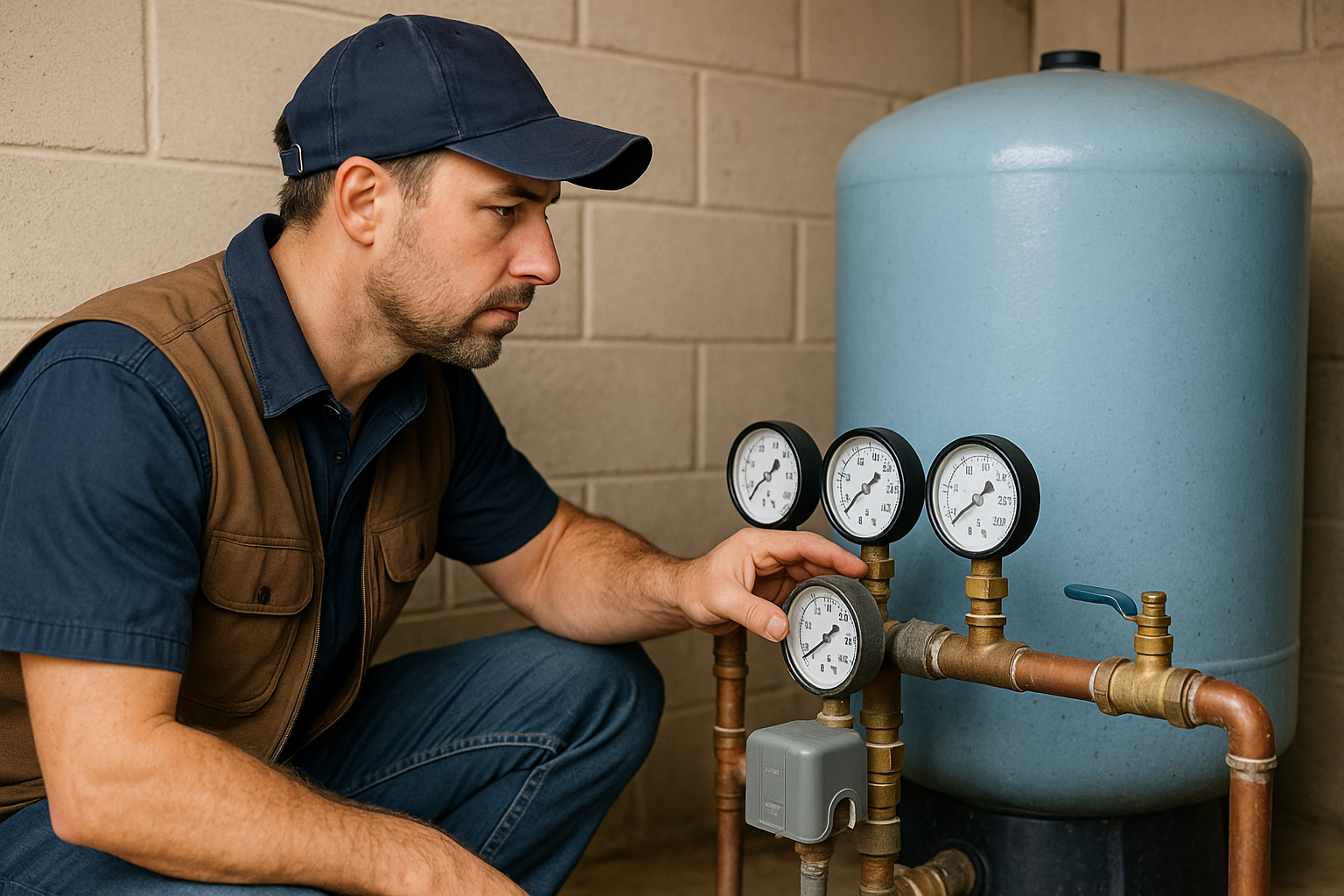
Confirm waterlogging with simple tests before purchasing a replacement. Turn off the pump at the breaker, then open a faucet to release pressure. Once pressure stabilizes near zero, check the tank's Schrader valve (like a tire valve, usually at the top). Press the valve core—if water sprays out, the bladder has failed. If air hisses out, check the pressure with a tire gauge; it should read about 2 PSI below your pressure switch's cut-in setting. If no air and no water, the tank is fully waterlogged with no air remaining. The knock test provides additional confirmation: use your knuckles to tap the tank from top to bottom—solid sound throughout confirms waterlogging while hollow-to-solid transition indicates proper air/water separation.
Replacement Process and Considerations
Pressure tank replacement is manageable for DIY-capable homeowners but may warrant professional installation for proper sizing and setup. The process involves: shutting off pump power, closing well supply, draining the old tank, disconnecting plumbing, removing the old tank, positioning the new tank, reconnecting plumbing with fresh fittings, setting proper air precharge (2 PSI below cut-in), restoring supply and power, and testing operation. Sizing matters—replacing with the same size only makes sense if the original was adequate. Consider upgrading to a larger tank for reduced cycling and extended pump life. Professional installation ensures proper setup and provides warranty coverage for both tank and labor.
Preventing Premature Tank Failure
Extend tank life through proper care and monitoring. Check air precharge annually—even good bladders lose small amounts of air over time. Use a tire gauge at the Schrader valve (with system depressurized) and add air as needed to maintain 2 PSI below cut-in pressure. Avoid excessive pressure settings; higher pressures stress bladder material. Consider water treatment if mineral content is high—scale and sediment damage bladders. Monitor pump cycling frequency; increasing cycles indicate developing problems. Position tanks to avoid physical damage and freezing. Most importantly, address waterlogging promptly—every pump cycle damages the pump, and those costs quickly exceed tank replacement. Southern California Well Service provides pressure tank diagnosis, replacement, and system optimization. Call (760) 440-8520 for professional service that protects your pump investment.
We install Well-X-Trol (Amtrol) and Flexcon pressure tanks — industry-leading bladder tanks that outlast standard diaphragm models. Proper sizing with a quality tank can double your pump's lifespan.
Frequently Asked Questions
What does it mean when a pressure tank is waterlogged?
A waterlogged pressure tank has lost its air charge, filling completely with water instead of maintaining the air-water separation that allows proper function. In bladder tanks (most modern tanks), this means the bladder has failed, allowing water to fill the entire tank. In older air-over-water tanks, the air has been absorbed into the water. Without air to maintain pressure between pump cycles, the tank cannot buffer demand, causing the pump to short cycle whenever water is used.
How do I test if my pressure tank is waterlogged?
Several quick tests diagnose waterlogging. First, press the air valve (Schrader valve) at the tank top—if water sprays out, the bladder has failed. Second, knock on the tank at different heights—a good tank sounds hollow at the top (air) and solid at the bottom (water); a waterlogged tank sounds solid throughout. Third, feel the tank's weight or temperature; a waterlogged tank feels uniformly heavy and cool throughout rather than lighter at top. Fourth, observe pump cycling—rapid cycles every few seconds indicate a waterlogged tank.
Can a waterlogged pressure tank be repaired?
Generally, no. Bladder tanks with failed bladders cannot be repaired and must be replaced—bladders are not replaceable components. Older air-over-water tanks can sometimes be recharged by draining and adding air, but if they repeatedly lose air charge, they should be replaced. The good news: pressure tanks are relatively affordable ($200-$600 for residential sizes) and replacement is straightforward for professionals. Continuing to operate with a waterlogged tank damages your pump through constant cycling.
How long do pressure tanks last?
Quality pressure tanks typically last 10-15 years, though some fail earlier and others last 20+ years. Factors affecting lifespan include: water quality (high mineral content stresses bladders), pressure settings (higher pressures stress tanks more), cycling frequency (more cycles mean more wear), and initial quality. Proactive replacement before complete failure prevents the pump damage that waterlogged tanks cause. If your tank is over 10 years old and showing any symptoms, consider preemptive replacement.
What size pressure tank do I need?
Tank sizing depends on pump flow rate—larger pumps require larger tanks to maintain adequate drawdown between cycles. The rule of thumb: a tank should provide at least one minute of water delivery between pump cycles. For a 10 GPM pump, that means 10+ gallons of drawdown capacity (which requires a tank rated at 30+ gallons since only about one-third of tank volume is usable drawdown). Oversizing tanks is beneficial, reducing cycling and extending pump life. Your well professional can calculate optimal sizing for your system.
Get Expert Help
Contact Southern California Well Service for professional assistance.
Call (760) 440-8520Serving San Diego, Riverside & San Bernardino Counties
Related Articles
Continue learning about well maintenance and troubleshooting
Low Water Pressure From Well: Complete Fix Guide
Diagnose and solve low pressure problems
Well Pressure Switch: Settings, Adjustment & Replacement
Everything about pressure switches
Pressure Tank Maintenance: Complete Guide
Keep your pressure tank working properly