

Ranch Water in Hesperia: Building a Well System That Keeps Up With the High Desert
Out on the large lots and horse properties that define so much of Hesperia, water is never a small question. This is High Desert country in the heart of the Victor Valley, where San Bernardino County opens into the wide alluvial basin of the Mojave River. Properties here are measured in acres, not square feet, and a single parcel may carry horses, a small cattle string, a stand of alfalfa or irrigated pasture, a household, and a stretch of brush that needs to be kept clear for fire safety. None of that runs on a city meter. It runs on a private well, and in a place where the groundwater table sits deep beneath ancient desert sediment, that well has to be designed to do real work.
Hesperia sits at the southern edge of the adjudicated Mojave Basin, ringed by Oak Hills, Apple Valley, Victorville, Phelan, and Adelanto, where dry desert air, big day-to-night temperature swings, and high summer evaporation push water demand far above what the same operation would need in a milder coastal climate. A reliable, properly sized deep well is not a luxury on a Hesperia ranch. It is the difference between livestock that stay watered through a 105-degree July afternoon and a frantic call for a water truck. At Southern California Well Service, we have spent more than 30 years drilling, equipping, and maintaining wells for exactly these kinds of rural properties, and the High Desert has its own rules.
A Hesperia Ranch's Water Demands
The first step in any ranch well design is being honest about how much water the property actually consumes on its hardest day. Livestock are steady, predictable consumers. A horse will typically drink on the order of 10 to 12 gallons a day, and considerably more when the temperature climbs and it is working or lactating. A mature cow commonly drinks 20 to 30 gallons a day, again trending higher in High Desert heat. Multiply those figures across a full barn or a small herd and the daily livestock draw alone becomes a meaningful number before a single drop reaches the house or the field.
Irrigation is where Hesperia properties truly separate themselves from suburban wells. Pasture, alfalfa, and other forage crops are thirsty under any conditions, but the High Desert raises the bar. High evaporation rates and dry winds mean a Hesperia field loses moisture far faster than the same field would in a humid climate, so growers here have to apply more water just to keep crops from stressing. Add normal household use for a ranch home and outbuildings, and then add what we always recommend on rural property: a dedicated fire and defensible-space reserve, water held back so that during a wildfire event there is something in the tank when it matters most.
- Livestock: horses, cattle, and other animals drinking continuously, with demand spiking in summer heat.
- Irrigation: pasture, alfalfa, and crops needing elevated volumes because of High Desert evaporation.
- Household: the ranch home, guest quarters, and outbuildings.
- Fire reserve: stored water set aside for defensible space and emergency response.
We never guess at a single site total without seeing the property, but framing demand across these categories is how we size a system that performs on the worst day, not just an average one.
Designing a High Desert Ranch Water System
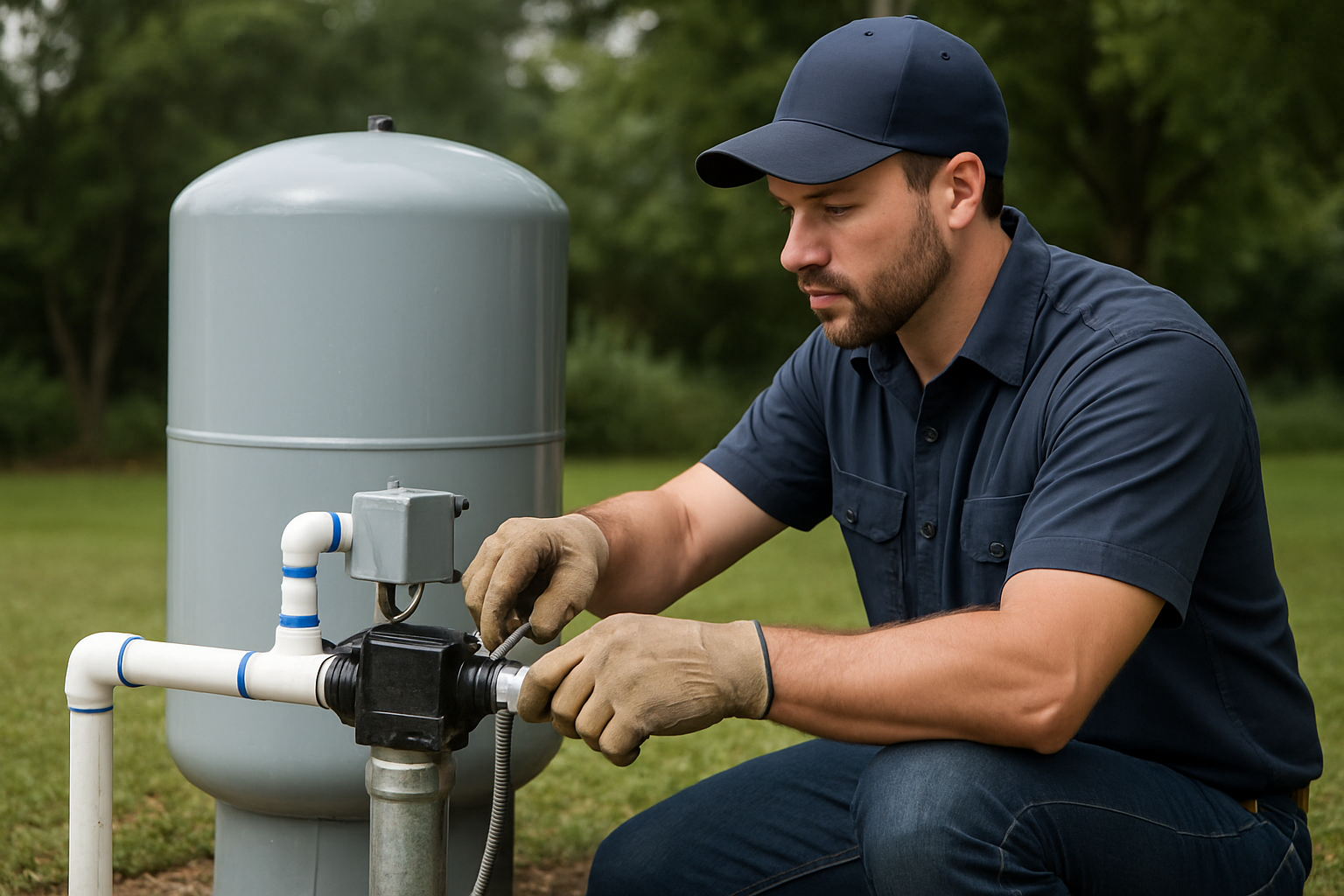
A working ranch system in Hesperia is more than a well and a pump. It is a coordinated chain: the well itself, a submersible pump set to the right depth, large-volume storage, and a booster or constant-pressure system that delivers usable pressure to every hydrant, trough, and sprinkler on the property. Because High Desert wells are often deep and many produce a modest to moderate yield, storage is the component that makes everything else work.
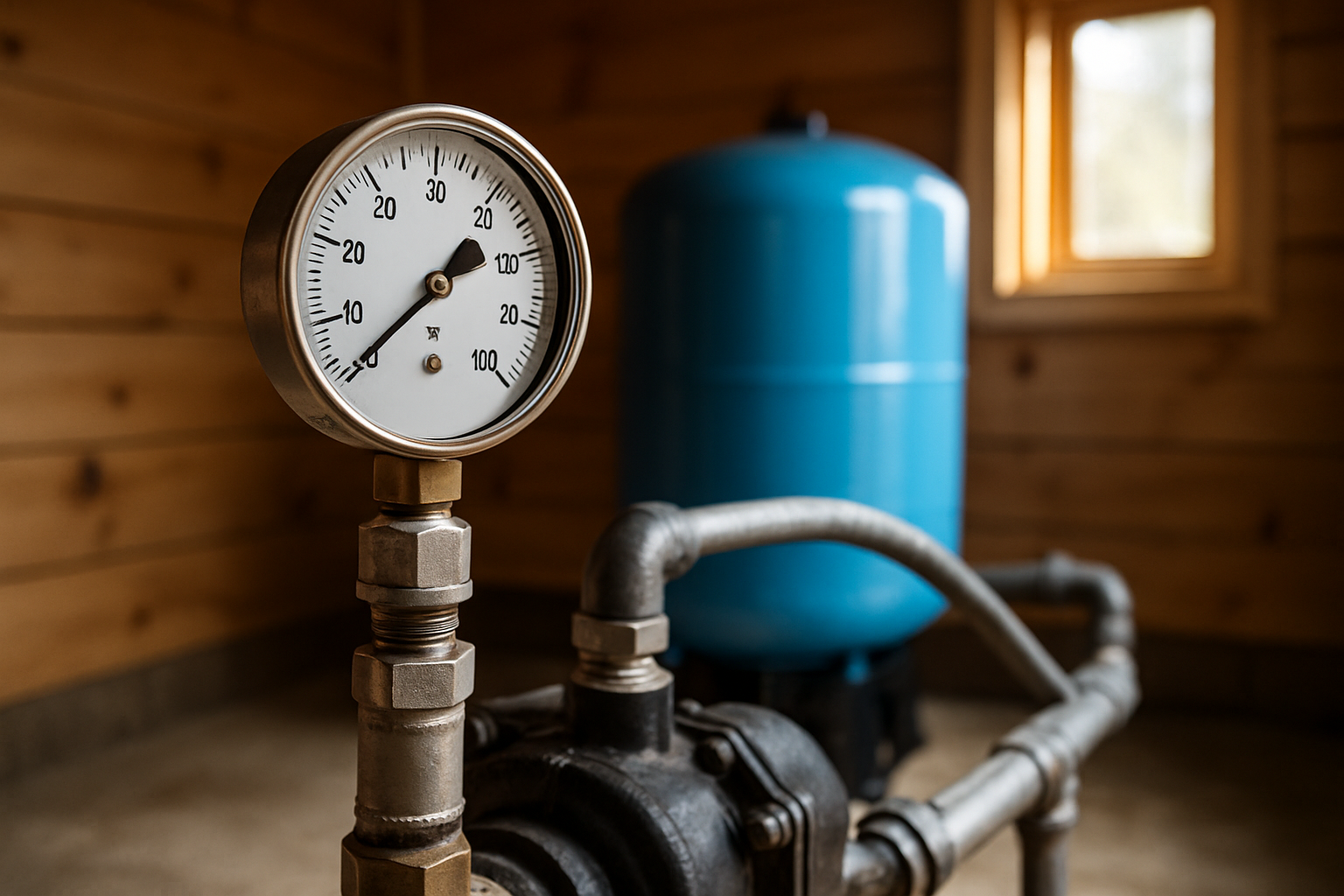
A well that produces a steady but unspectacular flow can still serve a demanding ranch if that flow is banked in a large tank. Rather than asking the pump to meet a sudden peak directly, the well fills storage around the clock, and a booster pump or a variable-frequency-drive (VFD) constant-pressure system draws from that reservoir to meet demand spikes. For Hesperia ranches we frequently design around storage tanks in the 2,500 to 10,000-plus gallon range, sized to the operation. That buffer is what lets a modest desert well irrigate a field and water a herd on the same hot afternoon without the pump cycling itself to death.
Storage also serves the fire mission. We can specify tanks fitted with fire-department-compatible connections so that a portion of your stored water is available to first responders, an important consideration on rural parcels in the brush-prone stretches around Oak Hills and the Hesperia foothills. A typical storage tank with booster package runs in the range of $3,000 to $8,000, and a quality pump generally falls between $2,500 and $8,000 depending on depth and horsepower. A complete new turnkey ranch or agricultural well in the High Desert, drilled deep and fully equipped, commonly lands in the $25,000 to $60,000-plus range.
Water Quality for Livestock and Irrigation
High Desert groundwater is hardworking water, but it is rarely soft or pristine straight from the ground. Hesperia draws from the deep Mojave River aquifer system, where water has traveled for ages through sedimentary and limestone formations, picking up dissolved minerals along the way. The result is typically very hard water, high in calcium and magnesium, often carrying elevated total dissolved solids and salinity. Iron and manganese are common as well, staining fixtures and clogging emitters.
Two naturally occurring contaminants deserve particular attention in the Mojave Basin. Regional groundwater studies have found arsenic above the drinking-water benchmark in a meaningful share of sampled points across the Mojave River and Morongo basins, and elevated fluoride in others. These are not present everywhere, and concentrations vary well to well, which is exactly why testing matters. For a ranch the stakes are layered: livestock can tolerate some mineral content that humans cannot, but high salinity and TDS still affect animal health and water palatability, and salty irrigation water can damage salinity-sensitive crops over time, slowly building salts in the soil.
We recommend testing any Hesperia ranch well at least annually, and any new well at completion, for hardness, TDS, salinity, arsenic, fluoride, nitrates, and iron. From there, treatment is matched to use: softening and filtration for the household, targeted treatment where arsenic or fluoride exceed safe levels, and irrigation strategies that account for salinity so your alfalfa and pasture stay productive.
Drought Resilience and Groundwater Overdraft
No conversation about Hesperia water is complete without the basin itself. The Mojave Basin is adjudicated, and the Mojave Water Agency serves as Watermaster over the roughly 4,900 square miles of High Desert it oversees. Local aquifers have been in overdraft for decades, with more water pumped each year than nature replaces through scarce rain and mountain snowmelt. Large-scale pumpers in the adjudicated basin hold defined pumping rights, and water levels in many areas have declined over the years.
For a ranch owner, that reality argues for resilience built into the system. A deeper well with the pump set well below the static water level gives you margin as tables fluctuate. Redundancy matters too: backup power, whether a standby generator or a properly sized power solution, keeps water flowing during the outages that roll through the High Desert in heat and wind events. We also encourage owners to monitor their wells, watching static and pumping levels over time so a declining trend is caught early rather than discovered the day the pump runs dry. Building in reserve storage is itself a drought strategy, smoothing your operation through the hardest, driest stretches of a Mojave summer.
Maintenance and Common Ranch Well Issues in Hesperia
High Desert wells work hard and face conditions all their own. Mineral scaling is the most common nuisance: the same hardness that defines Hesperia water builds up inside pipes, pumps, pressure tanks, and drip emitters, gradually choking flow and shortening equipment life. Sand and fine sediment are another recurring issue in desert alluvial wells, abrading pump components and clogging screens and filters.
- Mineral scaling from hard water reducing flow and wearing pumps.
- Sand and sediment common in desert alluvial formations.
- Pump wear accelerated by heavy ranch demand and deep settings.
- Declining yield as regional water tables drop.
Because Hesperia wells are often deep, the pump may be set hundreds of feet down, which makes a pull-and-repair job more involved and makes preventive maintenance all the more valuable. A gradual decline in yield can signal a dropping water table, a worn pump, or a fouled screen, and telling those apart takes experience. Regular service, periodic water testing, and attention to pressure and flow trends are what keep a ranch system running for the long haul rather than failing at the worst possible moment.
When to Call Southern California Well Service
If your Hesperia well is losing pressure, pumping sand, cycling oddly, running dry sooner than it used to, or simply struggling to keep your livestock and fields supplied, those are signs the system needs a professional eye. The same is true when you are planning ahead: adding animals, expanding irrigation, building out, or replacing an aging well that no longer matches the ranch it serves. As a licensed C-57 water well drilling contractor with more than 30 years in Southern California and a 4.9-star reputation, we drill new wells, install and repair pumps, design storage and booster systems, and troubleshoot quality and yield problems. Our diagnostic visit is $125, credited toward the work, and we offer same-day emergency response because a ranch without water cannot wait.
Serving Hesperia and High Desert Ranches
Southern California Well Service supports ranch and rural properties across the High Desert, including Hesperia and the surrounding communities of Apple Valley, Victorville, Oak Hills, Phelan, and Adelanto. We serve San Diego, Riverside, and San Bernardino counties from two offices: 1077 Main St in Ramona (CA 92065) and 57174 US Hwy 79 in Anza (CA 92539). Wherever your property sits in the Victor Valley, we bring the same combination of local desert knowledge, licensed expertise, and responsiveness to every job.
Frequently Asked Questions
Do I need a permit to drill a well in Hesperia?
Yes. Private well construction in the Hesperia area falls under San Bernardino County permitting and environmental health requirements, and the property lies within the adjudicated Mojave Basin. We handle the permitting process and make sure your new well is drilled and completed to code.
How deep are wells in the Hesperia High Desert?
High Desert wells are generally deeper than coastal ones because the water table sits well below the surface in the Mojave River basin. Depths in the Hesperia area commonly run a few hundred feet, and the right depth for your parcel depends on local geology and water levels, which we evaluate before drilling.
What does a new ranch well cost?
A complete turnkey ranch or agricultural well in the High Desert typically falls in the $25,000 to $60,000-plus range depending on depth, yield, and equipment. Storage-and-booster packages run roughly $3,000 to $8,000 and pumps $2,500 to $8,000. We provide a clear estimate after assessing your property.
Does the adjudicated Mojave Basin mean my well is metered?
The Mojave Basin is adjudicated and overseen by the Mojave Water Agency as Watermaster, and large-scale pumpers hold defined pumping rights. Whether and how a given property's production is metered or accounted for depends on its water rights and use. We can help you understand how your ranch well fits within the basin framework.
How often should I test my ranch well water?
At least once a year, and at completion for any new well. In Hesperia we recommend testing for hardness, TDS, salinity, arsenic, fluoride, nitrates, and iron, since Mojave Basin groundwater can carry naturally elevated levels of several of these, with direct consequences for livestock health and crop salinity.
Do you offer emergency service in Hesperia?
Yes. We provide same-day emergency response throughout the High Desert. A ranch that loses water with animals and crops depending on it is a genuine emergency, and we treat it that way.
Keep Your Hesperia Ranch Watered Year-Round
Whether you are drilling a new deep well, upsizing storage for a growing herd, chasing down a pressure or quality problem, or planning a system that can carry your operation through the next Mojave drought, Southern California Well Service is ready to help. Call us at (760) 440-8520 or send a text to (619) 259-0410 to schedule a diagnostic visit and put more than 30 years of High Desert well experience to work on your Hesperia ranch.