Water Well Inspection: Complete Guide to What's Checked and Why It Matters
Published February 2, 2025 | 13 min read
📋 In This Guide
- What Is a Water Well Inspection?
- When Do You Need a Water Well Inspection?
- What Does a Water Well Inspection Include?
- Water Well Inspection Cost
- The Inspection Report
- What Inspectors Look For: Red Flags
- Choosing a Well Inspector
- Service Areas for Water Well Inspection
- Frequently Asked Questions
- Related Articles
A water well inspection is one of the most important investments you can make as a well owner. Whether you're buying property with a well, selling your home, or simply maintaining your water system, a professional inspection reveals the true condition of your water supply. This guide explains what's included in a well inspection, when you need one, and what to expect in San Diego and Riverside Counties.
Need a Water Well Inspection? Southern California Well Service provides comprehensive well inspections throughout San Diego and Riverside Counties. Licensed C-57 contractor with detailed reporting. Call (760) 440-8520 to schedule your inspection.
What Is a Water Well Inspection?
A water well inspection is a comprehensive evaluation of your entire well system—from the wellhead to your pressure tank and everything in between. Unlike a simple service call, an inspection is a thorough assessment designed to document the well's condition, identify potential problems, and verify that the system meets safety and performance standards.
A professional inspection answers critical questions:
- Is the well structurally sound and properly sealed?
- How much water does the well produce?
- Is the water quality safe for drinking?
- What condition is the pump and equipment in?
- Are there any immediate repair needs?
- What's the expected remaining lifespan of components?
When Do You Need a Water Well Inspection?
Several situations call for professional well inspection:
Buying a Property with a Well
This is the most common reason for water well inspection. When buying a home with a well, you need to know:
- The well's production capacity and reliability
- Current condition of all equipment
- Water quality and any treatment needed
- Estimated costs for repairs or upgrades
- Whether the well meets your household needs
This information is essential for negotiating price and planning your budget. Don't rely on the seller's word—get an independent inspection.
Selling Your Home
Many sellers opt for pre-sale inspections to:
- Identify and fix issues before listing
- Provide documentation to reassure buyers
- Avoid last-minute surprises during escrow
- Justify asking price with proof of well condition
Annual Maintenance
Even without buying or selling, annual inspections catch problems early:
- Identify wear before it causes failure
- Verify water quality hasn't changed
- Ensure sanitary seal integrity
- Document system performance over time
- Extend equipment life through early intervention
After Specific Events
Schedule an inspection after:
- Flooding – Contamination risk to wellhead
- Earthquake – Potential casing or seal damage
- Nearby construction – Ground disturbance effects
- Drought – Verify water level and production
- Extended non-use – Before resuming use of a dormant well
When Problems Arise
Get an inspection if you notice:
- Changes in water taste, smell, or color
- Reduced water pressure or flow
- Pump cycling more frequently
- Unexplained increase in electricity bills
- Air or sediment in water
What Does a Water Well Inspection Include?
A comprehensive water well inspection covers multiple areas:
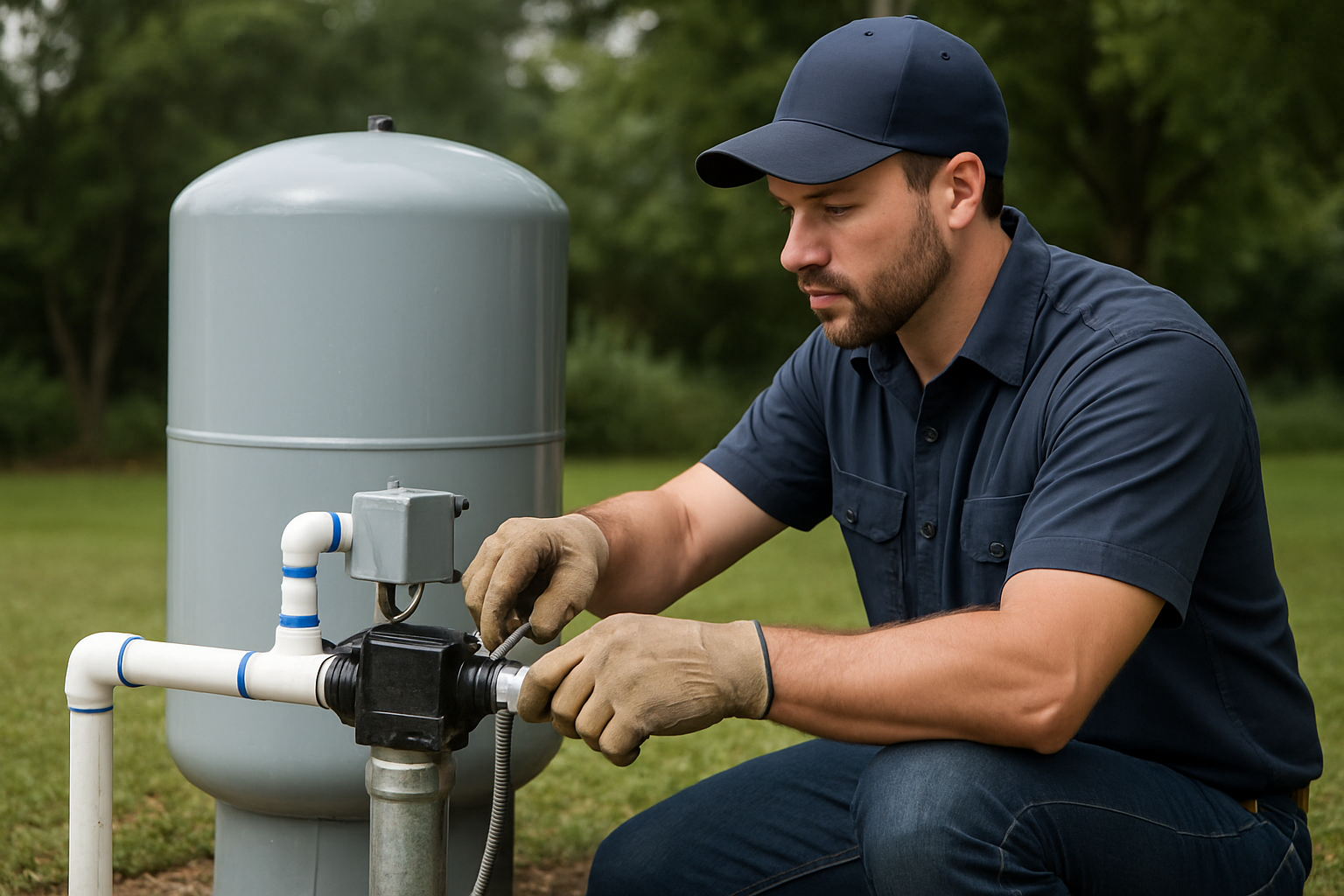
Wellhead and Surface Inspection
The inspector examines:
- Well cap condition – Secure, properly vented, pest-proof
- Sanitary seal – Intact grouting preventing contamination
- Casing condition – Visible portion checked for damage or corrosion
- Site grading – Water draining away from wellhead
- Setback compliance – Distance from septic, property lines
- General security – Protection from damage or tampering
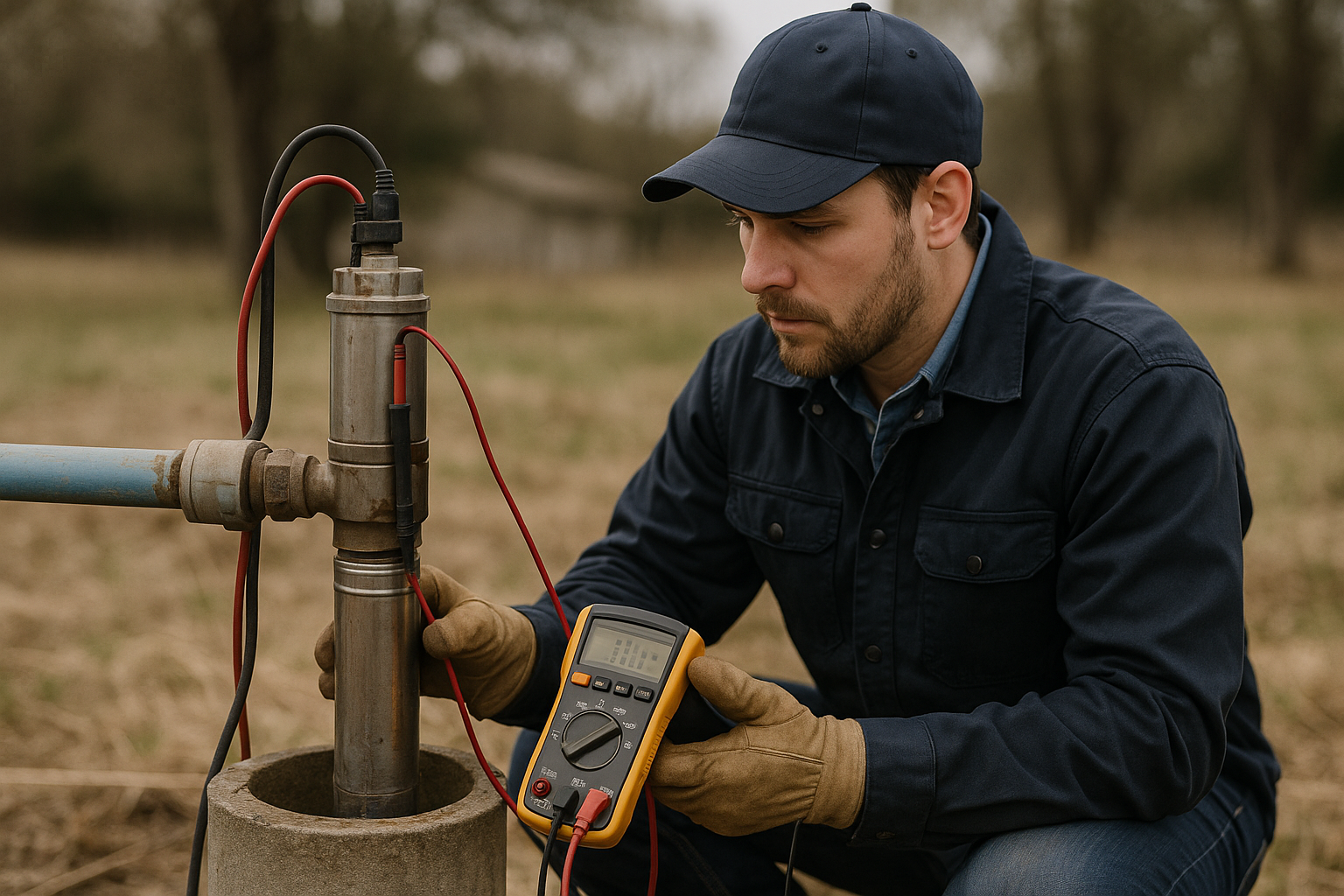
Pump and Motor Assessment
The pump system evaluation includes:
- Pump type and age – Submersible or jet, when installed
- Amperage draw – Compared to specifications (indicates motor condition)
- Operation observation – Proper startup and shutdown
- Noise assessment – Unusual sounds indicating wear
- Control box – Condition of electrical components
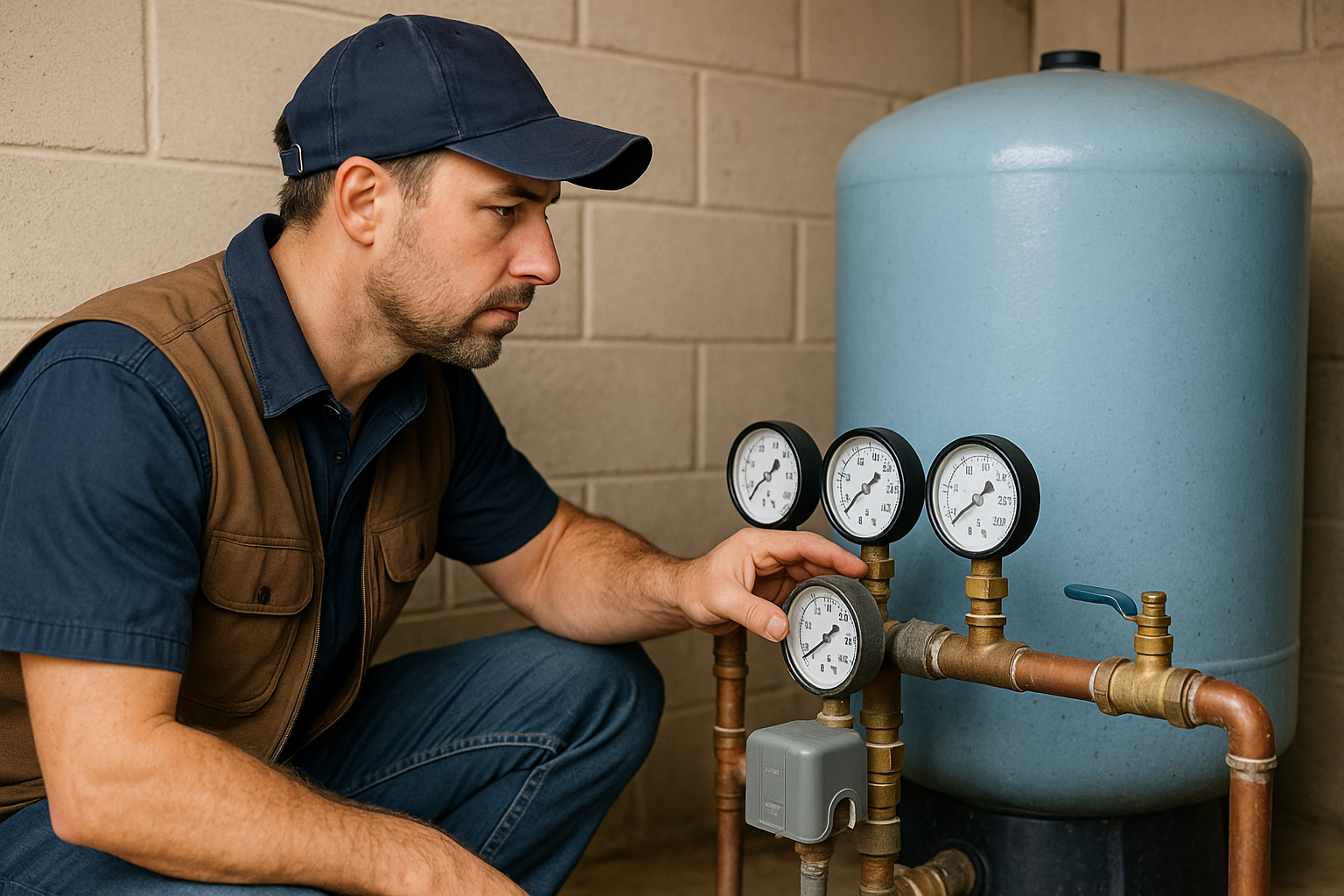
Pressure System Check
Pressure tank and related equipment:
- Tank condition – Physical inspection, corrosion check
- Pre-charge pressure – Proper air pressure for bladder tanks
- Waterlogging test – Verify bladder integrity
- Pressure switch – Settings and operation
- Pressure gauge – Accuracy and readings
Flow Rate Testing
One of the most important measurements:
- Gallons per minute (GPM) – How much water the system delivers
- Sustained flow – Performance over extended pumping
- Recovery rate – How quickly the well replenishes
- Comparison to needs – Adequate for household or irrigation use
For reference, a typical household needs 3-5 GPM minimum, with 5-10 GPM being ideal.
Water Level Measurement
- Static water level – Depth to water when pump is off
- Drawdown – How much level drops during pumping
- Pump setting depth – Ensure pump is properly positioned
Water Quality Testing
Water quality testing typically includes:
- Bacteria test – Total coliform and E. coli (safety critical)
- Nitrates – Common groundwater contaminant
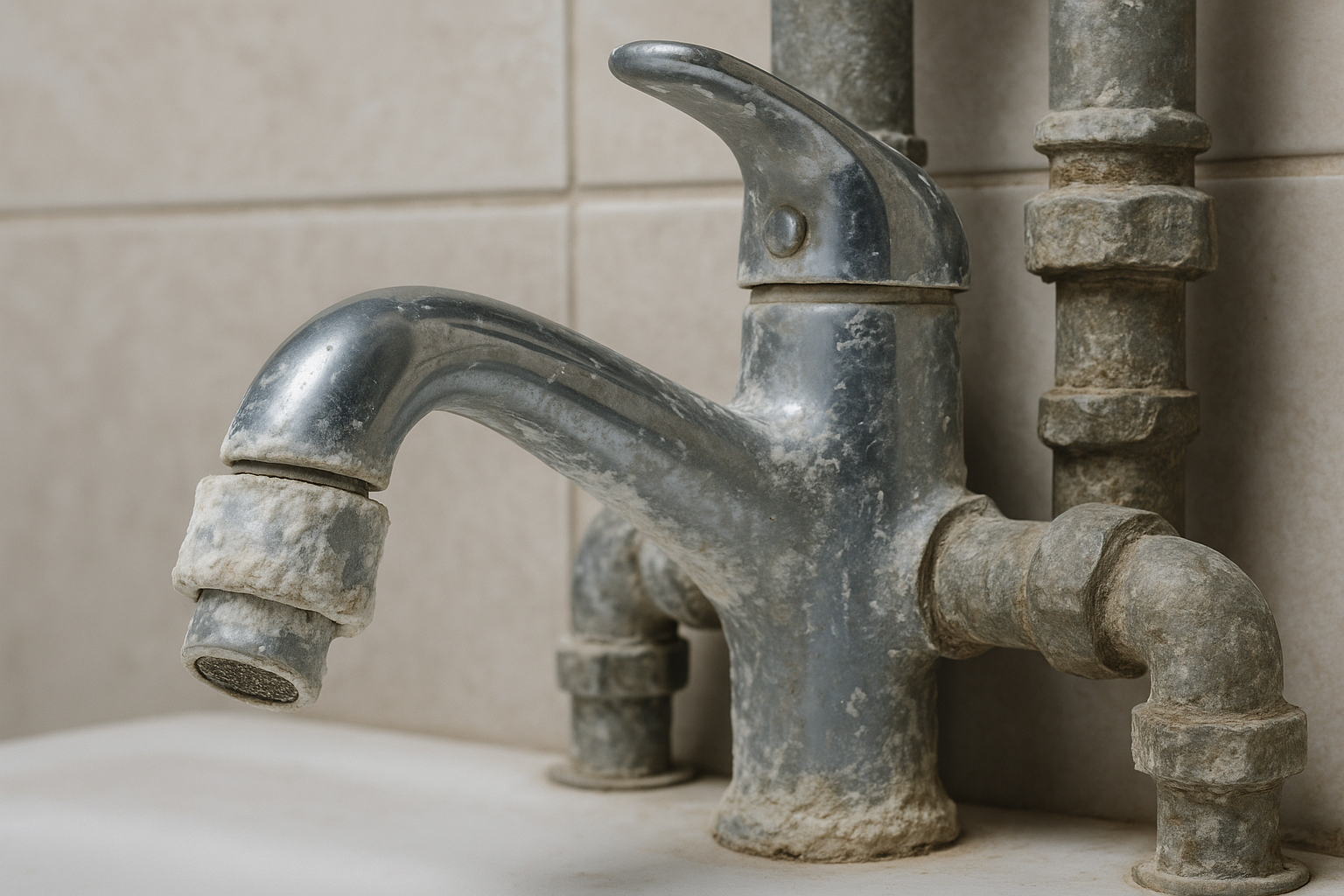
- pH level – Acidity/alkalinity affecting pipes and taste
- Hardness – Mineral content (calcium, magnesium)
- Total dissolved solids (TDS) – Overall mineral load
Additional tests may include arsenic, iron, manganese, and other contaminants based on local conditions.
Electrical System Inspection
- Wiring condition – Proper connections, no damage
- Circuit breaker – Correct sizing for pump
- Grounding – Proper electrical grounding
- Safety devices – Pump protector, lightning arrestor
Water Well Inspection Cost
Inspection costs vary based on the scope:
| Inspection Type | What's Included | Typical Cost |
|---|---|---|
| Basic Inspection | Visual inspection, equipment check, basic flow test | $300 - $400 |
| Standard Inspection | Above + water quality testing, detailed report | $400 - $500 |
| Comprehensive Inspection | Full evaluation + extended flow test, video option | $500 - $700 |
| Real Estate Inspection | Comprehensive + transaction-ready documentation | $500 - $700 |
| Video Camera Inspection | Downhole camera view of casing/screen (add-on) | $300 - $600 |
*Costs in San Diego and Riverside Counties. Prices may vary based on well depth, accessibility, and specific testing requirements.
The Inspection Report
After the inspection, you'll receive a detailed written report including:
- Well information – Location, depth, construction details
- Equipment inventory – Pump, tank, controls with age/condition
- Test results – Flow rate, water levels, water quality
- Condition assessment – Rating of each component
- Identified issues – Problems found during inspection
- Recommendations – Repairs needed, maintenance suggestions
- Photos – Documentation of wellhead and equipment
- Water quality lab report – Certified testing results
For real estate transactions, the report provides objective third-party documentation that can be shared with buyers, lenders, and insurers.
What Inspectors Look For: Red Flags
Professional inspectors know the warning signs that indicate problems:
Serious Issues Requiring Immediate Action
- 🚨 Bacteria in water – Health hazard requiring treatment
- 🚨 Damaged or missing well cap – Contamination pathway
- 🚨 Cracked or corroded casing – Structural failure risk
- 🚨 Failed sanitary seal – Surface water contamination
- 🚨 Electrical hazards – Improper wiring or grounding
- 🚨 Very low flow rate – Insufficient for household needs
Issues to Address Soon
- ⚠️ Waterlogged pressure tank – Causing pump wear
- ⚠️ High amperage draw – Pump motor struggling
- ⚠️ Aging equipment – Pump or tank past typical lifespan
- ⚠️ Elevated hardness/minerals – May need treatment
- ⚠️ Improper site grading – Water pooling near well
- ⚠️ Missing documentation – No records of well construction
Choosing a Well Inspector
Not all inspectors are equal. Look for:
- C-57 License – California Water Well Contractor license for expertise
- Local experience – Familiarity with your area's geology and wells
- Comprehensive service – Full inspection including water testing
- Detailed reporting – Written report with photos and documentation
- No conflicts of interest – Independent assessment, not just selling repairs
- References – Happy customers and real estate professionals
Service Areas for Water Well Inspection
Southern California Well Service provides water well inspection throughout:
San Diego County
- San Diego County
- Valley Center
- Ramona
- Fallbrook
- Escondido
- Poway
- Alpine
- Julian
- All rural communities
Riverside County
- Temecula
- Murrieta
- Hemet
- Menifee
- Wildomar
- Anza
- All rural communities
Frequently Asked Questions
How much does a water well inspection cost?
Water well inspection costs range from $300-$700 depending on scope. Basic inspections start around $300-$400, while comprehensive inspections with water quality testing run $500-$700.
What does a water well inspection include?
Comprehensive inspections include wellhead evaluation, pump/motor assessment, pressure tank inspection, electrical check, flow rate testing, water level measurement, water quality testing, and a detailed written report.
When should I get my well inspected?
Get inspections when buying/selling property, annually for maintenance, after flooding or earthquakes, if you notice water changes, and every 3-5 years minimum.
Do I need a well inspection when buying a house?
Yes, absolutely. An inspection reveals the well's condition, production capacity, and water quality—critical information for negotiating price and planning your budget.
How long does a well inspection take?
On-site inspection takes 2-4 hours. The written report with lab results is typically delivered within 3-5 business days.
Schedule Your Water Well Inspection
Don't guess about your well's condition—know for certain. Southern California Well Service provides thorough, honest well inspections throughout San Diego and Riverside Counties. Whether you're buying, selling, or just want peace of mind, we deliver the answers you need.