Does Well Depth Affect Water Quality?
📋 In This Guide
General Patterns: How Depth Influences Water Quality
One of the most common questions we hear from property owners in San Diego County is whether drilling a deeper well will give them better water. The answer isn't as straightforward as you might hope. Well depth absolutely affects water quality—but not always in the direction you'd expect. Understanding these patterns helps you make smarter decisions whether you're drilling a new well or troubleshooting an existing one.
What Typically Improves with Depth
As water travels deeper underground, it passes through layers of soil, clay, and rock that act as natural filters. This filtration process removes many surface-level contaminants, which is why deeper wells generally have several advantages:
- Better protection from surface contamination — Multiple layers of rock and clay create barriers between your water source and potential pollutants on the surface, including agricultural runoff, septic system leachate, and storm water.
- Lower bacteria risk — Coliform bacteria and E. coli, which are common in shallow water sources, rarely survive the journey through hundreds of feet of rock. Deep wells drawing from confined aquifers are especially well-protected.
- Less nitrate contamination — Nitrates from fertilizers and animal waste are a major concern for shallow wells in agricultural areas. Deeper aquifers are typically isolated from these sources.
- More stable water levels — Deep aquifers hold larger volumes of water and aren't as directly affected by seasonal rainfall patterns, meaning your well is less likely to run low during drought years.
- Less influence from weather and seasons — While a shallow well might show turbidity after heavy rains or taste changes through the year, deep wells maintain remarkably consistent quality year-round.
What May Get Worse with Depth
Here's where it gets counterintuitive. Water that's been sitting in rock formations for decades, centuries, or even millennia has had plenty of time to dissolve minerals from surrounding geology. That extended contact creates its own set of challenges:
- Higher mineral content (hardness) — Deep wells in limestone or granite areas often produce very hard water, sometimes exceeding 25 grains per gallon. This causes scale buildup in pipes, water heaters, and fixtures.
- More total dissolved solids (TDS) — Longer contact time with rock means more dissolved minerals in general. TDS above 500 mg/L can affect taste and appliance longevity.
- Naturally occurring arsenic, fluoride, or radon — These contaminants aren't from pollution—they leach naturally from certain rock types. Arsenic is particularly concerning in granitic regions like parts of eastern San Diego County.
- Hydrogen sulfide (sulfur smell) — That "rotten egg" odor is common in deep wells where sulfate-reducing bacteria thrive in oxygen-deprived environments, or where the geology naturally contains sulfur compounds.
- Higher water temperature — Geothermal gradients mean deeper water is warmer. Wells beyond 500 feet may produce noticeably warm water, which can affect taste perception and promote bacterial growth in storage systems.
The Key Point
Depth alone doesn't guarantee quality—local geology determines what's in the water at any depth. Two wells drilled 100 feet apart can produce dramatically different water if they tap into different fracture zones or aquifer layers. This is why water testing is essential regardless of how deep your well is, and why working with a driller who knows your local geology matters more than simply going deeper.
Shallow Wells (Under 50 Feet): What to Expect
Shallow wells—generally defined as those less than 50 feet deep—draw water from the uppermost layer of groundwater called the water table aquifer. These wells are more directly connected to surface conditions, which creates both advantages and vulnerabilities that every well owner should understand.
How Shallow Wells Work
Unlike deep wells that tap into confined aquifers sealed between impermeable rock layers, shallow wells access unconfined aquifers where water flows relatively freely through soil and permeable rock. This means the water in your shallow well is essentially rainwater that has percolated down through the ground relatively recently—sometimes within weeks or months of falling as precipitation.
Because of this direct connection to the surface, shallow well water levels fluctuate noticeably with the seasons. In San Diego County, you might see your static water level drop several feet between the end of the wet season (typically March-April) and the driest months (September-October). During extended droughts, shallow wells are the first to go dry.
Water Quality Concerns with Shallow Wells
The proximity to the surface that defines shallow wells also makes them more susceptible to contamination. Here are the primary concerns we see when testing water from shallow wells throughout Southern California:
- Bacterial contamination — Coliform bacteria can enter shallow wells through inadequate surface seals, cracks in the casing, or simply through the permeable soil. We recommend testing shallow wells for bacteria at least twice per year.
- Nitrate contamination — In agricultural areas and properties with septic systems, nitrates can leach into the water table fairly quickly. Nitrate levels above 10 mg/L (the EPA limit) are dangerous, especially for infants.
- Pesticides and herbicides — Properties near farming operations or even well-maintained lawns may see trace chemicals in shallow groundwater. These are rarely present in deep wells.
- Turbidity after storms — Heavy rainfall events can temporarily cloud your water as surface disturbance reaches the water table. If you notice your water turning muddy after rain, that's a sign your well is drawing from very shallow sources.
- Vulnerability to drought — Shallow wells in our region can drop below pump intake depth during multi-year droughts, leaving homeowners temporarily without water.
The Upside of Shallow Wells
Despite the contamination risks, shallow wells have genuine advantages that shouldn't be overlooked:
- Naturally softer water — Because the water hasn't spent years dissolving minerals from deep rock formations, shallow wells often produce water with lower hardness levels. This means less scale buildup and better soap performance.
- Lower total dissolved solids — Less time in contact with rock means fewer dissolved minerals overall, which often translates to better-tasting water straight from the tap.
- Lower drilling and maintenance costs — A 40-foot well costs a fraction of a 400-foot well to drill, and the pump equipment is less expensive to install and replace.
- Easier pump access — When your pump is 30 feet down instead of 300, service calls are faster and less expensive. Pump replacement might take a couple of hours instead of a full day.
Protecting Your Shallow Well
If you have a shallow well, taking proactive steps to protect your water quality is especially important. Start with ensuring your well has a proper sanitary seal—the annular space between the casing and the borehole should be grouted with cement to prevent surface water from flowing down alongside the casing. Maintain proper setback distances from potential contamination sources: at least 50 feet from septic systems, 100 feet from animal enclosures, and as far as possible from chemical storage areas.
Test your water at least annually for bacteria and nitrates, and more often if you notice any changes in taste, odor, or appearance. If contamination problems persist despite proper well construction, it may be time to consider deepening the well or drilling a new one into a deeper, more protected aquifer.
Deep Wells (150+ Feet): Benefits and Tradeoffs
Deep wells—those drilled to 150 feet or more—access confined aquifers that are sealed between impermeable layers of rock or clay. These confined aquifers are often under natural pressure (which is why some deep wells are called "artesian"), and the water they contain may have been underground for decades, centuries, or even longer. That isolation from the surface is both the biggest advantage and the source of unique challenges.
How Deep Aquifers Differ
In a confined aquifer, water is trapped between layers of impermeable material like clay, shale, or dense rock. Unlike the water table that shallow wells tap into, these deep aquifers don't receive direct recharge from rainfall on the surface above them. Instead, they're recharged from distant locations—sometimes miles away—where the aquifer layer happens to reach the surface (called a recharge zone). This means the water in a deep well near Ramona might have originally entered the ground in the Cuyamaca Mountains years ago.
This isolation creates remarkably stable water quality and supply. While shallow wells in San Diego County might fluctuate 10-20 feet seasonally, deep wells often show minimal variation even during severe droughts. For properties that depend on well water year-round, this reliability is worth the higher drilling cost.
Advantages of Deep Wells
- Superior contamination protection — With 150+ feet of rock and clay between your water source and the surface, deep wells are essentially immune to most surface contamination events. Septic failures, chemical spills, and agricultural runoff rarely impact deep aquifers.
- Consistent water quality — Deep wells produce the same quality water day after day, month after month. You won't see turbidity after storms or taste changes with the seasons.
- Minimal seasonal variation — The water level in a deep well barely moves, even during multi-year droughts. This makes deep wells the most reliable choice for properties that can't afford to lose water service.
- Higher yield potential — In fractured rock areas common throughout San Diego County, deeper drilling increases the chances of intersecting water-bearing fracture zones, potentially delivering higher gallons-per-minute flow rates.
The Mineral Challenge
The same geological isolation that protects deep water from surface contamination also means the water has been in contact with rock formations for a very long time. During that contact, minerals dissolve into the water. The result is often water that's significantly harder and more mineralized than what you'd find in a shallow well on the same property.
Common issues we encounter with deep wells in Southern California include:
- Very hard water — Calcium and magnesium levels can be extremely high, sometimes exceeding 30 grains per gallon. This causes rapid scale buildup in water heaters (reducing efficiency and lifespan), white deposits on fixtures, and difficulty getting soap to lather. A water softener is almost always recommended for deep wells in our area.
- Naturally occurring arsenic — This is a serious concern in granitic regions. Arsenic leaches from certain rock types over time, and concentrations above the EPA limit of 10 ppb require treatment. Eastern San Diego County and parts of Riverside County have areas where arsenic is a known issue.
- Excess fluoride — While fluoride is added to municipal water at 0.7 mg/L for dental health, deep wells can naturally contain much higher levels. Concentrations above 4 mg/L can cause dental and skeletal fluorosis over time.
- Hydrogen sulfide (sulfur odor) — Deep, oxygen-depleted environments are perfect for sulfate-reducing bacteria, which produce that distinctive rotten-egg smell. While not dangerous at typical concentrations, it makes water unpleasant to drink and can tarnish silverware and corrode copper pipes.
- Radon — In granite bedrock areas, radon gas can dissolve into deep groundwater. Radon in water is a health concern because it's released into indoor air during showering and other water use. Testing is recommended for any deep well in granite geology.
Deep Doesn't Mean Perfect
We've seen property owners assume that because they spent more to drill a deep well, their water must be safe. That's a dangerous assumption. Deep wells are protected from different contaminants than shallow wells, but they have their own set of potential problems—many of which are natural and can't be prevented by better well construction. The only way to know what's in your water is to test it, regardless of depth.
Contaminant Patterns by Depth: What to Test For
Understanding which contaminants are more likely at different depths helps you prioritize water testing and treatment. Here's a comprehensive breakdown based on what we see across hundreds of wells in Southern California:
| Contaminant | More Common In | Notes |
|---|---|---|
| Bacteria (coliform, E. coli) | Shallow | From surface contamination; most common in wells under 50 feet |
| Nitrates | Shallow | From fertilizer and septic systems; EPA limit is 10 mg/L |
| Pesticides/herbicides | Shallow | Agricultural areas and landscaped properties |
| Hardness (calcium/magnesium) | Deep | Extended contact with limestone and mineral-rich rock formations |
| Iron and manganese | Variable | Depends entirely on geology; can appear at any depth. Iron causes orange staining, manganese causes black staining. |
| Arsenic | Deep | Naturally occurring in granitic geology; EPA limit is 10 ppb. Common concern in eastern San Diego County. |
| Fluoride | Deep | Natural occurrence; beneficial at low levels but harmful above 4 mg/L |
| Hydrogen sulfide (sulfur) | Either | Geologically dependent; more common in deep wells with low oxygen environments |
| Radon | Deep (granite) | Dissolved radioactive gas; concern in granite bedrock regions |
| Total dissolved solids (TDS) | Deep | Cumulative measure of all dissolved minerals; above 500 mg/L affects taste |
Testing Recommendations by Well Depth
Based on these patterns, here's what we recommend for water testing depending on your well depth:
Shallow wells (under 50 feet): Test annually for bacteria (coliform and E. coli), nitrates, and any contaminants specific to your area. If you're near agricultural land, add pesticide screening. Test after any flooding event or if you notice changes in taste or appearance. Consider testing every six months if your well is less than 25 feet deep.
Medium-depth wells (50-150 feet): Annual bacteria and nitrate testing is still recommended, though these wells are at lower risk. Add a general mineral panel every 2-3 years to track hardness, iron, manganese, and TDS trends. If you're in a known arsenic area, include arsenic in your annual test.
Deep wells (150+ feet): Bacteria testing is less urgent but still recommended annually as a baseline. Focus testing on minerals, hardness, arsenic, fluoride, and radon (if in granite areas). A comprehensive water quality panel every 2-3 years is a smart investment, with annual spot-checks for any known issues.
Why Local Geology Matters More Than Depth
If there's one takeaway from this entire guide, it's this: the rock and soil your well is drilled through matters more than how deep it goes. Two wells drilled to the same depth on properties just a mile apart can produce completely different water quality because they're tapping into different geological formations. Understanding your local geology is the single most valuable thing you can do when planning a new well or diagnosing water quality issues with an existing one.
How Different Rock Types Affect Water Quality
Each type of rock formation imparts its own characteristics to groundwater. Here's what we commonly encounter across our service area:
- Granite — The dominant bedrock across much of San Diego County's mountainous areas, including Julian, Ramona, and the Cuyamaca Mountains. Granite wells can produce excellent water, but there's a risk of naturally occurring arsenic and radon. Water tends to be moderately hard with low to moderate yield from fracture zones. Well depths in granite country typically range from 200 to 600+ feet.
- Limestone and marble — Found in pockets throughout the region, limestone formations produce characteristically hard water with high calcium content. The upside is that limestone aquifers often provide good flow rates because the rock dissolves over time, creating natural channels and cavities.
- Decomposed granite (DG) and alluvial deposits — Common in valleys and near streambeds, these unconsolidated materials often produce good-quality water at moderate depths. Valley Center, Pauma Valley, and parts of the Temecula area have productive alluvial aquifers that yield relatively soft, clean water.
- Sandstone — Variable quality depending on the specific formation. Some sandstone aquifers produce excellent water; others have elevated iron or manganese. Sandstone formations can be productive aquifers with good storage capacity.
- Shale and metavolcanic rock — These formations tend to produce lower-yield wells and may contribute hydrogen sulfide (sulfur odor) to the water. Shale areas sometimes require deeper drilling to find adequate supply.
Regional Patterns in San Diego and Riverside Counties
After drilling and servicing wells across Southern California for years, we've observed clear regional patterns in water quality:
Mountain communities (Julian, Mount Laguna, Palomar Mountain): Predominantly granitic geology with fractured rock aquifers. Water quality varies significantly from well to well depending on which fracture systems are encountered. Wells are typically 300-600 feet deep. Arsenic screening is recommended for all mountain wells. Water is generally moderate hardness with low TDS.
Inland valleys (Ramona, Valley Center, Fallbrook): A mix of alluvial deposits and decomposed granite. Water quality is often good at moderate depths (150-350 feet), with lower hardness than mountain areas. Iron and manganese can be issues in certain neighborhoods. These areas tend to have the most predictable and favorable water quality in the region.
Desert and eastern regions (Borrego Springs, Anza, Aguanga): Deep alluvial aquifers that may be heavily mineralized. Wells often need to go 400+ feet to find adequate supply, and the water can have high TDS, hardness, and occasionally elevated fluoride. Whole-house treatment systems are common in desert communities.
Coastal foothills (Escondido foothills, Elfin Forest, Harmony Grove): Mixed geology with a combination of metavolcanic and granitic formations. Water quality is generally good but variable. Some areas have iron staining issues, and wells near former agricultural land may show elevated nitrates in shallower zones.
Learning from Neighboring Wells
One of the best resources when planning a new well is information from nearby existing wells. Ask neighbors about their well depth, water quality, and any treatment systems they use. The California Department of Water Resources maintains well completion reports (well logs) that are available to the public—these show what geological layers the driller encountered and at what depths water was found. Your well driller should review these logs before starting.
Keep in mind, though, that neighboring well data is a guide, not a guarantee. Fracture zones in granite can be highly localized—your neighbor's 300-foot well might hit a productive fracture that your 300-foot well completely misses. This is why experienced local drillers who know the geology of specific areas are worth their weight in gold.
Planning Before You Drill
Before investing in a new well, take these steps to set realistic expectations for water quality:
- Review existing well logs — Check the DWR well completion report database for wells on neighboring properties. Note the depths, yields, and geological formations encountered.
- Talk to your driller about local geology — An experienced driller who has worked in your specific area can tell you what to expect based on dozens or hundreds of previous wells.
- Budget for water treatment — Based on regional patterns, plan for the treatment you'll likely need. In granite areas, budget for arsenic and radon testing. In valley areas, consider a water softener. In desert regions, plan for a comprehensive treatment system.
- Test water during drilling — Ask your driller to collect water samples from different depths during the drilling process. This can help identify the best production zone and give you early insight into water quality.
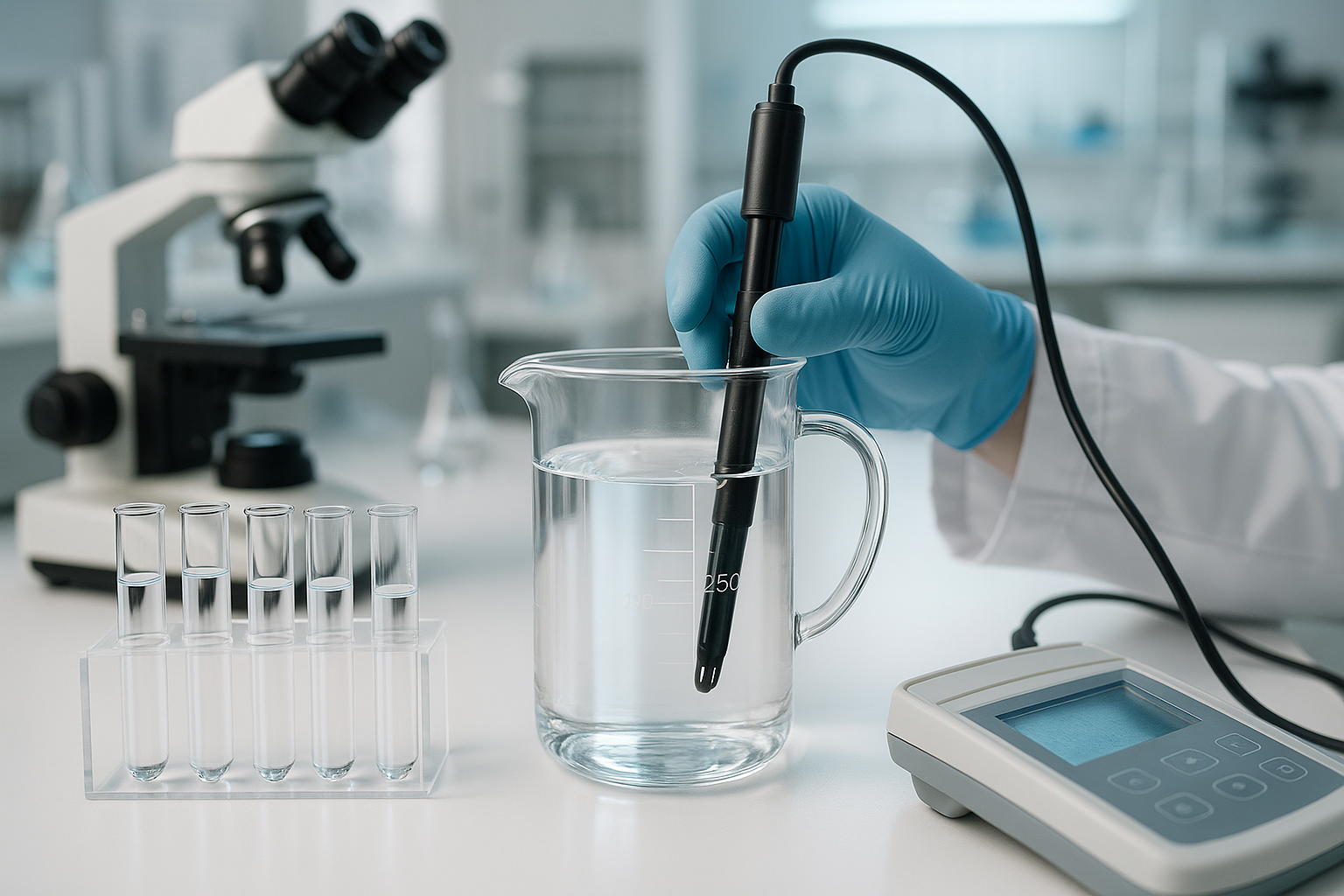
We use Hach and LaMotte professional water testing equipment for field analysis, with comprehensive lab testing through certified California laboratories.
Frequently Asked Questions
Does a deeper well always have better water quality?
No—deeper wells are better protected from surface contamination like bacteria and nitrates, but they often have higher mineral content, more hardness, and potentially naturally occurring contaminants like arsenic or fluoride. The "best" depth depends entirely on your local geology. We've seen shallow wells with pristine water and deep wells that need extensive treatment. The only reliable way to know your water quality is to test it, regardless of depth.
What's considered a shallow vs. deep well?
Generally, wells under 50 feet are considered shallow, 50-150 feet is medium depth, and anything over 150 feet is deep. In San Diego County, most residential wells fall in the 200-500 foot range due to our fractured granite geology. Some mountain areas require wells over 600 feet. These classifications matter because they affect vulnerability to different types of contamination and the testing schedule you should follow.
Should I drill deeper to improve my water quality?
That depends on what's wrong with your current water. If you're dealing with bacteria or nitrate contamination, a deeper well might solve the problem by reaching a more protected aquifer. However, if your issue is hardness, iron, or mineral taste, going deeper will likely make it worse. Before investing in a deeper well, get a comprehensive water test and consult with an experienced local driller who can explain what the geology looks like at greater depths on your property.
Why does my deep well have a sulfur smell?
Hydrogen sulfide gas is common in deep wells, especially in areas with certain geological conditions. It's produced either by sulfate-reducing bacteria that thrive in deep, oxygen-free environments, or by direct contact with sulfur-bearing minerals in the rock. While the rotten-egg odor is unpleasant, it's typically not dangerous at the concentrations found in residential wells. Treatment options include aeration systems, oxidizing filters, or chlorination. We can test your water to determine the cause and recommend the most effective treatment.
Is groundwater cleaner than surface water?
In most cases, yes. Groundwater is naturally filtered as it passes through layers of soil and rock, which removes many pathogens and particulates. This is why well water rarely needs the extensive treatment that municipal systems apply to surface water sources. However, groundwater can contain natural contaminants—like arsenic, fluoride, and radon—that surface water typically doesn't. It can also pick up minerals that affect taste and cause staining. The bottom line: groundwater is usually microbiologically safer, but it may need treatment for mineral and chemical issues.
How often should I test my well water?
At minimum, test annually for bacteria and nitrates. For shallow wells (under 50 feet), we recommend testing twice a year. Every 3-5 years, get a comprehensive panel that includes minerals, hardness, TDS, pH, and any contaminants common in your area. Always test after any major event—flooding, nearby construction, earthquake activity, or if you notice any change in taste, odor, color, or flow rate.
Can I improve my well water quality without drilling a new well?
Absolutely. Most water quality issues can be addressed with treatment systems. Water softeners handle hardness, reverse osmosis removes arsenic and excess minerals, aeration treats sulfur and radon, and UV sterilization eliminates bacteria. In many cases, installing the right treatment system is more cost-effective than drilling a new well and gives you better control over your final water quality. Contact us for a water test and treatment recommendation specific to your well.
Questions About Your Water?
See our water testing and well drilling services.
Related Articles
Continue learning about well maintenance and troubleshooting