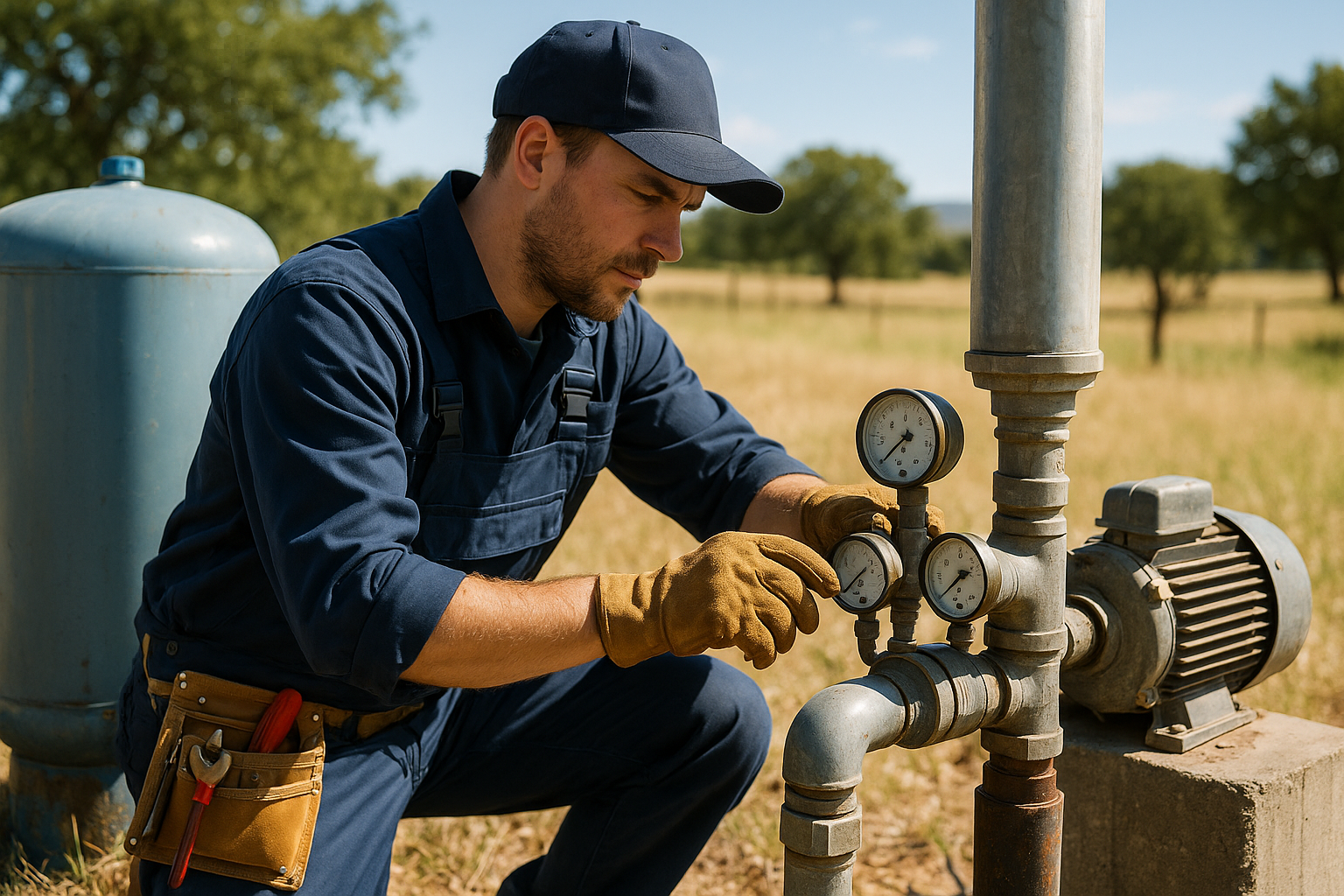
Well Inspection Services in Santee
Buying a property with a well in Santee? Need an annual well checkup? Southern California Well Service provides thorough well inspections with detailed reports on well condition, water quality, and system performance.
Why a Well Inspection Matters in Santee
Santee is best known for its municipal neighborhoods along the San Diego River, but move toward the community's eastern and northern edges - Carlton Hills, the ridgelines above Fanita, and the rural pockets that blend into Lakeside and El Monte Valley - and private wells become part of everyday life. Some Santee-area properties draw shallow water from the river's alluvial deposits, while others reach down into the granitic bedrock of the Peninsular Ranges. Whether you are buying one of these properties, supplementing landscape irrigation to escape city water costs, or maintaining a well that predates the surrounding development, a professional inspection tells you exactly what you have. Southern California Well Service has inspected wells throughout the Santee area since 2020.
The geology around Santee is genuinely mixed, and that matters for inspections. Wells near the San Diego River channel and the El Monte Valley tap alluvial sand and gravel, which tends to yield generously but is more exposed to surface influence and nitrate. Wells set into decomposed and fractured granite behave more like the classic backcountry hard-rock wells found across San Diego County, with yields that depend on intercepting fractures. Knowing which type of aquifer a well draws from shapes what we test for and what a healthy result looks like.
How a Santee Well Inspection Works
Every inspection follows the same disciplined sequence, whether the well is a shallow alluvial well near the river or a deeper granite well up a canyon. We start at the wellhead and move through the system, documenting measured values as we go so you receive a written report rather than a verbal opinion. For real estate transactions we time the visit to your escrow and deliver results your title company and lender will accept.
- Wellhead, cap, and sanitary seal. We confirm the casing is intact, the cap is vermin-proof, and the sanitary seal keeps surface water out. On shallow Santee-area alluvial wells, seal integrity is especially important because the water table sits closer to the surface.
- Static water level. We sound the resting water level and compare it to the driller's log where one exists.
- Flow and drawdown test. We run the pump, record GPM, measure how far the level draws down, and time the recovery. Alluvial wells often recover quickly; granite wells reveal their true reliability in this step.
- Pressure tank and switch. We check the tank pre-charge, verify switch cut-in and cut-out points, and look for short cycling.
- Electrical and controls. We inspect wiring, the control box, and breakers for corrosion, loose connections, and unsafe conditions.
- Water quality. We collect bacteria samples and, on request, test for nitrates - a real consideration for river-valley wells - along with hardness, iron, and manganese.
What We Check in Santee Wells
A complete Santee inspection documents each of these items with photos and measured readings:
- Pump performance and GPM - flow measured under real load, with amp draw checked against the motor nameplate
- Static and pumping water levels - resting depth and drawdown
- Recovery rate - how quickly the well refills after the pump stops
- Wellhead, cap, and sanitary seal - the primary barrier against contamination
- Casing integrity - corrosion or breaches, checked closely on older steel casings
- Pressure tank and pressure switch - pre-charge, cycling, and overall condition
- Electrical system and controls - wiring, control box, and breaker health
- Water quality - bacteria testing plus optional nitrate and chemistry panels
- Sanitary survey - setbacks from septic, property lines, and potential contamination sources
Common Santee-Area Scenarios
Shallow river-valley wells and nitrate
Wells drawing from the San Diego River and El Monte Valley alluvium can be excellent producers, but their proximity to the surface and to historic agricultural land makes nitrate testing worthwhile. Elevated nitrate is a common finding in river-valley groundwater, and it is one of the specific reasons we recommend a full water quality panel rather than a bacteria test alone for these properties.
Older wells near expanding development
As Santee has grown, some once-rural wells now sit close to newer neighborhoods. We frequently inspect wells with dated equipment - undersized pressure tanks, corroded controls, and pumps near the end of their life. A pre-purchase inspection tells a buyer whether they are inheriting a sound system or one due for near-term investment.
Irrigation and secondary wells
Many Santee-area owners keep a well purely for landscape and irrigation. These wells are easy to neglect until they fail. An inspection confirms the pump and pressure system are healthy and that the water is appropriate for its intended use.
Annual Inspections for Santee Well Owners
For homes and properties that rely on a well, we recommend an annual checkup along with a bacteria test. In the Santee area, where shallow wells can be more sensitive to seasonal and surface changes, yearly testing is the simplest way to catch a rising bacteria count or a shifting water level before it becomes a health or supply problem. Annual visits also keep your pressure tank, switch, and pump running efficiently, which protects the pump motor from the wear that short cycling and low water levels cause.
When to Call a Professional
Reach out promptly if you experience any of these warning signs: a loss of water or a noticeable pressure drop; sputtering, air-filled faucets; cloudy, discolored, or gritty water; a pump that never seems to shut off or that cycles rapidly; an unexplained jump in your electric bill; or a change in how your water tastes or smells. Any of these can indicate a failing pump, a waterlogged pressure tank, a dropping water level, or a contamination issue - all of which are cheaper to address early than after a full breakdown.
Santee Well Inspection Costs
Costs vary with the well's depth, access, and the depth of testing you want. Typical ranges for the Santee area are:
- Standard well inspection: $150-$400 depending on scope and testing included
- Diagnostic service call: $125, credited toward any repair we complete
- Pressure switch replacement: $150-$350
- Pressure tank replacement: $600-$1,500
- Submersible pump replacement: $2,500-$5,500 depending on depth and horsepower
- Sediment filtration system: $300-$900
- Water softener: $1,500-$3,500 for hard water
- UV disinfection system: $800-$1,800 when bacteria results call for it
San Diego County typically requires a well inspection and water quality documentation for real estate transactions. Our reports are accepted by all major title companies and lenders serving Santee.
Frequently Asked Questions
Do Santee-area wells need nitrate testing?
For wells drawing from the San Diego River or El Monte Valley alluvium, yes - we strongly recommend it. Shallow river-valley groundwater near historic agricultural areas can carry elevated nitrate, so a full panel is wiser than a bacteria test alone.
How long does a Santee well inspection take?
Most take two to four hours. Deeper granite wells that require a longer flow test take more time, since we run the pump long enough to see how the water level holds up under sustained demand.
Is an inspection required to buy a Santee home with a well?
San Diego County and most lenders require a well inspection and satisfactory bacteria test before closing on a property served by a private well. It also protects you as the buyer regardless of whether it is strictly mandated.
Can you inspect a well I only use for irrigation?
Absolutely. Irrigation and secondary wells still have pumps, tanks, and controls that wear out. We confirm the system is healthy and that the water is suitable for its intended use.
How often should a Santee well be inspected?
Once a year, with a bacteria test each time, plus additional testing whenever the taste, smell, or clarity of your water changes. Shallow wells especially benefit from consistent annual monitoring.
What areas near Santee do you serve?
We cover Santee and the adjoining San Diego County communities, including Lakeside, El Monte Valley, and the eastern county backcountry, with same-day service available for emergencies.
Schedule Your Santee Well Inspection
As a licensed C-57 contractor (CSLB #1086994) serving San Diego County, Southern California Well Service provides thorough inspections and clear written reports you can rely on. Call (760) 440-8520 or text (760) 219-5877 to schedule your Santee well inspection. Same-day emergency service is available.
Related Articles
Continue learning about well maintenance and troubleshooting