
If your well pressure gauge needle is bouncing, pulsating, or rapidly fluctuating, something in your water system needs attention. This isn't just an annoyance—a bouncing gauge often signals issues that can lead to premature pump failure, higher electricity bills, or complete loss of water pressure.
📋 In This Guide
- What Does a Bouncing Pressure Gauge Mean?
- 7 Common Causes of Bouncing Pressure Gauges
- How to Diagnose Your Bouncing Gauge
- Repair Costs in San Diego County
- When to Call a Professional
- San Diego Well Pressure Problems?
- Preventing Pressure Gauge Problems
- Frequently Asked Questions
- Related Articles
At Southern California Well Service, we diagnose bouncing pressure gauges throughout San Diego County every week. Here's everything you need to know about what causes this problem and how to fix it.
What Does a Bouncing Pressure Gauge Mean?
Your pressure gauge should move slowly and steadily between your system's cut-in pressure (when the pump turns on) and cut-out pressure (when it shuts off). A typical residential system runs between 40-60 PSI or 30-50 PSI.
When the needle bounces, it indicates rapid pressure changes in your system. This usually means:
- The pump is cycling on and off too quickly (short cycling)
- Air is entering the water lines
- The pressure tank has lost its air charge
- A check valve is failing
- The pressure switch is malfunctioning
7 Common Causes of Bouncing Pressure Gauges
1. Waterlogged Pressure Tank
This is the #1 cause of bouncing gauges we see in San Diego. Your pressure tank contains a rubber bladder that separates air from water. Over time, this bladder can fail, allowing the tank to fill completely with water.
Without the air cushion, there's no buffer between the pump and your plumbing. Every time you open a faucet, pressure drops instantly, triggering the pump. Close the faucet, and pressure spikes immediately.
How to test: Turn off the pump and open a faucet to drain pressure. If only a small amount of water comes out before the tank is "empty," it's waterlogged. You can also tap the tank—a waterlogged tank sounds solid, while a properly charged tank sounds hollow in the upper portion.
The fix: For bladder tanks, you may be able to recharge the air if the bladder is intact. Check the pre-charge with a tire gauge on the tank's Schrader valve. It should be 2 PSI below your cut-in pressure (e.g., 38 PSI for a 40/60 system). If the bladder has ruptured, the tank needs replacement.
2. Failing Check Valve
The check valve prevents water from draining back down into your well when the pump shuts off. A worn or debris-clogged check valve allows backflow, causing pressure to drop rapidly after each pump cycle.
Symptoms:
- Gauge drops several PSI within seconds of pump shutoff
- You can hear water draining back into the well
- Pump runs briefly, shuts off, then immediately restarts
The fix: Check valves are relatively inexpensive ($30-100) but are located at the pump, which may be 100-400+ feet down in your well. Professional replacement is usually necessary.
3. Leaking Foot Valve
On jet pump systems, the foot valve at the bottom of the suction pipe can develop leaks. This causes the pump to lose prime partially, creating air pockets that cause pressure fluctuations.
4. Pump Short Cycling
Short cycling occurs when your pump turns on and off too frequently—sometimes every few seconds. This is often caused by the waterlogged tank mentioned above, but can also result from:
- Pressure switch set with too narrow a range (e.g., 50-55 instead of 40-60)
- Running water demand exceeding pump capacity
- Partially closed valve restricting flow
Short cycling is extremely damaging to your pump motor. Each startup draws 3-5x the running amperage, generating heat. Frequent cycling can burn out a pump motor in months rather than the typical 10-15 year lifespan.
5. Air in the System
Air pockets in your water lines create compressible zones that cause pressure to bounce. Common causes include:
- Dropping water level in the well (pump drawing air)
- Cracked drop pipe allowing air infiltration
- Recently serviced system not properly purged
- Aeration from treatment equipment
In San Diego County's drought-prone areas like Ramona, Julian, and Valley Center, dropping water tables can cause pumps to occasionally draw air, especially during peak summer demand.
6. Worn Pressure Switch
The pressure switch contains electrical contacts that wear over time. Pitted or corroded contacts can cause erratic switching, where the pump rapidly cycles even though pressure hasn't reached the cut-in or cut-out point.
The pressure sensing port can also become clogged with sediment or scale, causing delayed or inaccurate pressure readings.
7. Debris in the Pressure Gauge
Sometimes the problem is the gauge itself, not the system. Sediment, scale, or a damaged internal mechanism can cause the needle to stick or bounce even when system pressure is stable.
Quick test: Install a new gauge temporarily. If the new gauge reads steady while the old one bounces, you've found your culprit.
How to Diagnose Your Bouncing Gauge
Follow this systematic approach to identify the cause:
Step 1: Observe the Cycle Pattern
With no water running in the house, watch your pressure gauge and listen to your pump:
- Rapid cycling (every few seconds): Likely waterlogged tank or failed check valve
- Gradual pressure loss when pump is off: Check valve or foot valve leak
- Bouncing only when water is running: Air in system or undersized pressure tank
Step 2: Check the Pressure Tank
- Turn off power to the pump
- Open a faucet to drain system pressure
- Locate the Schrader valve (like a tire valve) on top of the tank
- Check the air pressure with a tire gauge
- Compare to your cut-in pressure (should be 2 PSI less)
Step 3: Inspect the Pressure Switch
With power off, remove the pressure switch cover. Look for:
- Burned or pitted contacts
- Debris in the pressure sensing tube
- Signs of ant infestation (common in San Diego!)
- Moisture or corrosion
Step 4: Listen for Backflow
After the pump shuts off, put your ear near the wellhead or pressure tank. A whooshing or gurgling sound indicates water draining back—a sign of check valve failure.
Repair Costs in San Diego County
Here are typical repair costs for bouncing gauge issues:
| Repair | Typical Cost |
|---|---|
| Pressure tank recharge | $75-150 |
| Pressure tank replacement | $400-800 |
| Pressure switch replacement | $150-300 |
| Check valve replacement | $400-1,200+ |
| Pressure gauge replacement | $75-150 |
Check valve replacement costs vary significantly based on well depth—deeper wells require more time and equipment to pull the pump.
When to Call a Professional
While you can diagnose many bouncing gauge issues yourself, call a professional when:
- The pump is short cycling (causes rapid motor damage)
- You suspect the check valve needs replacement
- The pressure tank bladder has failed
- You're not comfortable working with electrical components
- Basic troubleshooting doesn't identify the cause
San Diego Well Pressure Problems?
A bouncing pressure gauge often indicates an issue that will worsen over time. Don't wait until you lose water completely.
Call SCWS at (760) 440-8520 for fast diagnosis and repair throughout San Diego County.
Preventing Pressure Gauge Problems
Regular maintenance can prevent most bouncing gauge issues:
- Annual tank check: Verify air charge yearly, especially before summer
- Sediment management: Install or maintain filtration to protect components
- Professional inspection: Annual checkup catches problems early
- Water level monitoring: Know your static water level and watch for changes
Frequently Asked Questions
- Why does my pressure gauge bounce when I run water?
- This usually indicates a waterlogged pressure tank that has lost its air charge. The tank can no longer buffer pressure changes, causing rapid fluctuations when water flows. Check and recharge or replace the tank.
- Is a bouncing pressure gauge dangerous?
- It's not immediately dangerous, but it often causes short cycling that can burn out your pump motor prematurely. It can also indicate air in the system, which may mean your water level is dropping. Address it promptly to avoid expensive repairs.
- How do I stop my well pump from short cycling?
- First, check your pressure tank's air charge—this is the most common cause. If the tank is properly charged, check for leaking check valves, pressure switch problems, or leaks in the system. Short cycling should be fixed quickly to protect your pump.
- How often should I check my pressure tank?
- Check the air charge at least once per year, ideally before summer when water demand increases. In San Diego's climate, annual checks help ensure reliable water pressure during peak usage months.
- Can I fix a bouncing pressure gauge myself?
- You can diagnose the problem and handle simple fixes like recharging the pressure tank or replacing the gauge. However, check valve replacement, pump work, or electrical repairs should be left to professionals for safety and warranty reasons.
- What pressure should my well tank be set at?
- The air pre-charge should be 2 PSI below your pressure switch's cut-in setting. For a 40/60 system, set the tank to 38 PSI. For a 30/50 system, use 28 PSI. Always check with the pump off and tank drained.
Related Articles
Continue learning about well maintenance and troubleshooting
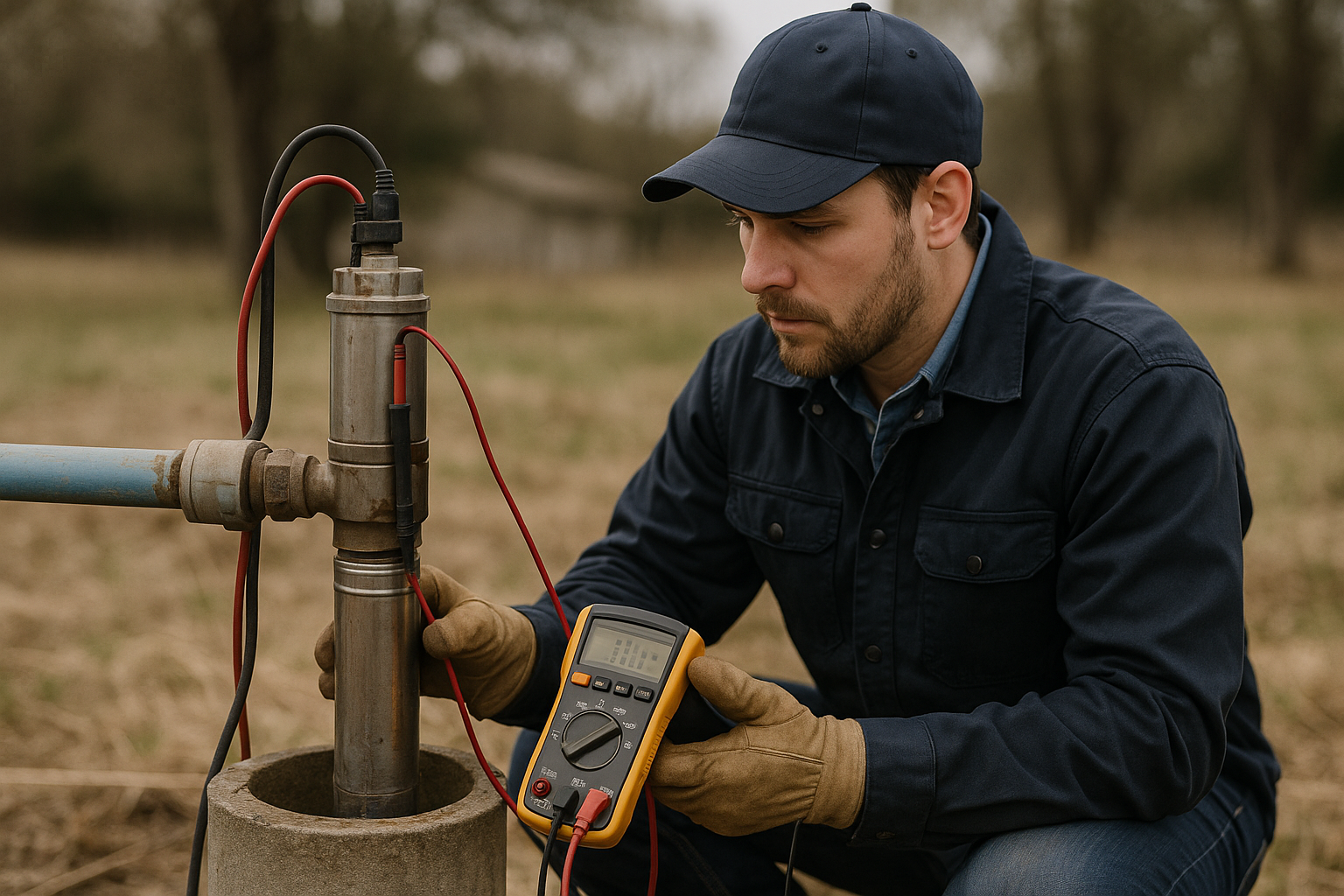
Low Water Pressure From Well: Complete Fix Guide
Diagnose and solve low pressure problems
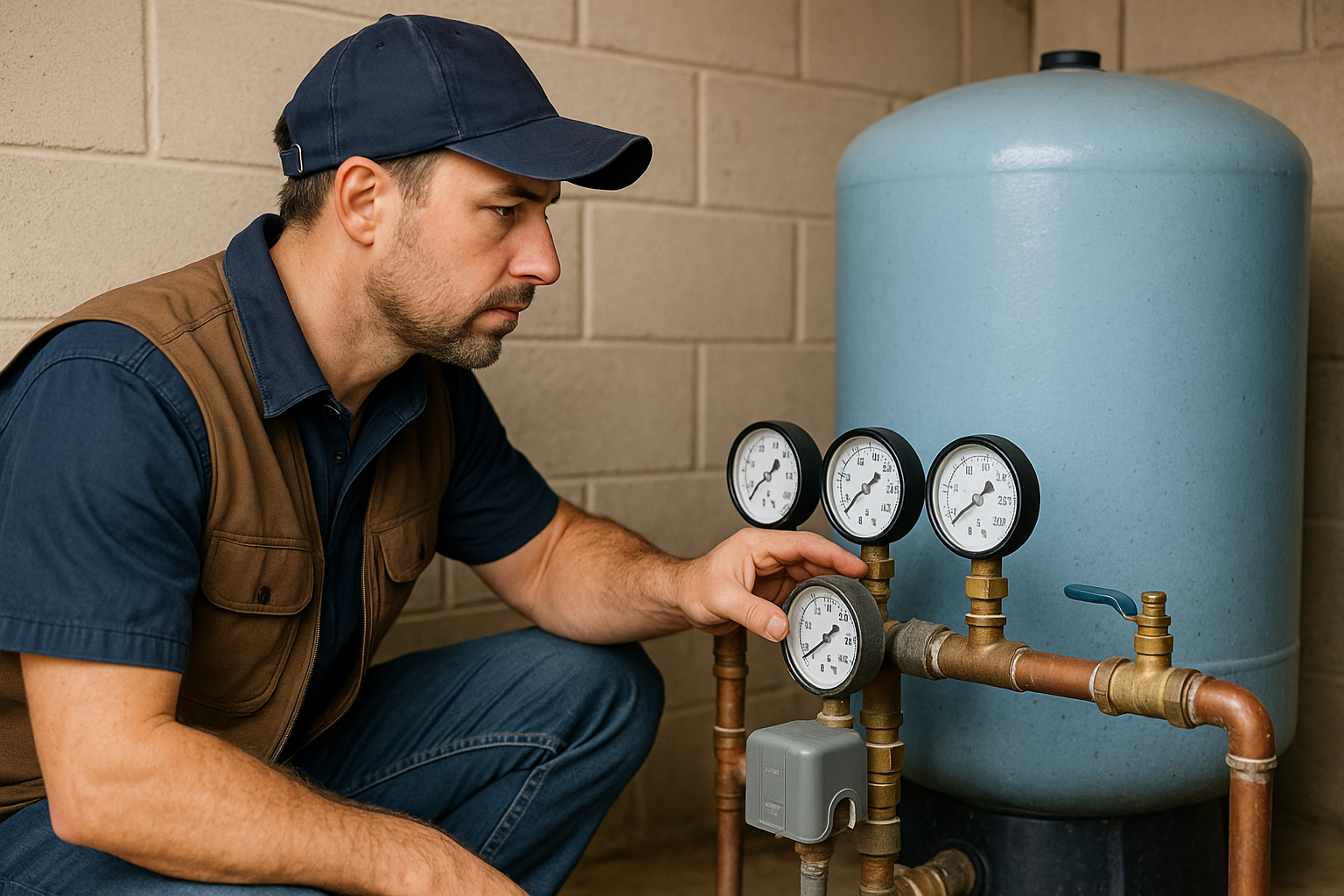
Well Pressure Switch: Settings, Adjustment & Replacement
Everything about pressure switches
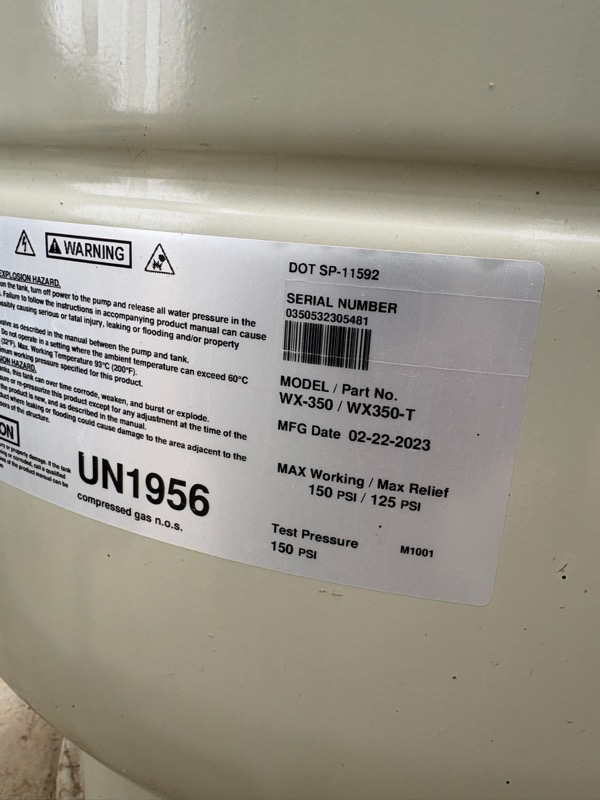
Pressure Tank Maintenance: Complete Guide
Keep your pressure tank working properly