
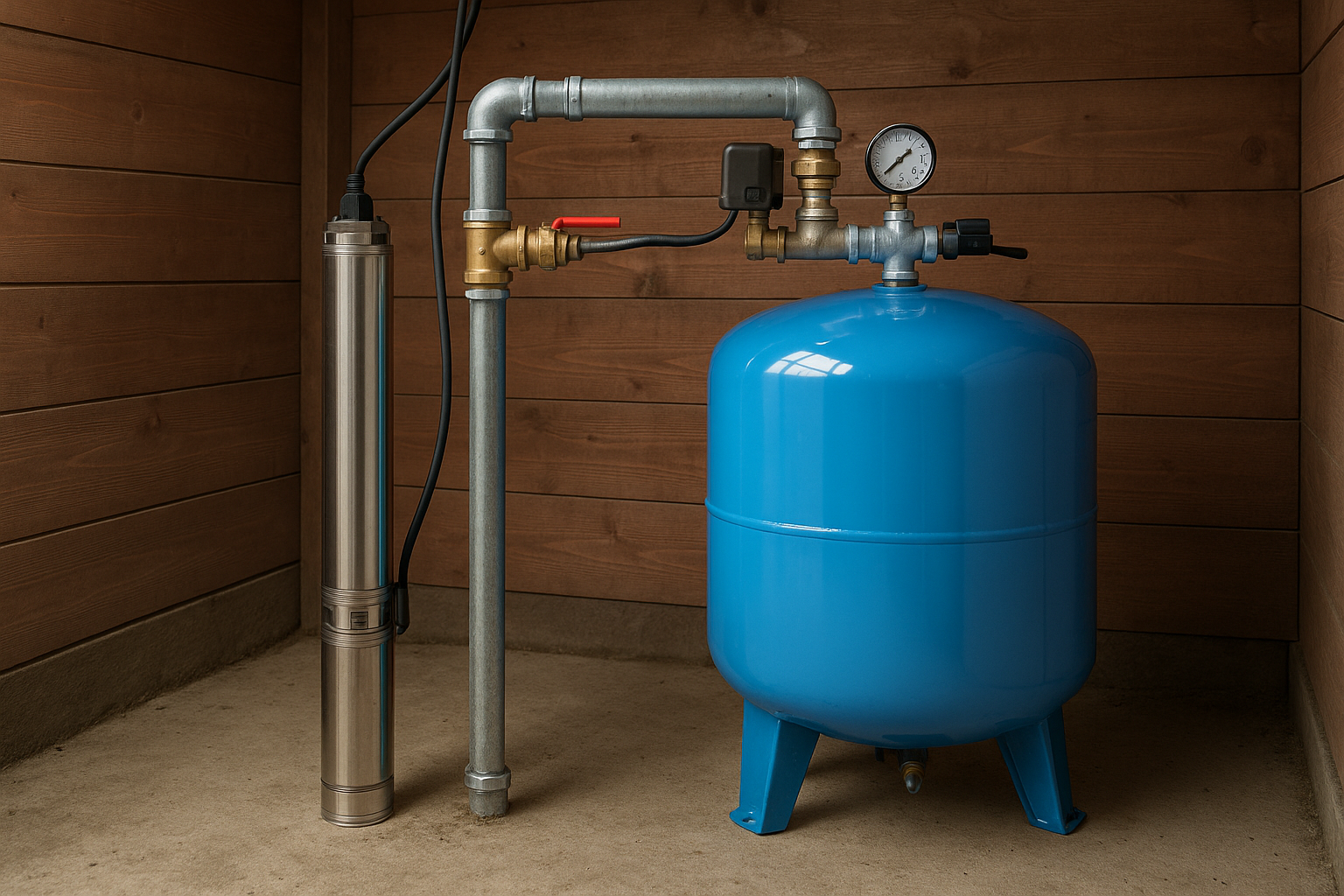
Well Pressure Tank Sizing Guide: What Size Do You Need?
📋 In This Guide
Pressure Tank Basics
What Does a Pressure Tank Do?
- Stores pressurized water for immediate use
- Maintains consistent water pressure
- Reduces pump cycling (on/off cycles)
- Protects pump motor from overheating
How It Works
The tank contains a rubber bladder. Air above the bladder compresses as water fills the tank. When you use water, the compressed air pushes water out without the pump running—until pressure drops to the "cut-in" point and pump starts again.
Ideal Pump Cycle
- Pump runs 1-2 minutes per cycle
- Pump stays off 5+ minutes between cycles
- Maximum 6-8 cycles per hour
Understanding Drawdown
What Is Drawdown?
Drawdown is the usable water stored in the tank between pump cycles. It's NOT the total tank size—it's typically 25-35% of the tank's total capacity.
Drawdown vs Total Capacity
| Tank Size (gallons) | Approximate Drawdown |
|---|---|
| 20 gallon | 5-6 gallons |
| 32 gallon | 8-10 gallons |
| 44 gallon | 11-14 gallons |
| 62 gallon | 16-20 gallons |
| 86 gallon | 22-28 gallons |
| 119 gallon | 30-38 gallons |
Note: Exact drawdown depends on pressure settings (30/50, 40/60, etc.) and tank brand.
How to Size Your Pressure Tank
The Simple Rule
Minimum drawdown (gallons) = Pump flow rate (GPM)
For a 10 GPM pump: Need at least 10 gallons drawdown = 32-44 gallon tank minimum
The Better Rule
For longer pump life and better performance, size up:
- Good: 1 gallon drawdown per GPM
- Better: 1.5 gallons drawdown per GPM
- Best: 2+ gallons drawdown per GPM
Step-by-Step Sizing
- Determine your pump's GPM (check pump label or specs)
- Multiply GPM × 1.5 for recommended drawdown
- Select tank with that drawdown capacity or larger
Example Calculation
Pump: 12 GPM submersible
Calculation: 12 GPM × 1.5 = 18 gallons drawdown needed
Tank needed: 62-gallon tank (provides ~18 gallon drawdown)
Pressure Tank Size Recommendation Chart
| Pump Flow (GPM) | Minimum Tank | Recommended Tank | Best Performance |
|---|---|---|---|
| 5 GPM | 20 gallon | 32 gallon | 44 gallon |
| 8 GPM | 32 gallon | 44 gallon | 62 gallon |
| 10 GPM | 32 gallon | 44-62 gallon | 86 gallon |
| 15 GPM | 44 gallon | 62-86 gallon | 119 gallon |
| 20 GPM | 62 gallon | 86 gallon | 119+ gallon |
| 25+ GPM | 86 gallon | 119 gallon | Multiple tanks |
Problems with Undersized Tanks
Rapid Cycling (Short Cycling)
The pump turns on and off too frequently. Signs include:
- Clicking pressure switch every few seconds
- Pump running multiple times per minute
- Lights flickering when pump cycles
Pump Motor Damage
Frequent starting is hard on motors:
- Starting uses 5-7× running amps
- Motor never cools properly
- Bearings and windings wear faster
- Result: Pump life cut from 12-15 years to 3-5 years
Higher Energy Costs
Motor starting current spikes waste electricity. Short cycling can increase pump energy use by 20-40%.
Pressure Fluctuations
Small tanks can't maintain steady pressure during moderate use, causing:
- Shower temperature fluctuations
- Inconsistent flow to appliances
When to Upgrade Your Pressure Tank
Signs You Need a Bigger Tank
- Pump cycles more than 6-8 times per hour
- Pump runs for less than 1 minute per cycle
- Pump has failed prematurely
- Pressure fluctuates noticeably during use
Upgrade Costs
- 32-gallon tank: $250-$400
- 44-gallon tank: $350-$500
- 62-gallon tank: $450-$650
- 86-gallon tank: $550-$800
- Installation: $150-$400
Cost Justification
A $500 tank upgrade can save a $2,500 pump replacement. The larger tank pays for itself by extending pump life.
We install Well-X-Trol (Amtrol) and Flexcon pressure tanks — industry-leading bladder tanks that outlast standard diaphragm models. Proper sizing with a quality tank can double your pump's lifespan.
Frequently Asked Questions
What size pressure tank do I need for my well?
Minimum: 1 gallon drawdown per GPM of pump flow. For most 10 GPM residential pumps, a 44-gallon tank is good; 62-86 gallon is better.
What happens if pressure tank is too small?
Rapid pump cycling, which overheats and damages the motor. Pump life is drastically reduced—from 12-15 years to potentially 3-5 years.
Can a pressure tank be too big?
Not really. Bigger tanks are better—more drawdown, less cycling, longer pump life. The only limits are space and budget.
How do I know if my tank is sized correctly?
Monitor pump cycles. If pump runs 1-2 minutes and stays off 5+ minutes during normal use, sizing is adequate.
What pressure tank size for a 1 HP pump?
1 HP submersible pumps typically produce 10-15 GPM. A 44-62 gallon tank is recommended.
Need Help Sizing Your Pressure Tank?
We'll evaluate your system and recommend the right tank size—or install a properly sized replacement.
Related Articles
Continue learning about well maintenance and troubleshooting
Low Water Pressure From Well: Complete Fix Guide
Diagnose and solve low pressure problems
Well Pressure Switch: Settings, Adjustment & Replacement
Everything about pressure switches
Pressure Tank Maintenance: Complete Guide
Keep your pressure tank working properly