
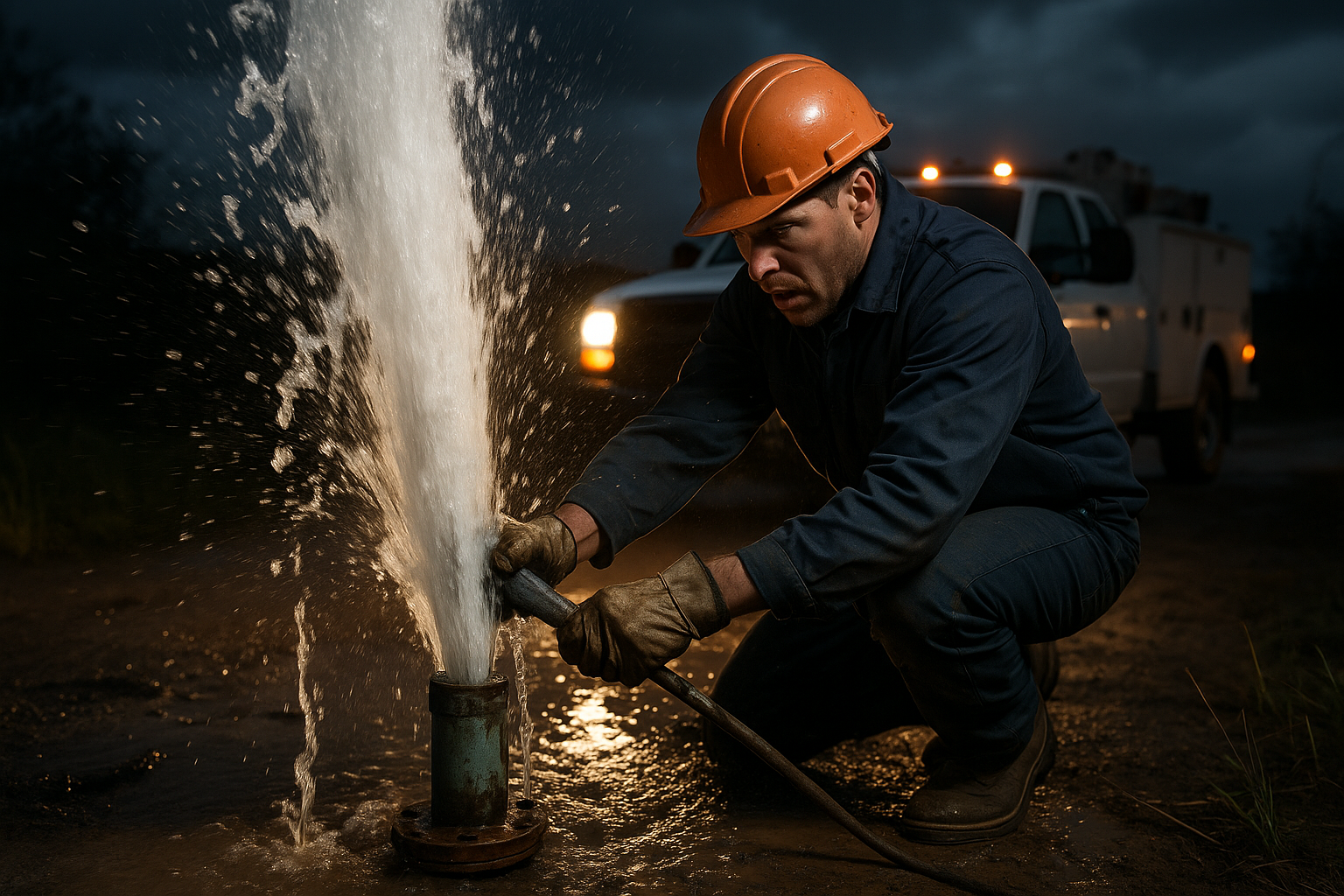
Pump Running But No Water? What San Diego County Shops Check
📋 In This Guide
First Steps When Your Pump Runs But No Water Comes Out
When you turn on a faucet and nothing comes out—but you can hear your well pump running—the most important thing is to act quickly and methodically. A pump running without water (called "dry running") can destroy itself in minutes, so your first priority is protecting the equipment while you figure out what's wrong.
Step 1: Turn Off the Pump Immediately
Go to your electrical panel and flip the breaker labeled for the well pump. This is the single most important step you can take. A submersible pump that runs dry loses the water cooling that protects its motor windings—within 2-5 minutes, the motor can overheat and burn out. That turns a potentially simple fix (like waiting for the well to recover) into a $3,000-5,000 pump replacement. A jet pump running without water damages the mechanical seals and impeller, leading to the same expensive outcome. When in doubt, turn it off.
Step 2: Check the Obvious Causes First
Before assuming the worst, rule out the simple explanations that account for a surprising number of "no water" calls we respond to:
- Is a valve closed somewhere? — Check the main shutoff valve near your pressure tank, any inline valves in the pump house, and any valves that may have been turned during recent plumbing work. We've driven out to emergency calls only to find a gate valve that was accidentally bumped closed.
- Is it freezing outside? — Even in Southern California, mountain communities like Julian, Palomar Mountain, and parts of Ramona can see freezing temperatures in winter. Check exposed pipes in your pump house or wellhead for ice. Frozen pipes are the most common winter "no water" cause.
- Did you just use a large volume of water? — Filling a pool, running irrigation for extended periods, or having multiple fixtures running simultaneously can draw the water level below the pump intake. This is especially common with low-yield wells (under 5 GPM).
- Was any plumbing or electrical work done recently? — A breaker may have been turned off and not fully restored, a valve may have been left closed, or pipes may have been disconnected and not properly reconnected.
Step 3: Check Your Pressure Gauge
The pressure gauge on your pressure tank is your best diagnostic tool. With all faucets closed, briefly turn the pump back on—no more than 30 seconds—and watch the gauge carefully:
- Gauge shows zero and doesn't climb at all: The pump is not moving any water. This points to a pump failure, dry well, or complete loss of prime (jet pumps).
- Gauge climbs slowly or partially: The pump is moving some water but something is restricting flow—a partially closed valve, clogged filter, or a pipe that's partially frozen or blocked.
- Gauge climbs to normal pressure but faucets still have no water: The problem is downstream of the pressure tank—a closed valve in the house plumbing, a frozen pipe between the tank and the house, or a blockage in the distribution piping.
- Gauge rapidly hits cut-off pressure: The pressure tank's bladder has likely failed. The tank has no air cushion, so it fills instantly and the pump short-cycles. You'll get brief spurts of water but no sustained flow.
After this brief test, turn the pump off again until you've identified the cause. Running it repeatedly against a dry condition does cumulative damage.
Common Causes
| Cause | Signs | Fix |
|---|---|---|
| Low water level | Heavy recent use, drought | Wait for recovery |
| Lost prime (jet pump) | Pump runs but no suction | Re-prime pump |
| Frozen pipe | Cold weather, exposed pipes | Thaw carefully |
| Broken drop pipe | Submersible pump, no water | Pull pump to repair |
| Failed pump | Pump runs but nothing happens | Replace pump |
| Closed valve | After recent work | Open valve |
Cause #1: Low Water Level (Your Well Ran Dry)
This is the most common reason a well pump runs but delivers no water, especially during Southern California's dry months. When the water level in your well drops below the pump intake, the pump draws air instead of water. It's still running—you can hear it—but it has nothing to pump.
Why Wells Run Dry
Wells don't usually run dry because the water is permanently gone. In most cases, the demand temporarily exceeded the well's ability to replenish (its "yield" or recovery rate). Common triggers include:
- Extended irrigation — Running sprinklers or drip systems for hours can draw down a low-yield well completely. A well producing 3 GPM can supply about 180 gallons per hour—if your irrigation demands 10 GPM, you'll outpace the well quickly.
- Filling a pool or water truck — These high-volume, sustained draws are notorious for emptying wells. A standard pool fill requires 15,000-20,000 gallons—far more than most residential wells can supply continuously.
- Drought conditions — After months without significant rainfall, the water table drops throughout the region. Wells that performed fine during wet years may start running dry during extended droughts. This has been an increasing issue across San Diego County's inland communities.
- Neighboring wells — If a nearby property drills a new well or increases their water usage, it can draw down the shared aquifer and reduce your well's available water.
What to Do When Your Well Runs Dry
- Turn off the pump and leave it off. Running a pump against air is the fastest way to destroy it.
- Wait 30-60 minutes for the well to begin recovering. Most wells start replenishing as soon as pumping stops—water flows back in from the surrounding rock and soil.
- Try the pump briefly (30 seconds). If water flows, let it run but monitor closely. If it sputters and dies again, the well hasn't recovered enough—wait longer.
- For severely drawn-down wells, you may need to wait 4-8 hours or even overnight for a full recovery. Low-yield wells in fractured rock (common in our mountain service areas) can be slow to replenish.
How to Know It's a Water Level Problem
Several telltale signs point to a drawn-down well rather than a pump failure: the water was sputtering and spitting air before it stopped completely, you were using a lot of water when it happened, the pump may have gotten louder or changed pitch as it started drawing air, and this pattern has happened before during heavy usage or dry months. If the water comes back after waiting, you've confirmed it's a yield issue, not a pump issue.
Long-Term Solutions for Low-Yield Wells
If your well regularly runs dry during peak usage, several solutions can prevent the problem from recurring:
- Low-water cutoff switch ($100-200 installed) — This sensor shuts the pump off automatically when the water level drops too low, preventing dry-run damage. The pump restarts automatically when the water recovers. This is the single most cost-effective protection for a low-yield well.
- Storage tank system ($3,000-8,000) — A large above-ground tank (1,000-5,000 gallons) fills slowly from your well during off-peak hours, then supplies the house and irrigation during high-demand periods. This effectively turns a 2 GPM well into a system that can handle peak demands of 20+ GPM.
- Deepen the well or lower the pump ($2,000-5,000) — If the water table has dropped but there's still water below your current pump setting, lowering the pump or deepening the well can restore reliable production.
- Drill a new well ($15,000-40,000+) — If the current well's yield is fundamentally inadequate, a new well in a better location or drilled into a more productive aquifer zone may be the only permanent solution.
Cause #2: Pump Problems (Failed or Lost Prime)
If the water level is fine but the pump still isn't delivering water, the pump itself may be the problem. The diagnosis depends on what type of pump you have—jet pumps and submersible pumps fail in different ways and require different approaches.
Jet Pump Lost Prime
Jet pumps (the above-ground pumps you can see in your pump house) require a continuous column of water in the suction line to function. This is called "prime." When air enters the suction side—through a leaking fitting, a failed foot valve, or a low water level—the pump loses prime and spins uselessly against air. You'll hear the motor running at a slightly higher pitch than normal, and no water will flow.
How to Re-Prime a Jet Pump
- Turn off power at the breaker. Never work on a pump with power connected.
- Locate the priming plug — a large hex or square plug on top of the pump housing.
- Remove the plug and fill the pump housing with water using a funnel. Pour slowly until water reaches the top of the opening and stays there.
- Replace the plug and tighten securely. A loose plug will allow the pump to suck air right at the housing, defeating the entire priming effort.
- Turn power on and listen. Within 30-60 seconds, you should hear the pump "catch"—the sound changes from a whiny, unloaded pitch to a deeper, working tone as it starts moving water.
- If it doesn't catch after 60 seconds, turn it off. Repeat the process. Some pumps require 2-3 priming attempts, especially if the suction line was completely drained.
Important: If your jet pump repeatedly loses prime, don't just keep re-priming. There's a reason air is getting in—usually a leaking suction line connection, a cracked pipe, or a foot valve that's no longer sealing. Find and fix the source, or you'll be back at this within days. A pressure test on the suction line can identify even tiny leaks that are invisible during normal operation.
Submersible Pump Failure
Submersible pumps sit at the bottom of the well, 100-500+ feet underground. When they fail, diagnosis is more challenging because you can't see or easily access the pump. Common failure modes include:
- Worn impellers — The impeller stages inside the pump wear down over time, especially in wells with sand or sediment. The pump motor runs normally and draws current, but the worn impellers can't generate enough force to push water up the drop pipe. This usually develops gradually—you'll notice declining pressure and flow over months before it stops entirely.
- Motor shaft disconnect — In rare cases, the coupling between the motor and the pump stages breaks. The motor runs (you can hear it or measure amps at the panel), but it's not connected to the impellers. No water moves at all.
- Electrical failure — Winding insulation breaks down over time, especially in pumps that have experienced overheating from dry-running or power surges. The pump may hum without turning, trip the breaker, or run weakly.
Signs Your Pump Has Failed
Diagnosing a submersible pump failure from the surface requires checking several clues. The pump hums or runs but produces zero water, the pressure gauge shows no buildup when the pump is on, the pump is more than 10-15 years old (typical lifespan for residential submersible pumps), and you've noticed gradually declining performance over the preceding months—lower pressure, slower recovery between pump cycles, or the pump running longer to reach cut-off pressure. If these signs align, the pump likely needs to be pulled and replaced. This is a professional job that requires specialized equipment—a well rig or pump hoist—and typically costs $2,500-6,000 depending on well depth and pump size.
Cause #3: Pipe and Plumbing Problems
Sometimes the pump is working perfectly and the well has plenty of water—but something in the piping between the pump and your faucets is preventing water from reaching you. Pipe issues can be tricky because they mimic pump failure, and the fix can range from a simple thaw to a major pipe replacement.
Frozen Pipes
While less common in Southern California's coastal and valley areas, frozen pipes are a real concern in our mountain service areas—Julian, Palomar Mountain, Mount Laguna, and even higher elevations around Ramona during cold snaps. Exposed pipes in unheated pump houses, above-ground pipe runs, and the wellhead itself are vulnerable when temperatures drop below freezing.
If you suspect frozen pipes, check for frost or ice on exposed sections. Thaw carefully using electric heat tape, a hair dryer, or heat lamp. Never use an open flame or propane torch—this can crack the pipe, damage fittings, or in the worst case, start a fire in your pump house. Once the pipe thaws, water should flow normally. Prevent future freezes by insulating exposed pipes, adding heat tape to vulnerable sections, and ensuring your pump house has adequate insulation or a heat source for cold nights.
Broken or Leaking Drop Pipe
The drop pipe connects your submersible pump at the bottom of the well to the surface plumbing. In deep wells, this pipe may be 200-500+ feet of PVC, polyethylene, or galvanized steel under constant pressure. Over time, connections can loosen, pipe can crack from thermal cycling, and corrosion can weaken steel sections.
When a drop pipe breaks or develops a significant leak, the pump pushes water up—but it falls right back down through the break point into the well. The pump runs, draws normal amps, but no water reaches the surface. Diagnosing a drop pipe leak requires pulling the pump, which means a service truck with a pump hoist and a crew. It's not a DIY job, but it's a common repair that most well service companies handle routinely.
Signs of a drop pipe issue: the pump runs and you can hear it working (it's under load, not spinning free), but no water reaches the pressure tank. You may notice the pump running for unusually long periods without building pressure. If your well was recently serviced and the pump was pulled, a loose connection that wasn't fully tightened could be the cause.
Clogged Pipe, Screen, or Filter
Sediment, scale, and mineral deposits can gradually restrict water flow in your well system. The pump intake screen can become clogged with sand or silt (especially in wells that produce sediment), scale can build up inside pipes over years of use, and whole-house filters can become so clogged that they effectively block all flow.
Check your whole-house filter or sediment filter first—this is the most accessible potential blockage point. If the filter cartridge is brown, packed with sediment, or visibly restricted, replace it and see if flow returns. For deeper blockages, flushing the system with high-pressure water or chemical treatment may be needed. If the pump intake screen is suspected, the pump will need to be pulled for cleaning or replacement.
When to Call a Well Service Professional
Some no-water situations can be resolved at home—waiting for a dry well to recover, re-priming a jet pump, or replacing a clogged filter. But others require professional equipment and expertise. Here's how to know when to call:
Call for Emergency Service If:
- You smell burning or notice an electrical odor near the pump, pressure switch, or electrical panel. This could indicate a failing motor, melting wire insulation, or an impending electrical fire. Turn off the breaker and call immediately.
- The pump makes grinding, screeching, or banging sounds — These noises indicate mechanical failure in progress. Continuing to run the pump may cause additional damage to the well casing, drop pipe, or electrical connections.
- The well hasn't recovered after 8+ hours — If you turned off the pump and waited overnight but still have no water, the problem is more than a temporary drawdown. You may need a flow test to determine your well's actual yield.
- You have no water and need it immediately — Households with infants, elderly family members, or medical needs can't wait for troubleshooting. A well service company can provide emergency diagnosis and often get water flowing the same day.
Schedule a Service Call If:
- The problem keeps recurring — A well that runs dry every few weeks, a jet pump that loses prime repeatedly, or pressure that gradually declines all indicate underlying issues that need professional diagnosis.
- Your pump is more than 12-15 years old — Submersible pumps have a typical lifespan of 10-20 years depending on water quality, usage patterns, and installation quality. If your aging pump is showing signs of decline, proactive replacement during a scheduled visit is far less stressful than an emergency failure.
- You suspect a submersible pump or drop pipe issue — Anything inside the well bore requires specialized equipment (pump hoist, well rig) to access. This is not a DIY repair.
- You need a water level measurement — If you suspect your well is running dry but aren't sure, a technician can measure the static water level and recovery rate to give you definitive answers about your well's capacity.
What to Tell the Technician When You Call
The more information you provide, the faster we can diagnose and fix the problem. Be ready to share: when the problem started (sudden or gradual), what you were doing when it happened (irrigation running, multiple fixtures, etc.), any unusual sounds or smells you noticed, what you've already tried (waited, re-primed, checked valves), the age of your pump if you know it, and the depth of your well if available. If you have a previous well report or pump installation receipt, having that handy helps too.
Frequently Asked Questions
Can I damage my pump by running it dry?
Absolutely, and the damage happens faster than most people realize. A submersible pump relies on the surrounding water to cool its motor. Without water flow, the motor overheats within 2-5 minutes—long enough to melt winding insulation and destroy the motor permanently. Jet pumps suffer seal and impeller damage when running dry. The moment you realize your pump is running but not producing water, turn it off at the breaker. This single action can save you thousands of dollars in pump replacement costs.
How long should I wait if my well ran dry?
Start with 30-60 minutes for a quick test. Turn the pump on briefly—if water flows, you're recovering. If not, wait longer. Most wells recover significantly within 4-8 hours if the drawdown was from normal usage. Low-yield wells in fractured rock (common in San Diego County mountain communities) may need 12-24 hours for a full recovery. If your well still hasn't recovered after 24 hours, the issue may be more serious—a seasonal water table drop, aquifer depletion, or a structural problem with the well itself. At that point, call a professional for a water level measurement and yield test.
Why would a submersible pump suddenly stop producing water?
The four most common causes are: the water level dropped below the pump intake (especially after heavy usage or during drought), the drop pipe that connects the pump to the surface developed a leak or break, the pump itself has failed (worn impellers or motor failure), or a check valve above the pump has stuck closed. Less common causes include a clogged intake screen, a broken wire connection to the pump motor, or a failed pressure switch that isn't signaling the pump to run at full capacity. A technician can systematically rule out each cause, usually starting with an amp draw test and water level measurement.
Can a well run dry permanently?
It's rare for a properly constructed well to run permanently dry, but it does happen. Most "dry well" situations are temporary—the water table drops during drought or heavy usage and recovers when conditions change. However, some wells do fail permanently due to aquifer depletion (usually from regional over-pumping), geological changes, or the well intersecting a fracture zone that has dried up. If your well hasn't recovered after several weeks, a hydrogeological assessment can determine whether the aquifer still has water and at what depth. Solutions range from deepening the existing well to drilling a new one in a more productive location.
How do I know if my pump is bad vs. just dry?
The key diagnostic is waiting. If you turn off the pump for several hours and water returns when you restart, the well was simply drawn down—the pump is fine. If water never returns despite adequate wait time, you need to differentiate between a dry well and a pump failure. A technician can measure the water level in the well (to confirm water is present) and check the pump's amp draw (to see if the motor is running normally). If the well has water but the pump draws normal amps and produces nothing, the pump's impellers are likely worn out. If the pump draws low amps or no amps, there's an electrical or motor failure. Both scenarios require pulling the pump for repair or replacement.
How much does it cost to fix a pump that runs but produces no water?
Costs vary widely depending on the cause. Re-priming a jet pump is essentially free if you do it yourself. Replacing a foot valve or check valve runs $150-400 including labor. A new pressure tank costs $400-1,200 installed. Pulling and replacing a submersible pump is the most expensive repair—typically $2,500-6,000 depending on well depth, pump size, and whether the drop pipe also needs replacement. Emergency and after-hours service calls may carry additional charges. At Southern California Well Service, we provide upfront pricing before starting any work so there are no surprises.
No Water Emergency?
We provide emergency well service. Call now and we'll get your water running again.
Related Articles
Continue learning about well maintenance and troubleshooting
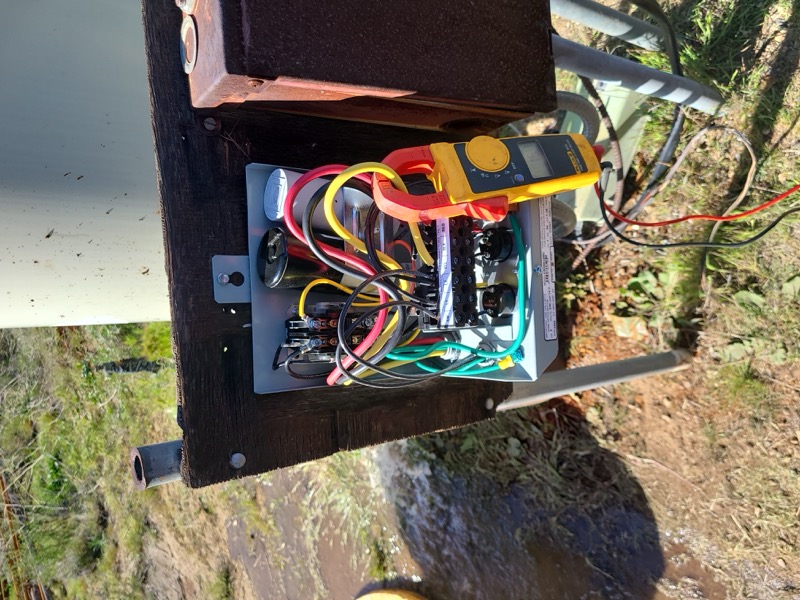
No Water From Well? Emergency Troubleshooting Guide
Step-by-step guide to diagnose and fix no water emergencies

Emergency Well No Water Checklist
Quick checklist for when your well stops producing water
No Water Emergency: What to Check First
Essential first steps when facing a water emergency