Southern California Well Service (760) 440-8520
Professional well pump service and maintenance technician

Professional Maintenance • Preventive Care • Local Experts

Well Pump Service Near Me

Professional Well Pump Maintenance & Inspection Services in Southern California

SC By SCWS Team | February 1, 2026 • 13 min read

Most property owners search for "well pump service near me" only after their pump fails—when they have no water and face emergency repair costs averaging $1,500-$3,000. But professional preventive maintenance costs just $200-400 annually and prevents 60-70% of pump failures. Regular well pump service extends equipment life by decades, maintains optimal performance, and gives you peace of mind that your water system won't fail when you need it most. This comprehensive guide explains what professional pump service includes, how often you need it, and how to find qualified local technicians who keep your water flowing reliably year after year.

💧 Schedule Your Annual Pump Service

Southern California Well Service provides professional well pump maintenance throughout San Diego and Riverside counties. Our experienced technicians keep your system running reliably with comprehensive annual inspections and preventive care.

Why Regular Well Pump Service Matters

Well pumps are your property's hardest-working equipment. Residential pumps cycle on and off thousands of times per year, agricultural pumps run for hours daily, and commercial systems operate continuously. This constant use creates wear that eventually leads to failure—unless you maintain the system properly.

Prevent Expensive Emergency Repairs

The most compelling reason for regular service is financial. Consider these typical costs:

  • Annual preventive service: $200-400
  • Emergency pump repair: $1,500-3,000 average
  • Complete pump replacement: $3,000-6,000+
  • Water damage from pump failure: $5,000-20,000+ (if failure floods basements, damages foundations, or kills livestock)

Regular maintenance catches small problems—worn pressure switches, failing control capacitors, incorrect pressure settings—before they cause complete system failure. A $35 pressure switch replacement during routine service prevents a $2,500 emergency repair when the pump burns out.

Extend Equipment Lifespan

Well pumps typically last 15-25 years with proper maintenance, but only 8-12 years when neglected. Regular service extends pump life by 30-50% through:

  • Maintaining correct operating pressures (reducing motor strain)
  • Catching electrical issues before they damage motors
  • Verifying proper pump cycling (preventing short-cycling wear)
  • Monitoring water levels (preventing dry-running damage)
  • Keeping pressure tanks properly charged (reducing pump cycles)

Maintain Water Quality

Pump system problems often manifest as water quality issues before complete failure. Regular service identifies:

  • Failing well screens allowing sediment intrusion
  • Corroded pipes contaminating water
  • Pressure tank bladder failures introducing bacteria
  • Declining well performance requiring deeper pump placement

Optimize Energy Efficiency

Poorly maintained pumps use 20-40% more electricity than properly serviced systems. Technicians optimize:

  • Pressure settings (reducing unnecessary pump operation)
  • Pressure tank performance (minimizing pump cycles)
  • Control system efficiency
  • Pump sizing relative to actual water needs

What's Included in Professional Pump Service

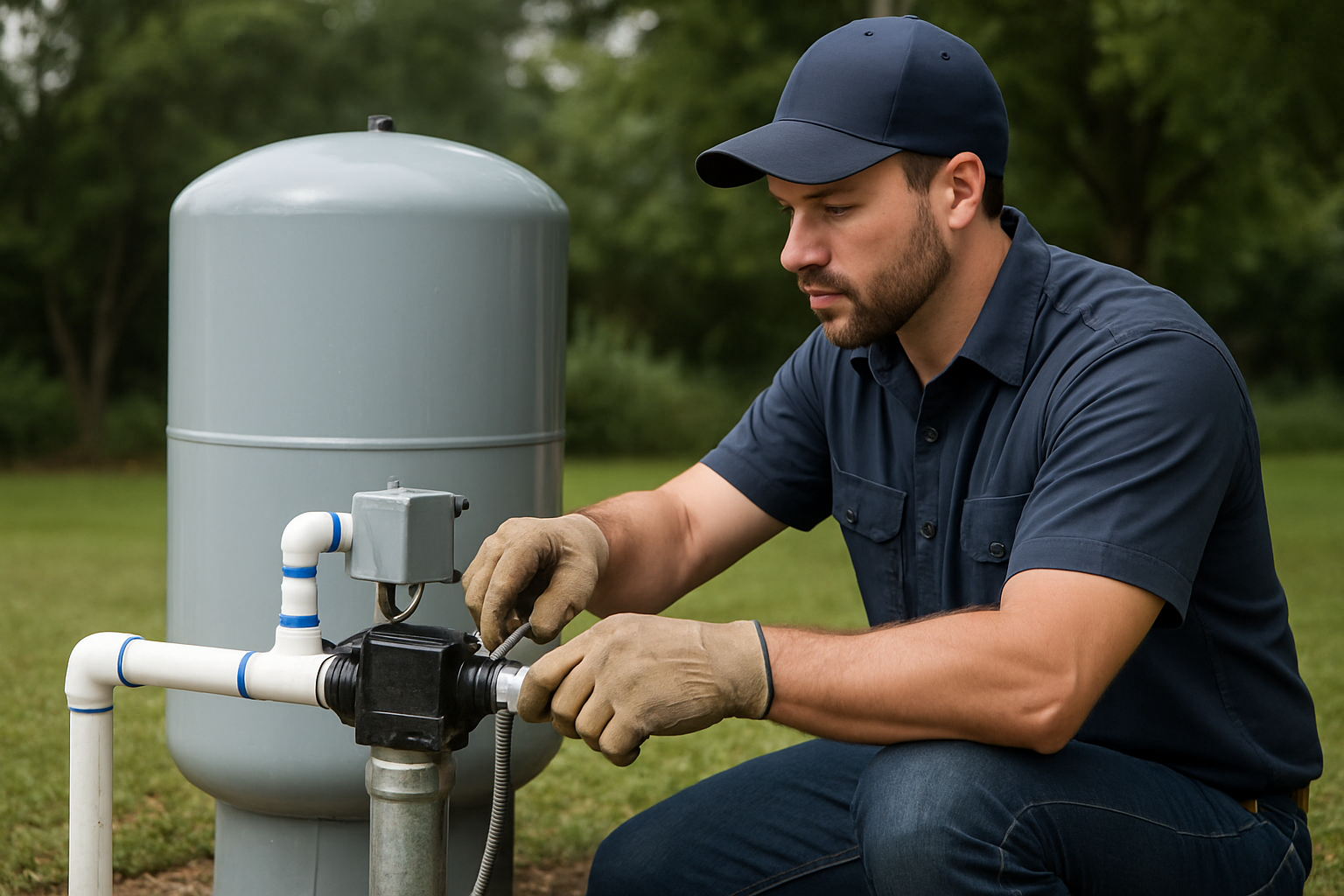
Comprehensive well pump service goes far beyond a quick visual inspection. Professional technicians perform systematic evaluation of your entire water system:

Pressure System Testing & Adjustment

Proper pressure is critical for pump longevity and performance. Technicians:

  • Test pressure at multiple points (wellhead, pressure tank, fixtures)
  • Verify pressure switch cut-in and cut-out settings (typically 40/60 PSI residential)
  • Adjust pressure as needed for optimal performance
  • Check for pressure fluctuations indicating system problems
  • Test pressure relief valves

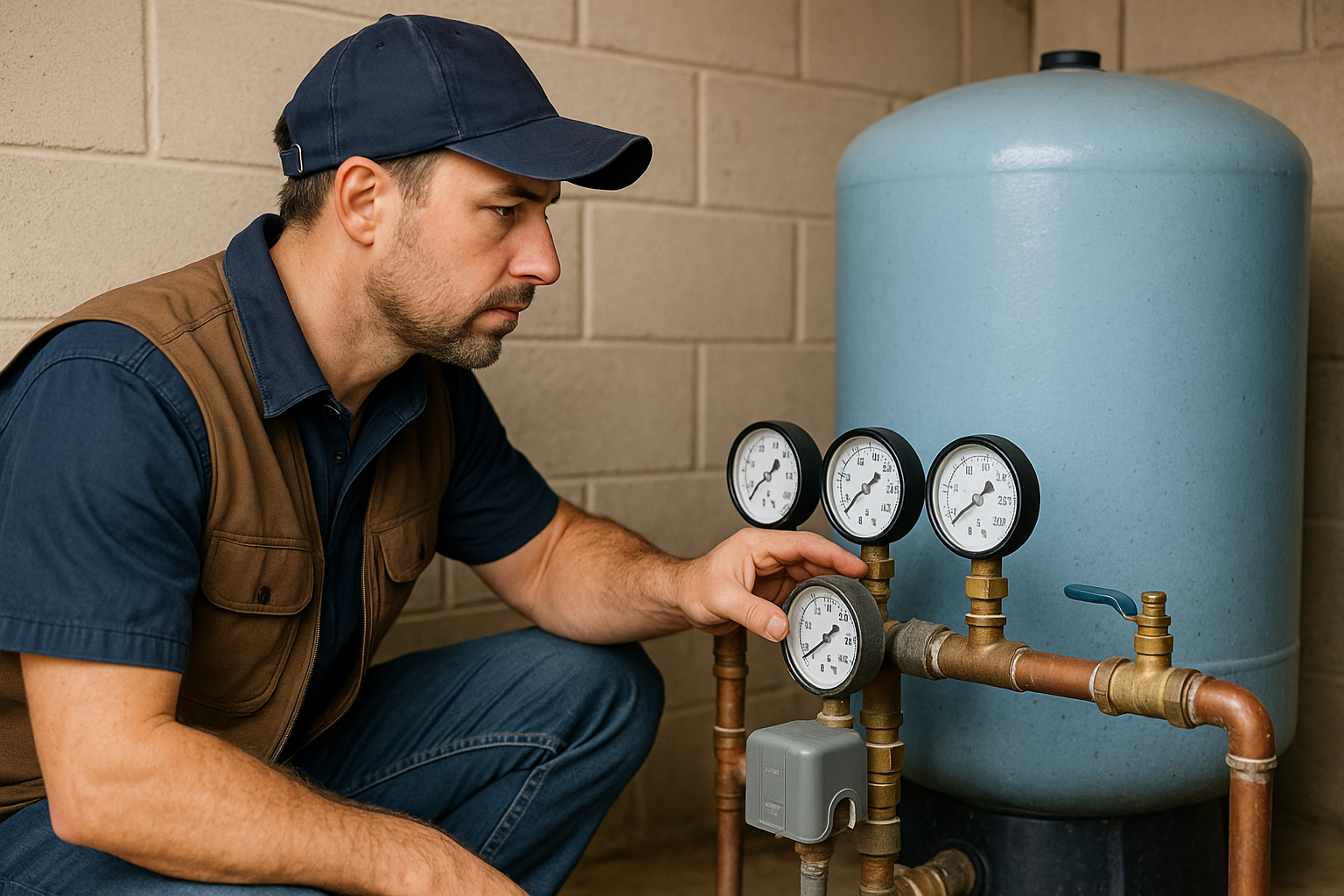
Pressure Tank Inspection & Service

Pressure tanks regulate system pressure and reduce pump cycling. Service includes:

  • Testing air charge with pressure gauge (should be 2 PSI below cut-in pressure)
  • Checking for waterlogged tanks (tapping test and pressure response)
  • Inspecting for rust, corrosion, or leaks
  • Testing bladder integrity in bladder-type tanks
  • Adding air charge if needed
  • Recommending replacement if tank is failing

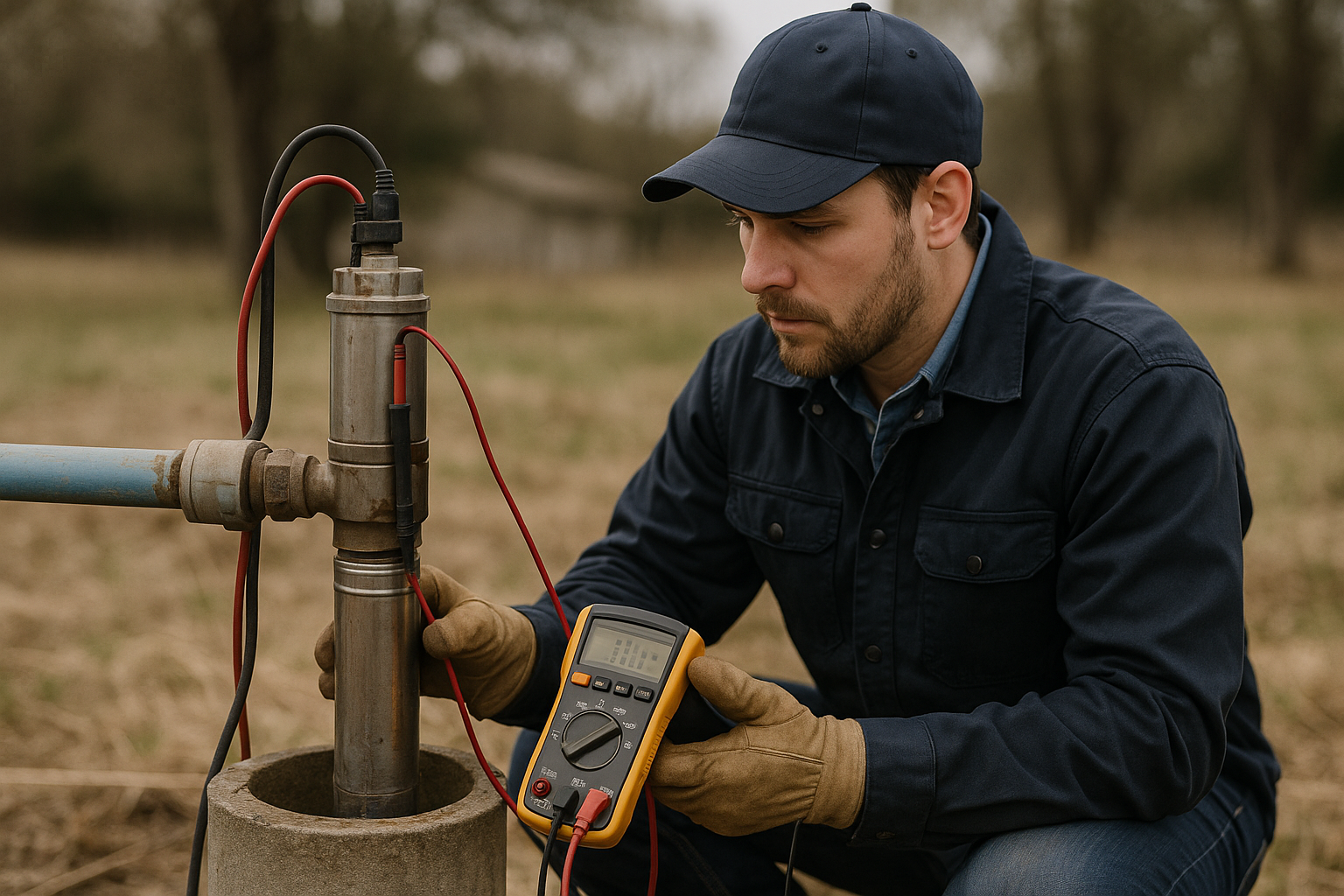
Electrical System Inspection

Most pump failures are electrical. Technicians inspect:

  • Control box or panel for proper operation
  • Starting capacitors (submersible pumps)
  • Pressure switch contacts and wiring
  • Circuit breaker sizing and condition
  • All electrical connections for tightness and corrosion
  • Voltage supply to pump
  • Grounding and safety systems

Pump Performance Testing

Understanding how your pump is performing helps predict potential problems:

  • Measure static water level (well water level when pump is off)
  • Measure pumping water level (level when pump is running)
  • Calculate drawdown (difference between static and pumping levels)
  • Test flow rate (gallons per minute)
  • Monitor pump cycle frequency
  • Listen for unusual sounds indicating mechanical wear
  • Check for vibration problems

Well System Inspection

The well itself requires periodic evaluation:

  • Inspect well cap/seal for damage or contamination risk
  • Check for surface water intrusion
  • Look for settling or movement around well casing
  • Verify proper venting
  • Check for casing damage or corrosion
  • Assess need for well rehabilitation if sediment is present

Water Quality Assessment

While not full laboratory testing, technicians check:

  • Visual water clarity
  • Presence of sediment or sand
  • Unusual odors or colors
  • Recommendations for laboratory testing if issues are noted

How Often Should You Service Your Well Pump?

Residential Wells: Annual Service

For typical residential well systems serving single-family homes, annual professional service is ideal. Schedule service in early spring or late fall before heavy water use seasons. Annual inspections are sufficient for:

  • Single-family residential use
  • Wells producing 5-15 gallons per minute
  • Systems less than 10 years old in good condition
  • Properties with municipal water backup

Agricultural/High-Use Systems: Semi-Annual Service

Heavy-use systems benefit from twice-yearly inspection:

  • Agricultural irrigation systems
  • Commercial operations (nurseries, farms, ranches)
  • Large properties with high-capacity wells (20+ GPM)
  • Systems running daily or for extended periods
  • Livestock operations where water is critical

Schedule service before and after peak irrigation season to catch problems before they impact crops or livestock.

Older Systems (15+ Years): Quarterly Monitoring

Pumps approaching or exceeding their typical 15-20 year lifespan warrant closer attention. Consider quarterly monitoring that includes:

  • Basic pressure checks
  • Listening for unusual sounds
  • Monitoring cycle frequency
  • Checking electrical components

After Repairs or Replacement: 30-Day Follow-Up

When pumps or major components are repaired or replaced, schedule a 30-day follow-up inspection to verify:

  • All systems are operating correctly
  • Pressure settings remain accurate
  • No leaks or connection issues have developed
  • Performance meets expectations

SCWS Annual Service Plans

We offer discounted annual service plans for regular customers. Scheduled maintenance includes complete system inspection, pressure optimization, electrical testing, and priority emergency service if problems develop.

  • Annual inspection with 20% discount
  • Reminder calls when service is due
  • Priority scheduling for plan members
  • 10% discount on any needed repairs
  • Complete service records maintained

Signs You Need Immediate Service (Don't Wait for Annual Inspection)

While annual maintenance is ideal, don't wait if you notice warning signs indicating developing problems:

⚠️ Schedule Service Immediately If You Notice:

  • ✓ Reduced water pressure or flow
  • ✓ Pump cycling more frequently than usual
  • ✓ Pump running continuously without shutting off
  • ✓ Unusual noises (grinding, squealing, banging)
  • ✓ Pressure fluctuations or surging
  • ✓ Dirty, cloudy, or sandy water
  • ✓ Circuit breakers tripping
  • ✓ Higher than normal electric bills
  • ✓ Pump hasn't been serviced in 2+ years

These symptoms indicate problems that will worsen if ignored. Early professional service prevents small issues from becoming expensive emergencies.

Finding Qualified Pump Service Technicians Near You

Verify Licensing & Insurance

In California, pump service work requires proper licensing. Look for companies with:

  • C-57 Water Well Contractor license or C-61/D-35 limited specialty contractor license
  • Current general liability and workers compensation insurance
  • Valid contractor bonds

Verify license status through the California Contractors State License Board.

Look for Established Local Companies

Choose companies with long-term local presence:

  • Years in business (10+ years indicates stability)
  • Verifiable local references
  • Knowledge of local geology and water conditions
  • Service area covering your location

Experience with Your Pump Brand/Type

Ensure technicians have experience servicing your specific pump type:

  • Submersible pump systems (most common in deep wells)
  • Jet pump systems (shallow wells or surface installations)
  • All major brands (Grundfos, Franklin Electric, Goulds, Berkeley, STA-RITE)
  • Variable speed systems and pressure controls

Service Plans & Customer Programs

Companies serious about preventive maintenance typically offer:

  • Annual service plans or maintenance contracts
  • Reminder systems to schedule regular service
  • Discounts for repeat customers
  • Priority emergency service for maintenance customers
  • Complete service record maintenance

Cost of Well Pump Service

Typical Service Costs

  • Basic annual inspection: $150-250
  • Comprehensive service with testing: $250-400
  • Agricultural/commercial system service: $350-600
  • Service plans (annual contracts): $200-350 with discounts

What Affects Service Cost?

  • System complexity: Simple residential systems cost less than sophisticated agricultural installations
  • Well depth: Deep wells require more time for water level testing
  • Location accessibility: Remote or difficult-access properties may have higher service costs
  • Additional testing: Water quality testing or specialized diagnostics cost extra
  • Needed adjustments: Simple pressure adjustments are included; component replacement costs extra

Return on Investment

Compare annual service costs to emergency repair savings:

  • Annual service: $250-400
  • Average emergency repair: $1,500-3,000
  • Complete pump replacement: $3,000-6,000

Preventing one emergency repair every 3-5 years through annual maintenance pays for itself many times over, not counting the value of never being without water.

DIY Maintenance vs Professional Service

What Property Owners Can Do

Between professional service visits, property owners can monitor:

  • Listen for unusual pump sounds monthly
  • Note any pressure changes or fluctuations
  • Monitor pump cycling frequency
  • Check for visible leaks around pressure tank and connections
  • Keep well area clear of debris and vegetation
  • Ensure well cap is secure and undamaged

What Requires Professional Service

Leave these tasks to qualified technicians:

  • Pressure system testing and adjustment
  • Electrical component inspection
  • Pressure tank air charge verification and adjustment
  • Water level measurement (requires specialized equipment)
  • Control box or switch replacement
  • Any work involving electrical systems or pressure vessels

Well pump systems operate at high pressure and voltage. Improper DIY work can cause electrocution, pressure vessel explosions, or equipment damage. Professional service is the safe choice.

Frequently Asked Questions

How often should well pumps be serviced?

We recommend annual professional service for residential systems. High-use systems (agriculture, commercial) benefit from semi-annual inspections. Regular maintenance prevents 60-70% of pump failures and extends equipment life significantly.

What's included in well pump service?

Complete service includes pressure system testing and adjustment, electrical inspection, pressure tank verification, water level measurement, flow rate testing, control panel inspection, and recommendations for any needed repairs.

How much does well pump service cost?

Annual maintenance typically costs $200-400 depending on system complexity. This investment prevents emergency repairs averaging $1,500-3,000. Many companies offer service plans with discounted rates.

Can pump service prevent failures?

Yes. Regular maintenance catches developing problems early—worn switches, failing tanks, incorrect pressures, electrical issues—before they cause complete failure. Preventive service typically extends pump life by 30-50%.

What are signs my pump needs service?

Schedule service if you notice reduced pressure, frequent cycling, unusual sounds, pressure fluctuations, or if it's been over a year since last professional inspection. Don't wait for complete failure.

Do you offer service plans for regular maintenance?

Yes. We offer annual service plans with discounted rates, reminder scheduling, priority emergency service, and complete service record maintenance. Call (760) 440-8520 for details.

Well Pump Service Areas

Related Articles