SC By SCWS Team | February 4, 2026 | 13 min read
Well Runs Out of Water Every Day?
Running out of water mid-shower or watching your pressure disappear every evening is exhausting and frustrating. If your well runs dry on a daily basis but recovers overnight, you're dealing with a classic low-yield well situation. The good news? This is a solvable problem. This guide explains why it happens and the practical solutions that can end your daily water struggles.
🔍 Understanding the Pattern
If your well runs dry during use but recovers after resting, your well does produce water—just not fast enough to keep up with peak demand. The solution is bridging the gap between what your well produces and what your household needs.
Why Your Well Runs Dry Every Day
When you turn on a faucet, your pump pulls water from the well. If the pump extracts water faster than the aquifer can replace it, the water level drops. Eventually, it drops below your pump's intake—and you get air instead of water.
The Math Behind Daily Depletion
Example scenario:
- Your well produces 1 GPM (gallon per minute) = 60 gallons/hour = 1,440 gallons/day
- Your household uses 150 gallons in the morning (showers, laundry, dishes)
- Your pump delivers 8 GPM—it can drain the available water in minutes
- After emptying, the well needs hours to recover those 150 gallons at 1 GPM
This is why your well seems fine in the early morning (it recovered overnight) but fails by mid-day.
Common Causes of Low Well Yield
🌍 Geology
Some areas simply have less productive aquifers. Tight rock formations, thin water-bearing zones, or limited fracture systems restrict water flow to wells.
☀️ Drought Conditions
Extended dry periods lower the water table. A well that once produced adequately may become marginal when groundwater levels drop.
👨👩👧👦 Increased Usage
Family growth, new irrigation, home additions, or lifestyle changes can push demand beyond the well's capacity.
🏠 Neighboring Wells
New wells in your area can compete for the same aquifer, reducing available water for everyone.
📏 Pump Too Shallow
If your pump is set higher than necessary, available water below it goes unused while the pump sucks air.
🚧 Well Deterioration
Mineral buildup, bacterial slime, or sediment infiltration can reduce a well's productivity over time.
Assessing Your Situation
Before choosing a solution, you need to understand your specific situation:
Get a Yield Test
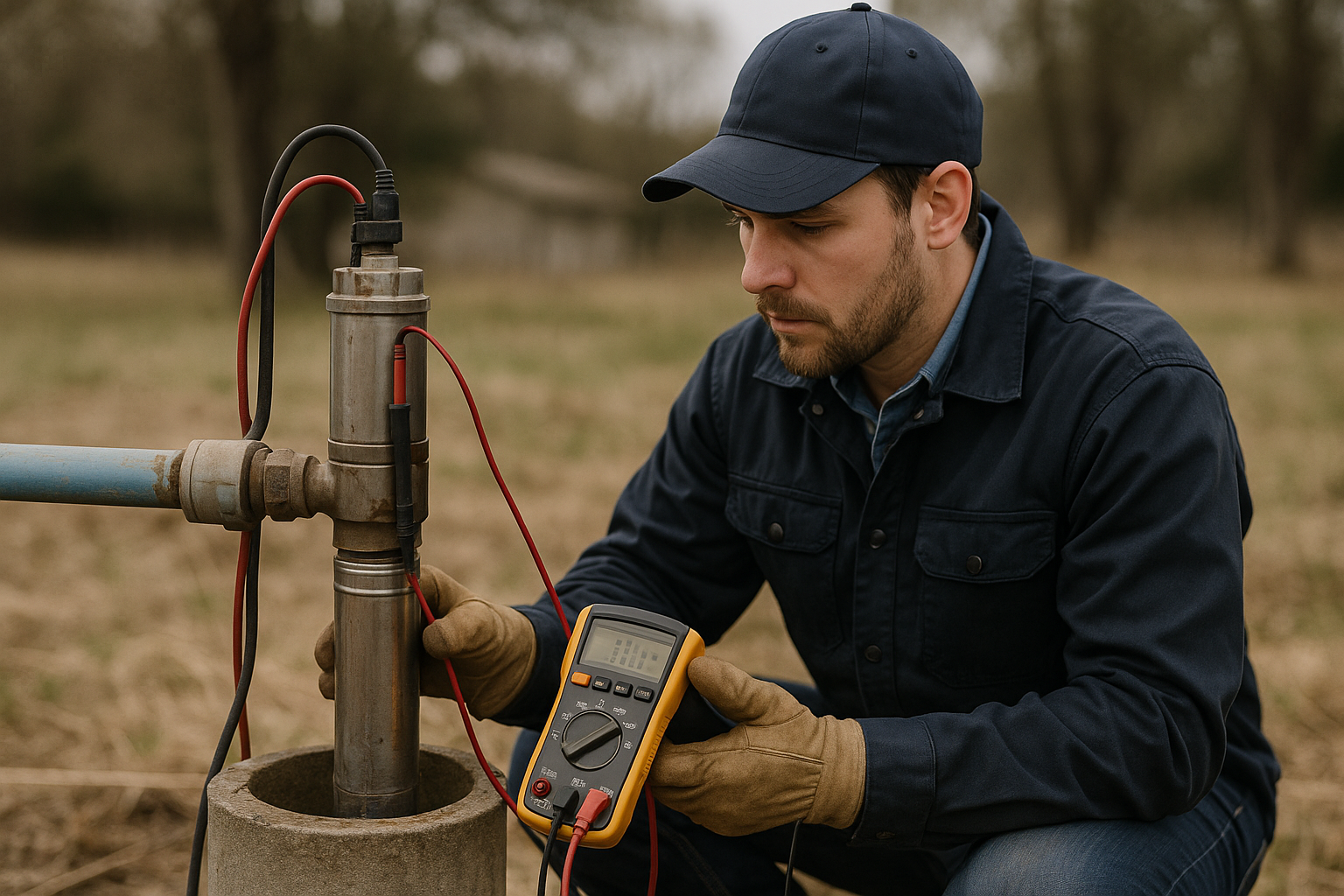
A professional yield test measures exactly how much water your well produces. This is essential data for any solution.
What a Yield Test Measures
- Static water level: Depth to water when pump hasn't run
- Pumping water level: Depth to water during pumping
- Drawdown: How much the water level drops during pumping
- Recovery rate: How quickly water level rises after pumping stops
- Sustainable yield: The rate water can be continuously extracted
Cost: $150-$400 for a professional yield test
Track Your Usage Patterns
Document when your well runs dry and your water usage habits:
- What time does the well typically run dry?
- How long until it recovers?
- What activities precede running dry? (showers, laundry, irrigation)
- Does it happen daily, or only on heavy-use days?
- Has it gotten worse over time?
This information helps determine the size and type of solution needed.
Solutions for Daily Water Shortages
From least to most expensive, here are your options:
1. Reduce Water Usage
Sometimes the simplest solution is reducing demand to match supply:
🚿 Low-Flow Fixtures
1.5 GPM showerheads, 1.0 GPM faucet aerators, WaterSense toilets
⏰ Stagger Usage
Spread showers throughout the day; don't run laundry and dishwasher together
🌱 Reduce Irrigation
Switch to drip irrigation, drought-tolerant landscaping, or rainwater for gardens
🔧 Fix Leaks
Even small leaks waste water and contribute to well depletion
Cost: $0-$500 | Effectiveness: Can reduce usage 20-40%
2. Install a Cycle Timer
A cycle timer limits how long your pump runs before forcing a rest period, allowing the well to recover.
How Cycle Timers Work
- Example setting: Pump runs maximum 15 minutes, then rests 30 minutes
- Prevents pumping the well completely dry
- Protects pump from running dry (major damage cause)
- Works best combined with pressure tank
Cost: $100-$300 installed
Limitation: Doesn't increase water availability—just manages what you have more sustainably.
3. Lower the Pump
If your well has unused depth below the current pump setting, lowering the pump accesses more of the available water column.
📏 When Lowering Helps
- • Your well is 400 feet deep but pump is at 200 feet
- • Water quality is acceptable at greater depth
- • Well casing extends below current pump depth
Cost: $500-$1,500 (requires pulling pump, adding pipe/wire)
4. Install a Storage Tank System (Best Solution)
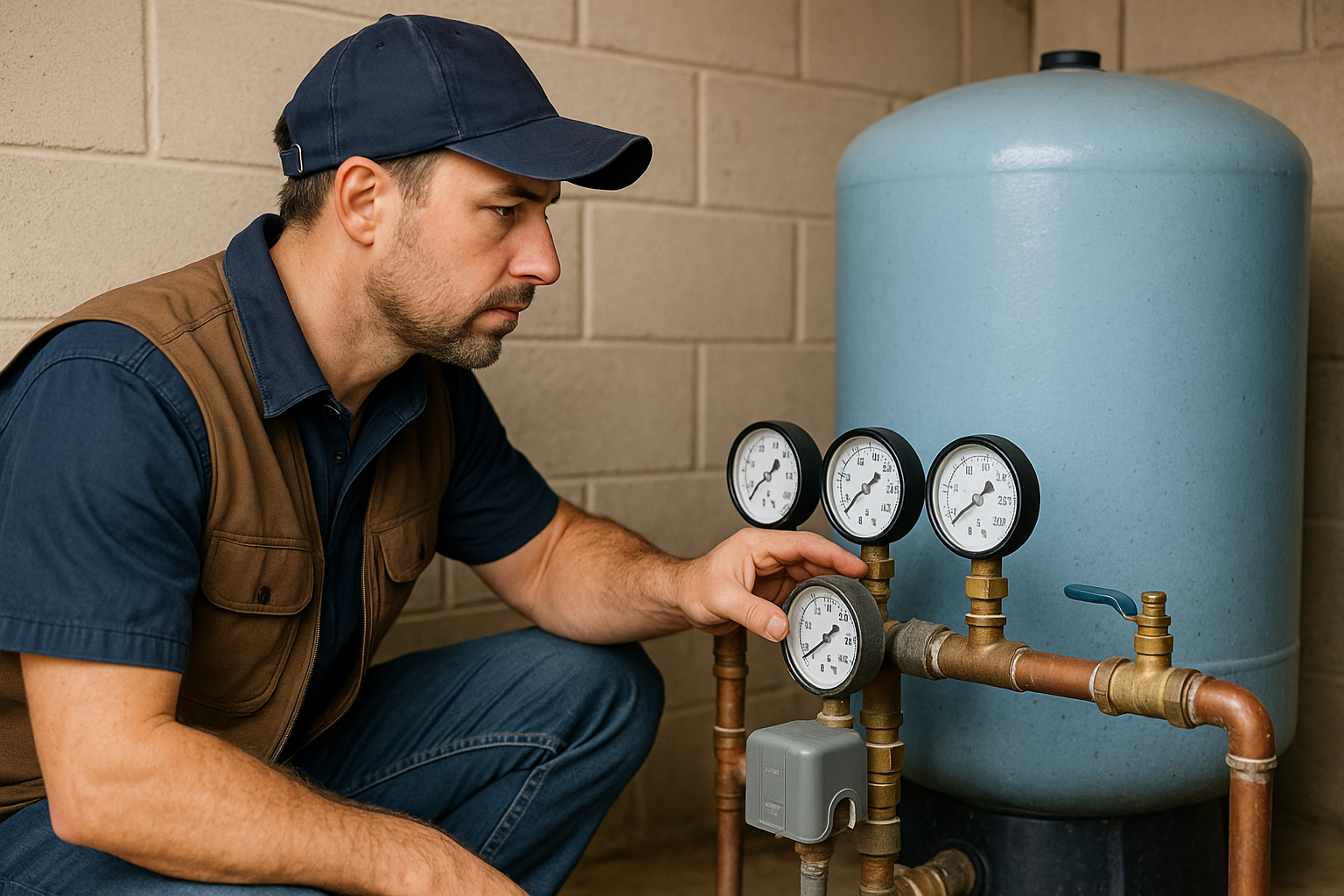
For most low-yield well situations, a storage tank is the most effective solution. It allows your well to fill a large tank slowly over time, providing ample reserve for peak demand.
🏗️ How Storage Tank Systems Work
- Well pump fills storage tank: Runs at low rate (matching well yield) to fill tank
- Tank accumulates water: 1 GPM × 24 hours = 1,440 gallons of reserve
- Booster pump delivers to house: Separate pump delivers from tank at high pressure/flow
- Result: House has abundant water regardless of well's low yield
| Well Yield | Daily Production | Recommended Tank Size | Morning Reserve* |
|---|---|---|---|
| 0.5 GPM | 720 gal/day | 1,500-2,500 gal | ~480 gal |
| 1 GPM | 1,440 gal/day | 2,500-5,000 gal | ~960 gal |
| 2 GPM | 2,880 gal/day | 2,500-5,000 gal | ~1,920 gal |
| 3 GPM | 4,320 gal/day | 2,500-5,000 gal | ~2,880 gal |
*Assuming 16 hours of overnight recovery (6pm-10am)
System cost: $3,000-$8,000 complete (tank, booster pump, controls, plumbing)
5. Well Rehabilitation
If your well's yield has declined over time, rehabilitation may restore some capacity:
- Chemical treatment: Dissolves mineral scale and bacterial buildup
- Mechanical cleaning: Brushing and surging to remove obstructions
- Air lift development: High-velocity air flow clears fine sediment
Cost: $1,000-$3,000 | Success rate: Variable—works best on wells that have declined from previous higher yields
6. Hydrofracturing (Bedrock Wells)
For wells in fractured rock (granite, gneiss, metamorphic rock), hydrofracturing can improve yield by opening and connecting water-bearing fractures.
Hydrofracturing Process
- Packers isolate a section of the well
- High-pressure water (500-3,000 PSI) is pumped into the formation
- Pressure opens existing fractures and may create new connections
- Water yield is tested after treatment
Cost: $1,500-$3,500
Success rate: ~70-80% see improvement in suitable geology
7. Deepen the Well
If deeper water-bearing zones exist, deepening your well can access additional water:
Deepening Considerations
- Only viable if well logs show potential water at greater depth
- Existing casing must be in good condition
- Water quality may differ at greater depths
- Not all wells can be deepened (depends on construction)
Cost: $50-$100 per foot plus casing, pump modifications
8. Drill a Second Well
Sometimes the best solution is a new well, either to supplement or replace the existing one.
💡 When to Consider a New Well
- • Current well is very old or in poor condition
- • Location or geology suggests better water elsewhere on property
- • Combined yield of two wells would be adequate
- • Hydrogeologic assessment indicates good potential
Cost: $15,000-$40,000+ (varies greatly by depth and conditions)
Comparing Your Options
| Solution | Cost | Effectiveness | Best For |
|---|---|---|---|
| Conservation | $0-$500 | ⭐⭐ | Minor shortages, first step |
| Cycle timer | $100-$300 | ⭐⭐ | Pump protection, minor issues |
| Lower pump | $500-$1,500 | ⭐⭐⭐ | Wells with unused depth |
| Storage tank | $3,000-$8,000 | ⭐⭐⭐⭐⭐ | Most low-yield situations |
| Rehabilitation | $1,000-$3,000 | ⭐⭐⭐ | Declined productivity |
| Hydrofracturing | $1,500-$3,500 | ⭐⭐⭐ | Bedrock/granite wells |
| Deepen well | $5,000-$15,000 | ⭐⭐⭐⭐ | Deeper water confirmed |
| New well | $15,000-$40,000+ | ⭐⭐⭐⭐⭐ | When other options fail |
Protecting Your Pump
Running a pump dry causes serious damage. While solving the root cause, protect your equipment:
⚠️ Signs of Running Dry
- Air spurting from faucets
- Pump runs but no water comes out
- Pressure gauge drops to zero
- Pump motor gets unusually hot
✅ Protection Measures
- Install low-water cutoff switch
- Use pump protection relay
- Set up cycle timer
- Monitor and limit usage manually
Frequently Asked Questions
Why does my well run out of water every day?
Your well runs dry daily because your pump is extracting water faster than the aquifer can replenish it. This happens when you have a low-yield well (produces less water than household demand), drought conditions have lowered the water table, increased usage exceeds the well's capacity, or the pump is set too close to the bottom. The well can recover when resting but empties again during peak use.
How do I know my well's yield?
Well yield is measured in gallons per minute (GPM) through a yield test. A professional draws water at a measured rate while monitoring the water level. The sustainable yield is the rate at which water can be drawn without depleting the well. Most residential wells should yield at least 3-5 GPM; anything under 3 GPM is considered low-yield.
Can I fix a low-yield well without drilling a new one?
Yes, several solutions exist: Install a storage tank to accumulate water slowly over time. Add a cycle timer to limit pump runtime. Lower the pump if your well has unused depth. Try hydrofracturing (for bedrock wells) to open new water channels. Deepen the existing well to access more water. Reduce household water usage. A professional assessment determines which options suit your situation.
How big of a storage tank do I need for a low-yield well?
Tank size depends on your daily water usage and well recovery rate. A general formula: If your well produces 1 GPM continuously (1,440 gallons/day) but you use 200 gallons during peak hours, you need enough storage to bridge the gap. Most low-yield wells benefit from 1,500-5,000 gallon tanks. A 1 GPM well filling a 2,500 gallon tank overnight provides substantial morning reserve.
Will my well run out of water permanently?
Most wells that run dry daily will recover—that's the nature of temporary depletion vs. permanent aquifer issues. However, if you consistently overpump, you risk pump damage and may lower the water table in your area over time. Extended droughts can cause longer-term issues. Regular monitoring and sustainable pumping practices help ensure long-term well viability.
How much does it cost to fix a well that runs out of water daily?
Costs depend on the solution: Storage tank systems run $3,000-$8,000 (tank, pump, controls). Lowering the pump costs $500-$1,500 if depth allows. Hydrofracturing is $1,500-$3,500 with variable success. Well deepening costs $50-$100/foot plus casing. A new well costs $15,000-$40,000+. Start with the least expensive options—sometimes a simple storage tank solves daily shortages affordably.
Ready to Solve Your Water Shortage?
Southern California Well Service specializes in low-yield well solutions throughout San Diego and Riverside Counties. We'll assess your well's production, recommend the most cost-effective solution, and install systems that end daily water struggles for good.