
Complete Well Services for Anza, CA Desert Properties
Well Service Anza CA — Expert Desert Well Solutions Since 1970
Anza sits at 3,900 feet elevation in the high desert of western Riverside County, where Terwilliger Road winds through granite hills and sage-covered valleys. For properties in Anza, Aguanga, and the surrounding rural areas, private wells are essential — and they require expertise in deep desert well drilling and specialized pump systems.
Southern California Well Service has been drilling and servicing wells in Anza for decades. We're not an out-of-area contractor trying to figure out the local geology — we have an office right here in Anza at 57174 US Highway 79. Our technicians know the area's unique challenges: deep water tables (400-800 feet), fractured granite bedrock, seasonal water level swings, and summer monsoon lightning strikes that can fry well equipment.
Why Anza Wells Are Different
Wells in Anza face challenges that don't exist in other parts of Southern California:
- Extreme depth — Most productive wells in Anza are 400-800 feet deep, compared to 200-400 feet in coastal areas. Deeper wells cost more to drill and require more powerful pumps.
- Fractured granite bedrock — The Peninsular Ranges batholith (massive granite formation) underlies most of Anza. Water flows through cracks and fissures rather than porous aquifers, making well placement more technical.
- Seasonal water table fluctuations — Desert wells can see 50-100 foot water level drops during multi-year droughts. Wells must be drilled deep enough to maintain production during these cycles.
- Hard water — Granite dissolution creates high mineral content (calcium, magnesium) that accelerates pump wear and creates scale buildup.
- Lightning exposure — Summer monsoons bring intense electrical storms. Lightning strikes can destroy well pumps, control boxes, and pressure switches if not properly protected.
- Remote locations — Many Anza properties are far from power lines, requiring solar pump systems or diesel generators. Mobilizing drilling rigs to remote sites adds complexity.
A well company that understands these conditions will save you money and headaches long-term. That's why Anza property owners trust local expertise over general contractors or out-of-area drillers.
Our Complete Well Services for Anza
We handle every aspect of private well systems — from new drilling to emergency repair to long-term maintenance. Here's what we offer:
New Well Drilling — Desert-Specialized Equipment
Drilling a productive well in Anza requires specialized equipment and experience. We use drilling rigs capable of penetrating 800+ feet into hard granite bedrock. Our geologists review nearby well logs, elevation maps, and fracture patterns before drilling to maximize your chances of hitting good water.
What's included in our Anza drilling service:
- Pre-drill geological assessment (reviewing Riverside County well log database, geology maps, fracture analysis)
- Riverside County Environmental Health well permit application and approval
- Deep desert drilling (typically 400-800 feet) with equipment rated for fractured granite
- Well development and flow testing to maximize yield
- Submersible pump sizing based on actual depth and yield (we don't over-pump or under-pump your well)
- Heavy-duty drop pipe (1" or 1.25" stainless steel or schedule 80 PVC rated for deep wells)
- Pressure tank, control box, lightning surge protection, electrical connections
- Final county inspection and approval
Typical well drilling costs in Anza range from $35,000 to $75,000 for a complete turnkey installation depending on depth, rock hardness, and site access. Desert wells cost more than coastal wells because they're deeper and require more powerful equipment. We provide detailed written estimates before starting work.
Well Pump Repair and Replacement
Deep well pumps work harder and wear faster than shallow well pumps. In Anza, we commonly see pump failures at 8-12 years due to hard water mineral buildup, electrical issues from voltage fluctuations, and mechanical wear from constant cycling.
Common pump problems in Anza wells:
- Submersible pump motor burnout — Hard water mineral scale reduces motor cooling efficiency, causing overheating. Deep wells exacerbate this because pumps work harder to lift water 500-800 feet.
- Lightning damage — Summer monsoons can send surges down the well cabling and destroy pump motors, control boxes, and capacitors. Lightning arrestors are essential in Anza.
- Short cycling from waterlogged tanks — Pressure tank bladders fail every 7-12 years, causing pumps to run constantly and burn out prematurely.
- Low pressure or no water — Failed capacitors, stuck check valves, broken drop pipe, or well yield issues.
- Sand and sediment damage — Some Anza wells produce from decomposed granite zones that can pump fine sand, which destroys pump impellers over time.
We stock replacement pumps for deep desert wells (1 HP to 2 HP submersible pumps rated for 500-800 foot depths). For deep well pump replacement, we pull the pump, inspect the condition of the drop pipe and cabling, replace worn components, and install a properly sized unit. Deep well pulls require specialized equipment — not every well company can handle 700-foot pump pulls.
Pressure Tank Replacement
Pressure tanks in Anza face harsh conditions: high heat in summer, temperature swings, and constant cycling. Bladders typically fail at 8-12 years. When a tank waterlogs, your pump short-cycles (runs every few minutes) which burns it out fast.
We replace failed tanks with properly sized units (typically 60-120 gallons for desert wells to reduce pump cycling) and ensure correct air pre-charge. For off-grid properties with limited power, larger tanks reduce pump runtime and conserve battery/solar capacity.
Water Quality Testing and Treatment
Anza well water quality varies by location and depth. Common issues include:
- Hard water — High calcium and magnesium from granite bedrock. We install water softeners sized for desert well conditions.
- Iron and manganese — Dissolved iron oxidizes after pumping, leaving orange/brown stains on fixtures and laundry. Treatment requires iron filtration or oxidation systems.
- Sulfur smell (hydrogen sulfide) — Some deeper wells produce water with rotten egg odor. We install aeration systems or catalytic carbon filters.
- Arsenic — Naturally occurring in some granite aquifers. Requires reverse osmosis treatment for drinking water if levels exceed EPA limits (10 ppb).
- Nitrates — From historical livestock/agricultural use. Treatment requires reverse osmosis or ion exchange.
- Bacteria — Coliform or E. coli contamination. Treatment requires shock chlorination, UV sterilization, or chlorine injection systems.
We coordinate with certified water testing labs (Riverside County Environmental Health approved) and install treatment systems that actually work for Anza's water chemistry.
Lightning Protection and Surge Suppression
Summer monsoons bring intense electrical storms to the Anza high desert. Lightning strikes can destroy well equipment in seconds. We install lightning arrestors and surge suppressors on well control boxes to protect expensive submersible pumps and electronics.
A $300 surge protection system can save you from a $5,000-8,000 emergency pump replacement after a lightning strike. It's cheap insurance for desert wells.
Solar Well Pump Systems
Many Anza properties are off-grid or have unreliable power. We design and install solar-powered well pump systems for remote locations:
- Solar panels sized for your well depth and daily water use
- Battery banks for night/cloudy day operation (if desired)
- DC submersible pumps or solar-powered inverter systems for AC pumps
- Storage tanks to buffer water supply during low-sun periods
- Backup generator integration for extended cloudy weather
Solar well systems cost more upfront ($10,000-25,000) but eliminate monthly power bills and provide water independence for off-grid living.
Emergency Service — Same-Day Response
When your well stops producing water in the desert, it's a true emergency. We prioritize emergency calls in Anza and aim for same-day response. Our service trucks are stocked with common replacement parts (pumps, tanks, control boxes, pressure switches, capacitors, lightning arrestors) so we can often complete repairs the same day.
Emergency service is available 7 days a week. Call (760) 440-8520 — a live person answers 24/7 for true emergencies.
Well Inspection and Maintenance
Regular maintenance prevents emergency breakdowns and extends equipment life. We recommend annual well inspections for Anza properties, especially before summer when water demand peaks and electrical storms threaten equipment.
What we check during a well inspection:
- Pump performance — flow rate (GPM), pressure, motor amps, voltage
- Pressure tank condition — air pre-charge, bladder integrity
- Electrical system — control box, wiring, pressure switch, capacitor, ground rod
- Lightning protection — surge arrestor condition, grounding system
- Well yield — static water level, pumping level, recovery rate (critical for drought monitoring)
- Water quality — visual inspection, odor, sediment, recommended lab testing interval
- Wellhead condition — sanitary seal, casing integrity, vermin protection
Annual inspections typically cost $200-300 and can catch small problems before they become expensive emergencies.
Understanding Anza's Desert Geology and Groundwater
Anza's location in the Peninsular Ranges creates a unique hydrogeological setting. Groundwater comes primarily from:
- Fractured granite bedrock — The Peninsular Ranges batholith (massive granite pluton) underlies most of Anza. Water flows through cracks, fissures, and fault zones rather than porous aquifers.
- Decomposed granite zones — Weathered granite (DG) can hold some groundwater in the upper 100-300 feet, though yields are typically low.
- Mountain runoff recharge — Winter rains and snowmelt from the Santa Rosa and San Jacinto mountains percolate into fractured bedrock, recharging the deep aquifer slowly over time.
- Alluvial fan deposits — Terwilliger Valley and other drainages have layers of alluvial material (sand, gravel, cobbles) that can store water above bedrock.
Well depths in Anza vary by location and elevation:
- Terwilliger Valley floor — 350-550 feet (alluvial deposits over bedrock)
- Hillside ranch properties — 500-800 feet (fractured granite)
- Higher elevation (4,000+ feet) — 600-900+ feet (deep fractured bedrock)
Seasonal water level fluctuations are significant in desert wells. After wet winters, water tables may rise 30-50 feet. During multi-year droughts (like 2012-2017 or 2020-2023), water levels can drop 100+ feet. Wells drilled to adequate depth (at least 150-200 feet below static water level) maintain production through these cycles.
Common Well Problems We Fix in Anza
Based on hundreds of service calls in Anza over the years, here are the most frequent well issues we encounter:
1. Pump Failures from Hard Water and Depth
Anza's well water is hard (high calcium and magnesium from granite bedrock) and wells are deep (400-800 feet). This combination accelerates submersible pump wear. Mineral scale builds up inside pump motors, reducing cooling efficiency. Deep wells require higher horsepower pumps that work harder and generate more heat. Typical pump lifespan is 8-12 years in Anza without water softening, compared to 12-18 years with softening.
Solution: Replace the failed pump with a properly sized unit (1-2 HP for deep desert wells) and consider installing a whole-house water softener to extend the new pump's lifespan.
2. Lightning Damage During Summer Monsoons
Summer monsoon storms bring intense lightning to the Anza high desert. Lightning can strike near the wellhead and send massive voltage surges down the pump cable, destroying the submersible motor, control box, pressure switch, and capacitors instantly. We see dozens of lightning-damaged wells every summer in Anza.
Solution: Install lightning arrestors on the control box and ensure proper grounding. Replace damaged components (control box, pressure switch, capacitor) and if the pump motor is damaged, pull and replace the submersible pump. A $300 surge protection system prevents $5,000-8,000 emergency replacements.
3. Low Yield During Multi-Year Droughts
Desert groundwater is stressed during multi-year droughts. Water tables can drop 50-100+ feet below normal levels. Wells that were drilled to marginal depths (only 100-150 feet below static water level) can experience reduced flow or run dry temporarily during severe drought cycles.
Solution: For wells with adequate depth but seasonal yield issues, we can lower the pump to a deeper setting (if the well is deep enough and water level allows). For wells that are truly too shallow, the permanent solution is to deepen the existing well (if geology allows) or drill a new, deeper well. Wells in Anza should be drilled at least 200 feet below static water level to handle drought cycles.
4. Waterlogged Pressure Tanks Causing Short Cycling
Pressure tank bladders fail every 7-12 years on average. When the bladder ruptures or the air pre-charge leaks out, the tank fills entirely with water and loses its ability to buffer pressure. The pump runs every time you open a faucet, even for a few seconds. In deep well systems, this causes the pump to cycle dozens or hundreds of times per day, burning it out in months instead of years.
Solution: Replace the failed pressure tank with a properly sized unit (60-120 gallons for deep desert wells to reduce cycling). Check air pre-charge (should be 2 PSI below pump cut-in pressure, typically 38 PSI for 40/60 switches). Larger tanks also help conserve energy in solar/off-grid systems.
5. Sand and Sediment Production
Some Anza wells produce from decomposed granite zones that pump fine sand along with water. Sand destroys pump impellers, clogs pressure switches, damages faucet cartridges, and fills hot water heaters. It's a sign the well screen is damaged, the formation is unstable, or the pump is set too low near the bottom of the well.
Solution: Install a sediment filter system (spin-down filter + cartridge filter in series) to protect fixtures and appliances. If sand production is severe, the pump may need to be raised higher in the well, or the well may need to be redeveloped or re-screened. In extreme cases, a new well may be required.
Service Area — Anza, Aguanga, Terwilliger, and Rural Riverside County
We serve Anza, Aguanga, Terwilliger, Sage, and all surrounding rural areas of western Riverside County. Our Anza office at 57174 US Highway 79 allows us to respond quickly to both scheduled and emergency calls. We also serve neighboring areas including Hemet, Winchester, Murrieta, Temecula, Fallbrook, Valley Center, and Ramona.
We specialize in remote ranch properties, off-grid homesteads, and challenging desert drilling conditions that many well companies won't attempt.
What Sets Southern California Well Service Apart
We're not the only well company serving Anza, but we're the one with a local office and decades of desert well experience. Here's why property owners trust us:
- Local office in Anza — 57174 US Highway 79, not an out-of-area contractor traveling 2+ hours to reach you
- Licensed C-57 Well Contractor — California Contractor License #1086994 (C-57 Water Well Drilling), properly licensed and insured
- Deep desert well expertise — We have the equipment and experience to drill 800+ feet into fractured granite
- Full-service well company — We drill, repair, maintain, and service wells — not just one specialty
- Honest assessments — We don't upsell unnecessary equipment or exaggerate problems. You get a straight answer about what's wrong and what it will cost to fix.
- Transparent pricing — Written estimates before work begins, no surprise charges
- 4.9★ Google rating — Hundreds of real reviews from satisfied customers across Southern California
- Same-day emergency service — When you have no water in the desert, we respond fast
- Solar and off-grid expertise — We design solar pump systems for remote properties
Typical Well Service Costs in Anza
Desert well service pricing reflects the challenges of deep wells and remote locations:
- New well drilling (turnkey) — $35,000 to $75,000 depending on depth (400-800 feet), geology, site access, and pump/tank sizing
- Deep submersible pump replacement — $4,500 to $9,500 depending on depth (500-800 foot pulls require specialized equipment) and pump horsepower (1-2 HP)
- Pressure tank replacement — $800 to $2,000 depending on tank size (60-120 gallons)
- Control box replacement with surge protection — $600 to $1,200 including lightning arrestor
- Well inspection and maintenance — $200 to $350 for annual service
- Water treatment system installation — $1,800 to $8,000 depending on system type (softener, iron filter, UV sterilizer, arsenic removal, etc.)
- Solar well pump system — $10,000 to $25,000 depending on well depth, daily water use, and battery storage
- Emergency service call — $150 diagnostic fee (applied to repair cost if you proceed)
We provide detailed written estimates before starting work. No surprises, no hidden fees.
Frequently Asked Questions — Well Service in Anza
How deep are wells in Anza, CA?
Wells in Anza typically range from 400 to 800 feet deep due to desert geology and elevation (3,900 feet above sea level). Terwilliger Valley properties may find water at 350-500 feet in alluvial deposits over bedrock. Hillside ranch properties often require drilling 500-800+ feet into fractured granite and metamorphic rock. Depth depends on local geology, elevation, and proximity to groundwater recharge areas (mountain runoff from the Santa Rosa and San Jacinto ranges).
How much does it cost to drill a well in Anza?
Well drilling in Anza typically costs between $35,000 and $75,000 for a complete turnkey installation including pump and pressure system. Deep desert wells cost more than coastal wells because they require deeper drilling (400-800 feet vs 200-400 feet), more powerful pumps (1-2 HP vs 0.5-1 HP), and heavier equipment. Remote locations may have additional mobilization costs. We provide detailed written estimates after a site assessment.
Do you handle Riverside County well permits?
Yes, we handle all Riverside County Environmental Health well permits as part of our turnkey drilling service. This includes the permit application, required inspections during drilling (typically 3-4 inspections: start, casing, grouting, completion), and final approval documentation. Riverside County has specific requirements for well construction, setbacks from septic systems, and sanitary seals. We know the regulations and ensure your well meets all code requirements.
What water quality issues are common in Anza wells?
Anza wells commonly encounter hard water from mineral content in granite bedrock (high calcium and magnesium), occasional iron and manganese staining (dissolved iron that oxidizes after pumping), and sometimes elevated arsenic in certain granite aquifers. Deeper wells (600+ feet) occasionally produce water with sulfur smell (hydrogen sulfide). We recommend water quality testing every 2-3 years for drinking water wells to monitor for bacteria, nitrates, arsenic, and other potential contaminants. We can coordinate lab testing and install treatment systems if needed.
How long does a well pump last in Anza?
Well pumps in Anza typically last 8-12 years, shorter than coastal wells due to hard water mineral buildup, deep well depths that work pumps harder, and lightning exposure during summer monsoons. Installing a water softener can extend pump life to 12-18 years by reducing mineral scale inside the motor. Frequent short cycling from a waterlogged pressure tank can burn out a pump in just 2-4 years, so maintaining your pressure tank is critical. Lightning arrestors protect against electrical damage from monsoon storms.
Do you service remote off-grid properties?
Yes, we specialize in remote ranch properties and off-grid homesteads throughout Anza, Aguanga, Terwilliger, and surrounding areas. We have equipment for difficult access sites and experience with solar-powered well pump systems. Many Anza properties are miles from power lines — we can design and install solar pump systems with battery backup for true energy independence. Our local Anza office means we can reach remote properties quickly for both scheduled and emergency service.
Ready to Schedule Service?
Whether you need a new desert well drilled, emergency pump repair, lightning damage assessment, solar pump system design, or annual maintenance, we're here to help. Call us at (760) 440-8520 or text (619) 259-0410 to speak with a well technician. For non-emergency inquiries, you can also request a quote online and we'll respond within 24 hours.
We're committed to providing honest, reliable well service to Anza property owners. Your water security in the desert is our top priority.
Well Service in Nearby Communities
Related Articles
Continue learning about well maintenance and troubleshooting

Signs Your Well Pump Is Failing
Catch pump problems early before you lose water completely.
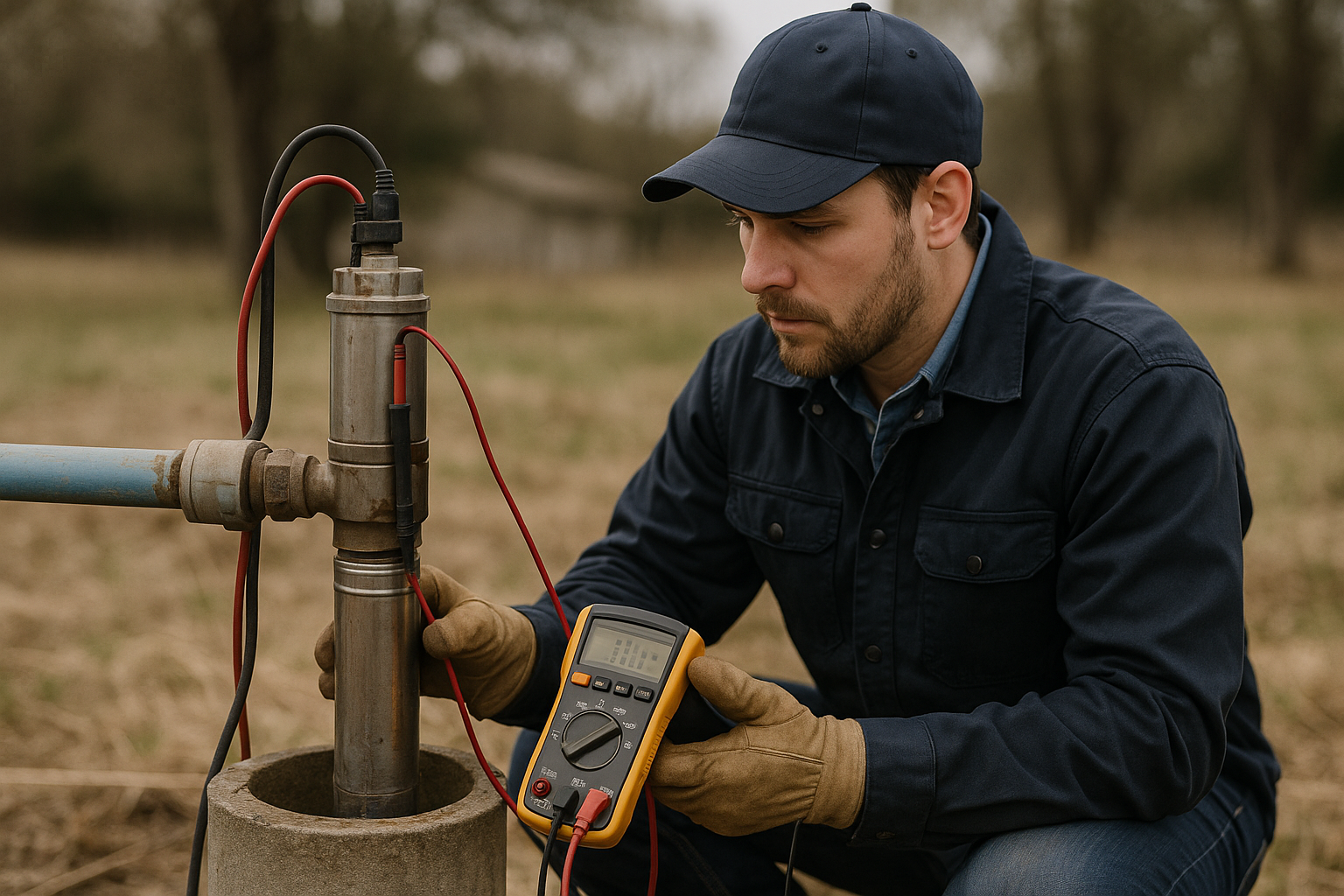
Low Water Pressure From Well
Diagnose and fix pressure problems before they get worse.
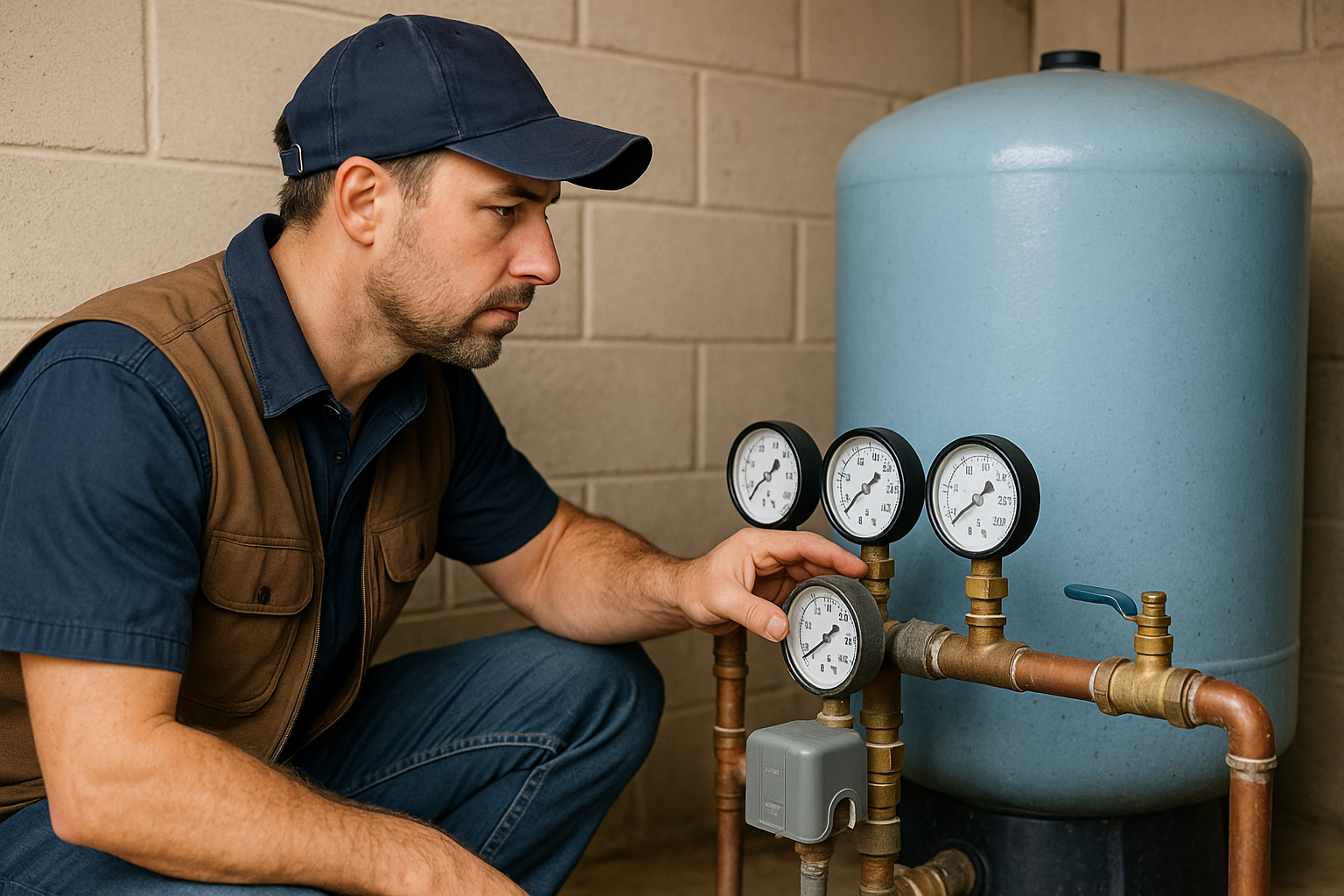
Well Maintenance Guide
Keep your well running smoothly with regular maintenance.