
Well Services for Olivenhain Avocado Groves
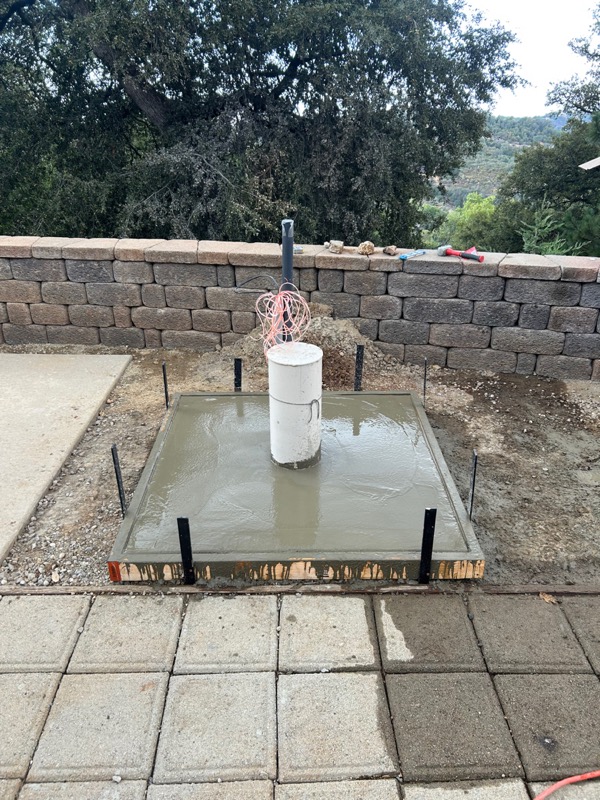
Growing avocados in Olivenhain? These water-loving trees need reliable, high-quality well water for healthy production. Southern California Well Service supports San Diego County avocado growers with specialized well services.
📋 In This Guide
- Avocado Water Demands
- Well Systems for Avocado Groves
- Chloride Sensitivity
- Partnering with Olivenhain Avocado Growers
- Related Articles
Avocado Water Demands
Avocados are thirsty trees:
- Mature tree: 40-70 gallons per day in summer
- Per acre: 4-6 acre-feet per year
- Critical periods: Fruit set and sizing
A reliable well is essential for profitable avocado production in San Diego County.
Well Systems for Avocado Groves
- High-capacity agricultural wells
- Storage tanks for peak demand periods
- Drip irrigation systems for efficiency
- Micro-sprinklers for young trees
- Pressure regulation for uniform coverage
Chloride Sensitivity
Avocados are highly sensitive to chloride in irrigation water. If your Olivenhain well has elevated chloride:
- Blending with lower-chloride water source
- Leaching irrigation to flush salts
- Rootstock selection for salt tolerance
- Regular soil and leaf testing
We test well water for avocado-critical parameters.
Partnering with Olivenhain Avocado Growers
Avocados are a major crop in San Diego County, and reliable water is essential for success. Contact us for well services designed for avocado production.
Need Help With Your Well in Olivenhain?
Our expert technicians serve Olivenhain and all of San Diego County with professional well services.
Related Articles
Continue learning about well maintenance and troubleshooting
Signs Your Well Pump Is Failing
Catch pump problems early before you lose water completely.
Low Water Pressure From Well
Diagnose and fix pressure problems before they get worse.
Well Maintenance Guide
Keep your well running smoothly with regular maintenance.
Our Locations
1077 Main St, Ramona, CA 92065
57174 CA-371 (US Hwy 79), Anza, CA 92539
Wells in Olivenhain's Rural, Horse-Country Hills
Olivenhain has a longer agricultural memory than most of coastal North County. Founded by a German farming colony in the 1880s — the name itself means "olive grove" — this rural pocket inside the City of Encinitas has stayed deliberately semi-rural, with rolling hills, large lots, horse properties, and a patchwork of avocado, citrus, and flower farms. The ground here is its own thing: sandy loam over decomposed granite, lighter and faster-draining near the surface than the heavy granite ground farther inland. For grove and ranch owners who rely on a private well, that mix of soils and Olivenhain's particular water picture calls for someone who knows the area.
Southern California Well Service is that someone. We're a licensed C-57 water well contractor (CSLB #1086994) with since 2020 of experience, and same-day emergency service from our Ramona and Anza offices. We drill, repair pumps, treat water, and dial in irrigation pressure for groves and equestrian properties across Olivenhain, Rancho Santa Fe, Elfin Forest, and the rest of the Encinitas back country.
A Note on Water Sources in Olivenhain
Olivenhain is served by the Olivenhain Municipal Water District, and many properties draw district water. But plenty of groves, horse ranches, and larger parcels run private wells — either as their main supply or to offset the cost of irrigating thirsty avocado trees and pasture with metered water. A well that carries the irrigation load while district water handles the house is a common and sensible arrangement here, and it's one we help owners set up and maintain. Whichever way your property is plumbed, an avocado grove's water has to be both plentiful in summer and clean enough not to scorch the trees.
What an Avocado Grove Asks of a Well
Avocados are shallow-rooted and want frequent, gentle, even watering. A mature tree can transpire 40 to 70 gallons on a hot day, and a producing acre commonly needs roughly four to six acre-feet a year, with demand peaking during late-summer fruit sizing. They are also notably sensitive to chloride and sodium — salts a pasture would tolerate will burn avocado leaf margins. So a grove well has to win on two fronts at once: enough water when it's hottest, and water clean enough to keep salts out of the root zone.
A typical Olivenhain grove system pairs a well finished in the granite below the sandy-loam topsoil with a submersible pump sized to the well's sustainable yield, a storage tank that banks the well's steady overnight output, and a constant-pressure pump that holds even pressure across the property's gentle rises. Mature trees run on micro-sprinklers; young trees and new plantings usually start on drip. Filtration matters here because the sandy surface soils can carry fine grit into the lines.
Salinity Management on Olivenhain Groves
If you see a scorched brown margin advancing along the older leaves, think salt before disease. Chloride and sodium build up when irrigation brings them in faster than rain flushes them out — the normal pattern in a dry Southern California year. The proven responses are:
- Leaching irrigation — a measured surplus that drives accumulated salts below the roots.
- Regular water testing for chloride, sodium, EC, and hardness so you track the trend.
- Blending well and district water where that's practical to lower overall salinity.
- Salt-tolerant rootstocks chosen at replant time.
We can sample and test your irrigation water for the parameters avocados actually respond to, then help you decide whether the fix is a treatment step, a scheduling change, or simply more deliberate leaching.
The Problems We're Called For in Olivenhain
- Sediment and grit from sandy surface soils fouling filters, emitters, and pump components.
- Pump scale and wear from mineral-rich water plating onto impellers and screens.
- Waterlogged pressure tanks that short-cycle the pump and chew through switches and motors.
- Peak-season shortfall when a grove that coasted through spring runs dry during sizing.
- Leaf burn from rising chloride, particularly after a dry winter.
- Dual-demand strain on ranch properties watering both a grove and pasture or stables from one well.
What You Can Check, and When to Call a Pro
You can safely verify the well breaker is on and the controller shows no fault, watch the pressure gauge for rapid on-off cycling, and walk the lines for an obvious leak or a popped filter housing. If one block of trees is dry while another is fine, the culprit is more likely a valve or pressure regulator than the well itself.
Call a licensed contractor when there's no water at all, when the pump runs but won't build pressure, when you smell a hot motor or see scorched wiring, or when creeping leaf burn means you need water testing. Pulling and diagnosing a deep submersible pump, chasing electrical faults, and judging true well yield are jobs for the right equipment and experience — and a mistake can drop a pump down the casing.
Honest Cost Ranges
Our diagnostic visit is $125 and credited toward the work. As a guide: a pressure switch runs $150–$350; a pressure tank $600–$1,500; a submersible pump $2,500–$5,500; sediment filtration $300–$900; a water softener $1,500–$3,500; and a constant-pressure/booster system $2,000–$4,500. Hydrofracturing a low-yield well runs $3,000–$8,000, and a complete new turnkey well $18,000–$42,000.
Serving Olivenhain and the Encinitas Back Country
From Ramona and Anza we serve groves and equestrian properties throughout Olivenhain and out into Rancho Santa Fe, Elfin Forest, and greater Encinitas. Holding a C-57 license and handling drilling, pumps, treatment, and pressure ourselves means one accountable team for the whole system — a real advantage on a property juggling a grove, a house, and animals on the same water.
How an Olivenhain Grove Irrigation System Is Built
It's worth seeing how the pieces of a grove water system fit together, because a weak link in any one of them shows up as stressed trees. The well comes first: in Olivenhain's ground, productive wells draw from fractures in the decomposed granite beneath the sandy-loam surface, and the pump is matched to the well's safe, sustainable yield so it isn't over-drawn and burned out. Next is storage. Many wells here produce a steady but moderate flow — ample over a full day, but not enough to run every micro-sprinkler in a grove at once — so a storage tank lets the well refill around the clock while the grove irrigates from the tank during its daily window. A constant-pressure or booster pump then pulls from that tank and holds even pressure across the property's gentle rises and the spread of an equestrian parcel. Finally, the delivery hardware — micro-sprinklers for mature trees, drip for young ones, plus filters and pressure regulators — puts clean, even water exactly where the roots are. When all four pieces are matched to the grove's real peak demand, the system runs efficiently for years; when one is undersized, the whole grove pays for it in August.
Maintenance That Pays Off
Olivenhain wells reward a little seasonal care, and the sandy soils make filter attention especially worthwhile. The cool, wetter months are the ideal time to service a system: check the pressure tank's air charge, clean or replace sediment filters that the loose surface soil tends to load up, inspect the control box and wiring for corrosion in the marine-influenced air, and pull a water sample while there's no peak-season pressure on the system. Keeping a simple log of pressure and pump run-time gives you early warning — when fill times stretch out or pressure sags, the pump is wearing or the well is fouling weeks before the grove actually runs short, letting you schedule a planned repair instead of an emergency one.
Frequently Asked Questions
I'm on the Olivenhain Municipal Water District. Can I still have a well?
Yes. Many Olivenhain properties keep district water for the home and run a private well for irrigation, which can substantially cut the cost of watering a grove or pasture. We help owners set up and maintain that kind of split system.
The sandy soil here seems to drain fast. Does that change my irrigation?
It does. Olivenhain's sandy loam drains quickly, so avocados generally do better with more frequent, lighter watering than they would on heavy ground. Good filtration also matters because the loose surface soil can carry grit into your lines.
What's causing brown, burnt edges on my avocado leaves?
That marginal scorch is usually chloride or sodium building up in the root zone, which worsens in dry years. Testing your irrigation water and adding a leaching fraction, sometimes blending with district water, typically corrects it.
Can one well handle both my avocado grove and my horses?
Often yes, if it's sized for the combined peak demand. We assess the well's yield and design storage and pressure around watering the grove, the pasture, and the stables together rather than overloading a system built for just one.
How quickly can you respond if my well fails?
We offer same-day emergency service from our Ramona and Anza offices. In peak summer a fast response can keep a stressed avocado grove from becoming a damaged one.
Get a Local Assessment of Your Olivenhain Well
If your Olivenhain grove or ranch well is short on summer water, fouling with grit, or showing salt stress in the canopy, call (760) 440-8520 or text (760) 219-5877. We'll give you a straight evaluation, real numbers, and a plan suited to Olivenhain's soils and water.