
Booster Pump Installation in Cedar Glen
Southern California Well Service provides professional booster pump installation to Cedar Glen and throughout San Bernardino County. With 30+ years experience and a 4.9★ Google rating, we're the trusted choice for well owners.
📋 In This Guide
Need Booster Pump Installation in Cedar Glen?
We serve Cedar Glen and all of San Bernardino County. Licensed C-57 contractor with 24/7 emergency service.
Call: (760) 440-8520Our Booster Pump Installation Services
- Fast response times to Cedar Glen
- Licensed, bonded, and insured (C-57 #1013597)
- Upfront pricing with no hidden fees
- Quality parts and professional workmanship
- 24/7 emergency service available
- Residential and agricultural wells
Why Cedar Glen Chooses SCWS
✓ Local Expertise
We know San Bernardino County geology and wells
✓ Fast Response
Same-day service for Cedar Glen
✓ Fair Pricing
Honest quotes, no surprises
✓ Quality Work
4.9★ rating, hundreds of reviews
Our Locations
Related Articles
Continue learning about well maintenance and troubleshooting

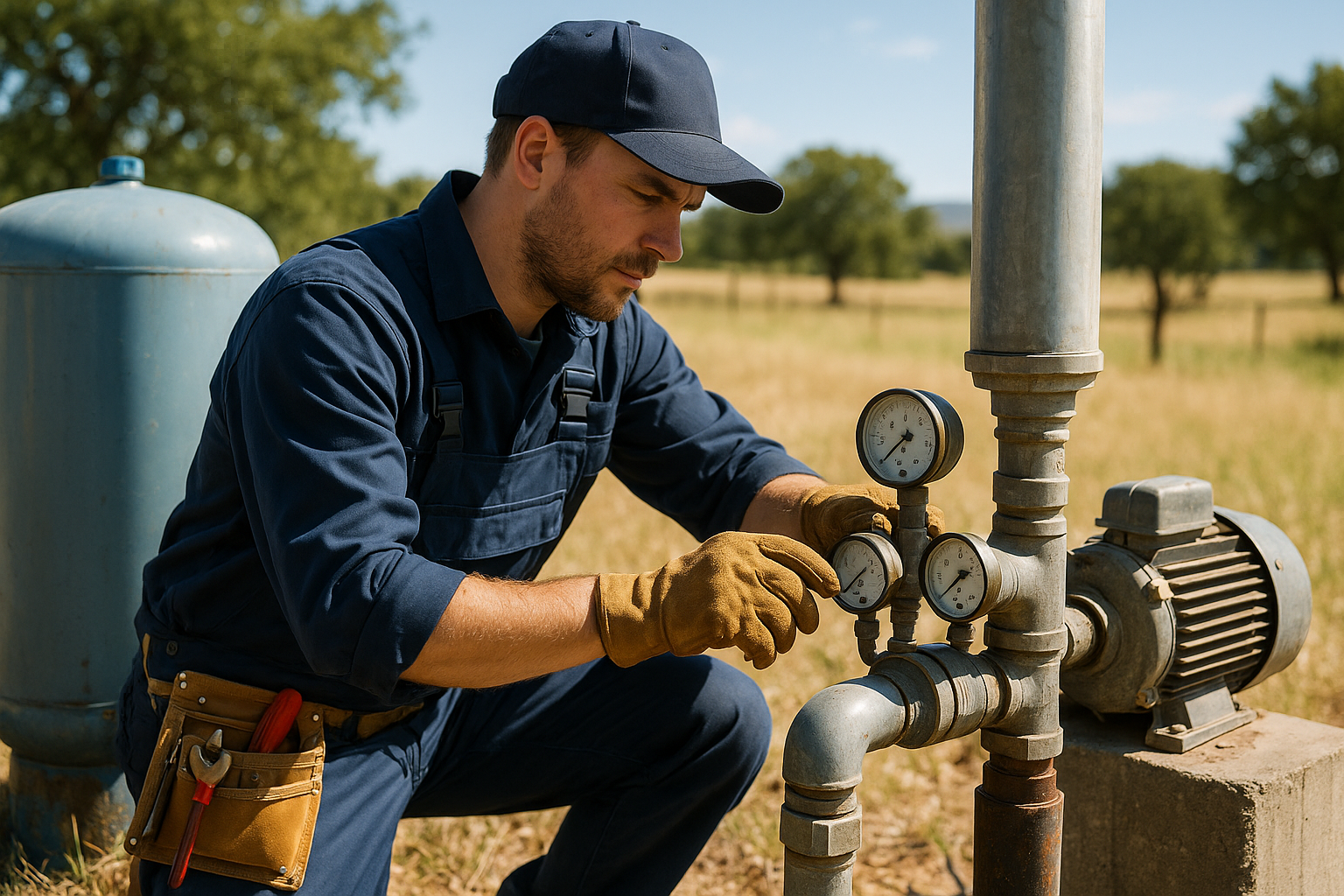
Booster Pump Solutions for Cedar Glen Mountain Properties
Cedar Glen sits at 5,500 feet elevation in the San Bernardino Mountains between Crestline and Lake Arrowhead. At this elevation, mountain geology, seasonal freeze-thaw cycles, and steep terrain create unique challenges for well systems that valley contractors simply don't understand. If you own property in Cedar Glen, you need a well service contractor with mountain experience.
Cedar Glen Geology and Well Characteristics
Cedar Glen wells tap fractured granite and metamorphic rock of the San Bernardino Mountains — part of the Peninsular Ranges batholith. This crystalline basement rock has been uplifted and fractured over millions of years, creating productive water-bearing fracture zones.
Typical Cedar Glen well characteristics:
- Depth: 200-450 feet (fractured granite aquifers)
- Yield: Variable — 3-18 GPM depending on fracture zones encountered during drilling
- Water quality: Generally excellent — low TDS, soft to moderate hardness, minimal treatment needed
- Seasonal variation: Spring snowmelt provides recharge, late summer/fall shows lower water tables
- Freeze risk: CRITICAL — Cedar Glen gets snow and extended sub-freezing temperatures in winter
The combination of high elevation, steep lots, and long pipe runs from well to cabin means most Cedar Glen properties require booster pumps to deliver adequate pressure throughout the home.
When Cedar Glen Properties Need a Booster Pump
Mountain properties face pressure challenges that valley homes rarely experience:
Signs You Need a Booster Pump
- Weak pressure on upper floors — common in two-story cabins where upper fixtures are 15-25 feet above the wellhead
- Pressure drops during simultaneous use — shower weakens when someone flushes toilet or starts dishwasher
- Long supply runs — if your well is 100+ feet from cabin, friction loss reduces pressure significantly
- Uphill from well to house — every 2.31 feet of elevation gain costs you 1 PSI (a 50-foot climb = 22 PSI loss)
- Low pressure in winter — partially frozen pipes reduce flow even with heat tape installed
- Irrigation system underperforms — sprinklers barely pop up or drip systems have weak flow
- Low-yield well — your well produces 3-5 GPM, but a storage tank + booster system makes it work
Diagnosis Process
Before installing a booster pump, we verify the actual problem:
- Measure static pressure at pressure tank — is your well pump delivering adequate pressure (40+ PSI)?
- Check pressure tank condition — waterlogged bladders cause pressure swings that boosters won't fix
- Test flow rate and recovery — measure GPM output and verify your well can support added demand
- Inspect for freeze damage — Cedar Glen winters can crack pipes, damage fittings, and create ice blockages
- Calculate total dynamic head — elevation gain + pipe friction loss + required delivery pressure
- Evaluate electrical capacity — many Cedar Glen cabins have 100A service limiting available circuits
Types of Booster Pumps for Cedar Glen Mountain Homes
1. Variable-Speed Constant Pressure Systems
Best for: Year-round mountain homes, consistent pressure needs, modern fixtures
Variable frequency drive (VFD) systems adjust pump speed in real time to maintain constant pressure regardless of water demand. Turn on one faucet, the pump runs slow. Open three, it speeds up. Result: rock-solid 50-60 PSI at every fixture.
Advantages:
- Constant pressure regardless of demand (critical for mountain homes)
- Eliminates pressure swings and water hammer
- Quieter operation with soft-start VFD motors
- Lower energy consumption (important when running on propane generators during outages)
- Handles elevation changes better than on/off systems
- Reduced stress on plumbing and appliances
Disadvantages:
- Higher upfront cost ($1,600-$2,900 installed in Cedar Glen including mountain travel)
- VFD electronics sensitive to power surges (common during mountain storms)
- Requires professional calibration
- More complex troubleshooting
Top brands: Grundfos Scala2, Franklin SubDrive, Goulds AquaBoost II
2. Standard Inline Booster Pumps
Best for: Seasonal cabins, targeted pressure boost, smaller homes
Inline boosters install directly in the water line and activate when flow is detected. Good for boosting pressure to specific zones — an upstairs bathroom, guest cottage, or irrigation system.
Advantages:
- Lower cost ($600-$1,200 installed)
- Compact footprint (fits in tight mechanical spaces)
- Simpler installation and maintenance
- Can target specific zones needing pressure boost
- Easier to winterize for seasonal use
Disadvantages:
- Limited boost (15-30 PSI typical)
- Not suitable for whole-house applications in larger homes
- Pressure varies with demand
- Shorter lifespan if cycled heavily (5-8 years)
Recommended models: Grundfos CMB, Zoeller Home Pressure Booster, Burcam
3. Storage Tank + Booster Systems (For Low-Yield Wells)
Best for: Wells yielding less than 5 GPM, seasonal water scarcity
When your Cedar Glen well can't keep up with household demand, a storage tank + booster system creates a buffer. The well pump fills a 250-500 gallon atmospheric tank slowly. The booster pulls from the tank on demand, delivering consistent pressure even when the well is recovering.
Advantages:
- Solves low-yield problems without expensive re-drilling
- Provides emergency water reserve (critical during wildfires, evacuations, winter storms)
- Reduces main well pump cycling (extends pump life)
- Can integrate with trucked water during drought
- Allows rainwater/snowmelt harvesting integration
Disadvantages:
- Higher cost ($2,200-$5,000 installed with tank and booster)
- Requires space (500-gallon tank is ~5 ft tall × 4 ft diameter)
- Tank must be protected from freezing (heated room or insulated enclosure)
- Periodic cleaning needed (every 2-3 years)
- More complex plumbing with float switches and controls
Recommended systems: Grundfos MQ + insulated poly cistern, Pentair booster + fiberglass tank
Booster Pump Installation in Cedar Glen
Mountain installations require extra care due to freeze protection, challenging access, and electrical limitations.
Step 1: Site Assessment
- Measure existing pressure at wellhead, pressure tank, and fixtures
- Test well yield and recovery (critical for mountain wells)
- Calculate total dynamic head (elevation + friction + delivery pressure)
- Evaluate freeze protection options (indoor vs. insulated pumphouse)
- Check electrical service capacity (many Cedar Glen cabins have 100A service)
- Plan backup power integration if generator exists
Step 2: Freeze Protection (CRITICAL in Cedar Glen)
Cedar Glen gets snow and extended freezing temperatures. Freeze protection is mandatory.
Indoor installation (preferred):
- Install booster in heated basement, utility room, or insulated crawl space
- Maintain ambient temperature above 40°F minimum
- Insulate supply lines running through unheated spaces
Insulated pumphouse (if outdoor required):
- Build insulated enclosure (R-19 walls minimum, R-30 roof)
- Install thermostat-controlled space heater (100-250W)
- Use heat tape on all plumbing
- Provide ventilation to prevent condensation
- Install low-point drain for winterization
Supply line protection:
- Bury lines below frost line (36-48 inches in Cedar Glen)
- For above-ground runs: heat tape + foam insulation + weather wrap
- Install check valves to prevent backflow and freezing
Step 3: Installation
- Install dedicated circuit (120V or 240V) with GFCI protection
- Use weatherproof conduit (rodents are common in mountains)
- Install shut-off valves with unions for service access
- Add pressure relief valve, check valve, pressure gauge
- Use frost-proof fittings throughout
- Mount pump on vibration-dampening base
Step 4: Calibration and Testing
- Prime pump thoroughly (remove all air)
- Set pressure (50-60 PSI typical for mountain homes)
- Test under peak demand (multiple fixtures running)
- Verify freeze protection systems working
- Train homeowner on operation and winterization
Cost Breakdown for Cedar Glen Installations
Mountain installations cost more due to travel time, challenging conditions, and freeze protection requirements.
| System Type | Equipment | Labor + Materials | Total Installed |
|---|---|---|---|
| Inline Booster | $350-$650 | $400-$700 | $750-$1,350 |
| Constant-Pressure VFD | $900-$1,600 | $700-$1,200 | $1,600-$2,800 |
| Tank + Booster (500-gal) | $1,300-$2,300 | $900-$1,800 | $2,200-$4,100 |
Additional mountain costs:
- Insulated pumphouse: $800-$2,200 (if outdoor installation required)
- Heat tape + thermostat: $200-$500
- Electrical panel upgrade: $500-$1,400 (if needed)
- Mountain travel surcharge: $100-$350
- Permits: San Bernardino County electrical permit $200-$450
Maintenance and Winterization
Seasonal Maintenance
Spring: Inspect for freeze damage, test operation, check pressure settings, clean inlet filter
Summer: Monitor well yield, listen for unusual noise, verify pressure under peak demand
Fall: Test heat tape, inspect insulation, verify pumphouse heater works, check pressure relief valve
Winter: Monitor during cold snaps, clear snow from pumphouse vents, watch for pressure drops indicating freezing
Winterization for Seasonal Cabins
- Shut off power to booster pump
- Close supply valve from well
- Open all faucets to drain
- Open drain valve at pump low point
- Blow out remaining water with compressed air
- Add RV antifreeze to traps and fixtures
- Drain hot water heater completely
- Leave system drained until spring
Common Problems and Fixes
Pump frozen solid: DO NOT start while frozen. Thaw slowly with space heater (never torch). Inspect for cracks once thawed. Fix freeze protection before next cold snap.
Pressure drops in cold weather: Check for ice in supply line. Verify heat tape is working. Inspect wellhead for freeze damage.
Rapid cycling: Check for leaks. Verify pressure tank pre-charge (2 PSI below cut-in). Inspect check valve for proper operation.
No pressure boost: Check for air lock (bleed at highest fixture). Verify check valve isn't stuck open. Inspect impeller for damage.
Alternatives to Booster Pumps
1. Upgrade Well Pump
If your well pump is undersized, upgrading to higher HP with more stages can eliminate booster need. A 1.5 HP 12-stage pump delivers higher pressure than ¾ HP 7-stage. Cost: $1,700-$3,000 installed.
2. Larger Pressure Tank
Upgrading from 20-gallon to 80-gallon tank reduces cycling and provides more reserve capacity. Doesn't increase max pressure but makes marginal pressure feel better. Cost: $550-$1,100 installed.
3. Replace Old Pipes
Old galvanized pipes corrode internally, reducing diameter and causing pressure loss. Replacing with PEX or copper often restores pressure without pump upgrades. Cabin repipe: $3,500-$9,000.
4. Cycle Stop Valve
CSV controls existing well pump to deliver constant pressure without separate booster. Works if pump has adequate capacity but pressure swings are the problem. Cost: $550-$1,000 installed.
Why Choose SCWS for Cedar Glen
- Mountain expertise: We understand high-elevation systems and freeze protection
- Licensed C-57 contractor: California well drilling license (CSLB #1086994)
- Full-service: Drilling, pump repair, pressure systems, water treatment
- Emergency service: 24/7 availability for no-water emergencies
- Honest pricing: Transparent quotes, no hidden fees
- Proven track record: 4.9★ Google rating, hundreds of satisfied customers
Frequently Asked Questions
How much does a booster pump cost to operate?
A ½ HP booster running 2-3 hours/day costs $7-$15/month at Cedar Glen electricity rates (~$0.40/kWh from Bear Valley Electric). Variable-speed systems use 20-30% less energy.
Can I install a booster pump myself?
Possible if you have skills, but mountain installations are complex. Improper freeze protection causes catastrophic damage. Incorrect electrical work creates fire hazards. We recommend professional installation.
Will a booster increase my well's flow rate?
No. Boosters increase pressure, not flow. If your well produces 4 GPM, a booster delivers that 4 GPM at higher pressure but can't make the well yield more. For low-yield wells, use storage tank + booster.
How long do boosters last in Cedar Glen?
With proper freeze protection and maintenance, quality boosters last 10-15 years. Inline boosters handling heavy cycling last 5-8 years. Constant-pressure systems last longer due to reduced cycling.
Do I need a permit in Cedar Glen?
San Bernardino County requires electrical permits. Plumbing permits depend on scope. We handle permits as part of installation.
What happens during power outages?
Booster stops when power is lost. If you have a generator, booster runs when generator powers panel. Size generator for booster starting current (2-3× running amps). ½ HP needs ~1,200W starting, 600W running.
Can I use a booster with a low-yield well?
Yes, but only with storage tank. Well fills tank slowly. Booster pulls from tank on demand. Without tank, booster runs well dry and damages well pump.
How do I protect from freezing?
Best: install indoors in heated space. If outdoor required: insulated pumphouse with heat tape and thermostat heater. For seasonal cabins: drain completely before winter.
Will booster work with tankless water heater?
Yes. Tankless heaters need minimum pressure (30-40 PSI) to activate. Booster ensures adequate pressure for reliable tankless operation.
What size booster do I need?
Depends on peak flow demand, required pressure increase, elevation gain, pipe run distance. Typical 3-bedroom Cedar Glen cabin needs 8-12 GPM at 50-60 PSI. We calculate during site assessment.
Service Area
We serve Cedar Glen and all surrounding San Bernardino Mountain communities, including Crestline, Lake Arrowhead, Running Springs, Twin Peaks, Blue Jay, Arrowbear Lake, and Rim of the World. With offices in Ramona (San Diego County) and Anza (Riverside County), we're positioned to serve mountain and valley properties throughout Southern California.