
Booster Pump Installation in Chino
Southern California Well Service provides professional booster pump installation to Chino and throughout San Bernardino County. With 30+ years experience and a 4.9★ Google rating, we're the trusted choice for well owners.
📋 In This Guide
Need Booster Pump Installation in Chino?
We serve Chino and all of San Bernardino County. Licensed C-57 contractor with 24/7 emergency service.
Call: (760) 440-8520Our Booster Pump Installation Services
- Fast response times to Chino
- Licensed, bonded, and insured (C-57 #1013597)
- Upfront pricing with no hidden fees
- Quality parts and professional workmanship
- 24/7 emergency service available
- Residential and agricultural wells
Why Chino Chooses SCWS
✓ Local Expertise
We know San Bernardino County geology and wells
✓ Fast Response
Same-day service for Chino
✓ Fair Pricing
Honest quotes, no surprises
✓ Quality Work
4.9★ rating, hundreds of reviews
Our Locations
Related Articles
Continue learning about well maintenance and troubleshooting

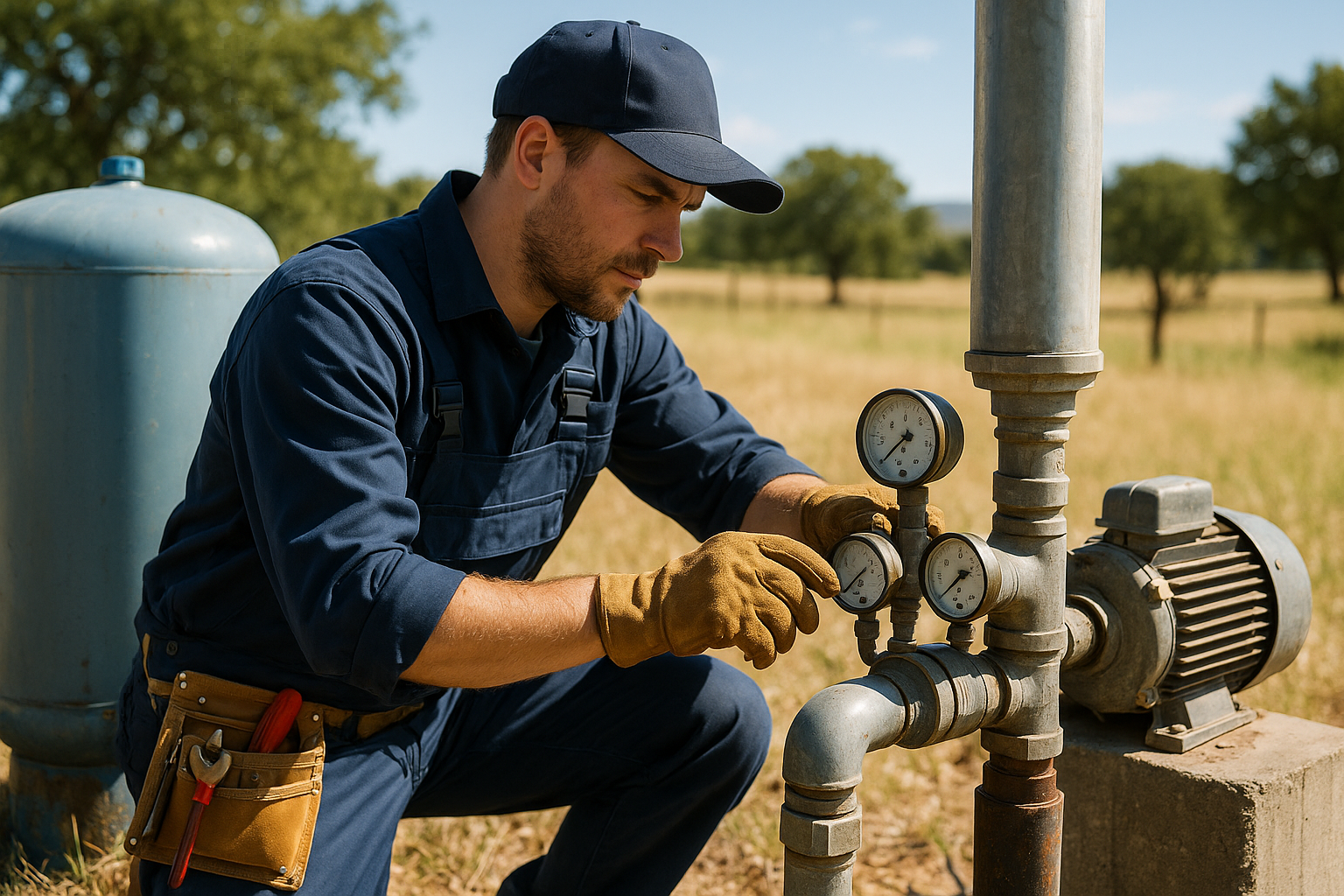

Booster Pump Solutions for Chino Properties
As a Chino property owner with a private well, you rely on your water system every day. Located in western San Bernardino County near Chino Hills and Ontario, Chino sits in the Chino Basin — a deep alluvial aquifer system supplying water to wells throughout the region. The area's unique hydrogeology sometimes requires booster pump solutions to meet household or agricultural demand.
Understanding Booster Pumps in Chino Wells
A booster pump increases water pressure from your well system to meet household or agricultural demands. In Chino, we commonly install booster pumps for:
- Multi-story homes — second or third floors need extra pressure to reach fixtures reliably
- Low-yielding wells — aging wells or drought conditions reduce available flow
- Large properties — long pipe runs to barns, stables, or irrigation zones far from the well
- Dairy and agricultural operations — Chino's historic dairy industry requires high GPM for milking parlors and livestock watering
- Pressure tank failures — temporary booster while awaiting permanent repairs
Chino Basin Geology and Well Characteristics
The Chino Basin is one of Southern California's most productive groundwater basins, with deep alluvial deposits (sand, gravel, silt) overlying crystalline bedrock. Typical well depths in Chino range from 200-500 feet, with static water levels between 100-250 feet depending on location and recent recharge. The basin's aquifers are generally high-yielding, but pressure delivery to the surface can be inconsistent due to:
- Seasonal drawdown — summer irrigation demand lowers regional water tables
- Well interference — Chino's high well density means nearby pumping affects your well
- Aging infrastructure — many Chino wells were drilled 40-60 years ago for dairy operations
- Urban development pressure — increased residential demand strains older agricultural wells
When Do You Need a Booster Pump?
Not every low-pressure situation requires a booster pump. We perform a thorough diagnosis before recommending equipment. Signs that a booster pump may help include:
- Pressure drops when multiple fixtures run — shower pressure falls when someone flushes a toilet or runs the washing machine
- Weak flow on upper floors — adequate pressure downstairs, but bathrooms upstairs struggle
- Sprinklers won't reach full coverage — irrigation zones fail to operate properly
- Appliances won't fill — dishwashers, washing machines, or water heaters fail to fill properly
- Air spitting from faucets — pressure too low to maintain solid water column in pipes
However, low pressure can also result from clogged filters, failing pressure switches, waterlogged pressure tanks, or undersized well pumps. We diagnose the root cause before recommending a booster — sometimes a simpler, less expensive fix solves the problem.
Types of Booster Pumps We Install
We install three main categories of booster pumps, selected based on your specific needs:
1. Variable-Speed Booster Pumps
These pumps adjust motor speed automatically to match demand. When you open a single faucet, the pump runs slowly; when multiple fixtures run, it speeds up. Brands like Grundfos Scala2 and Goulds Aquavar offer built-in pressure sensing and automatic control. Benefits include:
- Energy-efficient operation
- Quiet performance
- Consistent pressure regardless of demand
- No pressure tank required (though we often recommend one anyway for cycling protection)
Cost: $1,200-$2,500 installed for residential applications
2. Constant-Pressure Booster Pumps
These systems pair a standard centrifugal pump with a VFD (variable frequency drive) controller and pressure transducer. They're ideal for larger homes, dairy operations, or properties with highly variable demand. We commonly install Franklin SubDrive or Pentair Constant Pressure systems. Advantages:
- Precise pressure control (±1 PSI)
- Scalable for high GPM applications (20-50+ GPM)
- Excellent for dairy milking parlors and livestock watering
- Long service life with proper maintenance
Cost: $2,000-$4,500 installed depending on horsepower and features
3. In-Line Booster Pumps
Simple, single-speed pumps that add fixed pressure boost to your existing system. Suitable for modest pressure increases (10-20 PSI) or specific zones like upstairs bathrooms or remote irrigation. Simer, Wayne, and Red Lion offer reliable models. Best for:
- Budget-conscious installations
- Temporary or supplemental pressure boost
- Single-zone applications
Cost: $600-$1,200 installed for basic models
The Installation Process
A professional booster pump installation in Chino typically follows these steps:
- Site assessment and diagnosis — We measure static pressure, flow rate, system demand, and identify the root cause of low pressure. This ensures we're solving the right problem.
- System design — Select appropriate pump size (HP and GPM), location (indoor utility room vs. outdoor enclosure), and integration with existing components (pressure tank, pressure switch, control box).
- Permitting and code compliance — Though booster pumps generally don't require San Bernardino County permits, we ensure electrical work meets NEC standards and plumbing complies with UPC.
- Installation — Mount pump, connect suction and discharge piping, install check valves and isolation valves, wire electrical (120V or 240V depending on pump), configure pressure settings, and test operation.
- System testing and adjustment — Run multiple fixtures simultaneously, verify pressure delivery at distant or elevated fixtures, check for leaks, and fine-tune pressure settings for optimal performance.
Most residential booster pump installations take 3-5 hours. Larger dairy or agricultural systems may require a full day or multiple visits.
Booster Pump Brands We Trust
We install equipment from manufacturers with proven track records in Southern California's demanding conditions:
- Grundfos — Scala2 and MQ series for residential variable-speed applications. Excellent reliability and smart controls.
- Goulds (Xylem) — Aquavar and constant-pressure systems for high-demand residential and light commercial use.
- Franklin Electric — SubDrive constant-pressure systems, industry-leading VFD technology.
- Pentair — Versatile booster pump options for residential and agricultural applications.
- Red Lion — Economical shallow well and booster pumps for budget-conscious installations.
Alternatives to Booster Pumps
Depending on your situation, a booster pump may not be the best solution. We also offer:
- Pressure tank upgrades — Larger or additional pressure tanks reduce cycling and improve flow during peak demand
- Well pump replacement — Upgrading from a 1/2 HP to 3/4 HP or 1 HP submersible pump often solves low-pressure issues permanently
- Plumbing repairs — Clearing sediment from pipes, replacing corroded galvanized lines, or fixing leaks can restore lost pressure
- Pressure switch adjustment — Sometimes simply increasing the cut-in/cut-out pressure settings delivers the improvement you need
We provide honest assessments — if a $200 pressure switch adjustment solves your problem, we'll tell you that instead of selling you a $2,000 booster pump you don't need.
Chino's Dairy Industry and Agricultural Applications
Chino has been dairy country since the 1920s. Though residential development has replaced many dairy farms, the region still supports agricultural operations requiring high-capacity water systems. Booster pumps are critical for:
- Milking parlors — Automated milking systems require consistent 50+ PSI pressure
- Livestock watering — Large troughs and automatic waterers serving herds
- Wash-down operations — High-pressure hoses for cleaning barns, milking equipment, and pens
- Irrigation systems — Pasture irrigation, feed crops, and landscape maintenance
We've installed booster pump systems for dozens of Chino dairy operations over the past 30 years. We understand the unique demands of agricultural water systems and size equipment appropriately for continuous-duty operation.
Why Local Expertise Matters in Chino
Well systems in the Chino Basin face challenges specific to the region. Well depths, water quality, and aquifer characteristics vary significantly even between neighboring properties. A technician familiar with Chino's conditions can diagnose problems faster and recommend solutions that actually work — not generic fixes from a textbook.
We've been serving Chino and the broader Inland Empire region for over 30 years. We know which wells tap the shallow unconfined aquifer versus the deeper confined zones. We understand how seasonal irrigation demand affects regional water tables. And we know which equipment performs reliably in Chino's hard water and mineral-rich conditions.
Maintenance and Longevity
A properly installed booster pump should provide 10-15 years of reliable service with minimal maintenance. We recommend:
- Annual inspection — Check pressure settings, test pressure switch operation, inspect for leaks, verify electrical connections
- Filter replacement — If installed, change sediment filters every 3-6 months to protect pump internals
- Pressure tank maintenance — Check air charge annually, replace bladder every 7-10 years
- Monitor performance — Watch for pressure fluctuations, unusual noises, or increased cycling frequency
Most booster pump failures result from lack of maintenance (clogged filters starving the pump) or electrical issues (voltage fluctuations, lightning strikes, failing capacitors). Regular inspection catches problems early before they become expensive repairs.
Cost Factors for Chino Installations
Booster pump installation costs vary based on several factors:
- Pump type and horsepower — Variable-speed pumps cost more upfront but save energy long-term
- Installation complexity — Indoor utility room installations are simpler than outdoor weatherproof enclosures
- Electrical work — 240V circuits may require panel upgrades or new wiring runs
- Plumbing modifications — Additional valves, piping, or pressure tank integration
- Agricultural vs. residential — Dairy operations require higher-capacity equipment and more robust installations
We provide upfront, written estimates before starting work. No surprises, no hidden fees.
What Sets SCWS Apart for Chino Customers
- Two local offices — Ramona (San Diego County) and Anza (Riverside County) locations mean faster response times to Chino
- Full-service well company — drilling, pump repair, water treatment, booster pumps, and everything in between
- Licensed C-57 contractor — properly licensed well drilling contractor (CSLB #1086994)
- Transparent pricing — honest assessments and upfront quotes, no surprise charges
- Same-day emergency service — when you have no water, we respond fast
- 4.9★ Google rating — hundreds of reviews from real customers across Southern California
- Dairy and agricultural experience — we understand the unique demands of Chino's agricultural operations
Common Questions About Booster Pumps in Chino
Will a booster pump fix my low water pressure?
Maybe. Low pressure can result from multiple causes — failing well pump, waterlogged pressure tank, clogged filters, undersized piping, or excessive demand. We diagnose the root cause first. If your well pump delivers adequate flow but pressure drops due to elevation, distance, multi-story design, or dairy operation demands, a booster pump is an excellent solution. If your well pump is failing or your pressure tank is shot, those need to be addressed first.
How much does a booster pump cost in Chino?
Residential booster pump installations typically range from $600-$4,500 depending on pump type, horsepower, installation complexity, and features. Basic in-line boosters start around $600-$1,200 installed. Variable-speed residential systems run $1,200-$2,500. High-capacity constant-pressure systems for dairy or large residential properties cost $2,000-$4,500. Agricultural installations may exceed $5,000 for high-capacity systems. We provide free estimates after assessing your specific situation.
Can I install a booster pump myself?
Technically yes, but we don't recommend it unless you have plumbing and electrical experience. Booster pump installations require proper sizing, electrical wiring (often 240V), plumbing connections, check valve installation, pressure switch integration, and system balancing. Incorrect installation can damage your well pump, create water hammer, or result in electrical hazards. Most insurance companies and agricultural lenders require licensed contractor installation.
Do I still need a pressure tank if I install a booster pump?
It depends. Variable-speed booster pumps can operate without a pressure tank, adjusting speed to match demand. However, we typically recommend keeping or adding a small pressure tank (20-40 gallons) even with variable-speed systems. The tank reduces pump cycling, protects against water hammer, and provides a buffer during power outages or pump failures. For constant-pressure and in-line booster pumps, a pressure tank is essential.
How long does a booster pump last?
With proper maintenance, expect 10-15 years from a quality booster pump. Variable-speed pumps (Grundfos, Goulds) tend to last longer due to reduced cycling and gentler start/stop operation. Lifespan depends heavily on water quality — hard water, sediment, and iron can shorten pump life if not filtered. Regular maintenance (annual inspection, filter changes) significantly extends equipment longevity. Dairy operations with continuous-duty cycles may see shorter lifespans (7-10 years) due to higher usage.
Will a booster pump increase my electric bill?
Slightly, but not dramatically for most residential applications. A 1/2 HP booster pump running intermittently adds roughly $10-$20 per month to your electric bill depending on usage. Variable-speed pumps are the most energy-efficient, running at lower speeds when demand is light. Dairy operations with continuous-duty cycles will see higher costs — a 1.5 HP constant-pressure system running 8-12 hours daily may add $40-$60/month.
Can a booster pump damage my well pump?
Not if installed correctly. Proper booster pump installation includes check valves to prevent backflow, isolation valves for service, and pressure relief valves to protect against over-pressurization. The booster pump should be sized appropriately for your system — an oversized booster can create excessive pressure that damages piping, fixtures, or appliances. This is why professional sizing and installation matter.
What maintenance does a booster pump need?
Minimal. Check pressure settings annually, inspect for leaks, verify electrical connections, and replace sediment filters (if installed) every 3-6 months. Listen for unusual noises (grinding, squealing, or rattling) that indicate bearing wear or cavitation. Monitor cycling frequency — if the pump runs constantly or short-cycles, something's wrong. Most booster pumps require professional service only every 5-7 years unless a problem develops. Dairy operations should inspect quarterly due to higher usage.
Do I need a permit to install a booster pump in Chino?
Generally no. San Bernardino County does not typically require permits for booster pump installations on private wells. However, if electrical work involves upgrading your service panel or running new circuits, that may require an electrical permit and inspection. Commercial, dairy, or agricultural installations may have additional requirements. We handle any necessary permitting as part of the installation process.
Can a booster pump help with my dairy operation?
Absolutely. Many Chino dairy operations have high-demand water systems requiring 50+ PSI for milking parlors, automated waterers, and wash-down hoses. A constant-pressure booster system ensures consistent performance regardless of demand fluctuations. We've installed booster pumps for dozens of Chino dairies — we understand the unique requirements of agricultural water systems and size equipment for continuous-duty operation.
Service Area
We serve Chino and all surrounding communities in San Bernardino County, including Chino Hills, Ontario, Rancho Cucamonga, and Pomona. With offices in Ramona (San Diego County) and Anza (Riverside County), we're positioned to reach Chino quickly for both scheduled and emergency service calls. Most Chino customers receive same-day or next-day service.