
Booster Pump Installation in Romoland
Southern California Well Service provides professional booster pump installation to Romoland and throughout Riverside County. With 30+ years experience and a 4.9★ Google rating, we're the trusted choice for well owners.
📋 In This Guide
Need Booster Pump Installation in Romoland?
We serve Romoland and all of Riverside County. Licensed C-57 contractor with 24/7 emergency service.
Call: (760) 440-8520Our Booster Pump Installation Services
- Fast response times to Romoland
- Licensed, bonded, and insured (C-57 #1013597)
- Upfront pricing with no hidden fees
- Quality parts and professional workmanship
- 24/7 emergency service available
- Residential and agricultural wells
Why Romoland Chooses SCWS
✓ Local Expertise
We know Riverside County geology and wells
✓ Fast Response
Same-day service for Romoland
✓ Fair Pricing
Honest quotes, no surprises
✓ Quality Work
4.9★ rating, hundreds of reviews
Our Locations
Related Articles
Continue learning about well maintenance and troubleshooting

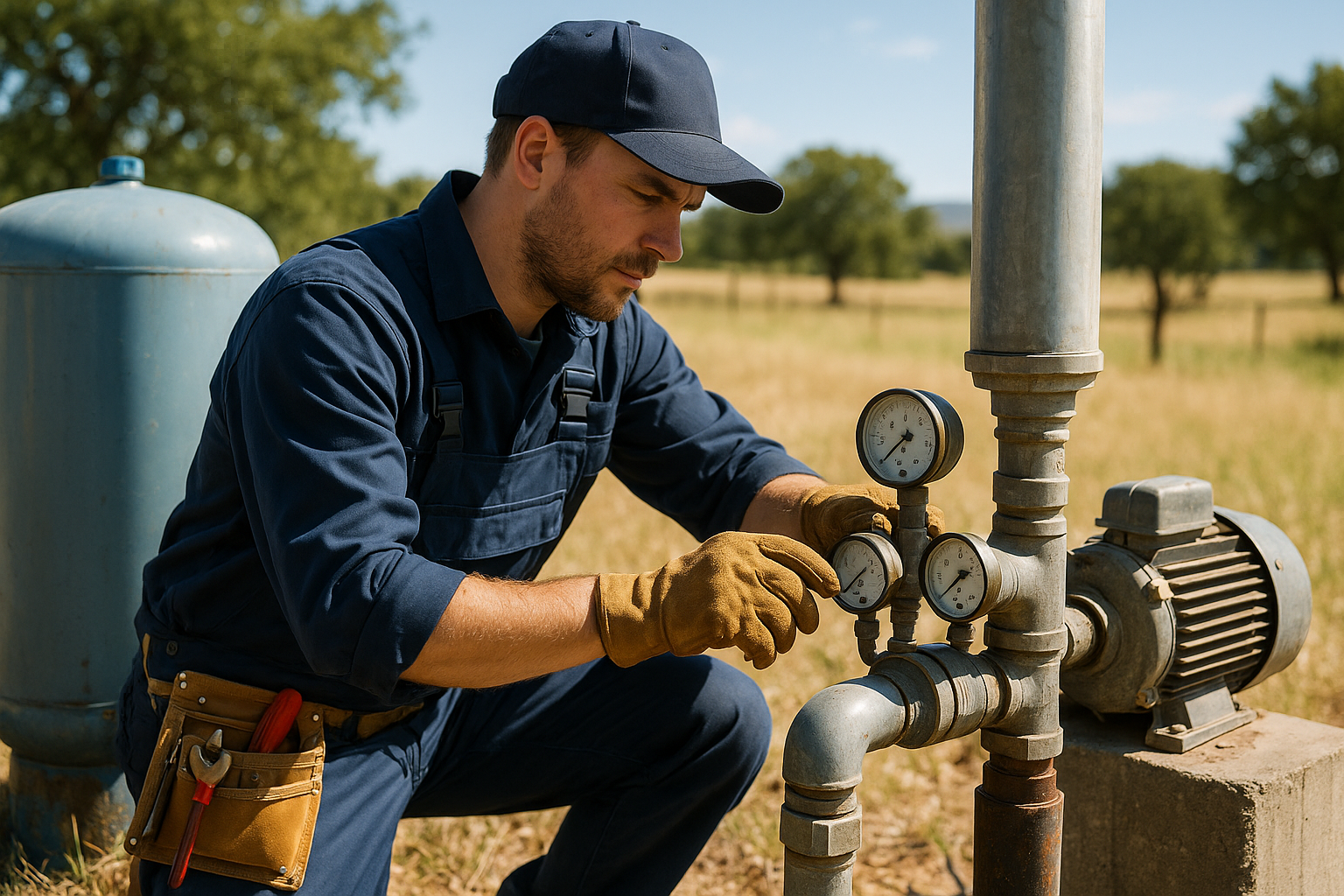

Understanding Booster Pumps for Romoland Wells
Romoland sits in the Perris Valley of Riverside County, where alluvial basin geology creates unique well conditions. Most wells here range from 150 to 400 feet deep, tapping shallow to moderate aquifers. Low pressure is common as the water table fluctuates seasonally and subdivisions add demand.
Romoland Geology & Pressure Challenges
The Perris Valley's alluvial deposits (sand, gravel, clay) create productive wells, but pressure problems arise from:
- Deep static water level: Groundwater 100-200 feet down requires high lift
- Seasonal drawdown: Summer drought lowers water table 10-30 feet
- Subdivision demand: Multiple homes on shared aquifer reduce available pressure
- Old well systems: Many Romoland wells drilled in 1970s-80s with undersized pumps
When You Need a Booster Pump
A booster pump increases water pressure after your well pump delivers water to the tank. It's needed when your well pump is working fine but pressure at fixtures is inadequate.
Signs You Need a Booster Pump
- Low pressure at fixtures: Weak shower, slow-filling toilet, dribbling faucets
- Pressure drops with multiple uses: Shower pressure plummets when toilet flushes
- Upstairs pressure worse than downstairs: Gravity amplifies pressure loss at elevation
- Irrigation system won't work: Sprinklers need 40-60 psi, well only delivers 25-30 psi
- Appliances don't work properly: Washing machine slow-fill, dishwasher won't spray
Diagnosis: Is the Problem Really Pressure?
Before installing a booster pump, verify the issue:
- Check pressure tank gauge: Should cycle between 30-50 psi (typical) or 40-60 psi (ideal)
- Test at different fixtures: If all low, it's system-wide. If isolated, it's a clog or valve.
- Monitor pump cycle: If pump runs frequently (every few minutes), you may have a waterlogged tank or leak — not a booster issue
- Measure flow rate: Time how long it takes to fill a 5-gallon bucket. Under 1 minute (5+ GPM) is fine; over 2 minutes indicates pump or well yield problem
When a booster pump won't help: Failing well pump, clogged pipe, leaking pressure tank, low well yield.
Booster Pump Types & Brands
We install three main booster pump configurations based on your needs and budget.
1. On-Demand Variable-Speed Booster Pumps (Best Choice)
These "smart" pumps adjust speed based on demand — quiet, efficient, consistent pressure.
- Grundfos Scala2: 3-45 psi boost, 1 HP, 8 GPM max — $900-$1,400 installed
- DAB E.sybox Mini: Italian-made, 1.5 HP, 10 GPM — $1,200-$1,800 installed
- Franklin SubDrive: Built for Romoland's hard water, robust motor — $1,400-$2,000 installed
Pros: No pressure tank needed, quiet, energy-efficient, consistent pressure.
Cons: Higher upfront cost, requires 240V power (most have it).
2. Constant-Pressure Systems with Storage Tank
Traditional booster with tank — proven technology, handles high flow bursts.
- Pentair Flotec: 1/2 HP pump + 20-gal tank — $800-$1,200 installed
- Wayne WSS30: 3/4 HP pump + 30-gal tank — $1,000-$1,600 installed
- Goulds J10S: Commercial-grade, 1 HP + 44-gal tank — $1,400-$2,200 installed
Pros: Lower cost, handles simultaneous high-demand uses (shower + irrigation).
Cons: Requires space for tank, cycling noise, more maintenance.
3. Inline Booster Pumps (Budget Option)
Simple pressure-boost for single application (shower, irrigation zone).
- Simer 2 HP inline: $300-$600 installed (DIY $150 pump + $150 labor)
- Red Lion RL-SPS50: 1/2 HP shallow well booster — $400-$700 installed
Pros: Cheapest option, simple installation.
Cons: Boosts only one area, not whole-house solution, louder.
Booster Pump Installation Process
Professional installation ensures proper sizing, pressure settings, and electrical safety.
What We Do During Installation
- Pressure assessment (30 min): Measure existing pressure at tank, fixtures, and during simultaneous use to determine required boost
- Electrical check (15 min): Verify 240V circuit for variable-speed pumps or 120V for smaller units
- Plumbing prep (1-2 hours): Install shut-off valves, pressure relief, bypass loop, and mount pump on vibration-dampening base
- Pump installation (1 hour): Connect inlet/outlet, wire control box, set pressure switches
- Testing & calibration (30 min): Run all fixtures simultaneously, adjust pressure settings, verify no leaks
Total time: 3-5 hours for most installations. Cost: $800-$2,200 including pump, labor, materials.
Permitting in Romoland
Riverside County generally does not require permits for booster pump installations if the electrical circuit already exists. Exception: If running new 240V circuit, electrical permit needed ($150-$300 + inspection).
Alternatives to Booster Pumps
Sometimes a booster pump isn't the best solution. Consider these alternatives:
1. Replace Undersized Well Pump
If your well pump is old (15+ years) or undersized, upgrading to a higher-HP pump may eliminate the need for a booster.
- When this makes sense: Well yield is strong (10+ GPM), but pump struggles to deliver pressure
- Cost: $2,500-$5,000 for pump replacement (Romoland average)
- Benefit: One system instead of two (fewer failure points)
2. Repair or Replace Pressure Tank
A waterlogged or undersized pressure tank mimics low-pressure symptoms.
- Signs of bad tank: Pump cycles every 30 seconds, no air cushion, tank sounds solid when tapped
- Cost: $400-$1,200 for tank replacement (20-80 gallon)
- Often cheaper than booster pump if this is the root issue
3. Install Larger Pressure Tank
Upgrading from 20-gal to 60-gal tank reduces cycling and provides buffer during high-demand periods.
- Cost: $600-$1,400 installed
- Doesn't fix chronic low pressure but helps with pressure drops during simultaneous use
Booster Pump Maintenance
Proper maintenance extends booster pump life to 10-15 years.
Annual Maintenance Checklist
- Check pressure settings: Verify cut-in/cut-out pressures match original specs
- Inspect for leaks: Look for weeping seals, dripping valves, corrosion
- Test pressure switch: Verify pump cycles on/off at correct pressures
- Clean inlet screen: Remove sediment buildup (especially in Romoland's sandy water)
- Listen for noise changes: Grinding, squealing, or cavitation indicates bearing wear
Common Booster Pump Problems
- Short cycling: Usually pressure switch drift or leak — adjust switch or check for drips
- No pressure boost: Clogged inlet screen, failed impeller, or wrong pump size
- Loud operation: Worn bearings, loose mounting, or cavitation from air in line
- Overheating: Pump running dry (no flow) or undersized for demand
Why Choose SCWS for Romoland Booster Pump Installation?
We've installed hundreds of booster pumps across Riverside County. We know Romoland's geology, typical well depths, and pressure challenges.
What Sets Us Apart
- Local expertise: 30+ years in Riverside County — we know Perris Valley wells
- Fast response: Anza office 30 minutes from Romoland for same-day service
- Honest assessments: We won't sell you a booster pump if a $400 tank fix will do the job
- Licensed C-57: Proper well contractor license (not just plumber)
- 4.9★ Google rating: Check our reviews — we do this right
- Warranty: 1-year labor, manufacturer warranty on pumps (typically 2-5 years)
Frequently Asked Questions
How much does booster pump installation cost in Romoland?
Typical range: $800-$2,200 installed, depending on pump type and complexity. Variable-speed systems (Grundfos Scala2, DAB E.sybox) run $1,200-$1,800. Traditional pump + tank systems cost $800-$1,600. Add $200-$400 if electrical work is needed.
Will a booster pump fix my low water pressure?
Only if your well pump is working properly. Booster pumps increase pressure after the pressure tank. If your well pump can't deliver adequate flow, a booster won't help. We always diagnose the root cause first — sometimes a $400 pressure tank replacement solves the problem.
How long does a booster pump last?
10-15 years with proper maintenance. Variable-speed pumps (Grundfos, DAB) tend to last longer than traditional pumps because they run smoother and cycle less. Romoland's hard water can accelerate wear — annual maintenance extends lifespan.
Do I need a permit in Romoland?
Usually no. Riverside County doesn't require permits for booster pump installations using existing electrical circuits. Exception: If we need to run a new 240V circuit, an electrical permit is required ($150-$300 + inspection).
Can I install a booster pump myself?
Yes, if you have plumbing and electrical skills. DIY inline booster pumps are simplest ($150-$300 pump + fittings). Variable-speed systems require 240V wiring and pressure calibration — mistakes can damage the pump or create unsafe conditions. Most Romoland customers opt for professional installation ($800-$1,200 labor + pump).
What size booster pump do I need?
Depends on your flow demand and pressure deficit. For typical Romoland homes:
- 1-2 bathrooms: 1/2 HP pump, 5-8 GPM capacity
- 3-4 bathrooms or irrigation: 3/4-1 HP pump, 8-12 GPM
- Boost needed: Measure current pressure (usually 25-35 psi) vs desired (40-60 psi) = 15-25 psi boost
We calculate exact sizing during free estimate — oversizing wastes energy, undersizing leaves you disappointed.
Will a booster pump increase my electric bill?
Slightly. Variable-speed pumps (Grundfos Scala2, DAB) use 300-800 watts during operation and only run when you're using water. Traditional pumps cycle more often, using 500-1,200 watts per cycle. Typical Romoland home: $5-$15/month increase depending on usage.
Can a booster pump run dry?
Yes, and it will burn out the motor. Most modern booster pumps (Grundfos, DAB, Franklin) have dry-run protection that shuts off the pump if flow stops. Older pumps and cheap inline models don't — if your well pump fails or water stops flowing, the booster can overheat and fail. We always install low-flow cutoff switches for protection.
What maintenance does a booster pump need?
Annual inspection (30 minutes, $80-$150 service call) includes:
- Check pressure settings and adjust if drifted
- Clean inlet screen (Romoland's sandy water clogs screens)
- Inspect for leaks, corrosion, loose fittings
- Test pressure switch and safety cutoffs
Most booster pumps are low-maintenance — no oil changes, no filter replacements (unless sediment filter added upstream).
Should I get a variable-speed or traditional booster pump?
Variable-speed if budget allows. Grundfos Scala2 and DAB E.sybox are quieter, more efficient, and don't require a pressure tank. They cost $300-$600 more upfront but save on electricity and last longer. Traditional pump + tank is fine if you need to save money or have high simultaneous demand (large family, irrigation + shower).