
Booster Pump Installation in Viejas
Southern California Well Service provides professional booster pump installation to Viejas and throughout San Diego County. With 30+ years experience and a 4.9★ Google rating, we're the trusted choice for well owners.
📋 In This Guide
Need Booster Pump Installation in Viejas?
We serve Viejas and all of San Diego County. Licensed C-57 contractor with 24/7 emergency service.
Call: (760) 440-8520Our Booster Pump Installation Services
- Fast response times to Viejas
- Licensed, bonded, and insured (C-57 #1013597)
- Upfront pricing with no hidden fees
- Quality parts and professional workmanship
- 24/7 emergency service available
- Residential and agricultural wells
Why Viejas Chooses SCWS
✓ Local Expertise
We know San Diego County geology and wells
✓ Fast Response
Same-day service for Viejas
✓ Fair Pricing
Honest quotes, no surprises
✓ Quality Work
4.9★ rating, hundreds of reviews
Our Locations
Related Articles
Continue learning about well maintenance and troubleshooting

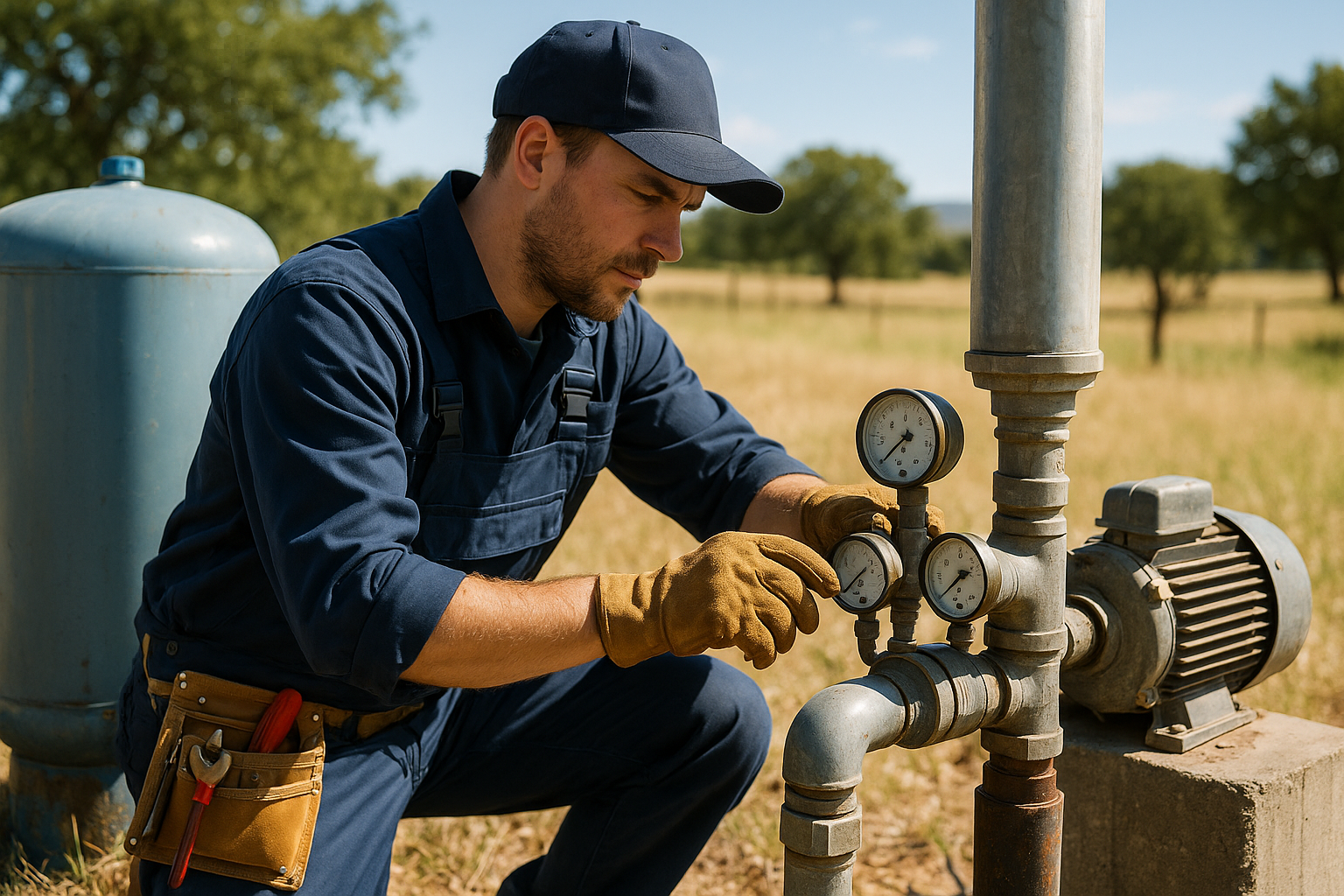
Booster Pump Solutions for Viejas Properties
As a Viejas property owner with a private well, you rely on your water system every day. The local geology in San Diego County — decomposed granite and fractured crystalline rock — creates unique conditions that require experienced, local well technicians who understand the area.
Viejas Geology and Well Characteristics
Viejas sits in the eastern San Diego County foothills, where wells typically penetrate decomposed granite and fractured crystalline basement rock. Most wells in the area range from 300 to 600 feet deep, encountering water-bearing fractures at varying depths. This geology creates challenges:
- Fractured bedrock aquifers — water flows through cracks, not uniform sand layers
- Variable yields — one property might get 15 GPM, a neighbor gets 5 GPM from the same depth
- Seasonal fluctuations — water tables drop during summer, recover during winter rains
- Elevation changes — Viejas terrain includes steep hillsides, requiring pressure management
- Hard water — granite aquifers produce mineral-rich water that builds up in pipes and equipment
When Do You Need a Booster Pump in Viejas?
Not every well needs a booster pump. Here's when we recommend them for Viejas properties:
1. Low Well Yield + Storage Tank System
If your well produces only 3-5 GPM but you need 15 GPM for showers and irrigation, a storage tank paired with a booster pump lets you draw water slowly from the well and deliver it at higher pressure when needed. Common for hillside properties where drilling hit low-yield fractures.
2. Elevation Pressure Loss
Properties built uphill from the well location lose approximately 0.43 PSI per foot of elevation gain. A well pump 200 feet downhill from your house might deliver only 20 PSI at the tap — not enough for normal fixtures. A booster pump at ground level restores proper pressure (40-60 PSI).
3. Long Horizontal Distances
Friction loss in pipes drops pressure over distance. A well 500+ feet from the house (common on larger Viejas acreage) can lose 10-15 PSI before water reaches your fixtures. A booster pump compensates for this loss.
4. Multi-Story Homes
Second and third story bathrooms need higher pressure than ground floor fixtures. A booster pump dedicated to upper floors ensures consistent pressure throughout the home.
5. Irrigation System Demands
Sprinkler systems for landscaping or small agricultural use need consistent 40-50 PSI. If your well pump can't maintain pressure while running multiple zones, a dedicated irrigation booster pump prevents pressure drops to the house.
Types of Booster Pumps We Install
1. Variable-Speed Booster Pumps (Most Popular)
Brands: Grundfos SCALA2, Goulds Aquavar, Franklin SubDrive
How they work: Built-in VFD (variable frequency drive) adjusts motor speed based on demand. Open one faucet, it spins slowly. Open three faucets, it spins faster to maintain pressure.
Advantages:
- Energy efficient — uses only the power needed for current demand
- No pressure tank required (though some installers add a small one for stabilization)
- Quiet operation
- Consistent pressure regardless of flow rate
- Longer motor lifespan from soft starts
Cost: $2,200-$3,800 installed (includes pump, controls, plumbing labor)
2. Constant-Pressure Booster Pumps
Brands: Grundfos SQE, Pentair FloXpress, Berkeley Pump
How they work: External pressure sensor and VFD controller regulate pump speed to maintain set pressure (typically 50-55 PSI).
Advantages:
- Rock-solid pressure — no fluctuation when multiple fixtures run
- Customizable pressure settings
- Works with existing pressure tanks
- Commercial-grade reliability
Cost: $2,800-$4,500 installed (higher due to separate VFD controller and sensors)
3. Standard On/Off Booster Pumps
Brands: Goulds GT Series, Grundfos JP, Red Lion RJC
How they work: Traditional pump with pressure switch. Turns on when pressure drops below set point (e.g., 30 PSI), turns off when it reaches upper limit (e.g., 50 PSI). Requires pressure tank to prevent rapid cycling.
Advantages:
- Lowest upfront cost
- Simple design, easy to repair
- Parts widely available
- Familiar to most technicians
Cost: $1,400-$2,200 installed (includes pump, pressure tank, switch, plumbing)
The Installation Process
A professional booster pump installation in Viejas typically follows this sequence:
Step 1: Site Assessment (30-60 minutes)
Our technician measures current system pressure with a gauge at multiple fixtures, checks well pump specifications, inspects existing plumbing, and determines optimal pump location. We test static pressure (no flow) and dynamic pressure (fixtures running) to calculate required boost.
Step 2: Equipment Selection
Based on measured data, we recommend pump size (typically 1/2 HP to 1 HP for residential), flow rate capacity, and control system type. We discuss options — standard vs. variable-speed, tank size, and whether to add filtration at the same time.
Step 3: Installation (3-5 hours)
We install the pump on a vibration-dampening pad (quieter operation), plumb inlet/outlet with shutoff valves for future service, wire the electrical circuit (often 240V for larger pumps), mount the pressure tank (if applicable), and install the controller/switch. All connections use brass or stainless fittings rated for well water.
Step 4: System Testing and Adjustment
We run the system under various load conditions (one fixture, multiple fixtures, irrigation zones), adjust pressure settings to your preference, verify no leaks or vibration, and test automatic restart after power cycling. Variable-speed pumps are calibrated for smooth ramp-up and shutdown.
Step 5: Customer Walkthrough
We show you the shutoff valves, explain basic maintenance (when to replace filters, how to check pressure), and provide documentation (pump model, settings, warranty info). You get a printed summary of the installation with our contact info for future service.
Costs for Viejas Booster Pump Projects
Based on recent Viejas and San Diego County installations, here's what you can expect:
| System Type | Equipment Cost | Labor Cost | Total Installed |
|---|---|---|---|
| Standard on/off (1/2 HP) | $600-$900 | $800-$1,300 | $1,400-$2,200 |
| Variable-speed (3/4 HP) | $1,200-$1,800 | $1,000-$2,000 | $2,200-$3,800 |
| Constant-pressure (1 HP) | $1,600-$2,400 | $1,200-$2,100 | $2,800-$4,500 |
| Large storage + booster | $2,800-$4,500 | $2,500-$3,800 | $5,300-$8,300 |
Additional costs to consider:
- Electrical panel upgrade: $400-$1,200 if your existing panel can't handle the pump load
- Trenching: $8-$15/linear foot if pump location requires buried conduit
- Pre-filtration: $300-$800 for sediment filter to protect pump from sand and debris
- Pressure reducing valve: $180-$350 if booster creates excessive pressure for home plumbing
Maintenance for Longevity
Booster pumps in Viejas face hard water, seasonal heat, and variable demand. Here's how to keep them running:
Every 3 Months
- Check pressure gauge readings (should be stable 40-60 PSI)
- Listen for unusual noises (grinding, squealing, excessive vibration)
- Inspect for leaks around fittings and seals
Every 6 Months
- Replace pre-filter cartridges (if installed)
- Test pressure switch operation (standard pumps)
- Check pressure tank air charge (should be 2 PSI below cut-in pressure)
Annually
- Professional inspection and cleaning
- Check motor bearings and seals
- Verify electrical connections are tight and corrosion-free
- Test VFD controller settings (variable-speed models)
Every 3-5 Years
- Replace pressure tank (bladder tanks eventually waterlog)
- Rebuild or replace pump motor if efficiency drops
Alternatives to Booster Pumps
Sometimes a booster pump isn't the best solution. We evaluate these alternatives during our site visit:
1. Upgrade the Well Pump
If your existing submersible pump is undersized or aging, replacing it with a higher-horsepower model (e.g., 1 HP → 1.5 HP) can increase both flow and pressure. More expensive than a booster pump ($3,500-$6,500 installed) but addresses the root cause.
2. Reduce Friction Loss
Replacing old galvanized pipes with larger-diameter PEX or HDPE reduces friction. Going from 3/4" to 1" pipe can recover 5-8 PSI on long runs. Cost: $6-$12/linear foot installed.
3. Zone Isolation
Install a small dedicated pump for problem areas (second floor, irrigation) while leaving the main system alone. Cheaper than replacing the main well pump, more targeted than a whole-house booster.
4. Storage Tank System
For low-yield wells, a 300-500 gallon storage tank filled slowly by the well pump (managed by float valves) provides reserve capacity. A booster pump draws from the tank on-demand. Initial cost is higher ($4,000-$7,000 total) but handles wells that can't sustain continuous flow.
Common Problems and Solutions
Booster Pump Cycles On and Off Rapidly
Cause: Waterlogged pressure tank, undersized tank, or failed bladder
Solution: Check tank air charge with pressure gauge (should be 2 PSI below cut-in). If waterlogged, drain and recharge. If bladder is ruptured, replace tank ($150-$400 for residential sizes).
Pressure Fluctuates During Use
Cause: Standard on/off pump without adequate tank size, or VFD settings need adjustment
Solution: For standard pumps, add a larger pressure tank (20-80 gallon). For variable-speed, recalibrate controller to respond faster to demand changes. SCWS technicians carry calibration tools for on-site adjustment.
Pump Runs But No Pressure Increase
Cause: Check valve stuck open, impeller damage, or plumbing bypass leaking
Solution: Shut off power, isolate pump with shutoff valves, disassemble and inspect check valve and impeller. Replace worn parts. If impeller is damaged (common with sandy water), install pre-filter to prevent recurrence.
Noisy Operation
Cause: Vibration from poor mounting, cavitation from inlet restriction, or worn bearings
Solution: Remount pump on rubber isolation pads, verify inlet pipe is full-size (no reducers), check for clogged pre-filter. If bearings are worn, motor rebuild or replacement needed.
Why Local Expertise Matters in Viejas
Well systems in San Diego County face challenges specific to the region. Well depths, water tables, and rock formations vary significantly even between neighboring properties. A technician familiar with Viejas's specific conditions can diagnose problems faster and recommend solutions that actually work — not generic fixes from a textbook.
What Sets SCWS Apart for Viejas Customers
- Two local offices — Ramona and Anza mean faster response times to Viejas
- Full-service well company — drilling, pump repair, water treatment, and everything in between
- Licensed C-57 contractor — properly licensed well drilling contractor (CSLB #1086994)
- Transparent pricing — honest assessments and upfront quotes, no surprise charges
- Same-day emergency service — when you have no water, we respond fast
- 4.9★ Google rating — hundreds of reviews from real customers across San Diego County
Frequently Asked Questions
How much does booster pump installation cost in Viejas?
Most residential booster pump installations in Viejas run $1,400-$3,800 depending on pump type and site complexity. Standard on/off pumps with pressure tanks cost $1,400-$2,200, while variable-speed models run $2,200-$3,800. Storage tank systems for low-yield wells cost $5,300-$8,300 installed.
How long does a booster pump last?
Quality booster pumps typically last 10-15 years with proper maintenance. Variable-speed models often outlast standard on/off pumps due to soft-start motor protection. Lifespan depends heavily on water quality — hard water with sand shortens pump life, while clean filtered water extends it.
Can I install a booster pump myself?
Technically possible if you have plumbing and electrical experience, but we don't recommend it. Incorrect sizing, improper electrical wiring (240V can be dangerous), and plumbing mistakes can damage your well system or create safety hazards. Professional installation includes permits, warranties, and guaranteed performance. DIY installations often void equipment warranties.
Will a booster pump increase my well's flow rate?
No. A booster pump increases pressure, not the volume of water your well produces. If your well yields 5 GPM, a booster pump delivers that 5 GPM at higher pressure — it can't create water that doesn't exist. For low-yield wells, a storage tank paired with a booster pump provides the solution (well fills tank slowly, booster delivers high-pressure flow on demand).
Do booster pumps use a lot of electricity?
Variable-speed booster pumps are very efficient — a 3/4 HP model uses roughly 560 watts at full load, often running at 30-50% capacity during normal use. Monthly cost averages $8-$15 for typical residential use. Standard on/off pumps cycle more frequently and may use slightly more energy, but the difference is minor ($10-$18/month).
What size booster pump do I need?
Size depends on required flow rate and pressure boost needed. Most Viejas homes need 1/2 to 1 HP pumps capable of 10-20 GPM. Calculate required flow: count simultaneous fixtures (shower 2.5 GPM, toilet 1.5 GPM, faucet 1.5 GPM, irrigation zone 8-12 GPM). Add 20% safety margin. For pressure, measure current PSI and determine desired PSI (typically 50-55 PSI). SCWS provides free sizing calculations during estimates.
Can a booster pump damage my plumbing?
If installed correctly, no. However, excessive pressure (>80 PSI) can strain old galvanized pipes, fixtures, and water heaters. We install pressure relief valves and adjust settings to safe levels. Modern PEX and copper plumbing handle 60-70 PSI without issue. If your home has old galvanized pipes, we may recommend a pressure reducing valve ($180-$350) to protect fixtures.
How loud is a booster pump?
Modern variable-speed pumps are very quiet — comparable to a refrigerator compressor (45-55 dB). Standard pumps are slightly louder when starting (60-65 dB). Installation location matters: pumps in garages or utility rooms are barely noticeable, while pumps near living spaces may need soundproofing or relocation. We use vibration isolation pads on all installations to minimize noise transmission.
What maintenance does a booster pump need?
Basic maintenance includes quarterly visual inspections (leaks, pressure gauge readings), semi-annual filter changes (if pre-filter installed), and annual professional service (inspect motor, check electrical connections, test pressure settings). Pressure tanks need bladder replacement every 5-8 years ($150-$400). Total annual maintenance cost averages $200-$350 including one professional service call.
How quickly can you install a booster pump in Viejas?
For standard installations with equipment in stock, we typically schedule within 2-3 business days and complete installation in 3-5 hours. Emergency service (no water, urgent need) can be same-day or next-day depending on availability. Custom systems (storage tanks, complex plumbing) may require 1-2 weeks for permitting and equipment delivery. We provide realistic timelines during the estimate — no false promises.
Service Area
We serve Viejas and all surrounding communities in San Diego County. With offices in Ramona (San Diego County) and Anza (Riverside County), we're positioned to reach Viejas quickly for both scheduled and emergency service calls.