Do Wells Need Regular Maintenance?
Yes, private wells absolutely need regular maintenance. Unlike city water where the utility handles treatment, testing, and infrastructure, private well owners are responsible for everything. Your well is your water utility—and it needs care to keep producing safe, reliable water.
📋 In This Guide
Why Well Maintenance Matters
You Are Your Own Water Utility
When you have a private well, you're responsible for:
- Water quality — No one tests your water but you
- Equipment operation — Pumps, tanks, and controls need care
- Safety — Contamination can happen without proper maintenance
- Repairs — No utility company comes when things break
The Cost of Neglect
Well maintenance is an investment that pays for itself:
- Pump lifespan: 15-25 years with maintenance vs. 8-10 years without
- Emergency repairs: $2,000-$5,000+ when major failures occur
- Health costs: Contaminated water causes illness
- Property value: Neglected wells affect home sales
What Maintenance Does a Well Need?
Monthly Tasks (DIY - 10 minutes)
- ☐ Check for leaks around pressure tank and pipes
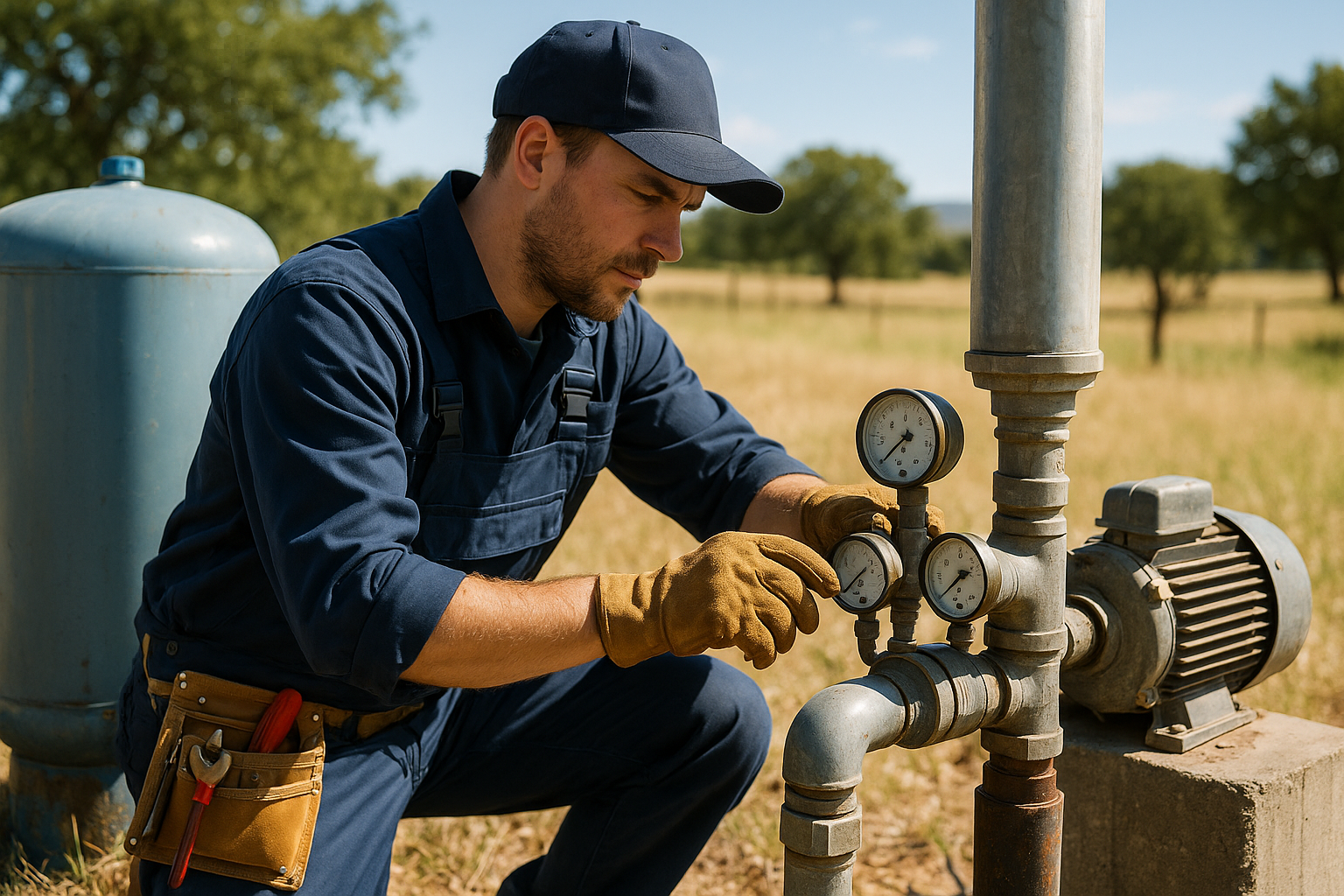
- ☐ Note pressure gauge reading (should be 40-60 PSI)
- ☐ Listen to pump operation (any unusual sounds?)
- ☐ Quick water quality check (color, taste, smell)
- ☐ Inspect wellhead area for debris or damage
Quarterly Tasks (DIY - 30 minutes)
- ☐ Check pressure tank air charge (most neglected task!)
- ☐ Inspect or change sediment filter
- ☐ Check water softener salt level (if equipped)
- ☐ Visual inspection of electrical components
Annual Tasks (Professional Recommended)
- ☐ Professional well system inspection
- ☐ Water testing (bacteria, nitrates, basic chemistry)
- ☐ Pump performance test (flow rate, amp draw)
- ☐ Electrical system check
- ☐ Replace UV bulb (if equipped)
- ☐ Water heater anode inspection
The Most Important Task: Pressure Tank Check
The quarterly pressure tank air check is the single most important DIY maintenance task—and the most commonly skipped. Here's why it matters:
What Happens Without Proper Air Charge
- Tank becomes "waterlogged" (no air cushion)
- Pump cycles on/off rapidly ("short cycling")
- Each cycle stresses the pump motor
- Pump burns out years early
- A $10 check prevents a $2,000 pump replacement
How to Check Air Charge
- Turn off power to well pump
- Open a faucet to drain pressure
- Find the air valve on top of tank (like a tire valve)
- Check pressure with a tire gauge
- Should be 2 PSI below your cut-in pressure
- Add air with bike pump if low
Water Testing: Your Safety Check
Minimum Annual Testing
| Test | Why It Matters | Cost |
|---|---|---|
| Coliform bacteria | Indicates contamination | $25-$50 |
| Nitrates | Agricultural/septic contamination | $25-$40 |
| pH | Affects pipes, treatment | $15-$25 |
| Total package | Comprehensive safety check | $100-$200 |
When to Test More Often
- After any flooding or heavy rain
- If water changes (taste, smell, color)
- After well or septic work
- If household members have unexplained illness
- When buying or selling property
What Professional Inspection Includes
An annual professional inspection typically covers:
Pump Testing
- Flow rate — How many gallons per minute your well produces
- Amp draw — Motor electrical consumption (high amps = wear)
- Cycle timing — How long pump runs, how often it cycles
- Pressure performance — Does it reach proper cut-off?
Electrical Check
- Voltage at the pump
- Wire connections and corrosion
- Pressure switch operation
- Control box condition
- Ground fault protection
Physical Inspection
- Wellhead and cap condition
- Well casing (visible portion)
- Pressure tank for rust or damage
- All fittings and connections
- Treatment equipment (filters, softener, UV)
Maintenance Costs
Annual Maintenance Budget
| Item | Cost | Frequency |
|---|---|---|
| Professional inspection | $150-$300 | Annual |
| Water testing | $100-$250 | Annual |
| Sediment filters | $30-$80 | 2-4x/year |
| Softener salt | $50-$150 | Annual |
| UV bulb (if equipped) | $60-$150 | Annual |
| Total | $300-$600 | Per year |
Compare to Cost of Neglect
| Problem | Repair Cost | Prevention Cost |
|---|---|---|
| Pump failure (early) | $1,500-$3,000 | $50/year (tank check) |
| Bacterial illness | Medical bills + suffering | $100/year (testing) |
| Clogged softener | $500-$1,500 | $80/year (filters) |
| Pressure tank failure | $500-$1,200 | $0 (quarterly check) |
Signs Your Well Needs Attention
Call for Service If You Notice:
- Pump runs constantly — Leak, low water level, or failing pump
- Pump cycles rapidly — Waterlogged tank or leak
- Pressure drop — Pump issue, clogged filter, or well problem
- Sputtering faucets — Air in lines, low water, or pump issue
- Higher electric bills — Pump working harder than normal
- Water quality changes — Contamination or well changes
- Unusual noises — Bearing failure, cavitation, debris
Frequently Asked Questions
Do private wells require maintenance?
Yes, private wells absolutely require regular maintenance. Unlike city water where the utility handles everything, well owners are responsible for their own water quality, equipment operation, and safety. Recommended maintenance includes monthly visual checks (leaks, pressure), quarterly pressure tank inspections (the most important DIY task), annual water testing for bacteria and nitrates, and yearly professional system inspections. Neglecting maintenance leads to shorter equipment life, water quality problems, and expensive emergency repairs.
How often should a well be serviced?
Professional well service should occur at least annually. This includes pump performance testing (flow rate, amp draw), electrical inspection, pressure system evaluation, and water quality testing. More frequent service may be needed if you notice changes in pressure, water quality, unusual pump sounds, or higher electric bills. Between professional visits, homeowners should do monthly visual checks and quarterly pressure tank maintenance themselves.
What happens if you don't maintain a well?
Neglected wells suffer serious consequences: pump life drops from 15-25 years to 8-10 years, water quality problems develop including bacterial contamination, small problems become expensive emergencies ($2,000-$5,000+ repairs), potential health hazards from untreated water, and property value impacts when selling. A neglected pressure tank causes pump short-cycling that burns out motors. Skipped water testing means you don't know if your water is safe. The cost of prevention is far less than the cost of repair.
How much does annual well maintenance cost?
Annual professional well inspection costs $150-$300. Water testing adds $100-$250 depending on the panel. Filter replacements cost $50-$100/year. Softener salt (if equipped) runs $50-$150/year. UV bulb replacement (if equipped) costs $60-$150. Total annual maintenance budget: $300-$600 for most wells. Compare this to emergency pump replacement ($1,500-$3,000), pressure tank failure ($500-$1,200), or medical costs from contaminated water. Maintenance is cheap insurance.
Our Maintenance Programs
Southern California Well Service offers maintenance plans for well owners:
- Annual inspection — Complete system evaluation
- Water testing — Coordinated with certified labs
- Priority service — Maintenance customers get faster response
- Discounted repairs — If issues are found
- Records — Documentation for your files
Start Your Maintenance Program
Annual maintenance extends equipment life and ensures safe water.
Call (760) 440-8520Annual inspections from $150 | San Diego, Riverside & San Bernardino Counties
Related: Maintenance Services | Maintenance Checklist | Water Testing
Related Articles
Continue learning about well maintenance and troubleshooting