Connecting Your Well to Drip Irrigation Systems | SCWS
Drip irrigation is the most efficient way to use well water for crops. Learn how to connect your well to drip systems, filtration requirements, pressure considerations, and system design for California farms.
📋 In This Guide
See our irrigation well services.
(760) 440-8520Well-to-Drip System Components
A complete well-fed drip system includes: submersible pump, pressure tank (optional but recommended), backflow preventer, filtration station, pressure regulator, mainline pipe, zone valves, sub-main lines, and drip tape or tubing with emitters. For agricultural scale, add a fertilizer injector (fertigation) and automation controller. Budget $2,000-$5,000 per irrigated acre for professional drip system installation, less for DIY with quality components.
Filtration Requirements for Well Water
Drip emitters have tiny openings (0.5-1mm) that clog easily. Well water requires multi-stage filtration: a sand separator or settling tank removes heavy particles, followed by screen or disc filters (120-200 mesh). Iron and manganese in groundwater can precipitate and clog emitters—treat with oxidation and filtration if levels exceed 0.3 ppm iron or 0.05 ppm manganese. Clean or backwash filters regularly; automatic backwash filters reduce maintenance for larger systems.
Pressure and Flow Management
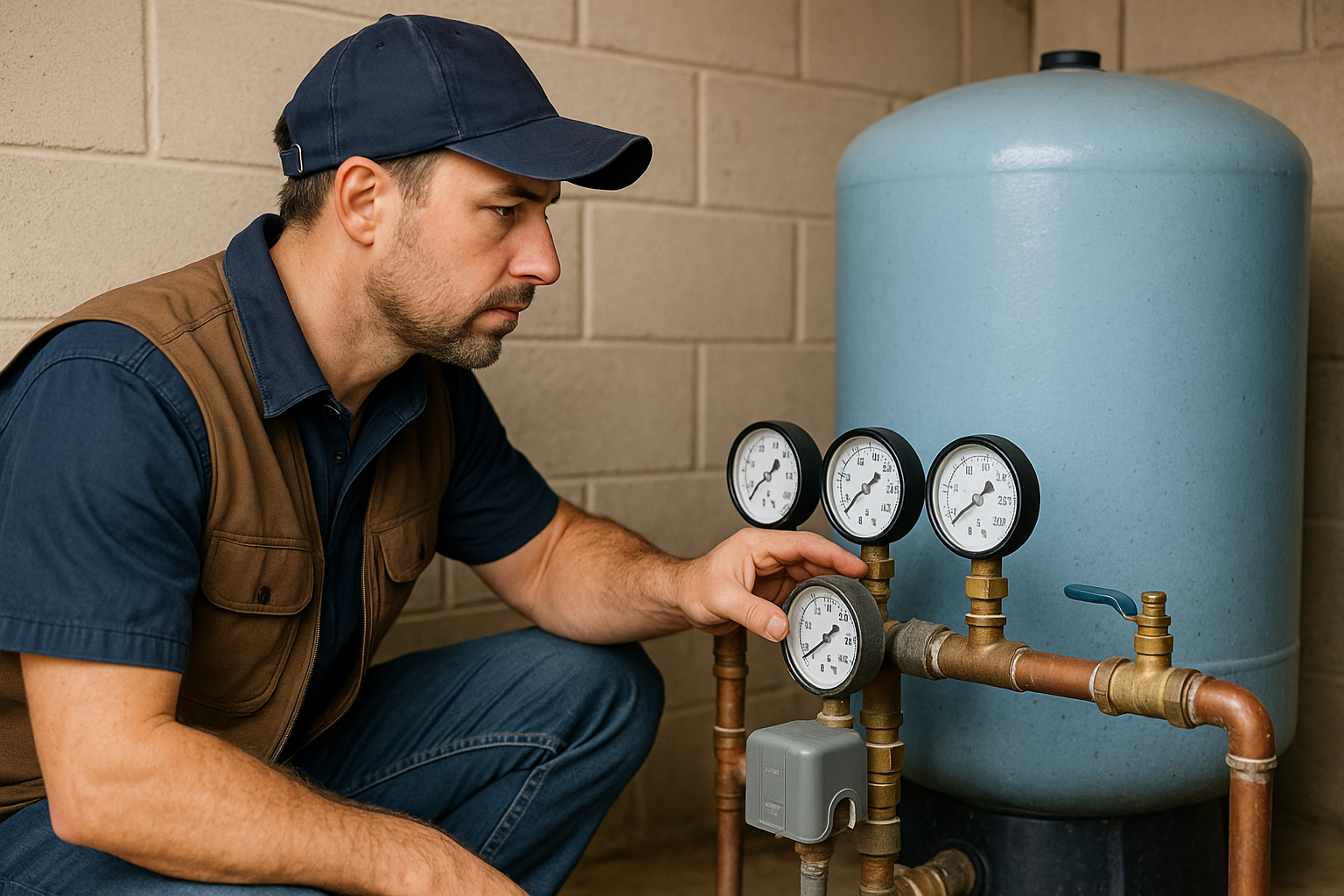
Match your well's GPM to drip system demands. A 10-acre drip system with 1 GPH emitters spaced every 18 inches needs roughly 15-20 GPM per acre when running all zones simultaneously—or design for sequential zone irrigation with smaller wells. Install pressure regulators at each zone inlet (15-25 PSI typical). Pressure-compensating emitters are essential for uneven terrain. Add pressure gauges at the filter inlet, outlet, and zone inlets to monitor system performance.
Automation and Fertigation
Automated controllers schedule irrigation based on time, soil moisture sensors, or ET data. Battery or solar-powered controllers work for remote fields without electrical service. Fertigation injectors add fertilizer through the drip system—the most efficient delivery method, reducing fertilizer use by 20-40% compared to broadcast application. Inject downstream of filters to prevent clogging. Venturi injectors are affordable ($100-$300), while proportional injectors ($500-$2,000) provide more precise control.
For agricultural applications, we install high-capacity Franklin Electric and Grundfos submersible pumps from 7.5 to 25+ HP. Grundfos SQFlex solar pumps are available for off-grid ranch locations.
Frequently Asked Questions
Can I run drip irrigation directly from my well?
Yes, but you'll need filtration between the well and drip lines. Well water contains sediment, minerals, and sometimes bacteria that clog drip emitters. At minimum, install a 120-mesh screen filter. Many wells also need sand media filters or disc filters. A pressure regulator ensures consistent flow to emitters regardless of pump pressure fluctuations.
What pressure does drip irrigation need?
Most drip systems operate at 10-25 PSI at the emitters. Wells often produce higher pressure (40-60 PSI), requiring pressure regulators. Low-flow drip tape works at 8-10 PSI, while drip emitters and micro-sprinklers typically need 15-25 PSI. Pressure-compensating emitters maintain consistent flow across varying pressures and terrain elevation changes.
How much water does drip irrigation save compared to sprinklers?
Drip irrigation typically uses 30-50% less water than sprinkler systems by delivering water directly to root zones with minimal evaporation. A crop requiring 5,000 gallons daily via sprinklers might need only 2,500-3,500 gallons with drip. This efficiency is crucial for farms with limited well capacity—drip makes viable agriculture possible on wells that couldn't support sprinkler irrigation.
Get Expert Help
Contact Southern California Well Service for professional assistance.
Call (760) 440-8520Serving San Diego, Riverside & San Bernardino Counties
Related Articles
Continue learning about well maintenance and troubleshooting