Earthquake Damage to Wells: Inspection & Repair Guide
California's seismic activity means earthquakes are a fact of life—and they can significantly impact private wells. Ground movement can damage casings, disturb aquifers, change water levels, and affect water quality. If you've experienced an earthquake, here's how to assess your well and what to do if you find problems.
📋 In This Guide
How Earthquakes Affect Wells
Structural Damage
- Casing damage — Cracking, shearing, or displacement of steel/PVC casing
- Seal failure — Grout seal around casing can crack, allowing surface contamination
- Screen damage — Well screen can be crushed or shifted
- Pipe damage — Drop pipe, connections, and fittings can break or separate
- Surface equipment — Pressure tanks, piping, and electrical can be damaged
Aquifer Changes
- Water level changes — Can rise or fall significantly
- New fractures — Open pathways for water (or contamination)
- Closed fractures — Previous water pathways blocked
- Sediment disturbance — Particles shaken into suspension
- Flow pattern changes — Groundwater direction or rate changes
Water Quality Effects
- Turbidity — Cloudy/muddy water from disturbed sediment
- Chemical changes — New minerals entering the aquifer
- Bacterial contamination — Surface water intrusion through new fractures
- Taste/odor changes — Different aquifer sources mixing
Post-Earthquake Inspection Checklist
Immediately After (Same Day)
Safety first: Don't approach the well if you see structural damage to surrounding ground, smell gas, or see downed power lines.
Visual Inspection
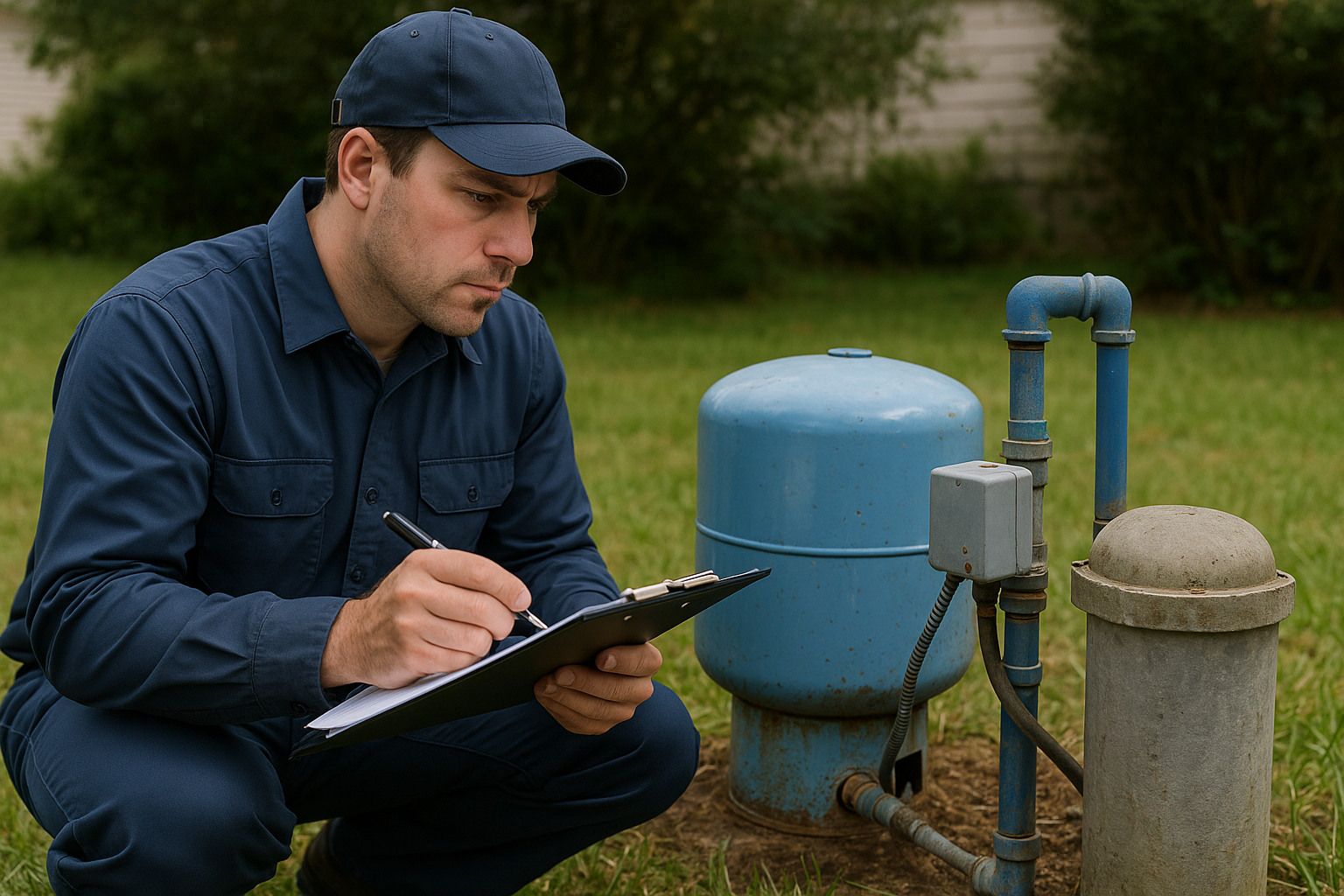
- ☐ Check wellhead area for ground cracks or settlement
- ☐ Inspect well cap—is it displaced or damaged?
- ☐ Look for visible casing damage at surface level
- ☐ Check pressure tank for shifting, leaks, or damage
- ☐ Inspect piping for breaks or separations
- ☐ Check electrical panel and control box
- ☐ Look for new water seepage around wellhead
Operational Check
- ☐ Is there power to the pump?
- ☐ Does the pump start and run normally?
- ☐ Does it build pressure properly?
- ☐ What does the water look like? (Color, clarity)
- ☐ Any unusual sounds from the pump?
Within 24-48 Hours
- ☐ Run water through an outside faucet for 10-15 minutes
- ☐ Check if turbidity clears with pumping
- ☐ Note any persistent changes in pressure or flow
- ☐ Check all fixtures inside the house
- ☐ Monitor for pump cycling issues
Within One Week
- ☐ Test water quality (bacteria at minimum)
- ☐ Monitor water level if possible (measure static level)
- ☐ Note any ongoing sediment or quality issues
- ☐ Schedule professional inspection if any concerns
Common Earthquake Damage Types
Casing Damage
Symptoms:
- Sudden or increased sediment in water
- Water level changes dramatically
- New contamination (bacteria) that wasn't present before
- Visible damage at surface casing
Diagnosis: Down-hole camera inspection
Repair: Casing liner installation or new well
Cost: $3,000-$10,000 for liner; $15,000-$50,000+ for new well
Pump Damage
Symptoms:
- Pump won't start or runs but produces no water
- Reduced flow rate
- Sand or debris in water (pump intake damage)
- Unusual motor sounds
Diagnosis: Pump pull and inspection
Repair: Pump replacement or repair
Cost: $1,500-$4,000+ depending on depth
Water Level Drop
Symptoms:
- Well runs out of water or produces less
- Pump cycles frequently
- Air in water lines
Diagnosis: Water level measurement
Solutions:
- Wait—water level may recover over weeks/months
- Lower pump if water is at a new level
- Deepen well if level dropped permanently
- Drill new well if aquifer shifted significantly
Water Level Rise
Less common but can happen:
- New fractures increase aquifer connection
- Ground compression raises water table
Concerns: Rising water can bring contamination if levels reach near surface
Contamination
Symptoms:
- Bacteria present that wasn't before
- New taste or odor
- Chemical changes in water tests
Causes:
- Surface water intrusion through casing cracks
- New fractures connecting contaminated zones
- Septic systems affected by quake leaking into aquifer
Solutions:
- Shock chlorination (if contamination is minor/temporary)
- Repair casing damage to stop contamination pathway
- Water treatment installation (UV, filtration)
- New well if contamination source can't be eliminated
Earthquake Magnitude and Well Response
Response by Earthquake Magnitude
| Magnitude | Typical Well Impact | Recommended Action |
|---|---|---|
| <4.0 | Usually minimal; possible temporary turbidity | Visual check; flush water |
| 4.0-5.0 | Possible sediment disturbance; minor water level changes | Full inspection; monitor water quality |
| 5.0-6.0 | Likely sediment issues; possible casing stress; water changes | Professional inspection; water testing |
| 6.0-7.0 | Significant risk of casing damage; major aquifer effects | Professional inspection required; don't drink until tested |
| >7.0 | High probability of damage; potential well loss | Emergency professional assessment |
Factors That Increase Damage Risk
- Proximity to epicenter — Closer = more impact
- Soil type — Soft soils amplify shaking
- Well age — Older wells more vulnerable
- Well depth — Deeper wells have more casing at risk
- Casing material — PVC can crack; steel can offset
- Aquifer type — Fractured rock wells may see flow changes
Water Testing After Earthquakes
Recommended Test Panel
| Test | Why After Quake | Cost |
|---|---|---|
| Coliform bacteria | New contamination pathways | $25-$50 |
| E. coli | Fecal contamination indicator | Included |
| Nitrates | Surface water/septic intrusion | $25-$40 |
| Turbidity | Sediment measurement | $15-$25 |
| pH | Aquifer chemistry changes | $15-$25 |
When to Test
- Wait 24-48 hours after quake (let initial disturbance settle)
- Pump for 30 minutes before collecting sample
- Retest in 2-4 weeks to confirm results
- If contamination found, test again after treatment
Insurance Considerations
Earthquake Insurance
- Standard homeowner's insurance does NOT cover earthquake damage
- Separate earthquake policy required (CEA or private)
- Well and water system may or may not be covered—check policy
- Document all damage with photos before repairs
Documentation for Claims
- Photos of all visible damage
- Water test results (before and after)
- Written professional inspection report
- Repair estimates from licensed contractors
- Receipts for any emergency repairs
Frequently Asked Questions
Can an earthquake damage a well?
Yes. Earthquakes can damage wells in several ways: shifting ground can crack, shear, or offset well casings (especially older steel casings or PVC); sediment can be shaken loose from the aquifer and well, clogging pumps and screens; water levels can change dramatically (both up and down) due to aquifer compression or new fracture pathways; and water quality can be affected by new fractures that allow surface water or contamination to reach the aquifer. Even moderate earthquakes can impact wells, especially older wells or those in certain soil types.
Should I check my well after an earthquake?
Yes, check your well after any earthquake you can feel. For minor quakes (under 4.0 magnitude), a visual inspection and water quality check is usually sufficient—look for cracks near the wellhead, run water and check for clarity, listen for unusual pump sounds. For moderate quakes (4.0-5.5), add water testing within a week. For significant quakes (5.5+) or if you notice any changes in water production or quality, get a professional inspection. Even if the well seems fine initially, changes underground may take time to become apparent.
Can earthquakes affect water quality?
Yes, significantly. Earthquakes can disturb sediment in the aquifer and well (causing temporary turbidity), open new fractures that allow surface water or contamination to reach the groundwater, change groundwater flow patterns that may bring different water chemistry, stir up naturally occurring minerals, and damage well seals that allow surface contamination to enter. Water may appear cloudy, taste different, smell different, or have elevated bacteria or chemical levels. Always test water after significant earthquakes, even if it looks and tastes fine.
Why did my well water turn muddy after an earthquake?
Earthquake vibrations shake loose sediment particles that have accumulated in the well, aquifer formation, piping, and pressure tank over time. This disturbed sediment shows up as turbidity (cloudiness) or visible particles in your water. This typically clears within hours to days of normal pumping as the particles work their way through the system. If water stays muddy beyond a week, or if you see sand consistently coming through faucets, the well may have structural damage—the casing may be cracked or the well screen damaged, allowing formation sediment to continuously enter the well.
Our Earthquake Assessment Services
Southern California Well Service provides post-earthquake well evaluation:
- Emergency inspection — Rapid response after seismic events
- Video inspection — Down-hole camera to assess casing condition
- Water testing — Contamination assessment
- Pump pulls — If equipment inspection or replacement needed
- Casing repair — Liner installation for damaged casings
- Documentation — Reports for insurance claims
Earthquake Damage Concerns?
If you've experienced an earthquake and are concerned about your well, we can help.
Call (760) 440-8520Emergency response | Professional assessment | Insurance documentation
Related: Well Inspection | Water Testing | Casing Repair
Related Articles
Continue learning about well maintenance and troubleshooting