Electric Bill High Well Pump
A sudden spike in your electric bill can often be traced to your well pump. Well pumps are one of the largest electricity consumers in rural homes, and when something goes wrong, your power bill reflects it. Here's how to identify if your well pump is causing high electric bills and what to do about it.
How Much Should a Well Pump Cost to Run?
Typical residential well pump electrical costs:
- 1 HP pump: $20-$40/month for average household
- 1.5 HP pump: $30-$60/month
- 2 HP pump: $40-$80/month
These costs assume normal operation with the pump running 1-3 hours per day total. If your well pump-related costs are significantly higher, something is wrong.
Common Causes of High Well Pump Electric Bills
1. Pump Running Constantly or Too Frequently
This is the #1 cause
If your pump runs 6-12+ hours per day instead of 1-3 hours, your electric bill can triple or more.
Possible reasons:
- Leaking plumbing: Hidden leaks force pump to run constantly replacing lost water
- Failed pressure tank bladder: Tank doesn't hold pressure, pump cycles every time you turn on a faucet
- Waterlogged pressure tank: No air cushion, causing short cycling
- Stuck check valve: Water drains back down the well, pump restarts repeatedly
- Pressure switch problems: Incorrect settings or stuck contacts
- Irrigation system leaks: Underground irrigation leaks can go unnoticed while draining thousands of gallons
2. Pump Working Harder Than Necessary
Even if runtime seems normal, a struggling pump uses more power:
- Lowered water table: Pump must work harder to lift water from greater depth
- Partially clogged pump or pipes: Restricted flow increases resistance
- Scale buildup on pump impellers: Reduces efficiency
- Worn pump impellers: Pump works harder to achieve same pressure
- Undersized or oversized pump: Wrong pump for the application wastes energy
3. Electrical Problems
Electrical issues can increase power consumption:
- Low voltage: Pump draws more amperage to compensate, using more power and shortening pump life
- Corroded electrical connections: Creates resistance, wastes energy as heat
- Failing motor windings: Motor works inefficiently before complete failure
- Capacitor problems: Reduces motor efficiency
4. Increased Water Usage
Sometimes the pump is fine, but usage has increased:
- Additional occupants in household
- New irrigation system or increased landscape watering
- Filling a pool or hot tub
- Running toilets (can waste 200+ gallons per day)
Need Professional Help?
Southern California Well Service provides expert pump diagnostics across San Diego, Riverside, and San Bernardino Counties. Licensed C-57 contractor (CSLB #1086994).
How to Diagnose the Problem
Step 1: Check if Pump is Running Excessively
- Turn off all water use in the house
- Listen at the well or pressure tank area
- Wait 10-15 minutes – pump should NOT be running
- If pump kicks on, you have a leak or pressure tank problem
Step 2: Monitor Pump Cycle Frequency
Count pump cycles during normal daily use:
- Normal: 10-30 cycles per day for typical household
- Problem: 50-100+ cycles per day indicates short cycling or leaks
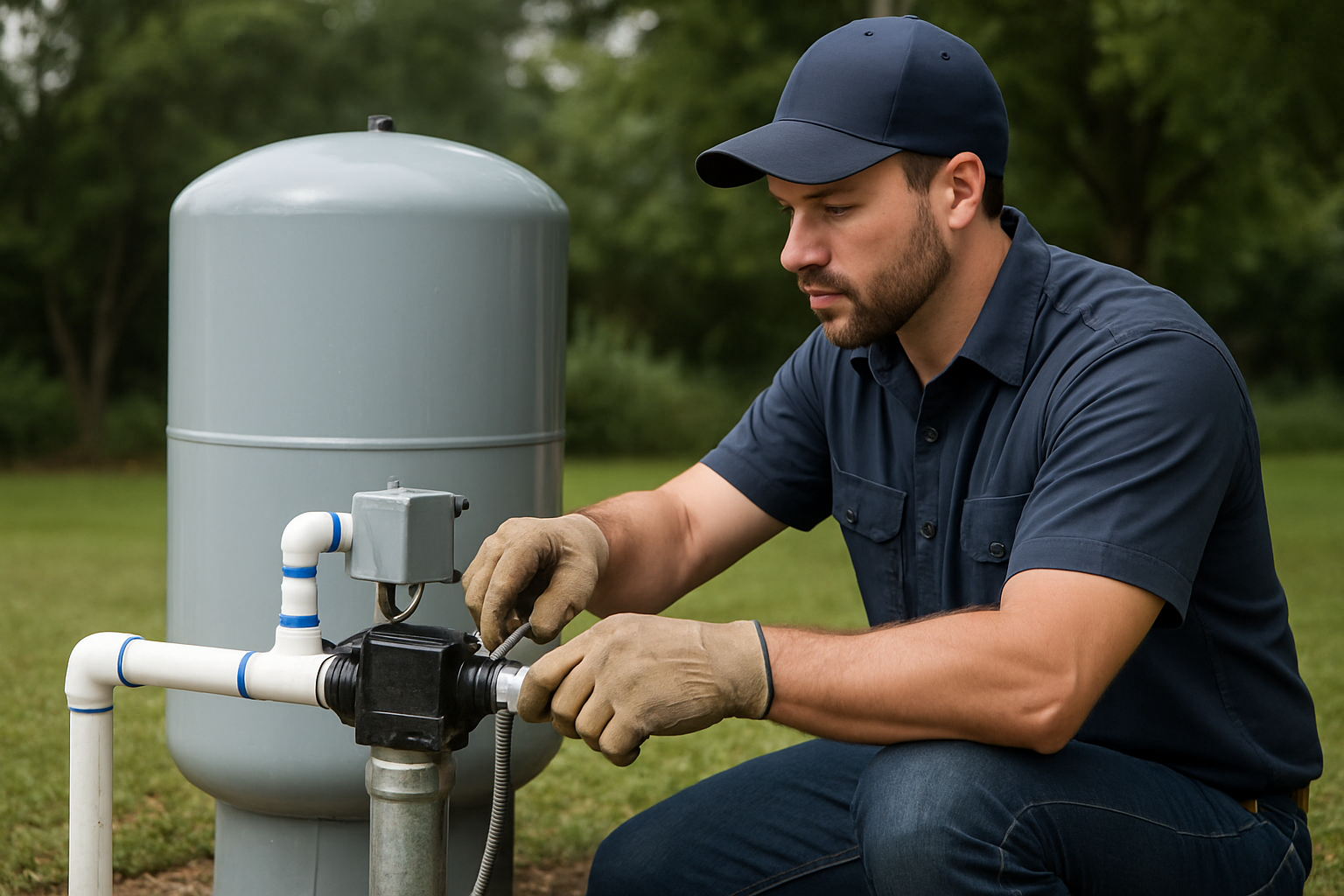
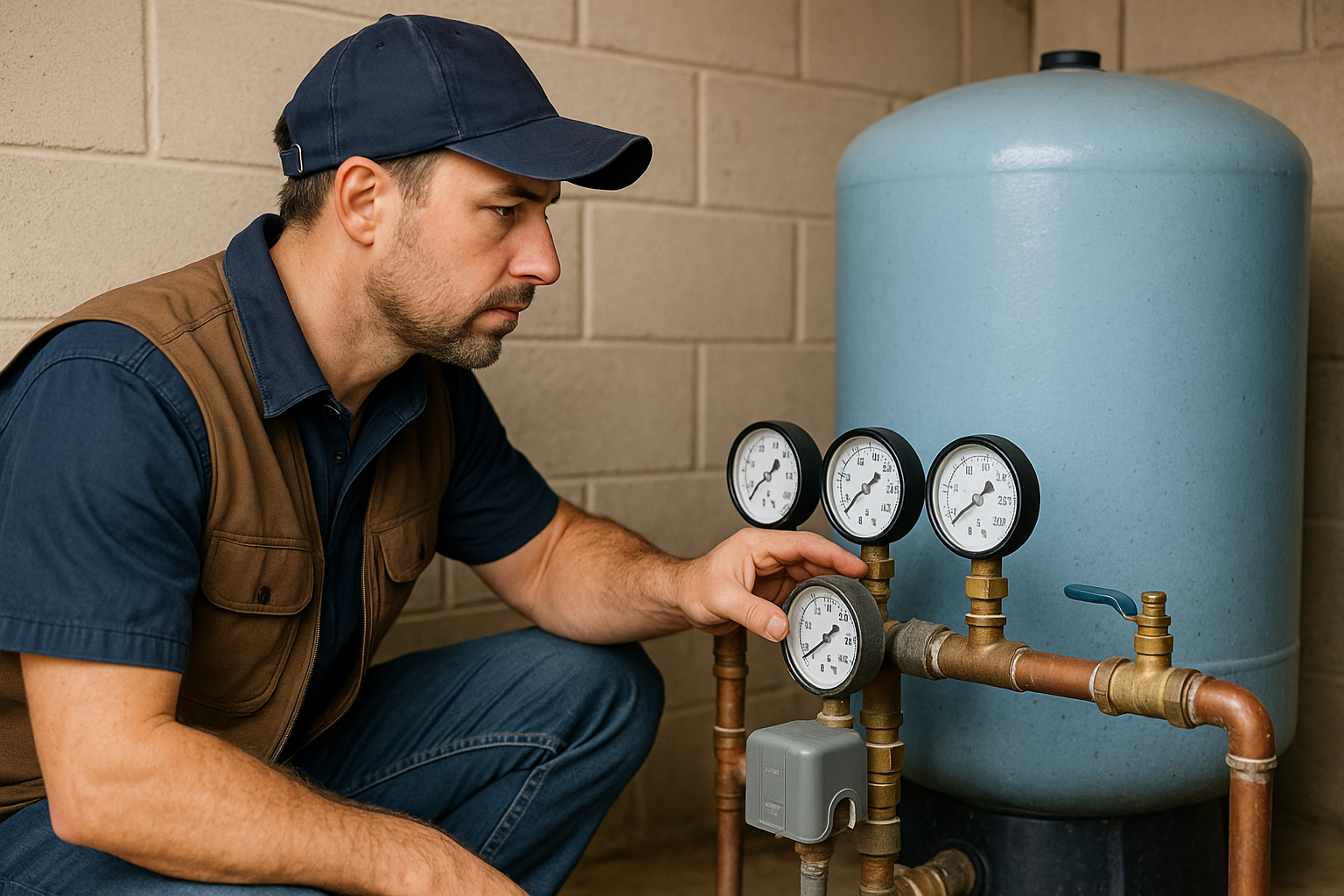
Step 3: Check Pressure Tank
- Tap the tank – should sound hollow in upper portion, solid (water-filled) in lower portion
- If entire tank sounds solid, bladder has failed or tank is waterlogged
- Check air pressure at Schrader valve on top (with pump off, pressure relieved) – should be 2 PSI below cut-in pressure
Step 4: Look for Leaks
- Check water meter – with all fixtures off, meter should not be moving
- Add food coloring to toilet tanks – if color appears in bowl without flushing, flapper is leaking
- Look for wet areas in yard indicating underground leaks
- Check irrigation system zones individually
Step 5: Monitor Electrical Usage
Options to measure pump electricity use:
- Install a kWh meter on the well pump circuit ($30-$80 for basic meter)
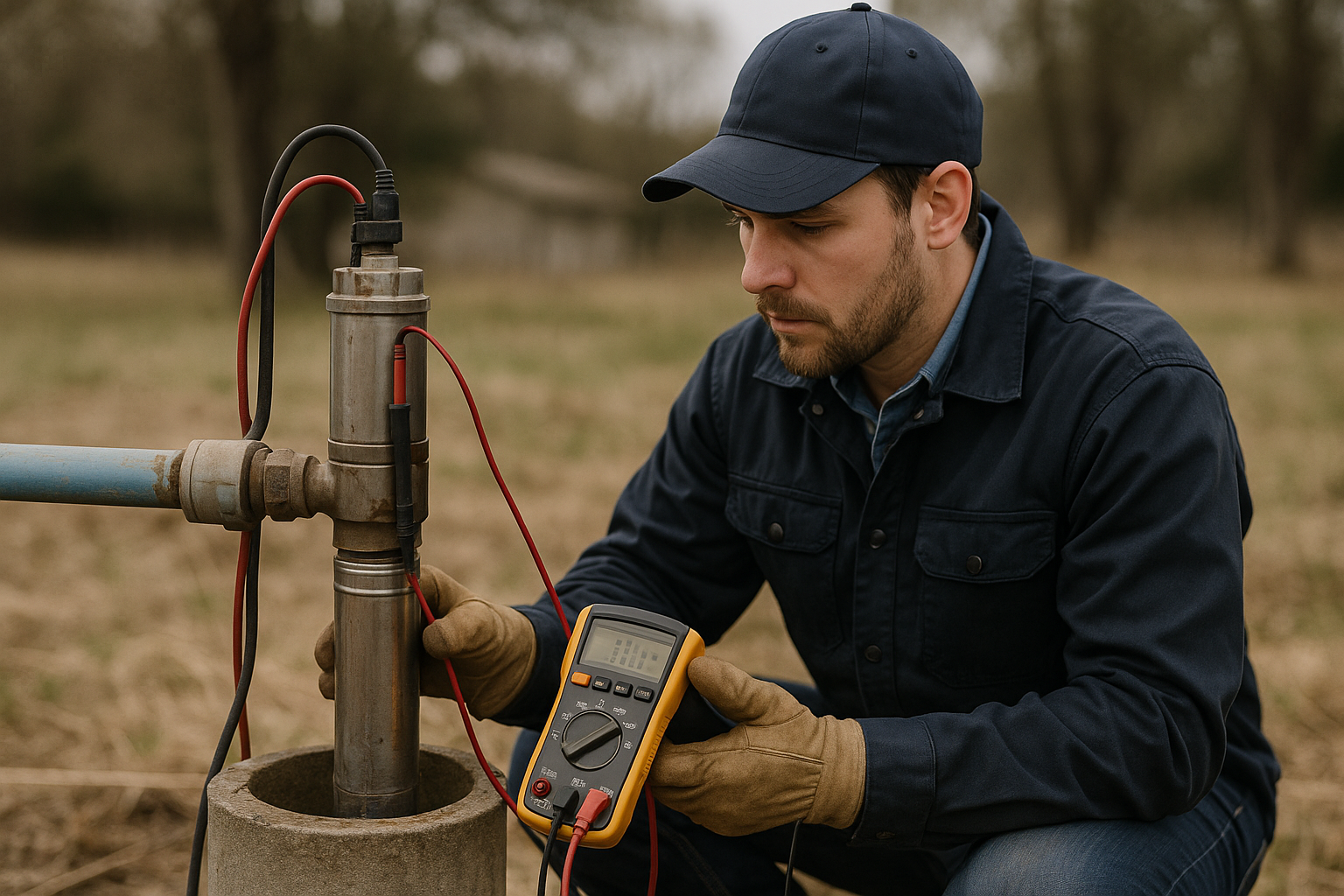
- Have an electrician measure amp draw during pump operation
- Compare electric bills before and after fixing suspected problems
Solutions to Reduce Well Pump Electric Costs
Quick Fixes You Can Try
- Fix leaking faucets and toilets – Can save $20-$50/month
- Reduce irrigation – Adjust timers, fix broken sprinkler heads
- Check pressure settings – Lower pressure switch settings slightly (e.g., 40/60 instead of 50/70) reduces pump work
Professional Repairs
- Replace pressure tank: $500-$1,200 – Often reduces pump cycles by 50-70%
- Replace failing pump: $1,500-$4,000 – New efficient pump uses less power
- Install variable frequency drive: $800-$1,500 – Can reduce energy use 20-40%
- Lower pump in well: $800-$1,800 – If water table has dropped, reducing lift distance
- Well rehabilitation: $1,500-$4,000 – Restores flow, reduces pump strain
- Repair electrical connections: $200-$600 – Eliminates resistance losses
When High Electric Bills Signal Pump Failure
Warning signs your pump is failing:
- Electric bill has doubled or tripled suddenly
- Pump runs hot to the touch
- Breaker trips frequently
- Pressure fluctuates erratically
- Grinding or rattling noises
- Reduced water pressure despite pump running more
Don't wait for complete failure – a struggling pump wastes electricity and can cause secondary damage. Call for professional evaluation.
Real-World Example: Electric Bill Savings
Case study from Ramona, CA:
Homeowner reported electric bill jumped from $180/month to $380/month. We found:
- Pressure tank bladder had failed
- Pump was short-cycling 150+ times per day (vs. normal 20-30)
- Small leak in irrigation system (5 GPM) had gone unnoticed
Solution: Replaced pressure tank ($850), repaired irrigation leak. Electric bill dropped back to $190/month – saving $190/month. Repair paid for itself in under 5 months.
Prevention Tips
- Annual well system inspection catches problems early
- Replace pressure tank bladder every 7-10 years proactively
- Fix leaks promptly – even small leaks add up
- Monitor electric bills – sudden increases signal problems
- Keep pressure settings at reasonable levels (40/60 or 50/70 PSI typical)
Get Your Well System Evaluated
If your electric bill has increased and you suspect your well pump, contact Southern California Well Service at (760) 440-8520. We'll diagnose the cause, provide upfront pricing for repairs, and help you get your electricity costs back to normal.
Serving San Diego, Riverside, and San Bernardino counties with complete well system diagnostics and repair. Licensed CSLB #1086994.
High Electric Bill? Let's Find Out Why
Expert well pump diagnostics and repair across Southern California.
Call (760) 440-8520