Fire Season Well Protection in California
California's fire season puts thousands of private wells at risk every year. If you live in a rural or semi-rural area of San Diego, Riverside, or San Bernardino County, protecting your well before fire season—and knowing what to do during and after a wildfire—can save you thousands in repairs and keep your family safe.
📋 In This Guide
At Southern California Well Service, we've helped hundreds of homeowners recover their wells after wildfires, including major events like the 2003 Cedar Fire and 2007 Witch Creek Fire. This guide shares what we've learned about protecting wells and getting them back online safely.
Emergency Well Service After Fire:
(760) 440-8520We prioritize post-fire inspections for affected homeowners
How Wildfires Damage Water Wells
Understanding how fires affect wells helps you protect them better. Here's what's at risk:
Surface Equipment (High Risk)
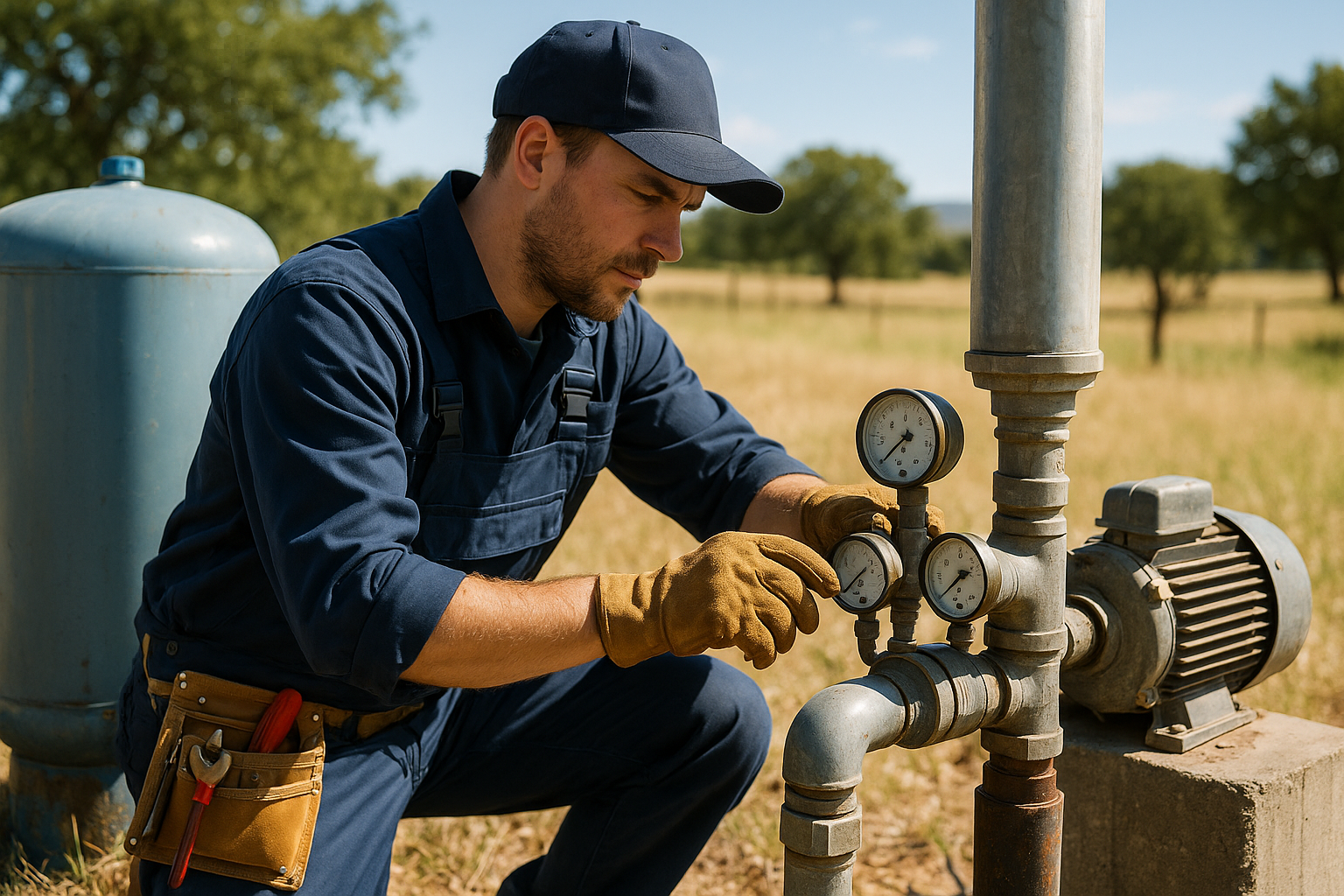
- Pressure tanks — Steel tanks can survive, but the rubber bladder inside fails at high temperatures. Bladderless tanks may warp.
- Electrical wiring — Plastic conduit and wire insulation melt, creating fire hazards and shorts.
- Well caps — Plastic caps melt completely; metal caps can seal from ash intrusion.
- Pressure switches and control boxes — Plastic housings melt, electronics fail.
- PVC piping — Any exposed PVC will melt or burn, contaminating the system with plastic residue.
Below-Ground Components (Lower Risk)
- Submersible pump — Usually safe 50+ feet underground, but can fail if power surges or the well cap melts and debris enters.
- Well casing — Steel and PVC casings underground are generally protected by soil, but surface-level sections may be damaged.
- Drop pipe — Safe unless the well becomes contaminated with debris or firefighting chemicals.
Water Contamination Risks
- Ash and debris — If the well cap fails, ash can enter directly.
- Firefighting chemicals — Fire retardants and foam contain chemicals that can seep into groundwater.
- Surface runoff — Post-fire rain washes contaminants into the water table.
- Damaged septic systems — Fires can crack septic tanks, allowing sewage to contaminate nearby wells.
Before Fire Season: Preparation Checklist
The best time to protect your well is before fire season begins (typically May-November in Southern California). Here's your preparation checklist:
Create Defensible Space Around Your Well
- Clear all vegetation within 30 feet of the wellhead
- Remove dead plants, leaves, and debris from the well area
- Cut grass short (under 4 inches) in the surrounding area
- Trim tree branches within 10 feet of any well equipment
- Remove any woodpiles, propane tanks, or combustibles near the well
Upgrade Vulnerable Components
- Install a metal well cap — Replace plastic caps with steel or aluminum versions ($50-$150)
- Use metal conduit for wiring — Replace exposed plastic conduit with rigid metal conduit ($200-$500)
- Consider a buried pressure tank — Underground tanks are protected from fire ($1,500-$3,000 installed)
- Build a fire-resistant enclosure — Metal or concrete pump house protects surface equipment ($500-$2,000)
- Replace exposed PVC with copper or steel — At least for the first 10 feet from the wellhead
Document Your System
- Take photos of all well components (helpful for insurance claims)
- Record pump make, model, and specifications
- Note the well depth, casing diameter, and static water level
- Save your well driller's report in a fireproof location or cloud storage
- Keep contact information for your well service company accessible
Schedule a Pre-Season Inspection
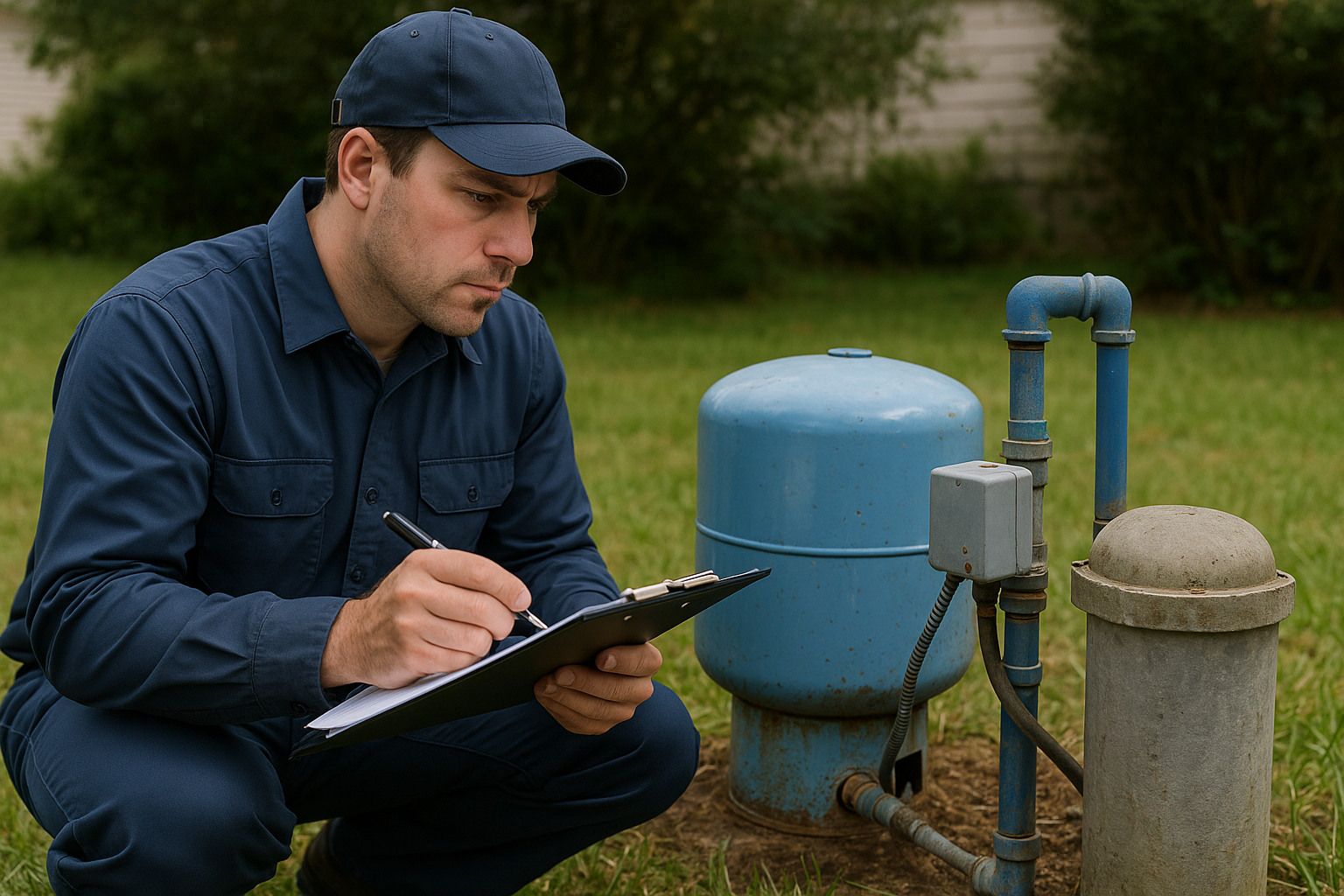
A professional well inspection before fire season identifies vulnerabilities. We'll check:
- Well cap condition and seal
- Electrical connections and conduit integrity
- Pressure tank condition
- Water quality baseline (important for post-fire comparison)
- Overall system function
During Evacuation: What to Do
When a wildfire threatens and you need to evacuate, take these steps to protect your well:
Shut Off Power to the Well
- Turn off the circuit breaker — Find the dedicated breaker for your well pump and switch it OFF
- Consider disconnecting at the disconnect box — If accessible, pull the disconnect near the pressure tank
- Don't rely on the pressure switch — A power surge can still damage equipment if only the pressure switch is off
Why this matters: Power surges during fires (from downed lines) can burn out pump motors. If wiring melts while energized, it can start secondary fires. Firefighters may need to cut power anyway.
Leave Water in the System
Don't drain your pressure tank before leaving. The water inside:
- Helps cool the tank slightly if fire approaches
- Will be available immediately when you return (if the system is intact)
- Maintains pressure that helps keep debris out of the well
If You Have Time
- Cover the wellhead with a metal trash can weighted with rocks
- Wet down the area around the well (but don't waste water if supplies are limited)
- Move any portable well equipment (pump controllers, filtration units) into your vehicle
Do NOT Leave the Pump Running
Some homeowners think leaving the well running will help firefighters. Don't do this:
- Firefighters bring their own water supply
- Your residential well can't supply the gallons-per-minute firefighting requires
- A running pump with damaged lines will burn out quickly
- You'll return to a dead pump and an empty well
After the Fire: Return and Recovery
Returning home after a wildfire is stressful. Here's how to assess your well safely:
Step 1: Visual Inspection (Before Powering On)
Do NOT turn on the well pump until you've checked:
- Wellhead — Is the cap intact? Any visible damage or debris entry?
- Electrical wiring — Look for melted conduit, exposed wires, burn marks
- Pressure tank — Check for melting, warping, or discoloration
- Control box — Is the housing intact? Any smoke damage?
- Surrounding area — Did fire reach within 30 feet of the well?
Step 2: Call a Professional
If you see ANY damage, don't try to power on the system. Call a licensed well contractor for a post-fire inspection. We'll:
- Test the electrical system safely
- Check the pump motor without risking damage
- Assess the pressure tank integrity
- Inspect the well itself for contamination
- Document damage for insurance purposes
Step 3: Water Testing
Even if your well looks fine, test the water before drinking it.
Post-fire water testing should include:
- Coliform bacteria — Fire can introduce pathogens
- Nitrates — Elevated after fires from ash and retardants
- pH and total dissolved solids — Indicates water chemistry changes
- Volatile organic compounds (VOCs) — From burned plastics, fuels, and chemicals
- Benzene and other contaminants — If fire retardants were used nearby
Step 4: Disinfection
If contamination is found (or suspected), the well needs shock chlorination:
- Calculate the amount of chlorine needed based on well depth and diameter
- Pour chlorine solution into the well
- Circulate through all fixtures
- Let sit for 12-24 hours
- Flush until chlorine smell dissipates
- Retest water after 7 days
Common Post-Fire Well Problems
Problem: No Water at All
Possible causes:
- Pump motor burned out from power surge
- Wiring damaged, circuit not completing
- Breaker tripped or blown fuse
- Pressure switch damaged
Solution: Professional electrical testing and pump check. Cost: $150-$2,500+ depending on damage.
Problem: Water Pressure Low
Possible causes:
- Pressure tank bladder failed from heat
- Waterlogged pressure tank
- Partially blocked lines from melted plastic
Solution: Pressure tank replacement ($400-$1,200) or line repair.
Problem: Water Smells or Tastes Bad
Possible causes:
- Ash contamination in the well
- Melted plastic in the lines
- Fire retardant chemicals in groundwater
Solution: Water testing, shock chlorination, possibly new filtration. May need multiple treatments.
Problem: Brown or Discolored Water
Possible causes:
- Sediment stirred up in the well
- Rust from damaged casing
- Ash and debris that entered through damaged cap
Solution: Well purging, sediment filter installation, possible well rehabilitation.
Insurance and Financial Assistance
Homeowner's Insurance
Most homeowner's policies cover well damage from fire, but coverage varies. Document everything:
- Take photos before touching anything
- Get written repair estimates from licensed contractors
- Save all receipts for temporary water (delivered water, etc.)
- Request a copy of your policy's well coverage limits
FEMA and Disaster Assistance
If your area is declared a federal disaster zone:
- Register at DisasterAssistance.gov
- FEMA may cover well repairs not covered by insurance
- Low-interest disaster loans (SBA) available for property damage
State and County Programs
California and San Diego County sometimes offer:
- Emergency water supply assistance
- Water testing subsidies after declared emergencies
- Contractor referral programs
High-Risk Areas in San Diego County
These areas face the highest wildfire risk and should prioritize well protection:
- Julian/Banner Grade — Heavily forested, limited access, high fire history
- Ramona — Interface zone between urban and wildland
- Valley Center — Mixed agriculture and chaparral, severe fire history
- Palomar Mountain — Remote, steep terrain, delayed emergency response
- Descanso/Pine Valley — Dense vegetation, I-8 corridor fires
- Fallbrook/De Luz — Santa Ana wind corridor
- Alpine/Harbison Canyon — Cedar Fire devastation area
Frequently Asked Questions
Can wildfire damage a water well?
Yes. Fire can melt plastic components, destroy electrical wiring, damage pressure tanks, and contaminate the water with ash, smoke, and firefighting chemicals. Underground components are usually protected, but surface equipment is vulnerable. We've seen complete surface equipment destruction with the pump still working 200 feet down.
Is well water safe to drink after a fire?
Not necessarily. Fire debris, ash, and firefighting chemicals can contaminate well water. Always have your water tested before drinking it after a wildfire, even if the well wasn't directly burned. Testing should include bacteria, nitrates, and volatile organic compounds. Use bottled water until test results confirm safety.
How do I protect my well pump from fire?
Clear vegetation 30 feet around the wellhead, install a metal well cap (not plastic), use fire-resistant conduit for wiring, consider burying the pressure tank or using a metal enclosure, and disconnect power before evacuating. These steps won't guarantee protection in a severe fire but significantly improve survival chances.
Should I run my well pump during a fire evacuation?
No—turn off power to the well pump before evacuating. Running the pump during a fire risks electrical fires from damaged wiring and can burn out the motor if water lines are compromised. Firefighters have their own water supplies and can't use residential well flow rates anyway (they need 500+ GPM; your well produces 5-20 GPM).
How much does post-fire well inspection cost?
Post-fire well inspections typically cost $150-$400 for the inspection plus $100-$300 for comprehensive water testing. If equipment was damaged, repair costs vary from $500 for minor electrical work to $3,000+ for pump or pressure tank replacement. Major contamination requiring well rehabilitation can cost $5,000-$15,000.
How long after a fire should I wait to use my well?
Don't use the water until: (1) a professional has inspected the system and confirmed it's safe to operate, and (2) water testing shows safe results. This typically takes 1-2 weeks minimum. If retardants were used in your area, wait for groundwater testing recommendations from county health officials.
Our Post-Fire Well Services
Southern California Well Service provides comprehensive post-fire well recovery:
- Emergency inspection — Same-day or next-day for fire-affected properties
- Electrical system testing — Before powering on damaged systems
- Pump testing and replacement — All major brands in stock
- Pressure tank replacement — Multiple sizes available immediately
- Water testing coordination — We work with certified labs
- Shock chlorination — Complete disinfection service
- Insurance documentation — Detailed reports and photos for claims
Fire-Affected Property? We Can Help.
If your property was in a fire zone, call us for a post-fire well inspection. We prioritize fire-affected customers.
Call (760) 440-8520Emergency service available | Serving San Diego, Riverside & San Bernardino Counties
Related: Well Inspection Services | Water Testing | Pump Replacement Costs
Related Articles
Continue learning about well maintenance and troubleshooting