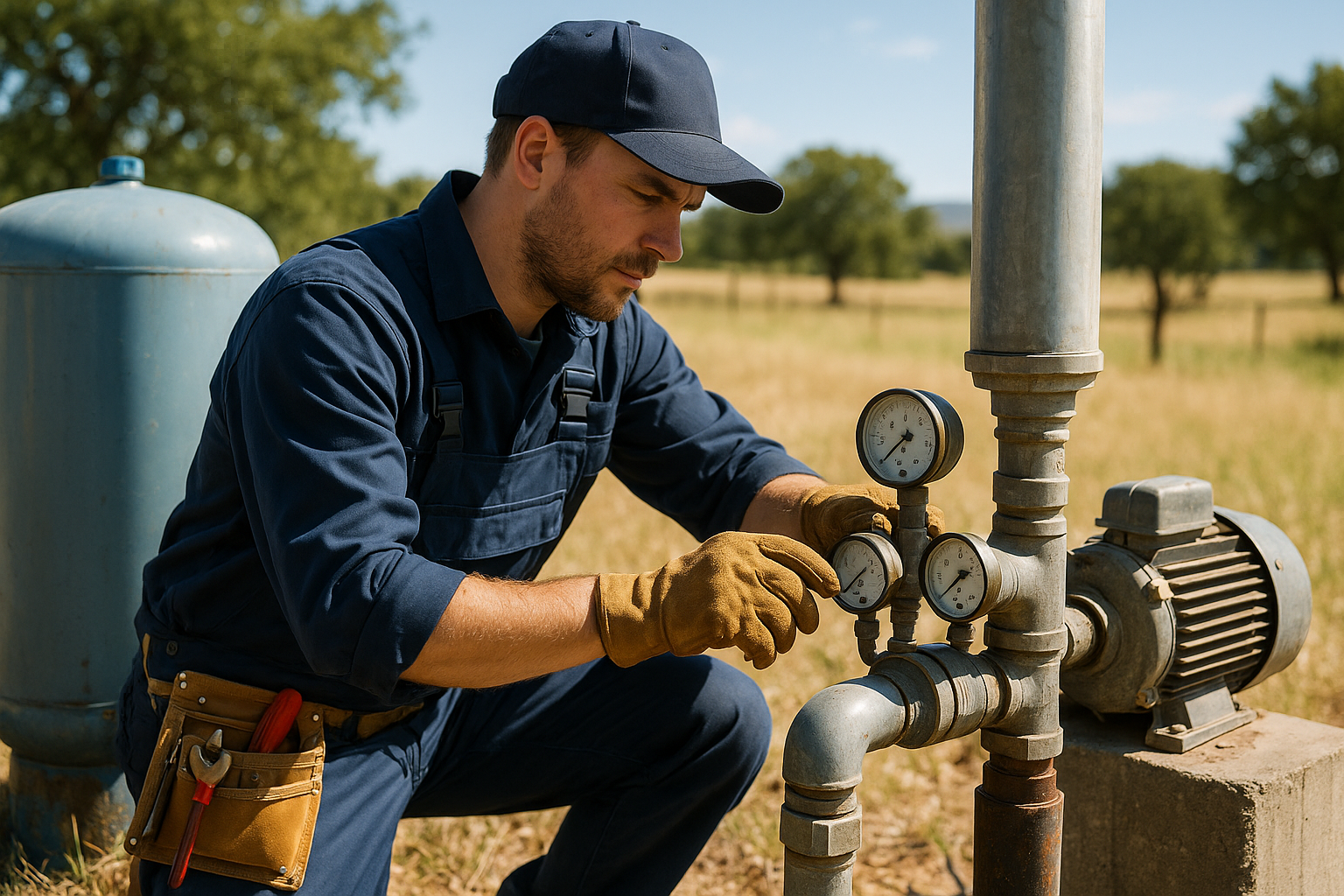
Congratulations on your new property with a private well! Whether you just moved to rural San Diego County or bought your first home with well water, you're now responsible for your own water supply. That's both freedom and responsibility.
This comprehensive guide covers everything first-time well owners need to know — from understanding how your system works to maintaining it properly and recognizing when you need professional help.
New Well Owner?
We offer well inspections and orientation for new homeowners. Learn your system, get water tested, and establish a maintenance relationship.
📞 Call (760) 440-8520
Schedule InspectionHow Your Well System Works
Understanding your well system helps you maintain it properly and recognize problems early.
The Well Itself
Your well is a drilled hole that reaches down to an underground aquifer — a layer of rock or sediment that holds water. Key components:
- Casing: A steel or PVC pipe lining the hole, typically 6" diameter for residential wells
- Well cap/seal: Protects the top from contamination and pests
- Screen: At the bottom, allows water in while keeping sediment out
- Grout seal: Cement seal around the casing to prevent surface water infiltration
The Pump
Most modern wells use submersible pumps — the pump motor sits down in the water, pushing water up to your house:
- Location: Typically 10-20 feet above the well bottom
- Power: Connected by electrical cable running down the well
- Pipe: Water rises through a drop pipe to the surface
- Lifespan: 10-15+ years with good water quality
Pressure Tank
The pressure tank stores water and maintains pressure so your pump doesn't run every time you turn on a faucet:
- Size: Typically 20-80 gallons for residential
- How it works: Compressed air in the tank pushes water out. As water depletes, pressure drops until the pump kicks on.
- Pressure switch: Turns pump on at ~30 PSI, off at ~50 PSI (settings vary)
The Water Cycle
- You turn on a faucet
- Water flows from the pressure tank
- Tank pressure drops
- At ~30 PSI, the pressure switch turns on the pump
- Pump pushes water up from the well, refilling the tank
- At ~50 PSI, the pressure switch turns off the pump
- Tank maintains pressure until you use water again
Essential Information to Gather
If you just bought a property, try to get this information from the seller or previous owner:
Well Records
- Well log/completion report: Shows depth, casing info, geology, and original yield
- Permit: Filed with the county when well was drilled
- Age: When was the well drilled?
- Depth: How deep is the well? (Critical for pump repairs)
- Flow rate: What GPM does it produce?
Equipment Records
- Pump info: Brand, model, HP, when installed
- Pressure tank: Size, brand, age
- Treatment system: Any filters, softeners, UV, etc.
Can't find records? We can inspect your well and create a baseline report.
Water Testing: Your First Priority
Unlike city water, no one monitors your well water quality. That's your responsibility.
Initial Testing (When You Move In)
Before drinking the water, test for:
- Coliform bacteria: Indicates potential contamination
- E. coli: Indicates fecal contamination (serious)
- Nitrates: Dangerous for infants, indicates contamination
- Basic minerals: pH, hardness, iron, manganese, TDS
Ongoing Testing Schedule
| Test | Frequency | Why |
|---|---|---|
| Bacteria (coliform) | Annually | Most common contamination issue |
| Nitrates | Annually | Can change over time |
| Full mineral panel | Every 3-5 years | Baseline and trending |
When to Test Immediately
- Change in taste, odor, or color
- After flood or heavy rain (especially if wellhead may have been submerged)
- After nearby construction or septic work
- After any well work (pump replacement, etc.)
- If anyone in household has recurring GI issues
Learn more: Complete Water Testing Guide
Routine Maintenance Checklist
Monthly
- ☐ Check pressure gauge on tank (should read ~40 PSI with pump off)
- ☐ Listen for unusual pump noises
- ☐ Note if water pressure seems lower than normal
Quarterly
- ☐ Check pressure tank for proper operation (tap on tank — should sound hollow on top, solid on bottom)
- ☐ Inspect wellhead for damage, pests, standing water
- ☐ Check that well cap is secure
Annually
- ☐ Test water quality (bacteria at minimum)
- ☐ Check pressure tank air charge
- ☐ Inspect visible electrical connections
- ☐ Review electric bills for increased pump usage
- ☐ Clean or replace sediment filters
- ☐ Service any treatment equipment (softener, UV, etc.)
Every 5-7 Years
- ☐ Professional well inspection
- ☐ Pump check (some pros recommend pulling pump to inspect)
- ☐ Water level measurement
Download: Printable Maintenance Checklist
Warning Signs to Watch For
Pump Problems
| Symptom | Possible Cause | Urgency |
|---|---|---|
| Pump runs constantly | Low water level, leak, failing pump | High — pump will burn out |
| Pump short cycles (on/off rapidly) | Waterlogged pressure tank, pressure switch issue | High — damages pump |
| Air sputtering from faucets | Low water level, drop pipe leak | Medium |
| Decreased water pressure | Failing pump, clogged filter, pressure tank issue | Medium |
| No water at all | Power issue, pump failure, empty well | Emergency |
Learn more: 7 Signs Your Well Pump Is Failing
Water Quality Problems
| Symptom | Likely Cause | Action |
|---|---|---|
| Rotten egg smell | Hydrogen sulfide gas | Treatment needed |
| Brown/rusty water | Iron, manganese, or disturbed sediment | Test and possibly treat |
| Cloudy water | Air bubbles, bacteria, or sediment | Test immediately |
| Slippery feel | High sodium or water softener issue | Test |
| Scale buildup | Hard water (high calcium/magnesium) | Consider softener |
See also: Sulfur Smell Solutions
Protecting Your Well
Contamination Prevention
- Maintain setbacks: Keep septic, chemicals, and animals away from wellhead (minimum 50-100 feet)
- Grade away from well: Surface water should drain away, not toward wellhead
- Secure the cap: Vermin-proof well cap prevents contamination
- Mark the well: Know where it is to avoid damage during landscaping or construction
Power Outage Preparedness
No power = no pump = no water. Options:
- Storage: Keep emergency water (1 gallon per person per day minimum)
- Generator: Can power your pump during outages — generator sizing guide
- Storage tank: Gravity-fed tank provides water even without power
Freeze Protection
In San Diego County mountain areas (Julian, Palomar, Laguna Mountains), protect against freezing:
- Insulate exposed pipes and pressure tank
- Use heat tape on vulnerable pipes
- Know how to shut off water if pipes freeze
When to Call a Professional
Some things you can handle; others need a pro:
DIY-Appropriate
- Checking pressure gauge
- Replacing sediment filters
- Adding salt to water softener
- Visual inspection of wellhead
Call a Professional For
- No water or significant pressure loss
- Pump running constantly or short cycling
- Electrical issues
- Contaminated water test results
- Any work requiring entering the well
- Pressure tank replacement
- Annual or periodic inspections
Common First-Time Owner Mistakes
1. Not Testing Water
Just because water looks clear doesn't mean it's safe. Bacteria and nitrates are invisible. Test before drinking.
2. Ignoring Warning Signs
Pump short cycling? Pressure dropping? Weird noises? These are your well asking for help. Address issues early before they become emergencies.
3. No Baseline Information
Not knowing your well depth, pump age, or normal water level makes troubleshooting harder. Get a professional inspection to establish a baseline.
4. Waiting Until Total Failure
Preventive maintenance is cheaper than emergency repair. A pump replacement costs $2,000-$4,000 but emergency weekend service adds significantly.
5. Using the Wrong Contractor
Not all plumbers work on wells. Use a licensed well contractor (C-57 license in California) for well work. General plumbers are fine for house plumbing but not the well itself.
New to Well Ownership?
Southern California Well Service offers new owner inspections that include:
- ✅ Complete system inspection
- ✅ Water quality testing
- ✅ Documentation of your well specs
- ✅ Walk-through of your equipment
- ✅ Maintenance recommendations
📞 Call (760) 440-8520 to schedule
Schedule Inspection