What is Geothermal Well Drilling?
Geothermal well drilling creates the underground infrastructure for ground source heat pump (GSHP) systems—one of the most efficient heating and cooling technologies available. By drilling vertical bores and installing closed-loop pipes, we tap into the earth's constant underground temperature (60-65°F in Southern California) to provide year-round climate control at a fraction of conventional HVAC costs.
Unlike water wells that extract groundwater, geothermal wells circulate a water-antifreeze mixture through buried pipes. In summer, this absorbs heat from your home and transfers it to the cooler ground. In winter, the process reverses—extracting the ground's warmth to heat your home. The result is 300-400% efficiency compared to traditional systems.
💰 30% Federal Tax Credit
The Inflation Reduction Act provides a 30% federal tax credit for geothermal heat pump systems through 2032. On a $30,000 system, that's $9,000 back on your taxes—making geothermal more affordable than ever.
How Geothermal Systems Work
❄️ Summer Cooling
The ground loop absorbs heat from your home and transfers it to the cooler earth (60-65°F). This is 25-50% more efficient than conventional AC because you're rejecting heat to 65° ground instead of 100°+ outdoor air.
🔥 Winter Heating
The process reverses—extracting heat from the relatively warm ground (60-65°F even in winter) and concentrating it to heat your home. Far more efficient than extracting heat from cold outdoor air like traditional heat pumps.
Ground Loop Types
Vertical Bore (Most Common)
Multiple holes drilled 150-400 feet deep, spaced 15-20 feet apart. Ideal for San Diego properties with limited land. Requires professional drilling equipment and expertise. This is our specialty.
Horizontal Loop
Pipes buried 4-6 feet deep in trenches. Requires significant land area (400-500 sq ft per ton of capacity). Lower drilling costs but more excavation. Better suited for new construction with large lots.
Pond/Lake Loop
Coils submerged in a pond or lake at least 8 feet deep. Most cost-effective if you have a suitable body of water. Rare in Southern California due to limited natural water bodies.
Geothermal Well Drilling Process
1. Site Assessment & Design
We evaluate your property, heating/cooling loads, soil conditions, and available space. A thermal conductivity test may be performed to optimize bore depth and spacing. We coordinate with your HVAC contractor on heat pump sizing.
2. Permitting
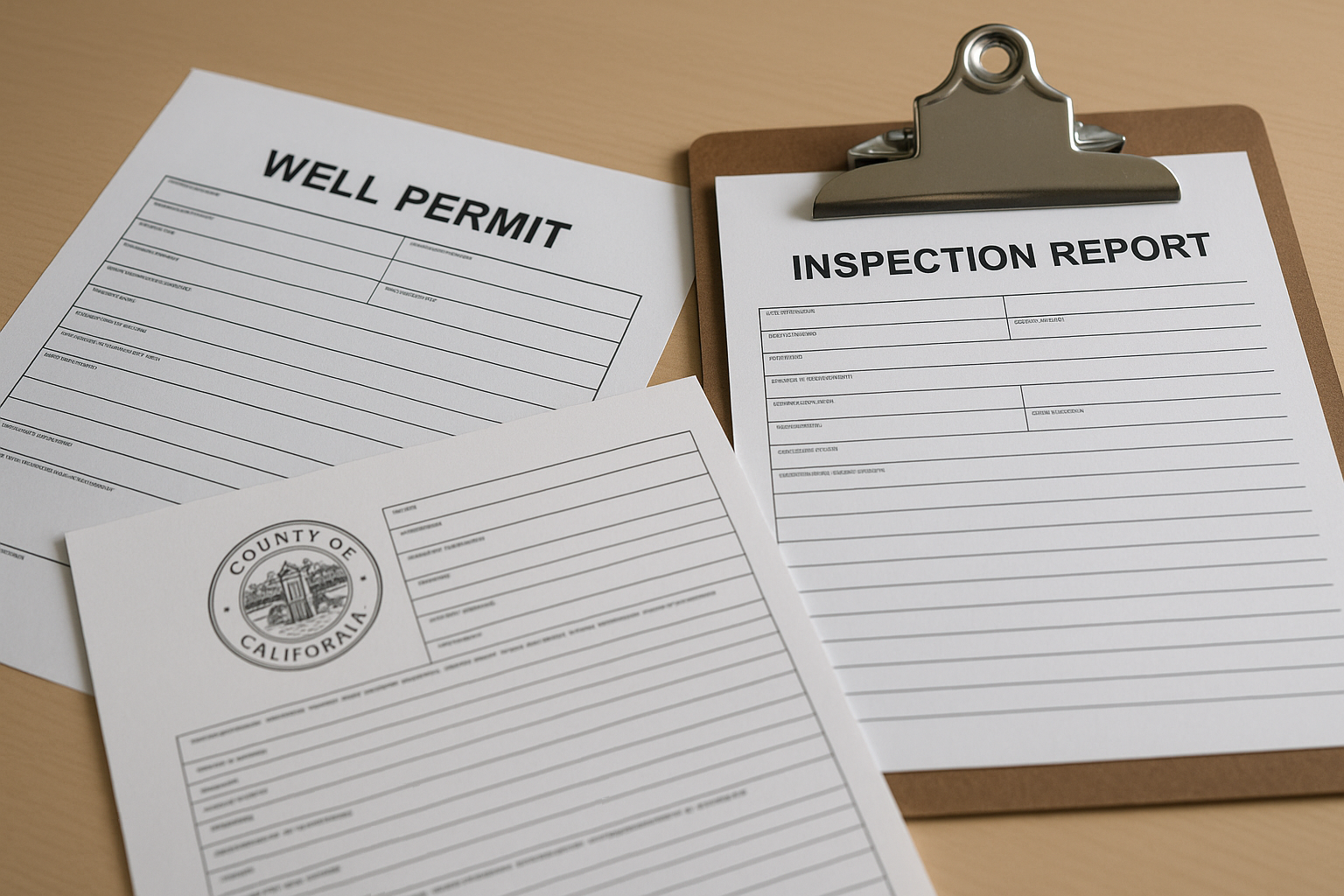
Geothermal bore permits differ from water well permits. We handle all applications with San Diego County. Requirements vary by location—some areas have streamlined geothermal permitting while others require full review.
3. Vertical Bore Drilling
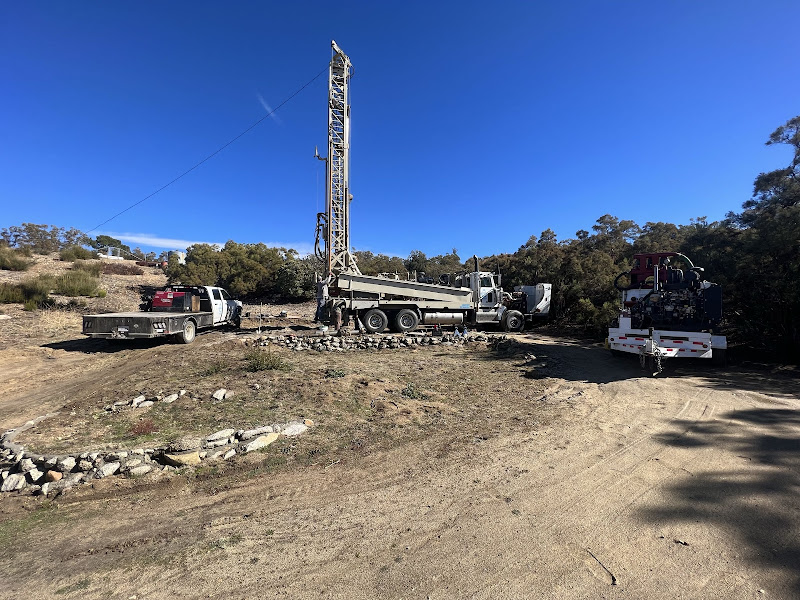
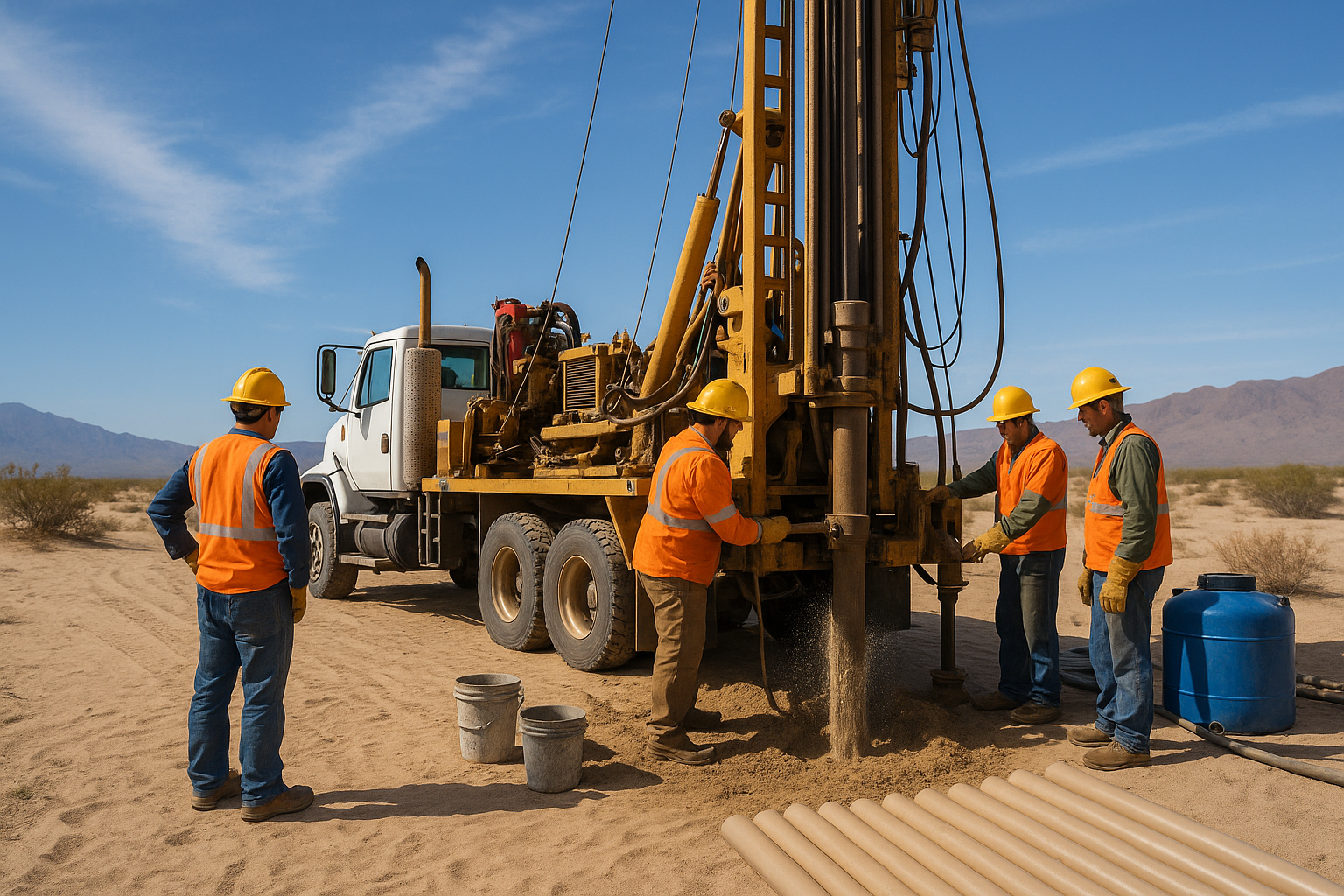
Using specialized drilling rigs, we create vertical bores typically 5-6 inches in diameter. Most residential systems require 3-5 bores drilled 200-300 feet deep. Drilling is clean and relatively quick—usually 1-3 days depending on geology.
4. Loop Installation
High-density polyethylene (HDPE) U-tubes are inserted into each bore. These durable pipes will circulate heat transfer fluid for 50+ years. Each bore typically contains two pipes forming a continuous loop.
5. Grouting
The bore is filled with thermally-enhanced grout to ensure maximum heat transfer between the pipes and surrounding earth. Proper grouting is critical—it prevents groundwater contamination and optimizes system efficiency.
6. Header & Connection
Individual bore loops are connected to a common header system and routed to your home's mechanical room. We excavate shallow trenches for horizontal connections and ensure all joints are properly fused.
7. System Testing
Before backfilling, we pressure-test all loops to ensure integrity. Flow rates are verified and the system is charged with the water-antifreeze mixture. Final connection to the indoor heat pump completes the installation.
Geothermal Drilling Costs
Geothermal well drilling represents the largest portion of a ground source heat pump installation. Here's what to expect in Southern California:
| Component | Typical Cost |
|---|---|
| Vertical bore drilling (per foot) | $15 - $30 |
| Loop pipe & installation | $3,000 - $6,000 |
| Grouting material & labor | $2,000 - $4,000 |
| Horizontal trenching & headers | $1,500 - $3,000 |
| Permits & inspections | $500 - $1,500 |
| Total Ground Loop (typical residential) | $15,000 - $30,000 |
Complete System Cost Example
A typical 3-ton residential geothermal system might include:
- • Ground loop installation: $20,000
- • Heat pump unit & indoor install: $12,000
- • Total before credits: $32,000
- • After 30% tax credit: ~$22,400
Benefits of Geothermal Heating & Cooling
⚡ 25-50% Lower Energy Bills
Geothermal systems deliver 3-4 units of heating/cooling for every 1 unit of electricity consumed. Most homeowners see monthly savings of $100-$200+ compared to conventional HVAC.
🏠 Exceptional Longevity
Ground loops last 50+ years. Indoor heat pump units last 20-25 years (vs 10-15 for conventional). You'll likely replace 2-3 conventional systems in the time one geothermal system operates.
🤫 Quiet Operation
No noisy outdoor compressor unit. The indoor heat pump operates quietly, and the ground loop is completely silent underground. Perfect for noise-sensitive neighborhoods.
🌍 Environmentally Friendly
Zero on-site emissions. Dramatically reduced electricity consumption. The most sustainable heating/cooling option available—especially when paired with solar panels.
Frequently Asked Questions
How much does geothermal well drilling cost?
Geothermal well drilling for ground source heat pump systems typically costs $15,000 to $40,000 for the drilling and loop installation portion. This includes vertical bore drilling (typically 150-400 feet deep), loop pipe installation, grouting, and connections. A complete residential geothermal HVAC system including the heat pump unit runs $20,000 to $50,000+ installed. Federal tax credits of 30% significantly reduce net cost.
How deep are geothermal wells drilled?
Geothermal wells are typically drilled 150 to 400 feet deep for residential systems. Most installations require multiple vertical bores spaced 15-20 feet apart. The exact depth depends on your heating/cooling load, soil conductivity, and available space. In Southern California, we often drill to 200-300 feet where ground temperatures stabilize around 60-65°F year-round.
Is geothermal worth it in Southern California?
Yes, geothermal heating and cooling is highly effective in Southern California. Our moderate underground temperatures (60-65°F) provide excellent efficiency for both heating and cooling. While upfront costs are higher than conventional HVAC, geothermal systems use 25-50% less electricity, last 20-25 years (vs 10-15 for conventional), and qualify for federal tax credits. Payback typically occurs in 5-10 years.
How long do geothermal systems last?
The ground loop portion of a geothermal system lasts 50+ years with no maintenance—the pipes are buried and protected. The heat pump unit inside your home typically lasts 20-25 years, significantly longer than conventional AC/heating systems. This longevity, combined with energy savings, makes geothermal one of the best long-term HVAC investments.
How much land do I need for geothermal wells?
Vertical bore geothermal systems require minimal land—typically a 20x20 foot area for a residential system. Multiple vertical bores are drilled 15-20 feet apart and connected underground. This makes vertical systems ideal for San Diego properties with limited space. Horizontal loop systems require more land (about 400-500 square feet per ton of capacity) but less drilling.
Related Services
Residential Well Drilling
Water wells for home supply—different from geothermal but often done together.
Deep Well Drilling
Specialized drilling for depths exceeding 300 feet in challenging geology.
Well Service & Maintenance
Ongoing service for all your well system needs.
Well Installation Cost Guide
Understand what drives costs for different well types.
Ready to Go Geothermal?
Get a free consultation on geothermal well drilling for your property. We'll assess your site, estimate costs, and help you understand the 30% federal tax credit and long-term savings.
Related Articles
Continue learning about well maintenance and troubleshooting