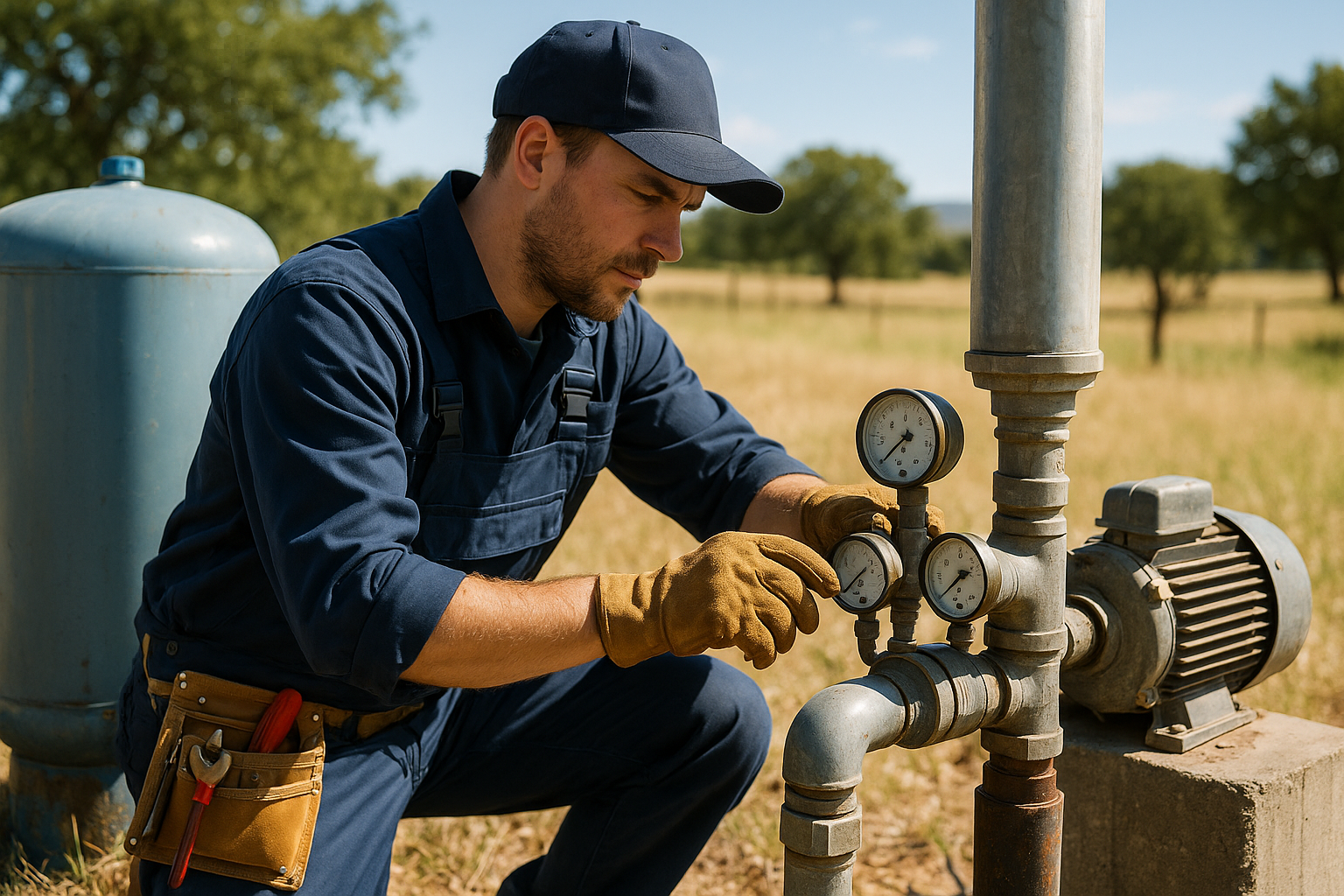
Managing a community well system is one of the most critical — and often overlooked — responsibilities an HOA board faces. Unlike municipal water where you simply pay the bill, community wells require proactive management, regulatory compliance, and significant reserve planning. This guide covers everything HOA boards and property managers need to know about keeping your community's water flowing safely and affordably.
At Southern California Well Service, we maintain community well systems throughout San Diego and Riverside Counties, from small 10-home developments to large master-planned communities with hundreds of connections. We've seen what works, what fails, and what keeps HOA boards up at night. Here's the knowledge we've gathered over 25+ years of commercial well service.
Need Help With Your HOA Well System?
Our commercial well team specializes in community water systems. We offer maintenance contracts, emergency service, and compliance consulting for HOAs throughout San Diego and Riverside Counties.
📞 Call (760) 440-8520 for a free system assessment
Request HOA AssessmentUnderstanding Community Well System Types
Community wells fall into different regulatory categories based on size, and understanding your classification determines everything from testing requirements to operator certification needs.
Small Water Systems (Under 15 Connections)
If your HOA serves fewer than 15 service connections or under 25 people, you're classified as a State Small Water System in California. These systems have reduced regulatory requirements but still must meet basic safety standards:
- Annual bacteria testing (coliform)
- Annual nitrate testing
- Source assessment and protection
- Basic record keeping
- County health department oversight
Many small HOAs in rural San Diego County — places like Julian, Ramona, and Valley Center — operate state small water systems. The reduced requirements keep costs manageable while ensuring basic safety.
Public Water Systems (15+ Connections)
Once your system serves 15 or more connections, or 25 or more people for at least 60 days per year, you become a Community Public Water System under California and federal law. This triggers significantly more stringent requirements:
- Monthly coliform bacteria testing
- Annual chemical contaminant testing (nitrates, nitrites, regulated chemicals)
- Every 3 years: Inorganic chemicals, synthetic organics
- Every 6-9 years: Radiological testing
- Certified water distribution operator (Grade D1 minimum)
- Consumer Confidence Reports (annual water quality reports to residents)
- State Water Resources Control Board reporting
- Sanitary surveys every 3-5 years
The jump from 14 to 15 connections is significant. We've seen HOAs intentionally keep developments under 15 homes to avoid Public Water System classification. If you're at 15+, budget accordingly — compliance costs add $3,000-$8,000 annually beyond basic maintenance.
HOA Well System Components
Understanding your system's components helps you budget for maintenance and replacements. A typical community well system includes:
The Well Itself
- Casing: Steel or PVC pipe lining the borehole (typical lifespan 30-50+ years)
- Well seal: Sanitary seal preventing surface contamination
- Screen: Perforated section allowing water entry while filtering sediment
- Gravel pack: Filter material around the screen
Pump System
- Submersible pump: Located deep in the well, lifts water to surface (lifespan 10-20 years)
- Motor: Powers the pump, sized for required GPM and lift
- Drop pipe: Connects pump to surface piping
- Pump cable: Provides power to submersible motor
- Check valve: Prevents backflow when pump stops
For community systems, we typically recommend constant pressure systems with variable frequency drives (VFDs). These maintain steady pressure regardless of demand fluctuations and significantly extend pump life.
Storage and Pressure System
- Storage tank: Community systems often have 5,000-50,000+ gallon storage tanks for fire flow and peak demand
- Pressure tanks: Maintain system pressure, reduce pump cycling
- Booster pumps: Increase pressure for distribution if needed
- Pressure switches and transducers: Control pump operation
Treatment Systems
Many community wells require treatment to meet drinking water standards or address aesthetic issues:
- Chlorination: Required for most public water systems (continuous or shock treatment)
- UV disinfection: Chemical-free bacteria/virus elimination
- Filtration: Sediment, iron, manganese removal
- Water softening: Hardness reduction for community comfort
- Nitrate treatment: Ion exchange or reverse osmosis for contaminated sources
Learn more about treatment options in our chlorination vs. UV comparison guide.
Distribution System
- Main lines: Backbone piping serving the community
- Service lines: Individual connections to each home
- Meters: Track individual usage (essential for fair billing)
- Valves: Isolation valves for maintenance and emergencies
- Fire hydrants: If required by fire code
Annual Maintenance Requirements
Proper maintenance prevents expensive emergencies and ensures safe water. Here's what your HOA should budget for annually:
Monthly Tasks
- Check pump run times and cycling patterns
- Verify pressure readings at multiple points
- Inspect wellhead for damage or tampering
- Check chlorine residual (if chlorinating)
- Review flow meter readings
- Collect bacteria samples (Public Water Systems)
Quarterly Tasks
- Water quality panel testing
- Pressure tank inspection and air charge check
- Treatment system maintenance (filter changes, UV lamp check)
- Electrical system inspection
- Storage tank inspection (visual)
Annual Tasks
- Comprehensive pump performance test
- Well production test (static level, pumping level, specific capacity)
- Full water chemistry analysis
- Storage tank interior inspection
- Emergency generator test (if equipped)
- Valve exercising throughout distribution system
- Backflow preventer testing and certification
Download our printable maintenance checklist to track your system's care.
Cost Planning for HOA Well Systems
Proper budgeting is essential. We see too many HOAs caught off-guard by major repairs because they didn't plan ahead. Here's what to expect:
Annual Operating Costs
| Expense Category | Small System (<15) | Public System (15+) |
|---|---|---|
| Water quality testing | $500-$1,200 | $2,400-$5,000 |
| Routine maintenance | $1,500-$3,000 | $3,000-$6,000 |
| Treatment supplies | $500-$1,500 | $1,000-$3,000 |
| Electricity | $2,000-$5,000 | $5,000-$15,000 |
| Certified operator | Not required | $2,000-$6,000 |
| Insurance | $1,000-$2,000 | $2,000-$5,000 |
| Total Annual Operating | $5,500-$12,700 | $15,400-$40,000 |
Reserve Fund Requirements
California Civil Code requires HOAs to maintain adequate reserves for major component replacement. For well systems, plan for:
| Component | Lifespan | Replacement Cost | Annual Reserve |
|---|---|---|---|
| Submersible pump | 12-20 years | $8,000-$25,000 | $500-$2,000 |
| Pressure tank(s) | 15-25 years | $3,000-$15,000 | $150-$750 |
| Storage tank | 30-50 years | $25,000-$100,000 | $600-$2,500 |
| Treatment system | 15-25 years | $10,000-$50,000 | $500-$2,500 |
| Control system | 15-20 years | $5,000-$20,000 | $300-$1,200 |
| Well rehabilitation | Every 10-15 years | $15,000-$40,000 | $1,200-$3,500 |
| Total Annual Reserve | $3,250-$12,450 |
Pro tip: Have a reserve study done that specifically addresses your well system. Generic reserve studies often underestimate well component costs or miss them entirely.
Common HOA Well Problems We See
1. Declining Well Production
Wells lose capacity over time due to mineral buildup, biofouling, and aquifer changes. Signs include:
- Pump running longer to meet demand
- Lower static water level readings
- Reduced flow rate at test points
- Increasing pump energy consumption
Solution: Well rehabilitation (chemical treatment, mechanical cleaning, or redevelopment) can often restore 70-90% of original capacity. Cost: $15,000-$40,000 depending on well depth and condition.
2. Water Quality Changes
Sudden changes in water quality often indicate problems:
- Bacteria positive: Potential wellhead breach or cross-contamination
- Increasing nitrates: Nearby septic influence, agricultural runoff
- New tastes/odors: Changing aquifer conditions or bacterial growth
- Sediment: Screen failure, casing corrosion, or pump issues
3. Pressure Fluctuations
Residents complaining about inconsistent pressure usually points to:
- Undersized system for current demand
- Failing pressure tank bladder
- Pump unable to keep up during peak usage
- Distribution system leaks or restrictions
A constant pressure system upgrade often solves pressure complaints while extending equipment life.
4. Regulatory Violations
Public water systems face enforcement if they fail to:
- Submit required monitoring reports
- Meet maximum contaminant levels (MCLs)
- Maintain certified operator oversight
- Issue required public notifications
Violations can result in fines, mandatory corrective actions, and in extreme cases, orders to connect to municipal water (if available).
Emergency Planning for HOA Wells
Every HOA with a community well needs an emergency response plan. We recommend:
Have a Service Contract
Partner with a licensed well service company (like us) for priority emergency response. When 50 homes lose water on a holiday weekend, you don't want to be calling around hoping someone answers.
Backup Power
Consider a standby generator for your well system. During wildfires and PSPS events (Public Safety Power Shutoffs), communities with backup power have water while their neighbors don't. Cost: $15,000-$50,000 installed depending on system size.
Emergency Water Supplies
Know your options if the well fails:
- Water delivery services (tanker trucks)
- Temporary connections to municipal water (if nearby)
- Bottled water distribution points
- Portable treatment if contamination occurs
Communication Plan
Have a system to quickly notify all residents of water emergencies, conservation requirements, or boil-water advisories. Text/email blast systems work well.
When to Consider Municipal Connection
Sometimes the best solution for an aging HOA well system is connecting to municipal water, if available. Consider this option when:
- Well production has declined below community needs
- Water quality issues require expensive treatment
- Regulatory compliance costs exceed municipal rates
- Major infrastructure replacement is needed
- Municipal water mains are nearby
Connection costs vary widely — $50,000 to $500,000+ depending on distance to mains, required infrastructure, and connection fees. Get multiple quotes and compare 20-year total costs (connection + ongoing rates) versus continued well operation.
See our comparison: Well Water vs. Municipal: Pros and Cons
Choosing an HOA Well Service Provider
When selecting a company to maintain your community well system, look for:
- C-57 Well Drilling Contractor License — Required for well work in California
- Commercial/community experience — Residential-only companies may lack expertise
- 24/7 emergency availability — Water emergencies don't wait for business hours
- Certified operators on staff — For public water system compliance
- Local presence — Fast response times matter
- References from other HOAs — Ask for and check them
- Proper insurance — Commercial liability coverage appropriate for your system size
HOA Well System Experts in San Diego & Riverside County
Southern California Well Service has maintained community well systems for over 25 years. We offer:
- ✅ Comprehensive maintenance contracts
- ✅ 24/7 emergency response
- ✅ Certified water system operators
- ✅ Compliance consulting and reporting assistance
- ✅ Reserve study support
📞 Call (760) 440-8520 to discuss your community's needs
Request HOA ConsultationFrequently Asked Questions
Can individual homeowners opt out of the community well?
Generally no. If the well serves your property, you're part of the system and share in maintenance costs through HOA dues. Drilling a private well usually requires HOA approval and may be prohibited by CC&Rs.
Who pays when a community well needs major repairs?
The HOA pays from reserve funds. If reserves are insufficient, the board may levy a special assessment. This is why adequate reserve funding is critical — spreading costs over time is much easier than hitting homeowners with a sudden $20,000 assessment.
What happens if our well runs dry?
Options include deepening the existing well, drilling a new well, or connecting to municipal water if available. In severe drought, temporary water hauling may be needed. This is a scenario every HOA should plan for, especially in water-stressed areas.
Can we drill a second well for backup?
Yes, and many larger communities do exactly this. A backup well provides redundancy and can share the load during peak demand. Permits are required, and the backup well must meet the same standards as the primary.
How do we fairly bill homeowners for water usage?
Individual meters are essential for fair billing. Without meters, you're stuck dividing costs equally even though usage varies dramatically. Meter installation costs $500-$1,500 per home but pays for itself through conservation incentives and fair allocation.