How to Check Well Water Level: DIY Methods for Homeowners
Learn simple DIY methods to measure your well water level at home. Step-by-step instructions for using tape measures, air lines, and electronic indicators.
Why Monitoring Well Water Level Matters
Your well's water level is one of the most important indicators of your water system's health. The "static water level" is the depth to water when the pump isn't running—think of it as your well's resting state. Understanding this measurement helps you catch problems before they become emergencies.
Dropping water levels can indicate several issues: drought conditions affecting the aquifer, increased demand from neighboring wells, or even a developing problem with your well itself. A sudden drop might mean a hole in the casing allowing water to escape, while gradual decline over years could signal long-term aquifer depletion.
In Southern California's semi-arid climate, water levels naturally fluctuate with the seasons. Most wells see their lowest levels in late summer and fall, then recover after winter rains. By tracking these patterns, you'll know what's normal for your well—and when something's wrong.
DIY Methods to Check Your Well Water Level
There are several ways to measure your well's water level at home, ranging from simple low-tech methods to electronic instruments. Here are the most practical options for homeowners:
The Chalk-on-Tape Method
This is the simplest and cheapest method. You'll need a measuring tape (at least as long as your well is deep), some sidewalk chalk, and a small weight like a fishing sinker.
- Attach the weight to the end of the tape measure
- Coat the last 10-15 feet of the tape with chalk
- Lower the tape slowly into the well until slack indicates you've hit bottom
- Pull it back up—the wet line shows where the water surface is
- Read the measurement at the top of the well casing
Electronic Water Level Meters
For more accurate and repeatable measurements, consider purchasing an electronic water level indicator. These devices have a probe on a graduated tape that beeps or lights up when it contacts water. Prices range from $150-$400 for homeowner-grade models. They're worth the investment if you plan to monitor regularly.
The Air Line Method
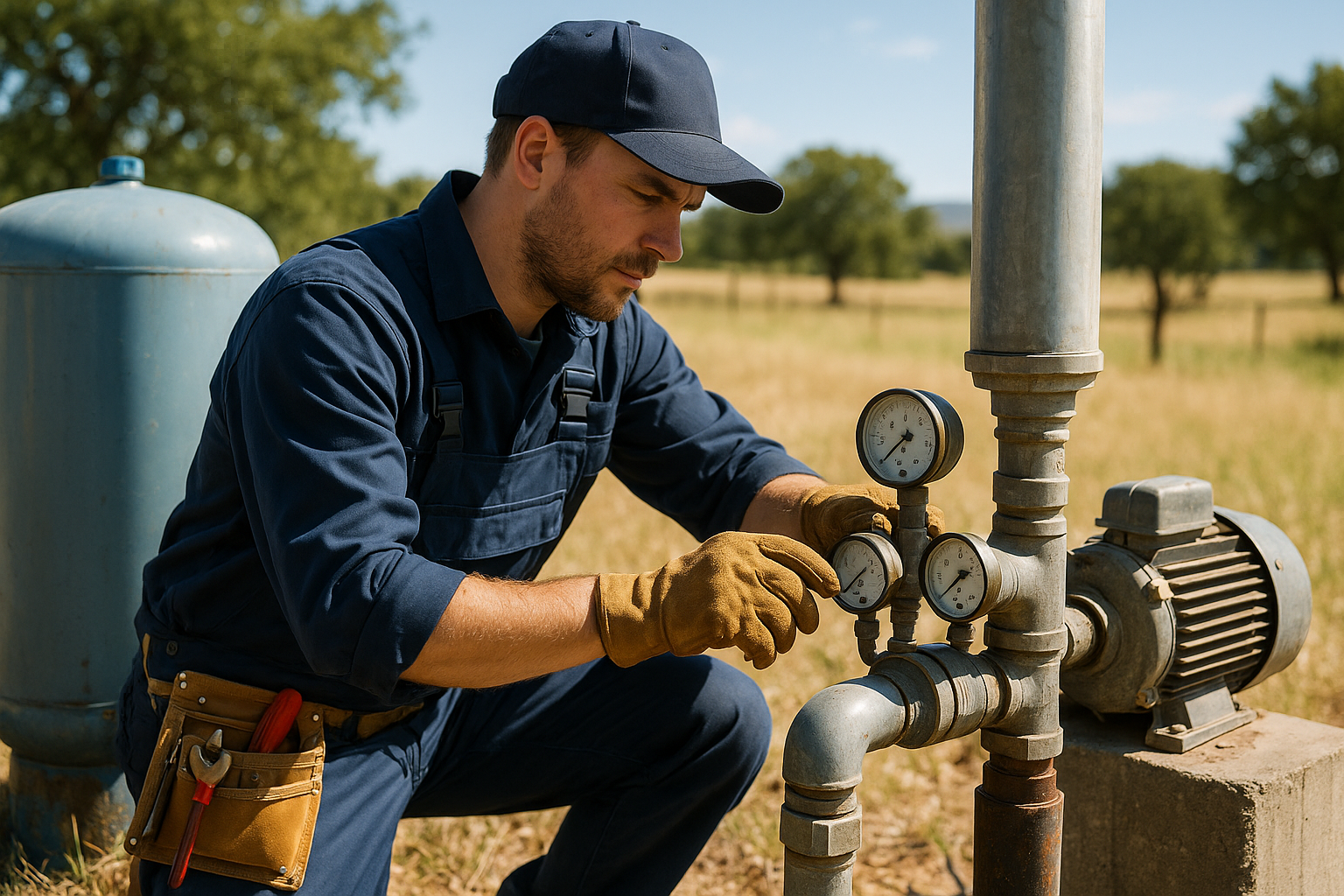
Some wells have an air line installed—a small tube running down into the well. By pressurizing this tube and reading the pressure gauge, you can calculate the water depth. This method requires specific equipment and knowledge of your well's total depth, so it's less common for DIY use.
⚠️ Safety Warning: Never lean over or into a well opening. Well casings can be slippery, and the gases in some wells can cause dizziness. Always maintain secure footing and have someone nearby when working around your well.
Understanding Your Water Level Readings
Once you've measured your water level, what do the numbers mean? Here's how to interpret your readings and know when to be concerned.
Static Water Level: This is the measurement when the well has been idle for several hours (ideally overnight). It represents the natural water table at your location. In San Diego County, static water levels commonly range from 50 to 300 feet below ground, though some areas have shallower or much deeper levels.
Pumping Water Level: When your pump runs, the water level drops—this is called drawdown. The pumping level should recover to static level within a few hours after the pump stops. If recovery takes longer than it used to, your well's production may be declining.
What to Track:
- Record date, time, and measurement for each reading
- Note whether the pump was running recently
- Compare readings across seasons to establish your baseline
- Watch for drops of more than 10-20 feet from your normal levels
When to Call a Professional
While regular monitoring is a great DIY practice, some situations require professional assessment. Call a licensed well contractor if you observe any of the following:
- Sudden dramatic drop: A water level that drops 20+ feet suddenly could indicate a casing breach or other structural problem
- Water level at or below pump: If water is near your pump's intake, you risk burning out the motor
- Failure to recover: If the level doesn't return to static after 12-24 hours of no pumping, your well's production is compromised
- Can't access the well: If your well cap is damaged, sealed shut, or you can't safely reach the casing, don't force it
- Consistent year-over-year decline: If your baseline keeps dropping each year, you may need to lower your pump or consider well rehabilitation
A professional can perform a comprehensive well yield test, inspect the casing with a camera, and recommend solutions if your water level indicates problems. Early intervention often prevents much more expensive repairs down the road.
Frequently Asked Questions
How often should I check my well water level?
Check your well water level at least twice per year—once at the end of the dry season (typically October in Southern California) and once after winter rains. During droughts or if you notice reduced water flow, check monthly. Keeping a log helps you track seasonal patterns and detect potential problems early.
What is a normal water level for a residential well?
Normal static water levels vary significantly by location and aquifer. In San Diego County, residential wells typically have static water levels between 50-300 feet below ground surface. The key is tracking YOUR well's baseline and watching for changes of more than 10-20 feet, which could indicate problems.
Can low water levels damage my pump?
Yes, running a pump with insufficient water can cause serious damage. Submersible pumps rely on water for cooling—running dry can burn out the motor within minutes. If your water level drops near the pump intake, the pump may pull air and lose prime, leading to cavitation damage. This is why monitoring water levels is important.
Get Expert Well Service
Southern California Well Service has served San Diego, Riverside, and San Bernardino counties for decades. Licensed C-57 contractor.
Call (760) 440-8520Available 24/7 for emergencies
Related Articles
Continue learning about well maintenance and troubleshooting