Mobile Home Well Connections: Setup & Requirements
Manufactured and mobile homes are a popular housing option in San Diego County's rural areas, and many of these properties rely on private wells for water. Whether you're setting up a new mobile home on a lot with an existing well, or drilling a new well for your manufactured home, this guide covers everything you need to know about making the connection properly.
📋 In This Guide
Understanding Mobile Home Water Systems
How Mobile Homes Are Different
Mobile and manufactured homes have some unique characteristics that affect well connections:
- Single-point water inlet — Usually a 3/4" or 1" connection under the home
- Pressure limitations — Designed for 40-80 PSI, may need regulator for higher pressures
- Plastic plumbing — PEX or polybutylene more common than copper
- Elevated floor — Easier access to plumbing but pipes may freeze
- Standard fittings — Most use standard plumbing connections
Terminology
- Mobile home: Built before June 15, 1976 (pre-HUD code)
- Manufactured home: Built after June 15, 1976 (HUD code compliant)
- Modular home: Built to local building codes, assembled on-site
Most people use "mobile home" for all types, but the distinction matters for code compliance and financing.
Well System Requirements
Minimum Requirements
- Flow rate: 3-5 GPM minimum (same as any residence)
- Pressure: 40-60 PSI typical, not to exceed 80 PSI
- Water quality: Must be potable (drinkable)
- Storage/pressure tank: Standard residential sizing
Pressure Considerations
Mobile home plumbing is more sensitive to pressure extremes than site-built homes:
- Ideal range: 45-60 PSI
- Minimum workable: 30 PSI
- Maximum safe: 80 PSI (install regulator if higher)
If your well system runs at higher pressure (some are set at 50-70 or 60-80 PSI), install a pressure reducing valve (PRV) before the mobile home inlet. Cost: $50-$200 installed.
Typical Well System Setup
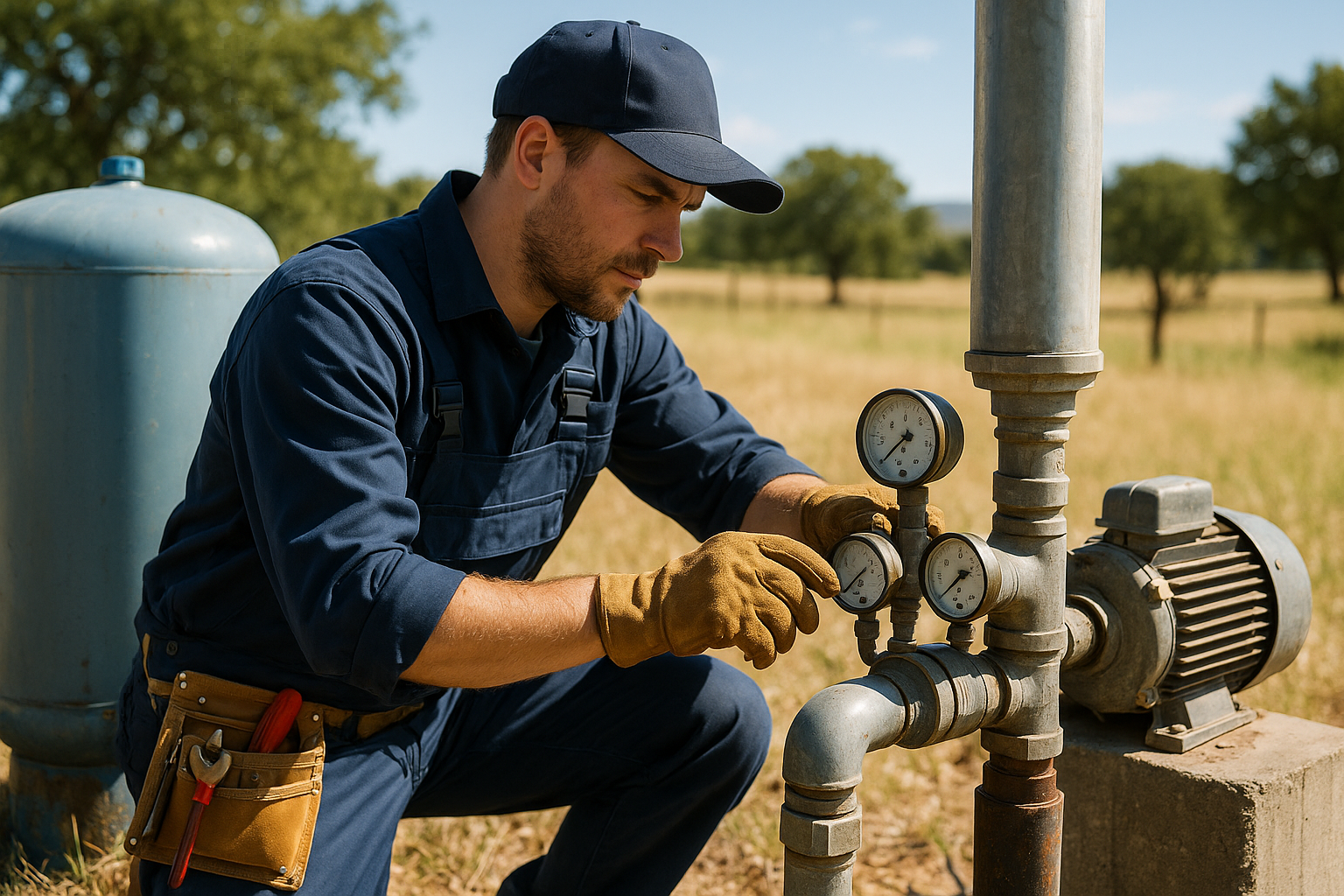
- Well — Source of water
- Pump — Submersible or jet pump
- Pressure tank — Maintains consistent pressure
- Treatment (if needed) — Filtration, softening, UV
- Main shutoff valve — Before the home connection
- Pressure regulator — If pressure exceeds 80 PSI
- Supply line — To mobile home inlet
Connecting to an Existing Well
Before You Connect
- Test the water — Bacteria, nitrates, basic chemistry
- Check the well condition — When was it last serviced?
- Verify flow rate — Is it adequate for your needs?
- Check pressure settings — Are they compatible with your home?
- Inspect existing equipment — Pump age, tank condition
Connection Steps
- Locate the mobile home water inlet — Usually under the home, near the water heater
- Install shutoff valve — Near the pressure tank or at the home
- Run supply line — From well system to mobile home
- Bury supply line — Below frost line (18-24" in most of San Diego County, deeper in mountains)
- Install pressure regulator — If needed
- Connect to inlet — Using appropriate fittings
- Test for leaks — Check all connections under pressure
- Inspect under mobile home — Verify interior connections aren't leaking
Pipe Sizing
| Distance Well to Home | Minimum Pipe Size | Recommended |
|---|---|---|
| Under 50 feet | 3/4" | 3/4" |
| 50-100 feet | 3/4" | 1" |
| Over 100 feet | 1" | 1" |
Pipe Materials
- Schedule 40 PVC — Common for buried supply lines
- HDPE (Poly pipe) — Flexible, freeze-resistant
- PEX — Good for above-ground, UV-protected runs
- Copper — Durable but expensive, subject to corrosion
Special Considerations
Freeze Protection
Mobile homes are more vulnerable to frozen pipes because plumbing is often in the crawl space:
- Bury supply line deep — 18-24" minimum, deeper in Julian/Palomar
- Insulate exposed pipes — Under the home and at the inlet
- Heat tape — For mountain properties or exposed runs
- Skirting — Reduces cold air under the home
- Drip prevention — Know how to drain pipes if needed
Multiple Mobile Homes
Some rural properties have multiple mobile homes on one well:
- Check flow rate — Need 3-5 GPM per home minimum
- Size pressure tank appropriately — Larger tank needed
- Consider constant pressure system — Better for multiple users
- Individual shutoffs — For each home
- Permits — May have different requirements for multi-unit
Rental/Guest Houses
Adding a mobile home as a rental or ADU (Accessory Dwelling Unit):
- San Diego County has specific ADU regulations
- May need separate meter or sub-meter
- Well must be capable of supporting additional demand
- Permits required for the dwelling and plumbing
Permits and Code Compliance
Required Permits
- Plumbing permit — For water supply connection
- Mobile home installation permit — If placing a new home
- Well permit — If drilling new or modifying existing
- Septic permit — If installing or connecting septic
Setback Requirements
Minimum distances required in San Diego County:
- Well to septic tank: 50-100 feet
- Well to leach field: 100 feet
- Well to property line: Typically 5-10 feet
- Well to building: 5-10 feet minimum
Check with San Diego County for your specific property—requirements vary based on lot size, soil type, and existing features.
Inspection Requirements
- Water supply line installation typically requires inspection
- Well contractor provides documentation if well is new
- Water test results may be required
Common Problems and Solutions
Low Water Pressure
Symptoms: Weak shower, slow-filling toilets, poor appliance performance
Causes and solutions:
- Pressure tank issue — Check air charge, may need adjustment
- Clogged filter — Replace sediment filter
- Long supply line — May need larger pipe or booster pump
- Pressure regulator set low — Adjust or replace regulator
- Pump problem — May need professional service
Water Hammer
Symptoms: Banging pipes when faucets turn off
Causes and solutions:
- High pressure — Install or adjust pressure regulator
- Air chambers drained — Drain and refill water system
- Loose pipes — Secure pipes under mobile home
Frozen Pipes
Prevention:
- Insulate all exposed pipes
- Seal gaps in skirting
- Install heat tape in vulnerable areas
- Let faucets drip during freezing nights
If frozen:
- Turn off water at main shutoff
- Thaw slowly with hair dryer (not open flame)
- Check for cracks after thawing
Poor Water Quality
Solutions depend on the problem:
- Sediment — Sediment filter before the home
- Hard water — Water softener
- Iron/rust — Iron filter
- Bacteria — UV sterilizer or chlorination
- Odor — Carbon filter or aeration
Costs
Basic Connection (Existing Well)
| Item | Cost Range |
|---|---|
| Supply pipe (50-100 ft) | $100-$300 |
| Fittings and valves | $50-$150 |
| Pressure regulator (if needed) | $50-$200 |
| Trenching/burial | $200-$500 |
| Labor | $200-$500 |
| Permit and inspection | $100-$300 |
| Total (DIY-friendly) | $500-$1,200 |
| Total (professional) | $800-$2,000 |
If Well Work Is Needed
| Service | Cost Range |
|---|---|
| Well inspection | $150-$300 |
| Pump replacement | $1,000-$2,500 |
| Pressure tank replacement | $400-$1,200 |
| Water treatment system | $500-$3,000 |
| New well (if needed) | $15,000-$40,000 |
Frequently Asked Questions
Can a mobile home be connected to a well?
Yes, manufactured and mobile homes can absolutely be connected to private wells. The connection requires appropriate pressure (typically 40-60 PSI), proper pipe sizing (usually 3/4" or 1" main supply line), and compliance with local plumbing codes. The well system requirements are similar to site-built homes, but mobile homes may have specific inlet requirements and pressure limitations—most are designed for 40-80 PSI maximum.
What water pressure do mobile homes need?
Most mobile and manufactured homes are designed for 40-80 PSI water pressure. The typical well system pressure of 40-60 PSI works perfectly. Pressures above 80 PSI can damage mobile home plumbing, connections, and fixtures, so a pressure regulator should be installed if your well system operates at higher pressure. Pressures below 30 PSI may cause inadequate flow to fixtures and appliances.
Do I need a permit to connect a mobile home to a well?
Yes, San Diego County requires permits for plumbing connections including well-to-home water supply lines. You'll need a plumbing permit for the water supply connection, and the work must be inspected before burial and final approval. The well itself may also need permits if it's new or being modified. Working with licensed contractors ensures code compliance and avoids problems with future sales or refinancing.
How far should a well be from a mobile home?
San Diego County requires minimum setbacks: 50-100 feet from septic tanks and leach fields, 100 feet from any sewage disposal area, and typically 5-10 feet from building foundations including mobile homes. Actual requirements depend on your specific lot, soil type, and septic system design. Always check with the County Planning Department for your property's specific requirements before drilling a well or placing a mobile home.
Can two mobile homes share one well?
Yes, but the well must produce enough water for both homes (typically 6-10 GPM minimum for two homes), and the pressure system must be sized appropriately. You'll need a larger pressure tank, and each home should have its own shutoff valve. County regulations may have specific requirements for multi-dwelling water systems, especially if the second home is a rental or ADU. Check with the County and consider installing a constant pressure system for better performance.
Our Mobile Home Well Services
Southern California Well Service works with mobile and manufactured home owners throughout the county:
- Well inspection before purchase — Evaluate existing wells
- Connection installation — Proper hookup to your home
- Pressure system setup — Correct pressure for mobile homes
- Water treatment — Filters, softeners, and UV systems
- Pump and tank service — Repairs and replacement
- Freeze protection — Insulation and heat tape installation
Mobile Home Well Connection Help
Whether you're connecting to an existing well or need a complete system, we can help.
Call (760) 440-8520Connections | Pressure systems | Water quality | All of San Diego County
Related: Well Inspection | Constant Pressure Systems | Water Testing
Related Articles
Continue learning about well maintenance and troubleshooting