Monthly Well Monitoring: 5-Minute Checks That Prevent Disasters
Most well problems don't happen suddenly — they develop over weeks or months. A simple 5-minute monthly check helps you spot issues while they're still small and cheap to fix, rather than waiting for a complete failure at 2 AM on a holiday weekend.
📋 In This Guide
Want professional monitoring?
We offer annual well inspections that complement your monthly checks.
(760) 440-8520The 5-Minute Monthly Routine
Step 1: Check the Pressure Gauge (30 seconds)
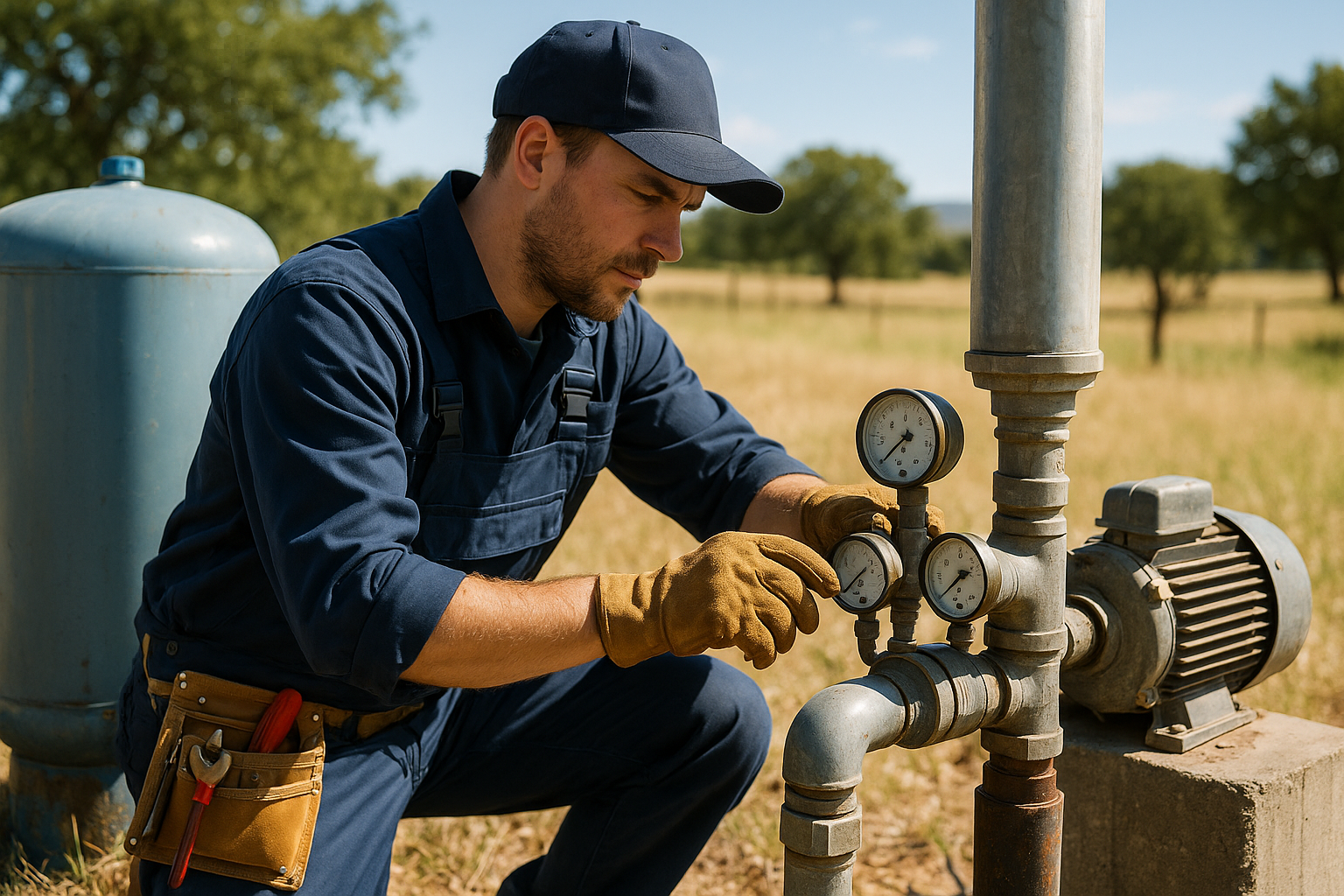
Your pressure tank has a gauge that shows system pressure. Check it:
- With pump off: Should hold steady (typically 40-60 PSI)
- When pump kicks on: Note the "cut-in" pressure (usually 30-40 PSI)
- When pump shuts off: Note the "cut-out" pressure (usually 50-60 PSI)
Record these numbers. Changes over time indicate problems:
- Dropping cut-out pressure → Pump may be weakening
- Narrowing gap between cut-in/out → Waterlogged tank
- Pressure won't build → Leak or pump failure
Step 2: Listen to a Pump Cycle (1 minute)
Turn on a faucet and let the pressure drop until the pump kicks on. Listen for:
- Normal: Quiet humming, water flow sound, pump shuts off after 1-3 minutes
- Concerning: Grinding, squealing, clicking, or unusual noise
- Bad: Short cycling (on/off rapidly), pump running but no pressure build
Time the cycle. A pump that takes much longer than usual to reach cut-out pressure may be developing problems.
Step 3: Inspect for Leaks (1 minute)
Walk around and visually check:
- Pressure tank: Look for moisture, rust, or drips at connections
- Pipe connections: Check visible fittings for wetness
- Control box: Look for scorch marks, burnt smell, or insects
- Wellhead: Ensure cap is secure, no standing water around it
Step 4: Check Water Quality (1 minute)
Run water from a tap and observe:
- Color: Should be clear. Brown, orange, or cloudy indicates problems.
- Smell: Should be odorless. Sulfur, musty, or chemical smells need investigation.
- Taste: Should taste normal. Metallic, salty, or "off" tastes matter.
- Air: Occasional spurts are normal; constant sputtering is not.
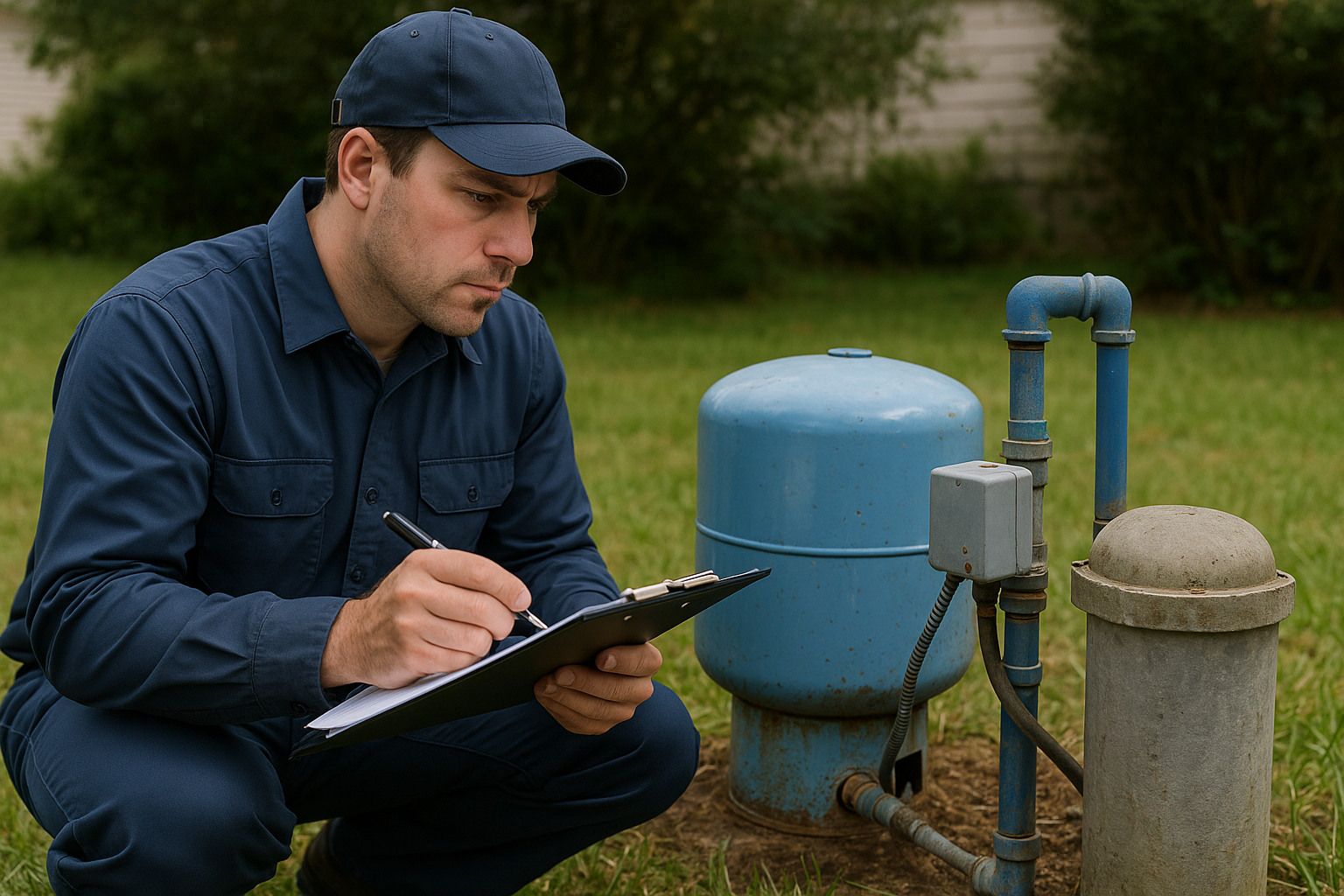
Step 5: Log Your Observations (1 minute)
Keep a simple log with:
- Date
- Pressure readings (cut-in/cut-out)
- Pump cycle time
- Any unusual observations
This history is invaluable when troubleshooting problems or talking to a service technician.
Printable Checklist
See our well maintenance schedule for a printable monthly and annual checklist.
What Each Check Tells You
Pressure Gauge Insights
| Observation | Likely Cause |
|---|---|
| Pressure drops overnight | Check valve failure or leak |
| Narrowing cut-in/out range | Waterlogged pressure tank |
| Lower cut-out than usual | Pump losing capacity, leak, or low well |
| Gauge reads zero | Pump failure, major leak, or gauge broken |
| Needle bounces rapidly | Waterlogged tank, short cycling |
Sound Diagnosis
| Sound | Likely Cause |
|---|---|
| Grinding | Bearing failure, sand in pump |
| Clicking at switch | Pressure switch wearing out |
| Humming without running | Bad capacitor, seized motor |
| Banging pipes | Water hammer |
| Rapid on/off | Short cycling — tank or leak issue |
Seasonal Adjustments
Summer Checks (Add These)
- Monitor for increased pump run time (more water use)
- Check irrigation system for leaks wasting water
- Ensure wellhead area stays clear of vegetation
Winter Checks (Add These)
- Inspect for frozen or cracked pipes (mountain areas)
- Verify heat source in well house is working
- Check insulation on exposed pipes
After Major Events
Do a full check after:
- Power outages
- Flooding or heavy rain
- Earthquakes
- Any construction near the well
- Extended absence from the property
When to Call a Professional
Call immediately if you notice:
- No water at all
- Grinding or screaming sounds from the pump
- Burning smell from control box
- Tripped breaker that won't reset
- Sudden water discoloration
- Sewage or chemical smell in water
Schedule service soon if:
- Pressure readings trending downward
- Pump cycle times increasing
- New sounds appearing
- Minor leaks developing
- Water quality changes
Tools for Better Monitoring
Basic (Free-$50)
- Notebook: Simple written log
- Flashlight: For inspecting dark areas
- Timer: Use your phone to time pump cycles
Intermediate ($50-200)
- Digital pressure gauge: More accurate readings
- Ammeter: Measure pump current (amp draw changes indicate problems)
- Water testing kit: Basic home testing for pH, hardness, chlorine
Advanced ($200+)
- Smart water monitor: Continuous flow monitoring, leak alerts
- Pressure logger: Records pressure over time automatically
- Well level monitor: Tracks water level in well (useful during drought)
We service all major pump brands including Franklin Electric, Grundfos, Goulds (Xylem), and Sta-Rite (Pentair). Our trucks carry common parts and components for same-day repairs.
Frequently Asked Questions
What should I check on my well each month?
Monthly well checks should include: reading the pressure gauge (note cut-in and cut-out), listening to the pump cycle for unusual sounds, checking for leaks around the pressure tank and pipes, running water to check for color or odor changes, and inspecting the wellhead area. This takes about 5 minutes and can catch problems early.
What pressure readings are normal for a well system?
Most residential well systems run on a 30-50 or 40-60 PSI setting. The pump turns on (cut-in) at the lower number and off (cut-out) at the higher number. If your pressures have shifted more than 5 PSI from normal, or if the pump cycles rapidly, something needs attention.
How do I know if my well has a problem?
Warning signs include: pressure changes from normal baseline, pump running longer or more frequently, unusual sounds (grinding, clicking, humming), water quality changes (color, smell, taste), air spurts at faucets, or higher electric bills. Monthly monitoring helps you notice these changes before they become emergencies.
How often should I have my well professionally inspected?
Annual professional inspection is recommended. This includes flow rate testing, electrical checks, and water quality testing that's hard to do yourself. Monthly self-monitoring catches issues between professional visits. If you notice anything concerning during monthly checks, don't wait for the annual inspection.
What's the most important thing to monitor?
Pressure readings and pump cycle behavior. These are the earliest indicators of most problems. A change in normal pressure patterns or cycle times often precedes complete failures by weeks or months — giving you time to address issues before emergencies.
Due for a Professional Checkup?
Annual inspections catch what monthly checks might miss. Schedule yours today.
Call (760) 440-8520Serving San Diego, Riverside & San Bernardino Counties
Related Articles
Continue learning about well maintenance and troubleshooting