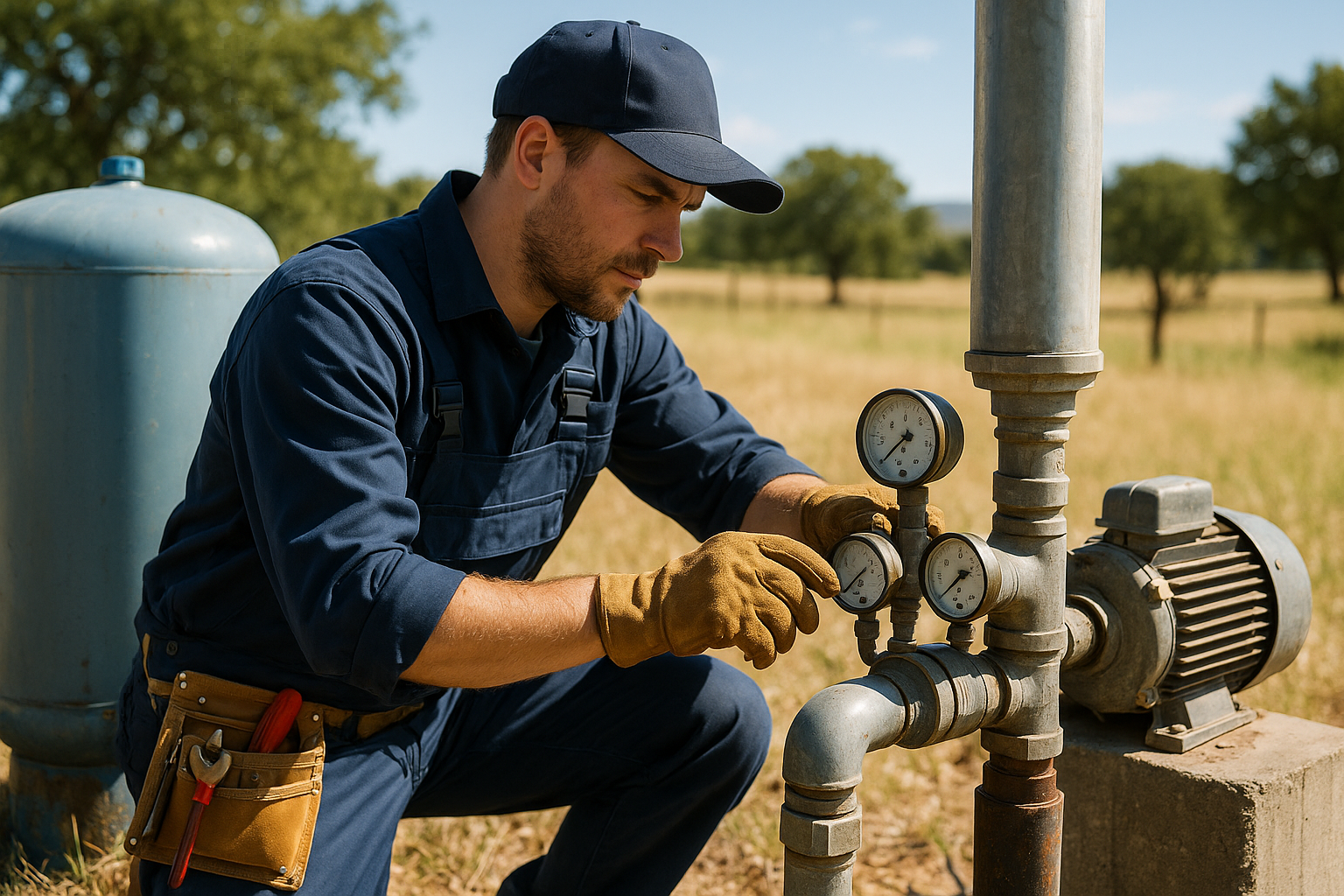
Well Pump Clicks But Won't Run: Troubleshooting Guide
You hear a click when the faucet runs dry, but the pump never starts. That clicking is your system trying to deliver water—and failing. Here's how to diagnose what's wrong and whether it's a DIY fix or time to call a pro.
📋 In This Guide
⚠️ No Water Emergency?
Turn off the circuit breaker to prevent electrical damage, then call us for same-day service.
Call (760) 440-8520What That Clicking Sound Means
The click you hear is usually one of two things:
- Pressure switch contacts closing – The switch detects low pressure and tries to start the pump
- Relay engaging in control box – For 3-wire pumps, the control box relay attempts to energize the motor
Either way, clicking means the system knows it should run—but something prevents the motor from starting.
Common Causes (Most to Least Common)
1. Failed Start Capacitor
Likelihood: Very common (40% of cases)
Single-phase submersible pumps (1 HP and larger) use capacitors to start the motor. When the start capacitor fails, the motor can't overcome inertia to begin spinning.
Symptoms:
- Click, brief hum, then nothing
- Motor may try to start, then trip breaker
- Capacitor may appear swollen or show burn marks
Location: Inside the control box (gray box mounted near pressure tank or wellhead)
Fix: Replace capacitor ($15-$50 part, professional installation recommended)
2. Bad Relay Contacts
Likelihood: Common (25% of cases)
The relay in the control box switches power to the pump motor. Over time, contacts burn and pit from repeated switching.
Symptoms:
- Clicking from control box
- Intermittent starting (works sometimes, not others)
- Visible damage or discoloration on relay
Fix: Replace relay or entire control box ($50-$200)
3. Burned Pressure Switch Contacts
Likelihood: Common (20% of cases)
The pressure switch contacts arc each time they close. Eventually, they become so pitted they can't carry enough current.
Symptoms:
- Clicking directly from pressure switch (mounted on pipe near tank)
- Visible burning or pitting on contacts (open switch cover to inspect)
- Contacts close but pump doesn't run
Temporary fix: Carefully file contacts smooth (buys time, not a permanent solution)
Proper fix: Replace pressure switch ($20-$50)
4. Low Voltage
Likelihood: Moderate (10% of cases)
Pump motors need adequate voltage to start. If voltage is low, the motor may click and hum but lack power to turn.
Causes:
- Utility voltage drop (especially during heat waves)
- Undersized wire for distance
- Loose connections causing voltage drop
- Generator too small (during power outages)
Fix: Check voltage at pump circuit (should be 230V ±10%). Address wiring issues or wait for utility to restore normal voltage.
5. Seized Motor/Pump
Likelihood: Less common (5% of cases)
If the pump sat unused for extended periods, or sand/sediment jammed the impeller, the motor may be mechanically stuck.
Symptoms:
- Click, hum, then breaker trips
- Motor draws excessive current trying to start
- History of sandy water or long dormant period
Fix: Pump must be pulled and inspected. May need replacement ($1,500-$4,000+ installed)
Step-by-Step Diagnosis
Step 1: Turn Off Power
Stop the clicking to prevent further damage. Turn off the circuit breaker for the well pump. Confirm power is off with a voltage tester before touching any components.
Step 2: Locate the Click
Turn power back on briefly and listen:
- Click from pressure switch (on pipe): Likely switch contacts or downstream issue
- Click from control box (gray box): Likely relay or capacitor issue
- Click plus hum from wellhead: Motor trying to start but can't—seized or capacitor
Step 3: Visual Inspection
Pressure switch:
- Turn off power
- Remove switch cover (one screw usually)
- Look for burned, pitted, or corroded contacts
- Check for ant nests (common cause of failure)
Control box (3-wire systems):
- Turn off power
- Remove cover
- Look for swollen or burned capacitors
- Check for burnt relay contacts or discoloration
- Look for loose wires
Step 4: Test Voltage (If Comfortable with Electrical)
Using a multimeter:
- Check voltage at pressure switch input terminals: Should be 230V (220-240V acceptable)
- Check voltage at control box output: Should match input when switch is closed
- Voltage below 200V can prevent starting
⚠️ Warning: Working with 240V is dangerous. If you're not comfortable with electrical testing, call a professional.
What You Can Fix Yourself
- Reset tripped breaker – If it trips again, there's an underlying problem
- Clean corroded contacts – Light filing or sandpaper on pressure switch contacts (temporary fix)
- Clear ant nests – Remove debris from pressure switch (common in San Diego)
- Tighten loose connections – With power OFF, check wire terminals
When to Call a Professional
- Capacitor or relay replacement (240V work)
- Breaker trips repeatedly
- Motor hums but won't start (likely seized or electrical issue)
- You're not comfortable with electrical diagnosis
- Problem persists after basic checks
Repair Costs
| Pressure switch replacement | $100–$200 |
| Capacitor replacement | $150–$300 |
| Relay replacement | $150–$300 |
| Control box replacement | $200–$400 |
| Pump replacement (if motor seized) | $1,500–$4,000+ |
Pump Won't Start?
Don't let it keep clicking—that damages electrical components. Call us for same-day diagnosis and repair.
See our pump repair services or motor humming guide.
Call (760) 440-8520Serving San Diego, Riverside & San Bernardino Counties
Frequently Asked Questions
Why does my well pump click but not start?
The clicking sound usually indicates the pressure switch or relay is trying to energize the pump, but something is preventing the motor from running. Common causes include a failed start capacitor, bad relay contacts, seized motor, or low voltage. The click means power is being sent, but the motor can't start.
Is a clicking well pump an emergency?
Yes—continuous clicking can damage electrical components and indicates you have no water. Turn off the circuit breaker to prevent damage and call a professional. Don't let the system keep clicking, as this can burn out the pressure switch contacts or control box.
Can I fix a clicking well pump myself?
Some causes like tripped breakers or corroded pressure switch contacts can be DIY fixes. However, capacitor replacement, relay repair, and motor issues involve 240V electricity and should be handled by a licensed professional for safety.
How much does it cost to fix a clicking well pump?
Simple fixes like pressure switch replacement run $100-$200. Capacitor or relay issues cost $150-$400 to repair. If the motor is seized, pump replacement costs $1,500-$4,000+ depending on well depth.
Get Expert Help
Contact Southern California Well Service for professional pump diagnosis and repair.
Call (760) 440-8520Serving San Diego, Riverside & San Bernardino Counties
Related Articles
Continue learning about well maintenance and troubleshooting