Water Softener Installation for Well Systems
Hard water is one of the most common issues affecting private wells in San Diego County. Calcium and magnesium minerals create scale buildup that damages water heaters, clogs fixtures, leaves spots on dishes, and makes soap less effective. A properly sized and installed water softener solves these problems.
📋 In This Guide
This guide covers everything you need to know about choosing, sizing, installing, and maintaining a water softener for your well system.
Understanding Hard Water
What Causes Hard Water?
Hard water contains dissolved calcium and magnesium minerals picked up as groundwater moves through limestone, chalk, and other mineral-rich formations. San Diego County's geology produces some of the hardest water in California, with many wells testing 15-30+ grains per gallon (GPG).
Hardness Levels
| Classification | Grains Per Gallon (GPG) | mg/L (ppm) |
|---|---|---|
| Soft | 0-3.5 | 0-60 |
| Slightly Hard | 3.5-7.0 | 61-120 |
| Moderately Hard | 7.0-10.5 | 121-180 |
| Hard | 10.5-14 | 181-240 |
| Very Hard | 14+ | 241+ |
Many San Diego County wells test in the "Very Hard" category. A water softener becomes essential when hardness exceeds 7-10 GPG.
Problems Caused by Hard Water
- Scale buildup in pipes — Reduces flow, eventually clogs lines
- Water heater damage — Scale insulates the heating element, reducing efficiency and causing failure
- Spotty dishes and glassware — Mineral deposits don't rinse clean
- Soap scum — Hard water reacts with soap to form sticky residue
- Dry skin and hair — Minerals leave film that blocks moisture
- Stiff, dingy laundry — Minerals trap dirt and prevent proper cleaning
- Clogged fixtures — Aerators and showerheads become restricted
- Damaged appliances — Washing machines, dishwashers, and ice makers fail prematurely
How Water Softeners Work
Ion Exchange Process
Traditional water softeners use ion exchange to remove hardness minerals:
- Hard water flows through a tank filled with resin beads
- Resin beads are charged with sodium ions
- Calcium and magnesium ions are attracted to the resin and stick to it
- Sodium ions are released into the water in exchange
- Softened water flows to your house
- When resin becomes saturated, the system regenerates with salt brine
- Salt solution flushes the hard minerals off the resin to drain
- Fresh sodium ions recharge the resin for the next cycle
Types of Water Softeners
Salt-Based Ion Exchange (Most Common)
- Best for: Very hard water, most residential applications
- Advantages: Most effective at removing hardness, proven technology
- Disadvantages: Requires salt, produces brine discharge, adds sodium to water
- Cost: $400-$2,500
Salt-Free Conditioners (Template Assisted Crystallization)
- Best for: Moderate hardness, sodium-restricted diets, environmental concerns
- Advantages: No salt, no discharge, no electricity, retains beneficial minerals
- Disadvantages: Doesn't actually remove hardness, less effective on very hard water
- Cost: $500-$2,000
Dual-Tank Systems
- Best for: Continuous soft water demand, larger households
- Advantages: Always has soft water available (one tank regenerates while other works)
- Disadvantages: Higher cost, takes more space
- Cost: $1,200-$3,500
Sizing Your Water Softener
Proper sizing is critical. An undersized softener regenerates too often, wasting salt and water. An oversized softener has stagnant water in the resin bed.
Sizing Formula
Daily softening requirement = Water hardness (GPG) × Daily water usage (gallons)
Weekly softening requirement = Daily requirement × 7 days
Required softener size = Weekly requirement (match to standard sizes)
Example Calculation
A 4-person household using 300 gallons/day with 20 GPG hardness:
- Daily: 20 GPG × 300 gallons = 6,000 grains/day
- Weekly: 6,000 × 7 = 42,000 grains/week
- Recommended: 48,000 grain softener (next size up)
Standard Softener Sizes
| Grain Capacity | Home Size | Hardness Range |
|---|---|---|
| 24,000 grains | 1-2 people | Up to 15 GPG |
| 32,000 grains | 2-3 people | Up to 20 GPG |
| 48,000 grains | 3-5 people | Up to 25 GPG |
| 64,000 grains | 5+ people | 25+ GPG |
| 80,000+ grains | Large homes, commercial | Very hard water |
Special Considerations for Wells
- Iron in water: If iron exceeds 0.3 mg/L, size up or add iron pre-treatment
- Manganese: Similar to iron, causes fouling
- Low pH: Acidic water (below 7.0) can damage resin
- Chlorine: Not typically an issue with well water
Installation Location and Requirements
Proper Installation Sequence
From well to house:
- Well pump
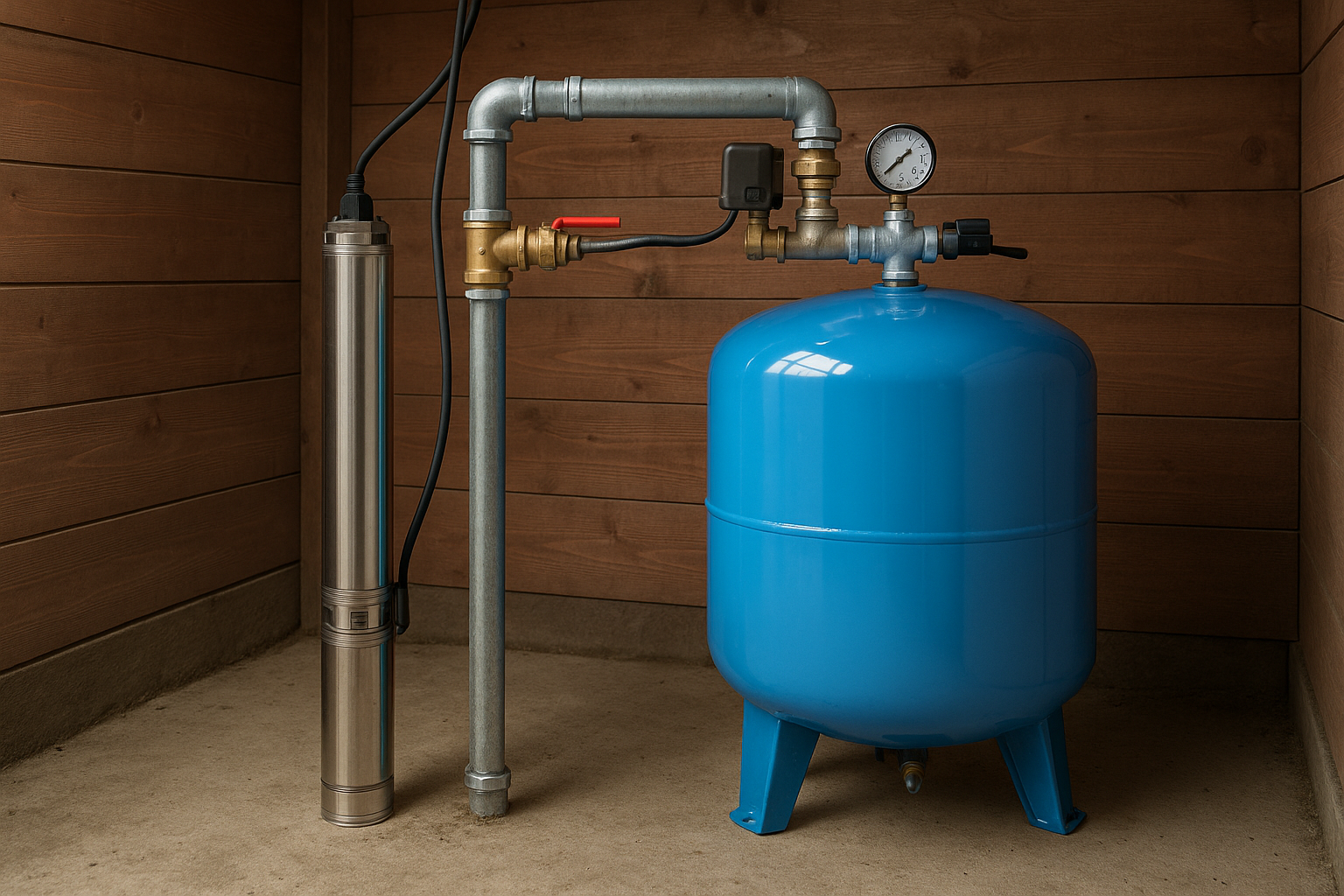
- Pressure tank
- Sediment filter (required before softener)
- Iron filter (if needed)
- Water softener ← Install here
- Carbon filter (if needed)
- UV sterilizer (if needed)
- House plumbing
Location Requirements
- After pressure tank — Softener needs consistent pressure to operate
- Near a drain — Regeneration water needs to discharge somewhere
- Electrical outlet — For the control valve (120V standard)
- Level floor — Softener tanks must be level
- Protected from freezing — Frozen softeners are destroyed
- Accessible — For salt loading and maintenance
- Room for salt storage — Keep extra bags nearby
Bypass Considerations
Always install a bypass valve so you can:
- Service the softener without shutting off water to the house
- Use unsoftened water for outdoor irrigation
- Isolate the softener if problems occur
What NOT to Soften
Consider bypassing soft water to:
- Outdoor hose bibs — Plants don't need soft water, and salt can harm soil
- Irrigation systems — Same reason
- Kitchen cold water (optional) — Some prefer unsoftened drinking water
Drain Requirements
Softeners produce brine discharge during regeneration. This water needs to go somewhere appropriate.
Acceptable Drain Options
- Septic system — Most common for wells; small amounts of brine are acceptable
- Floor drain — If connected to appropriate waste system
- Utility sink — Requires air gap to prevent backflow
- Dedicated drain line — To septic or dry well
NOT Acceptable for Brine
- Yard/ground surface — Salt damages plants and soil
- Storm drains — Illegal in most areas
- Directly into streams or waterways — Environmental violation
Air Gap Requirement
Local codes typically require an air gap between the softener drain line and any drain. This prevents contaminated water from being siphoned back into your water supply.
Installation Overview
Note: Water softener installation involves plumbing and electrical work. Professional installation is recommended unless you have experience.
Basic Steps
- Turn off water and power — To the well pump
- Install bypass valves — Before and after softener location
- Position the softener — Level, near drain and outlet
- Connect plumbing — Inlet, outlet, and drain lines
- Add resin (if not pre-loaded) — Follow manufacturer instructions
- Add salt — Fill brine tank about 2/3 full
- Connect electrical — Plug in control valve
- Program the controller — Set hardness and regeneration
- Turn on water slowly — Check for leaks
- Run initial regeneration — Prepares the system
- Test water hardness — Verify system is working
Costs and Budget
Equipment Costs
| Softener Type | Cost Range |
|---|---|
| Basic timer-based (24-32K grains) | $400-$600 |
| Demand-initiated (32-48K grains) | $600-$1,200 |
| High-efficiency (48-64K grains) | $1,000-$2,000 |
| Dual-tank systems | $1,500-$3,500 |
| Salt-free conditioner | $500-$2,000 |
Installation Costs
- DIY installation: $0 (if you're experienced)
- Professional installation: $200-$500
- Complex installation: $400-$800 (moving plumbing, adding drain)
Ongoing Costs
- Salt: $50-$150/year (40-80 lb bag costs $5-$8)
- Electricity: $5-$15/year (controls only)
- Resin cleaner: $20-$40/year (optional but recommended)
- Annual service: $100-$200 (optional professional check)
Salt Types
Rock Salt
- Pros: Least expensive
- Cons: Contains impurities that leave residue, requires more cleaning
- Cost: $4-$6 per 40 lb bag
- Best for: Budget-conscious, don't mind extra maintenance
Solar Salt (Evaporated Sea Salt)
- Pros: More pure than rock salt, dissolves well
- Cons: May contain some insoluble matter
- Cost: $5-$7 per 40 lb bag
- Best for: Most residential applications
Evaporated Salt Pellets
- Pros: Purest form (99.9%), less buildup, best performance
- Cons: Most expensive
- Cost: $6-$9 per 40 lb bag
- Best for: Best performance, less maintenance
Potassium Chloride
- Pros: Sodium-free alternative, better for plants if discharged to yard
- Cons: Significantly more expensive, may be less effective
- Cost: $20-$30 per 40 lb bag
- Best for: Sodium-restricted diets, environmental concerns
Maintenance
Monthly Tasks
- Check salt level — Keep 1/3 to 2/3 full
- Break up salt bridges (if present)
- Note regeneration frequency
Quarterly Tasks
- Clean the brine tank if residue builds up
- Check for salt mushing (solid mass at bottom)
- Verify the system is regenerating properly
Annual Tasks
- Professional inspection (recommended)
- Clean or replace the brine tank
- Check resin for fouling (especially with iron)
- Verify hardness removal with test kit
- Clean the venturi and nozzle
Common Problems
- Salt bridge: Hard crust forms above water level — break up with broom handle
- Salt mushing: Sludge at bottom — clean out tank, use better salt
- Resin fouling: Iron buildup — use resin cleaner or iron pre-filter
- Running continuously: Check for leaks, stuck valve, or clogged drain
Frequently Asked Questions
How much does a water softener cost for a well?
Water softeners for well systems cost $400-$2,500 for the unit plus $200-$500 for professional installation. Basic units suitable for average hardness cost $400-$800. High-capacity units for very hard water or large homes run $1,000-$2,500. Whole-house systems including pre-filtration and installation typically total $800-$3,000. Salt costs $50-$150/year ongoing.
What size water softener do I need for my well?
Water softener size depends on your water hardness (GPG) and daily water usage. Calculate: (Hardness GPG × Daily gallons × 7 days) = weekly grain capacity needed. Example: 15 GPG hardness × 300 gallons/day × 7 = 31,500 grains/week, so you'd need a 32,000+ grain softener. Most 3-4 bedroom homes with moderate hardness (15-20 GPG) need 32,000-48,000 grain units.
Should I put a softener before or after the pressure tank?
Install the water softener AFTER the pressure tank and sediment filter. The pressure tank provides consistent flow and pressure for the softener to operate properly—softeners don't work well with the pulsing flow directly from a pump. Never install a softener directly on the well pump outlet—pressure fluctuations and debris will damage the softener. Proper order: Well → Pressure tank → Sediment filter → Softener → House.
Do I need a sediment filter before my water softener?
Yes, always install a sediment filter (5 micron recommended) before a water softener on a well system. Well water contains sand, silt, and particles that will clog the softener resin bed, causing channeling, reduced efficiency, and premature failure. A $100 sediment filter protects your $1,000+ softener investment and extends its lifespan by 5-10 years.
Is soft water safe to drink?
For most people, yes. The amount of sodium added is relatively small—about 50mg per quart for every 10 GPG of hardness removed. That's less than a slice of bread. However, people on strict sodium-restricted diets should consult their doctor, use potassium chloride instead of sodium, or install a separate tap with unsoftened water for drinking and cooking.
Well-Specific Considerations
Iron and Manganese
Many San Diego County wells have iron (causing red/orange staining) or manganese (causing black staining) in addition to hardness. While softeners remove small amounts of iron (up to 1-2 mg/L), higher levels require pre-treatment:
- 0-2 mg/L iron: Softener may handle it (use resin cleaner)
- 2-5 mg/L iron: Add an iron filter before the softener
- 5+ mg/L iron: Definitely need dedicated iron treatment
Low pH (Acidic Water)
Well water with pH below 7.0 can damage softener resin. Test your pH—if it's below 6.5, install a neutralizer before the softener.
Tannins
Organic tannins (causing yellow/brown color) can foul softener resin. If your water has tannins, a dedicated tannin filter may be needed.
Get a Free Water Hardness Test
We'll test your water hardness and recommend the right softener for your well system.
Call (760) 440-8520Free estimates | Serving San Diego, Riverside & San Bernardino Counties
Related: Water Testing | Hard Water Problems | Sediment Filtration
Related Articles
Continue learning about well maintenance and troubleshooting