SC By SCWS Team | January 18, 2026 | 12 min read
Water Softener vs Water Conditioner for Well Water
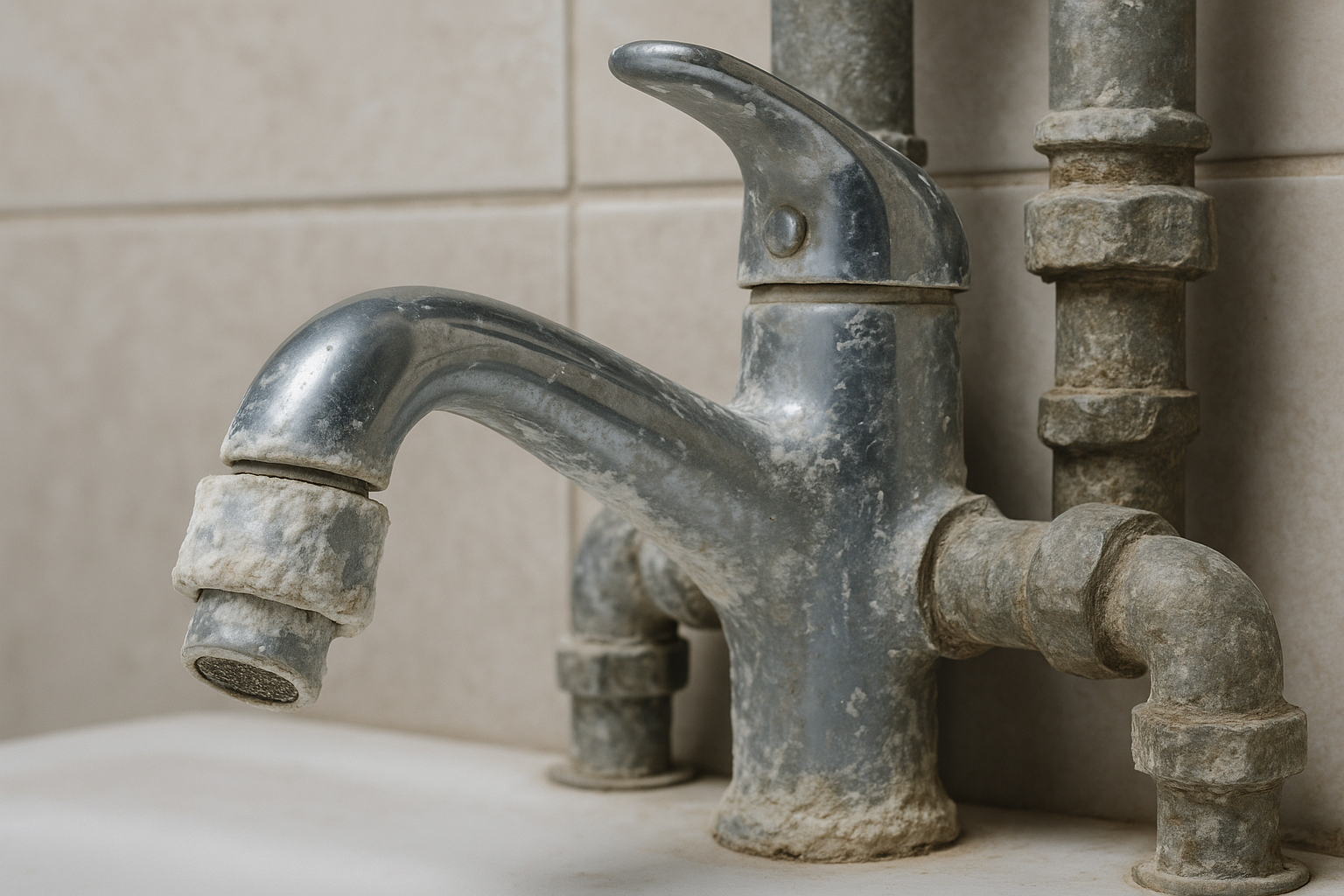
Dealing with hard well water? Scale buildup in pipes, spots on dishes, dry skin and hair, and shortened appliance life are frustrating problems for well owners throughout San Diego County. Both water softeners and water conditioners promise to solve hard water issues—but they work very differently and produce different results. Here's what you need to know to choose the right solution.
📋 In This Guide
⚡ Quick Answer
Water softeners are best for most well water situations—they actually remove hard minerals and provide true soft water benefits. Water conditioners (salt-free) are better for mild hardness, homes where salt use isn't possible, or when you only care about preventing scale (not achieving soft water).
Understanding Hard Water
Before comparing solutions, let's understand the problem. Hard water contains dissolved calcium and magnesium minerals picked up as groundwater flows through rock formations. In San Diego County, most well water is moderately to very hard.
Water Hardness Scale
| Hardness Level | Grains Per Gallon (GPG) | Parts Per Million (PPM) |
|---|---|---|
| Soft | 0-1 GPG | 0-17 PPM |
| Slightly Hard | 1-3.5 GPG | 17-60 PPM |
| Moderately Hard | 3.5-7 GPG | 60-120 PPM |
| Hard | 7-10 GPG | 120-180 PPM |
| Very Hard | 10+ GPG | 180+ PPM |
Most San Diego County wells test between 10-25 GPG—firmly in the "very hard" category. At these levels, hard water causes significant issues.
Problems Caused by Hard Water
- Scale buildup: White crusty deposits on faucets, showerheads, and inside pipes
- Reduced appliance life: Water heaters, dishwashers, and washing machines fail earlier
- Water heater inefficiency: Scale insulates heating elements, increasing energy costs 25-40%
- Soap scum: Hard water prevents soap from lathering properly
- Spots and film: Dishes, glasses, and shower doors show mineral deposits
- Dry skin and hair: Mineral residue on skin after showering
- Stiff laundry: Clothes feel rough and wear out faster
How Water Softeners Work
Traditional water softeners use ion exchange to remove calcium and magnesium from water, replacing them with sodium (or potassium) ions.
The Ion Exchange Process
- Hard water enters the mineral tank containing resin beads
- Resin beads are charged with sodium ions
- Calcium and magnesium ions are attracted to the beads and stick
- Sodium ions are released into the water in exchange
- Soft water exits to your home's plumbing
- Regeneration: Periodically, salt brine flushes the beads, removing captured minerals and recharging with sodium
Water Softener Result
Hardness minerals are completely removed from the water. What comes out is genuinely soft water—0 GPG hardness—with added sodium content.
Water Softener Benefits
- ✓ Complete elimination of hardness minerals
- ✓ No scale buildup anywhere in the system
- ✓ Soap lathers better—use 50-75% less soap/detergent
- ✓ Soft, smooth feeling skin and hair
- ✓ Brighter, softer laundry
- ✓ Spot-free dishes (when combined with rinse aid)
- ✓ Extended appliance lifespan
- ✓ Improved water heater efficiency
- ✓ Proven technology with decades of track record
Water Softener Drawbacks
- ✗ Requires regular salt purchases ($100-$200/year)
- ✗ Adds sodium to water (~30-50mg per 8oz glass)
- ✗ Wastes water during regeneration (50-100 gallons per cycle)
- ✗ Larger equipment footprint
- ✗ Some "slippery" feeling that takes adjustment
- ✗ Discharge may be restricted in some areas
- ✗ Not recommended for watering most plants
How Water Conditioners Work
Water conditioners (also called salt-free softeners, descalers, or scale inhibitors) take a different approach. Instead of removing minerals, they change how the minerals behave.
Template Assisted Crystallization (TAC)
The most common salt-free technology is TAC, which works by:
- Hard water flows through a tank containing special media
- Calcium and magnesium ions are converted into microscopic crystals
- These crystals remain suspended in water and don't stick to surfaces
- Result: Minerals pass through plumbing without forming scale
Water Conditioner Result
Hardness minerals are still present in the water—but in a form less likely to create scale. This is "conditioned" water, not "soft" water.
Other Conditioning Technologies
- Electronic/Magnetic descalers: Claim to alter mineral behavior with electromagnetic fields. Evidence is mixed.
- Polyphosphate injection: Adds food-grade phosphates that bind to minerals. Limited effectiveness on very hard water.
- Chelation systems: Use citric acid to sequester minerals. Requires media replacement.
Water Conditioner Benefits
- ✓ No salt to buy or haul
- ✓ No sodium added to water
- ✓ No water wasted in regeneration
- ✓ Smaller, simpler equipment
- ✓ Lower maintenance requirements
- ✓ Safe for watering plants
- ✓ No discharge restrictions
- ✓ Retains beneficial minerals in water
Water Conditioner Drawbacks
- ✗ Does NOT remove hardness minerals
- ✗ Won't eliminate soap scum or hard water feel
- ✗ Spots may still appear on dishes and shower doors
- ✗ No improvement in lathering or reduced soap usage
- ✗ Less effective on very hard water (15+ GPG)
- ✗ Doesn't address existing scale—only prevents new buildup
- ✗ Some technologies have questionable effectiveness
📊 Side-by-Side Comparison
| Factor | Water Softener | Water Conditioner |
|---|---|---|
| Removes Hardness | Yes (completely) | No (changes it) |
| Prevents Scale | Yes | Yes |
| Soft Water Feel | Yes | No |
| Reduces Soap Use | Yes (50-75%) | No |
| Eliminates Soap Scum | Yes | No |
| Requires Salt | Yes | No |
| Adds Sodium | Yes | No |
| Wastes Water | Yes (regeneration) | No |
| Equipment Cost | $1,000-$2,500 | $800-$2,000 |
| Annual Operating Cost | $100-$200 | $0-$50 |
| Best For | Hard to very hard water, full soft water benefits | Mild hardness, scale prevention only |
Cost Comparison
Upfront Costs
Water Softener System
$1,500-$3,500
- • Quality softener unit: $800-$2,000
- • Installation: $500-$1,000
- • Initial salt/setup: $100-$200
Water Conditioner System
$1,000-$3,000
- • Quality TAC unit: $600-$1,800
- • Installation: $300-$800
- • No initial supplies needed
10-Year Cost of Ownership
| Cost Category | Water Softener | Water Conditioner |
|---|---|---|
| Initial System | $2,500 | $2,000 |
| Salt (10 years) | $1,500 | $0 |
| Media Replacement | $0 | $300 |
| Soap Savings | -$600 | $0 |
| Water Heater Efficiency Savings | -$500 | -$300 |
| 10-Year Net Cost | $2,900 | $2,000 |
Water conditioners have lower total costs—but you don't get the full soft water benefits. Whether the savings justify losing those benefits depends on your priorities.
For detailed cost information, see our complete water softener cost guide.
Effectiveness by Hardness Level
Your water hardness significantly affects which solution works best:
0-7 GPG (Soft to Moderately Hard)
Either solution works well. Water conditioner may be sufficient—scale prevention is manageable and soft water benefits are less dramatic at lower hardness.
7-15 GPG (Hard to Very Hard)
Water softener recommended. Conditioners can help with scale but won't address soap scum, dry skin, or other hard water effects at these levels.
15+ GPG (Extremely Hard)
Water softener strongly recommended. Conditioners struggle at this hardness level—you need actual mineral removal to solve problems.
📍 San Diego County Reality
Most well water in our area tests 10-25 GPG. At these hardness levels, a water softener typically provides better results than a conditioner. Get your water tested to know exactly what you're dealing with.
Special Considerations for Well Water
Well water often has issues beyond hardness that affect your treatment choices:
Iron in Well Water
Many San Diego wells have iron, which causes orange staining. Standard water softeners can handle low iron levels (under 2 PPM), but higher levels require pre-treatment with an iron filter. If your water has the rotten egg smell or turns brown, you likely need more than just softening.
pH Levels
Both softeners and conditioners work best with near-neutral pH (6.5-8.5). Acidic water (low pH) can damage softener resin and reduce conditioner effectiveness. If your well water is acidic, you may need pH correction first.
Sediment
Well water often contains sediment that can clog both types of systems. A sediment pre-filter is usually recommended regardless of which treatment you choose.
Bacteria
Neither softeners nor conditioners remove bacteria. If your well tests positive for coliform or E. coli, you need UV treatment or chlorination—water softening is a separate issue.
Making the Right Choice
✅ Choose a Water Softener If:
- • Your water hardness is over 10 GPG
- • You want true soft water benefits (softer skin, better lathering, brighter laundry)
- • Soap scum and spots on dishes bother you
- • You don't mind adding salt monthly
- • You're not on a strict low-sodium diet (or will use potassium)
- • Your area allows softener discharge
- • You want proven, predictable results
⚠️ Choose a Water Conditioner If:
- • Your water hardness is under 10 GPG
- • You only care about preventing scale buildup
- • You can't use salt (health, environmental, or regulatory reasons)
- • You use well water for extensive irrigation
- • You want the lowest maintenance option
- • You prefer keeping minerals in your water
- • Your local area restricts softener discharge
The Hybrid Approach
Some homeowners use both technologies strategically:
- Softener for indoor water: Full soft water benefits for bathing, laundry, and dishes
- Conditioner for outdoor water: Scale protection for irrigation without adding sodium to soil
- Bypass for drinking water: RO system for drinking/cooking to avoid sodium
This approach costs more but gives you the best of both worlds.
Frequently Asked Questions
What's the main difference between a water softener and water conditioner?
Water softeners remove hard minerals (calcium and magnesium) from water through ion exchange, replacing them with sodium. Water conditioners don't remove minerals—they change the mineral structure to reduce scale buildup without adding salt. Softeners produce truly "soft" water; conditioners produce "conditioned" water that still contains minerals.
Which is better for well water: softener or conditioner?
For most well water with moderate to high hardness (over 10 GPG), water softeners are more effective. They completely remove hardness minerals, eliminating scale and providing all the benefits of soft water. Water conditioners work better for mild hardness or situations where you can't use salt.
How much does a water softener cost for a well?
A quality water softener system for a well costs $1,500-$3,500 installed, including the unit, installation, and initial setup. Annual operating costs run $100-$200 for salt plus minimal electricity. Salt-free conditioners cost $1,000-$3,000 installed with lower ongoing costs.
Do salt-free water conditioners actually work?
Salt-free conditioners do reduce scale buildup in pipes and appliances—studies confirm this. However, they don't provide all the benefits of true soft water: you'll still have soap scum, spots on dishes, and the "hard water feel" in showers. They're effective for scale prevention but not for achieving soft water effects.
Can I drink softened water?
Yes, softened water is safe to drink for most people. However, it contains added sodium (about 30-50 mg per 8 oz glass with typical hardness). People on low-sodium diets should consider a reverse osmosis system for drinking water or use potassium chloride instead of sodium chloride.
How often do water softeners need maintenance?
Regular maintenance includes: adding salt every 4-8 weeks (depending on usage and hardness), checking the brine tank annually, and occasionally cleaning the resin bed. Most quality softeners run 15-20 years with minimal attention. Water conditioners need even less—typically just annual inspection.
Will a water softener affect my septic system?
Research shows water softener discharge doesn't harm properly functioning septic systems. The salt and regeneration water actually help break down waste. However, some areas have regulations restricting softener discharge. Check local codes—this is one situation where salt-free conditioners may be preferred.
Do I need to treat my well water for other issues besides hardness?
Possibly. Well water often has multiple issues: iron (causes stains), sulfur (rotten egg smell), low pH (corrosion), or bacteria. A water test identifies what you're dealing with. Many homeowners need pre-treatment for iron or sediment before the softener, or UV treatment for bacteria.
Need Help Choosing the Right Water Treatment?
Start with a water test—we can help you understand your well water's hardness, iron content, pH, and other factors that affect treatment choices. We install both water softeners and conditioners and will recommend what actually makes sense for your situation.