Well Booster Pumps: When You Need One & How to Choose
📋 In This Guide
When You Need a Booster Pump
Multi-Story Homes
- Pressure drops ~0.5 PSI per foot of elevation
- Second/third floor may have weak flow
- Especially if well pressure is already marginal
Distant Buildings
- Guest house, barn, shop far from well
- Pressure loss over long pipe runs
- Booster at distant building restores pressure
Storage Tank Systems
- Gravity-fed from above-ground tank
- Low-yield well with storage
- Booster provides pressure from tank to house
Irrigation Needs
- Sprinklers need 40-60 PSI minimum
- Well pressure not sufficient
- Dedicated booster for irrigation
Signs You Need One
- Weak flow on upper floors
- Poor shower pressure upstairs
- Sprinklers don't reach properly
- Pressure below 40 PSI at distant fixtures
- Multiple fixtures running drops pressure dramatically
Types of Booster Pumps
Single-Stage Centrifugal
- Most common for residential
- Good for moderate boost (10-30 PSI)
- Simple and reliable
- Cost: $300-$800
Multi-Stage
- Higher pressure boost capability
- For demanding applications
- More efficient at higher pressures
- Cost: $500-$1,500
Variable Speed (VFD)
- Adjusts speed to match demand
- Constant pressure delivery
- Most efficient, quietest
- Cost: $1,000-$2,500
Jet Pump (as Booster)
- Self-priming capability
- Good for storage tank systems
- Can handle some suction lift
- Cost: $300-$700
How to Size a Booster Pump
Determine Pressure Boost Needed
- Measure current pressure at problem location
- Determine desired pressure (50-60 PSI typical)
- Difference = boost needed
- Add 10-20% margin
Determine Flow Needed
- Count fixtures to be served
- Estimate peak demand (GPM)
- Match pump capacity to demand
Typical Residential Sizing
| Application | Flow (GPM) | Boost (PSI) |
|---|---|---|
| Single bathroom | 5-8 | 10-20 |
| Whole upper floor | 8-15 | 15-25 |
| Guest house | 10-20 | 20-30 |
| Irrigation system | 10-30 | 20-40 |
Important Considerations
- Don't boost beyond pipe rating (usually 80 PSI residential)
- Booster amplifies existing pressure—needs incoming water
- Oversizing wastes energy; undersizing limits performance
Installation
Location Options
- Near pressure tank: Boosts whole house
- At branch point: Boosts specific zone
- At distant building: Restores pressure remotely
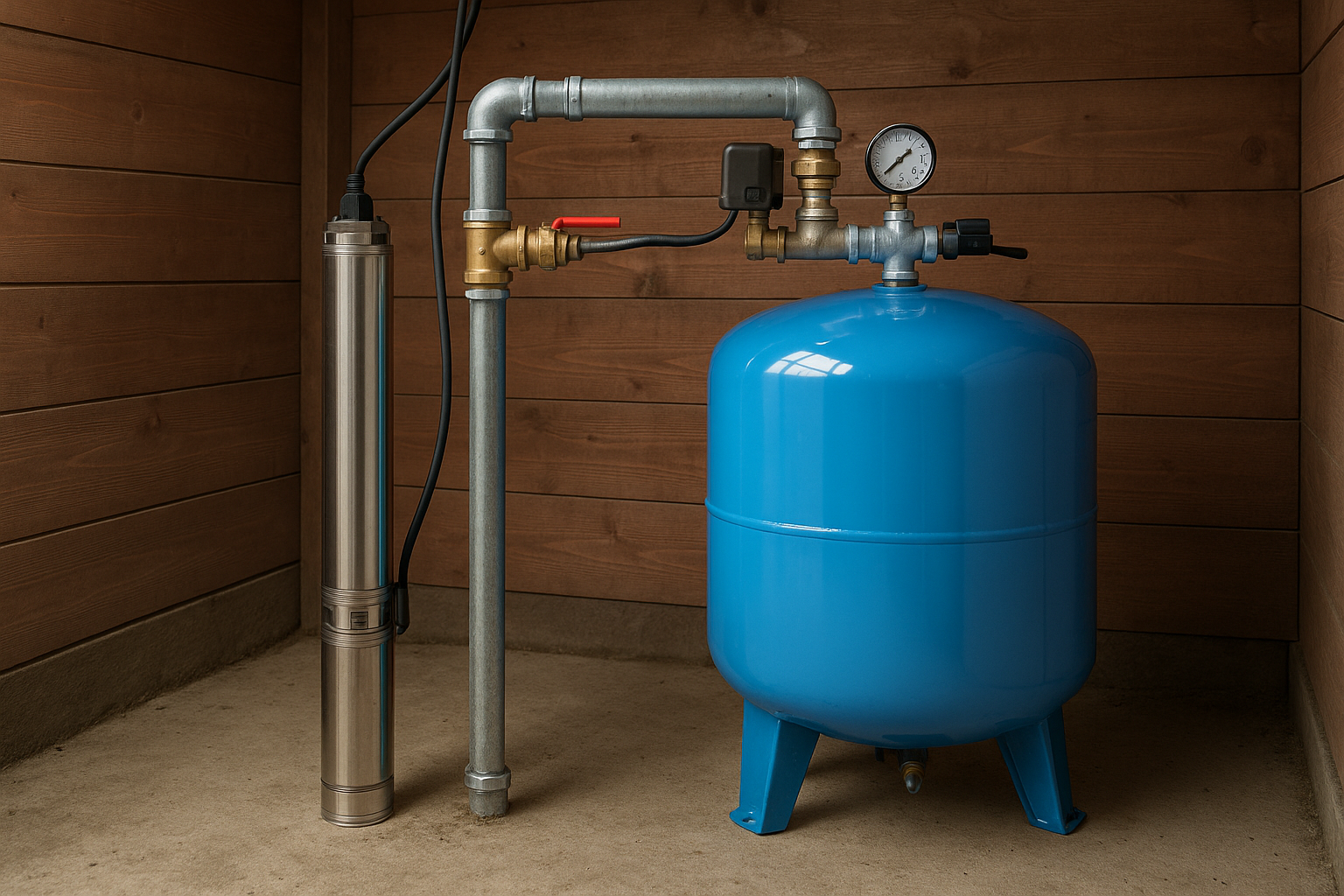
Components Needed
- Booster pump
- Check valve (prevents backflow)
- Pressure switch or VFD controller
- Small expansion tank
- Isolation valves
Electrical Requirements
- Most residential: 120V or 240V
- Dedicated circuit recommended
- Higher HP needs 240V
Professional vs DIY
- DIY possible with plumbing skills
- Electrical should be by licensed electrician
- Professional ensures proper sizing and setup
Costs
Equipment
| Type | Pump Cost |
|---|---|
| Basic single-stage | $200-$500 |
| Quality single-stage | $400-$800 |
| Multi-stage | $500-$1,200 |
| Variable speed | $800-$2,000 |
Installation
- Basic installation: $200-$500
- With electrical work: $300-$800
- Complex setup: $500-$1,200
Total Installed
- Basic system: $500-$1,200
- Mid-range: $1,000-$2,000
- Premium variable speed: $1,500-$3,500
Operating Costs
Adds $5-$20/month to electric bill depending on usage and efficiency.
Frequently Asked Questions
When do I need a booster pump for my well?
When your well system can't provide adequate pressure—common in multi-story homes, with distant buildings, or storage tank systems.
Can a booster pump increase my GPM?
No—boosters increase pressure, not flow. They need adequate incoming water to work. For more GPM, you need a larger well pump or more well capacity.
Can I install a booster pump myself?
The plumbing can be DIY with skills. Electrical should be done by a licensed electrician for safety and code compliance.
How long do booster pumps last?
Quality booster pumps last 10-15+ years. Variable speed models tend to last longer due to reduced stress.
Will a booster pump make my water heater work better?
Higher pressure won't speed up heating, but it will improve flow at hot water fixtures.
Need Help with Water Pressure?
We can diagnose your pressure issues and recommend the right solution.
Related Articles
Continue learning about well maintenance and troubleshooting