Well Diggers Near Me
Finding Expert Water Well Diggers in Southern California
SC By SCWS Team | February 1, 2026 • 18 min read
When you search for "well diggers near me," you're looking for professionals who can access groundwater on your property. While the term "well digger" comes from historical manual excavation methods, today's water wells aren't actually dug—they're drilled using sophisticated rotary drilling equipment capable of reaching productive aquifers hundreds of feet deep. Whether you're building a new home in rural San Diego County, developing agricultural land in Riverside, or replacing an aging well, finding experienced local well drillers (commonly called "diggers") is critical to securing reliable, long-term water access. This comprehensive guide explains modern well drilling, how to find qualified contractors, what to expect during the process, and why choosing the right local company makes all the difference.
💧 Need Professional Well Drilling?
Southern California Well Service provides expert water well drilling throughout San Diego and Riverside counties. Licensed C-57 contractors with modern equipment and 35+ years of local experience. Call (760) 440-8520 for free consultation.
Well Diggers vs. Well Drillers: Understanding Modern Water Well Installation
The terms "well digger" and "well driller" are often used interchangeably today, but they originally referred to very different techniques:
Historical Well Digging
Historically, "well diggers" manually excavated shallow wells using shovels, picks, and buckets—lowering workers into vertical shafts to dig through soil and soft rock. These hand-dug wells typically reached only 15-40 feet deep, accessing shallow water tables in loose sedimentary material. Hand-digging was dangerous, labor-intensive, limited in depth, and produced wells vulnerable to surface contamination.
Hand-dug wells still exist on older properties, but they're no longer constructed in California due to safety concerns, depth limitations, and contamination risks. Modern health codes require mechanically drilled wells with proper casing and sanitary seals.
Modern Rotary Drilling
Today's "well diggers" are actually rotary drilling contractors using powerful truck-mounted drilling rigs. These specialized machines drill vertical boreholes using rotating drill bits, mud circulation, and heavy steel casing—reaching depths of 200-1,000+ feet depending on geology and aquifer depth. Modern drilling equipment can penetrate solid granite bedrock, create straight vertical wells with precise diameters, and install protective casing that prevents contamination.
California requires all water well construction to be performed by licensed C-57 Well Drilling contractors using approved equipment and techniques. While property owners still call them "well diggers" (especially in rural communities), the actual work is sophisticated drilling requiring specialized equipment, technical knowledge, and proper licensing.
Why Local Well Diggers Matter
Choosing local well drillers isn't just about convenience—it fundamentally affects the success of your well installation:
Geological Expertise
Successful well drilling requires intimate knowledge of local geology. San Diego and Riverside counties contain dramatically different rock formations, fault zones, and aquifer systems—sometimes within just a few miles. Experienced local drillers know where productive water zones typically occur, how deep you'll need to drill, what rock types to expect, and how to handle challenging local geology.
A driller from Los Angeles tackling their first job in Ramona's volcanic bedrock won't have the local knowledge that prevents expensive mistakes. Local experts who've drilled hundreds of wells in your area understand geology from hands-on experience, not just theoretical knowledge.
Regulatory Knowledge
Well permitting requirements vary significantly between counties and even within county jurisdictions. San Diego County's Department of Environmental Health has different requirements than Riverside County's. Some areas have groundwater management districts with additional regulations. Local professional well drillers handle permits daily and know exactly what's required for your specific location.
Emergency Response
Well and pump failures require urgent response—especially for agricultural operations or properties without backup water. Local companies can reach your property quickly for emergency repairs, while distant companies may take days to mobilize. When your well pump fails on a Friday evening, you need a driller who answers the phone and provides weekend service—not a voicemail promising callbacks on Monday.
Verifiable Reputation
Local drillers build reputations over decades. You can visit properties they've drilled, talk to neighbors who use their services, and verify their track record through actual community experience. National companies or out-of-area drillers may have impressive websites, but lack verifiable local history.
How to Find Qualified Well Diggers in Your Area
Verify C-57 Licensing
In California, water well drilling requires a specialized C-57 Water Well Drilling Contractor license issued by the Contractors State License Board (CSLB). This isn't a general contractor license—it's a specialized classification requiring:
- Passing technical exams on well drilling, hydrogeology, and California regulations
- Demonstrating verified field experience in well construction
- Maintaining required contractor bonds and liability insurance
- Staying current with continuing education requirements
- Complying with all state and county well construction standards
You can verify any contractor's license at CSLB.ca.gov. Check that their license is active, current, properly bonded, and has no serious disciplinary actions. Never hire unlicensed "well diggers"—you'll have zero legal recourse when problems arise, and insurance likely won't cover damage from unpermitted work.
Assess Local Experience
Look for drillers with substantial local experience—ideally companies that have operated in your county for 10+ years. Ask:
- How many wells have you drilled in this specific area?
- Can you provide references from recent projects within 10 miles?
- What's typical well depth in my location?
- What geology will you encounter on my property?
- How do local rock conditions affect drilling costs?
Vague answers or inability to discuss local geology suggests lack of genuine local experience. Established drillers should confidently discuss neighborhood geology, typical depths, and challenges specific to your area.
Request Local References
Ask for at least three recent references from properties near yours. Contact these references and ask:
- How well did the driller estimate final depth and costs?
- Was the project completed on schedule?
- How does the well perform? Reliable water supply?
- Any issues with permitting or county inspections?
- How responsive is the company for service or questions?
- Would you hire them again?
If a driller can't or won't provide local references, consider that a major red flag.
Check Insurance and Bonding
Professional well drilling involves heavy equipment, deep excavations, and significant liability exposure. Require proof of:
- General liability insurance ($1M+ recommended)
- Workers' compensation insurance
- Current contractor bond (verified through CSLB)
- Equipment insurance
Request current insurance certificates naming you as additional insured. Uninsured or under-insured drillers transfer massive risk to property owners if accidents or equipment damage occurs.
Red Flags When Hiring Well Diggers
- ❌ No C-57 license or expired/suspended license
- ❌ Unwilling to provide local references or insurance certificates
- ❌ Estimates significantly lower than other quotes (often indicates cutting corners)
- ❌ Pressure to sign contracts immediately or provide large deposits
- ❌ Vague about permitting process or suggests skipping permits
- ❌ Can't discuss local geology or typical well depths
- ❌ No written contract or contract missing key details
- ❌ No established local business presence or verifiable history
Understanding Well Drilling Costs
Well drilling costs in Southern California vary widely based on geology, depth requirements, site conditions, and system capacity needs. Understanding cost factors helps you budget appropriately and evaluate estimates.
Typical Cost Ranges
Complete turnkey well installation in San Diego and Riverside counties typically ranges:
- Shallow valley wells (150-300 feet): $20,000-$30,000
- Standard residential wells (300-450 feet): $28,000-$40,000
- Deep bedrock wells (450-600 feet): $38,000-$52,000
- Extra-deep wells (600+ feet): $50,000-$75,000+
- High-capacity agricultural wells: $45,000-$90,000+
These estimates include drilling, steel casing, sanitary well seal, submersible pump installation, pressure tank, electrical control panel, basic water testing, and permitting. See our detailed well drilling price guide for complete cost breakdowns.
Primary Cost Factors
Drilling Depth: Most Southern California drillers charge per foot ($35-$75/foot typical), so depth directly affects cost. A 300-foot well costs significantly less than a 500-foot well due to drilling time, casing, and pump requirements.
Rock Type: Soft sedimentary formations drill faster and cheaper than hard granite bedrock. Extremely hard or fractured rock requires specialized bits, slower drilling speeds, and more equipment wear—all increasing costs.
Site Access: Easy access for drilling rigs minimizes costs. Steep hillsides, narrow roads, or locations requiring equipment mobilization challenges increase costs due to additional time and specialized rigging.
Required Flow Rate: Standard residential wells (5-10 GPM) use standard equipment. High-capacity agricultural or commercial wells (20-50+ GPM) require larger diameter wells, more powerful pumps, and potentially drilling deeper to reach higher-yielding zones.
Pump Depth and Capacity: Deeper water tables require longer pump cables and pipe, plus more powerful pumps—increasing equipment and installation costs substantially.
The Modern Well Drilling Process
Step 1: Site Assessment
Professional drillers begin with thorough site evaluation:
- Review neighboring well data to assess likely depth and productivity
- Evaluate property geology through topography and geological maps
- Verify setback compliance from septic systems, property lines, and structures
- Assess access for drilling equipment and mobilization requirements
- Discuss water capacity needs based on property use
- Determine optimal well location considering geology, access, and setbacks
This assessment results in detailed written estimates including expected depth ranges, equipment recommendations, timeline, and total costs. Site assessments should be free with established local drillers.
Step 2: Permit Application
Your driller handles all permitting through county environmental health departments:
- Well construction permit application with site plans and setback verification
- Geological assessment and groundwater evaluation
- Water use projections and well design specifications
- Contractor license and insurance verification
- Environmental review (if required for sensitive areas)
Permit processing takes 2-4 weeks typically, though complex applications or backlogs may extend timelines. Never let a driller start without approved permits—unpermitted wells create major legal and property transfer issues.
Step 3: Drilling Operations
Once permitted, drilling typically follows this sequence:
Day 1-2: Setup and Initial Drilling
The drilling rig is positioned and leveled at the approved location. Drilling begins using rotary methods—the drill bit rotates while circulating drilling mud that cools the bit, carries rock cuttings to the surface, and stabilizes the borehole. Initial drilling typically penetrates surface soils and weathered rock.
Days 2-5: Deep Drilling
Drilling continues to target depth or until adequate water-bearing zones are encountered. Drillers monitor rock formations, water inflow, and drilling conditions continuously. In good conditions, rigs drill 50-100+ feet per day; hard granite may be 20-40 feet per day.
Days 5-6: Casing and Sealing
Steel casing is installed from the surface down through unstable formations (typically 60-120 feet). The annular space around the casing is grouted with cement to create a sanitary seal preventing surface contamination from reaching the well. A locked well cap completes surface protection.
Day 6-7: Development and Testing
The well is developed by pumping to remove drilling mud, fine sediments, and debris—increasing water clarity and flow. Flow testing determines sustainable pumping rates. Water samples are collected for laboratory analysis.
Step 4: Pump Installation
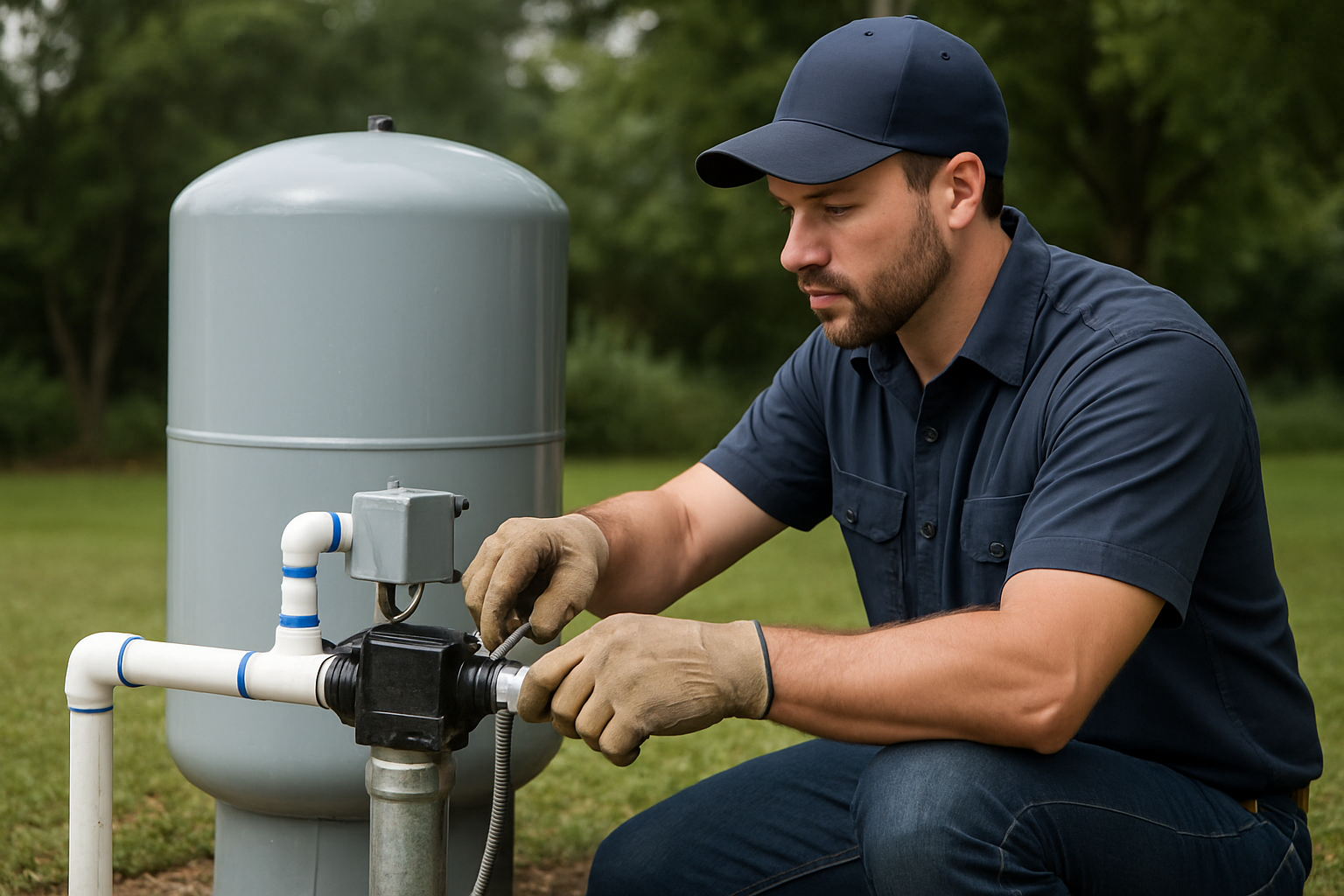
After drilling completes, your driller installs the complete water system:
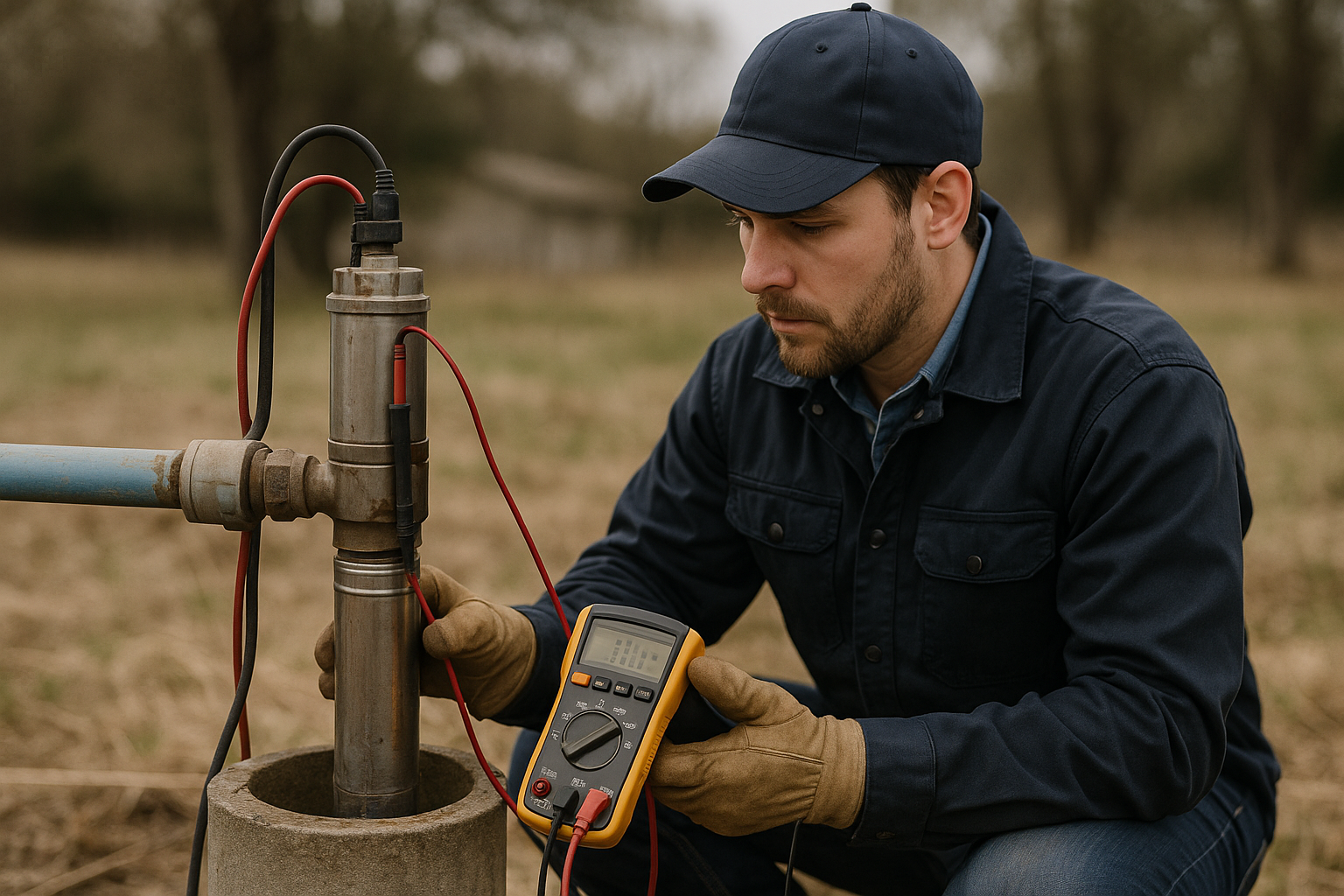
- Submersible pump sized for well depth, flow rate, and pressure requirements
- Pump control panel with pressure switches, motor protection, and safety cutoffs
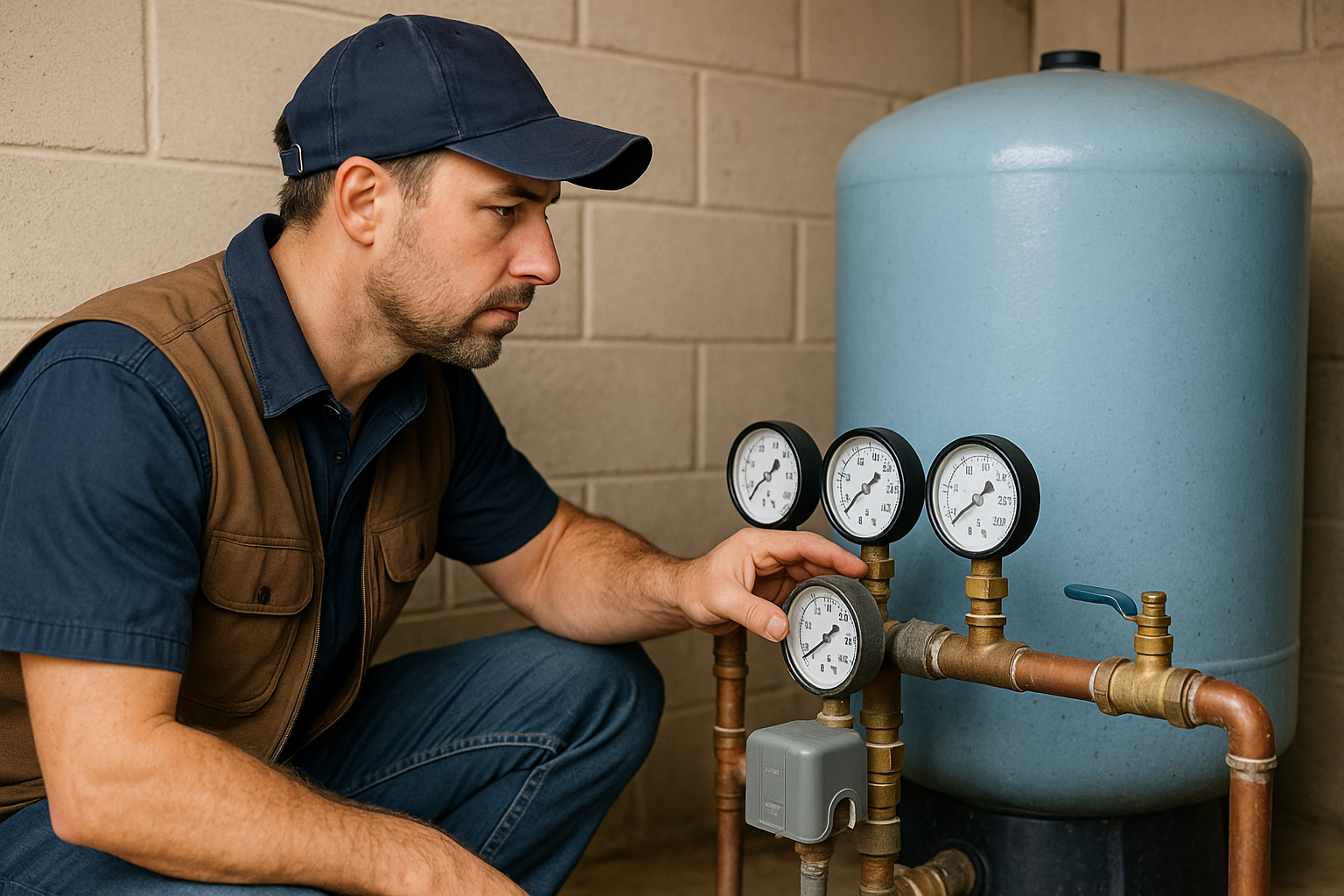
- Pressure tank for consistent water delivery and reduced pump cycling
- Electrical wiring and proper grounding per electrical codes
- Plumbing connections to property water distribution system
- Check valves, shut-off valves, and drain provisions
Step 5: Testing and Documentation
Professional installations conclude with:
- System operation testing and pressure adjustment
- Water quality testing (bacteria, nitrates, minerals, pH)
- Well completion report filed with California Department of Water Resources
- County final inspection scheduling and approval
- Complete documentation package including well logs, pump specs, and warranties
- Owner training on system operation and maintenance
Southern California Well Service: Your Local Well Experts
We've been drilling wells throughout San Diego and Riverside counties since 1987—long enough to drill wells for multiple generations of families. Our reputation is built on honest assessments, quality work, and standing behind everything we do.
- Licensed C-57 Well Drilling Contractors (verify anytime at CSLB.ca.gov)
- 35+ years serving Southern California communities
- Hundreds of successful wells drilled across diverse geology
- We handle all permitting, inspections, and documentation
- Modern drilling equipment and experienced crews
- Emergency service for well and pump failures
- Family-owned and operated—we answer when you call
Regional Considerations: San Diego vs. Riverside Counties
San Diego County Well Drilling
San Diego County's geology varies dramatically from coastal to mountain regions:
- North County Inland: Valley Center, Fallbrook, Ramona feature mixed sedimentary and igneous geology with typical depths 250-500 feet
- East County Mountains: Alpine, Julian, Pine Valley encounter granite bedrock requiring 350-600+ foot wells
- South County: Jamul, Dulzura, Campo have volcanic and granite formations with variable depth 250-550 feet
San Diego County permits through the Department of Environmental Health with typical processing times of 2-4 weeks. The county maintains detailed well databases helping drillers assess local conditions.
Riverside County Well Drilling
Riverside County encompasses diverse hydrogeological settings:
- Southwest Riverside: Temecula, Murrieta, Winchester have productive alluvial aquifers with 200-400 foot wells common
- San Jacinto Valley: Hemet, San Jacinto feature deep sedimentary basins with 300-600 foot typical depths
- Desert Valleys: Coachella Valley requires 400-800+ foot wells to reach productive deeper zones
- Mountain Communities: Idyllwild, Anza encounter granite bedrock at 300-550 feet typically
Riverside County has different permit requirements, and some areas are managed groundwater basins with additional regulations. Local drillers navigate these requirements routinely.
After Your Well is Complete: Maintenance and Care
Annual Inspections
Schedule annual professional inspections to catch small issues before they become expensive failures:
- Pressure system testing and adjustment
- Electrical component inspection and connection tightening
- Well cap and sanitary seal inspection
- Static and pumping water level measurement
- Flow rate testing and pump performance assessment
- Control panel functionality verification
Water Quality Testing
Test well water every 2-3 years for bacteria, nitrates, and general mineral content. Agricultural wells should test annually. Properties near agricultural areas or with nearby septic systems should test more frequently. Water testing identifies contamination early and informs treatment needs.
Ongoing Service
Choose a local well driller who provides long-term service, not just installation. Wells and pumps occasionally need repairs, adjustments, or upgrades. Having the company that drilled your well available for service means they understand your specific system and can respond quickly when issues arise.
Frequently Asked Questions
What's the difference between well diggers and well drillers?
Historically, "well diggers" manually excavated wells using shovels and picks, reaching only 15-40 feet. Modern "well drillers" use rotary drilling rigs to reach 200-600+ feet through solid rock. Today the terms are used interchangeably, though all modern wells are drilled, not dug.
How do I find qualified well diggers in my area?
Look for licensed C-57 contractors with substantial local experience. Verify their license at CSLB.ca.gov, check insurance and bonding, request local references, and confirm they handle all permitting and inspections.
How much does well digging cost?
Complete well installation in Southern California typically costs $20,000-$50,000+ depending on depth, geology, site access, and water capacity needs. Get detailed written estimates from multiple licensed drillers.
How deep do well diggers drill?
Well depth in San Diego and Riverside counties typically ranges 150-600+ feet depending on local geology. Valley locations may find water at 200-300 feet; granite mountain areas often require 400-600+ feet. Local drillers assess expected depth based on neighboring wells.
How long does well digging take?
After permit approval, drilling takes 3-7 days depending on depth and rock conditions. Permit processing adds 2-4 weeks. Complete installation including pump setup typically finishes within 2-3 weeks of starting drilling.
Do I need permits for well drilling?
Yes. All new wells in California require county environmental health permits. Professional drillers handle all permit applications, which typically take 2-4 weeks for approval. Never allow drilling without proper permits.