Well Easements & Property Rights Explained | SCWS
Understanding well easements is crucial for California property owners. Whether you're buying rural property with a shared well, drilling a new well near a property line, or dealing with a neighbor who needs access to equipment on your land, well easements affect your property rights, your water supply, and your wallet. This guide covers everything San Diego, Riverside, and San Bernardino County property owners need to know about well easements, access rights, and how to protect your interests.
📋 In This Guide
- What Is a Well Easement?
- Types of Well Easements
- California Water Rights and Wells
- Shared Wells in Southern California
- Creating and Recording Easements
- Protecting Your Interests
- Easement Issues When Buying Property
- Well Setback Requirements and Easements
- Resolving Well Easement Disputes
- Frequently Asked Questions
Need help with a well on your property? See our well consultation services.
(760) 440-8520What Is a Well Easement?
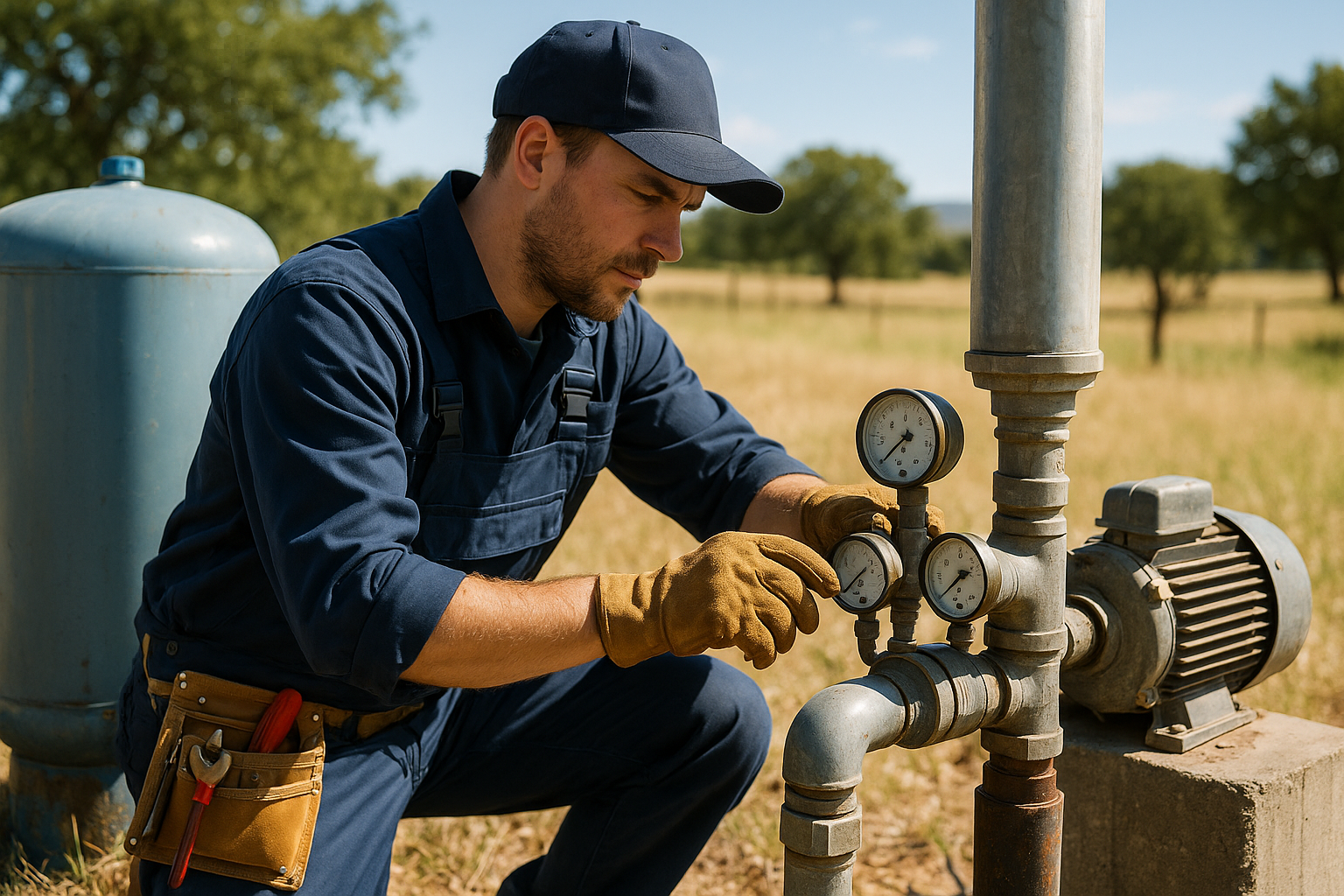
A well easement is a legal right that allows someone other than the property owner to access, use, or maintain a water well located on that property. In rural parts of Southern California — places like Ramona, Julian, Valley Center, Anza, and the unincorporated areas of San Diego and Riverside Counties — shared wells and well easements are extremely common.
Unlike municipal water systems where each property has its own meter and connection, rural properties often rely on private wells. When a well serves multiple properties, or when a well sits near a property boundary and requires access from a neighboring parcel, easements become necessary to protect everyone's water supply and access rights.
A well easement typically covers one or more of the following:
- Physical access — the right to travel across someone's land to reach the well
- Water rights — the right to draw water from the well itself
- Utility corridors — the right to run water lines, electrical conduit, or control wiring across the property
- Maintenance access — the right to bring in equipment and personnel to service, repair, or replace well components
Easements are typically recorded with the county recorder's office and attached to the property deed. This means they "run with the land" — when the property changes hands, the easement stays in effect. This is critical because well infrastructure represents a significant investment (often $15,000–$50,000 or more for a deep well in Southern California), and the rights to that infrastructure need to survive ownership changes.
Types of Well Easements
Not all easements are created equal. Understanding the specific type of easement that applies to your situation determines your rights, obligations, and legal options.
Appurtenant Easements
An appurtenant easement is attached to a specific parcel of land rather than a specific person. If Parcel A has a well and Parcel B has an easement to access that well, the easement belongs to Parcel B — not to whoever happens to own Parcel B at any given time. When Parcel B sells, the new owner inherits the easement automatically. This is the most common and most protective type of well easement in California.
Easements in Gross
An easement in gross is a personal right granted to a specific individual or entity, not tied to a particular parcel. These are less common for wells but sometimes appear when a utility company needs permanent access to a well site for infrastructure purposes. Easements in gross may or may not transfer when the holder sells their property, depending on how the easement was written.
Prescriptive Easements
In California, if someone has been using your property to access a well openly, continuously, and without your permission for five or more years, they may have acquired a prescriptive easement. This is similar to adverse possession but applies to use rights rather than ownership. Prescriptive easements are legally enforceable even though they were never formally granted or recorded. We see this frequently in rural San Diego County where neighbors have shared informal well access for decades.
Express vs. Implied Easements
An express easement is one that was deliberately created and documented — typically in a written agreement or deed. An implied easement arises from circumstances rather than explicit documentation. For example, if a single large parcel with one well is subdivided into two lots, the lot without the well may have an implied easement to continue using the well water, especially if the well was the only water source for the entire original parcel.
California Water Rights and Wells
California water law is complex, and it directly affects well easements. Understanding the basics helps you protect your water supply.
In California, groundwater rights for private domestic wells generally follow the doctrine of correlative rights. This means that overlying landowners (those whose property sits above a groundwater basin) have equal rights to reasonable use of that water. No single property owner can monopolize the groundwater supply to the detriment of their neighbors.
Key California water law principles affecting well owners:
- Reasonable use doctrine — You can pump groundwater for reasonable, beneficial use on your overlying land. Wasting water or pumping far beyond your needs at the expense of neighbors is not protected.
- Well permits — San Diego, Riverside, and San Bernardino Counties all require permits before drilling. The permitting process includes setback requirements from property lines, septic systems, and other wells.
- No guarantee of quantity — An easement granting access to a well does not guarantee a specific volume of water. If the well's production declines (which happens regularly in Southern California during drought years), all users share the reduced supply.
- SGMA compliance — The Sustainable Groundwater Management Act (SGMA) is increasingly affecting rural well owners. Some basins in Riverside and San Bernardino Counties now have groundwater sustainability plans that may limit pumping.
Shared Wells in Southern California
Shared wells are a fact of life in many rural communities. In areas like Julian, Borrego Springs, Warner Springs, Anza, Aguanga, and the backcountry east of Ramona, it's common for two to five properties to share a single well. This arrangement works well when everyone cooperates, but it can become a nightmare when relationships sour or properties change hands.
What a Shared Well Agreement Should Include
If you share a well with one or more neighbors, you should have a written shared well agreement that covers:
- Water allocation — How is the water divided? Equal shares? Based on acreage? Based on historical use?
- Cost sharing — Who pays for electricity to run the pump? How are repair and replacement costs split? Who handles the bills?
- Maintenance responsibilities — Who is responsible for routine maintenance like checking the pressure tank, testing water quality, and winterizing exposed pipes?
- Emergency repairs — What happens when the pump fails at 2 AM? Who has authority to call a well service company and authorize repairs?
- Dispute resolution — Mediation before litigation saves everyone money and relationships.
- Water conservation — During drought or low-yield periods, what restrictions apply? Who decides when to implement conservation measures?
We regularly work on shared well systems throughout San Diego and Riverside Counties. The most common problems we see are undersized pressure tanks trying to serve multiple households, aging pumps that can't keep up with combined demand, and deteriorating shared water lines that lose pressure over long distances. A well inspection can identify these issues before they become emergencies.
Need a shared well inspected or serviced? We work on shared well systems throughout San Diego and Riverside Counties.
Call (760) 440-8520Creating and Recording Easements
If you need to create a well easement — whether for a new shared well arrangement, a property subdivision, or to formalize an existing informal agreement — the easement document should be thorough and specific. Vague easements lead to disputes.
Essential Elements of a Well Easement Document
A properly drafted well easement should include:
- Legal descriptions — Both the dominant estate (the property that benefits from the easement) and the servient estate (the property burdened by the easement) should be identified by their full legal descriptions, not just addresses.
- Easement area — The physical boundaries of the easement should be described precisely, ideally with a survey map attached. For access easements, specify the width (typically 12–20 feet for vehicle access) and exact location.
- Permitted uses — Spell out exactly what the easement allows. Access only? Water withdrawal? Equipment staging for maintenance? The more specific, the fewer disputes later.
- Maintenance obligations — Who maintains the access road? Who is responsible for the well casing, pump, pressure tank, and water lines? How are costs divided?
- Duration — Most well easements are perpetual (they last forever), but some may have expiration dates or termination conditions.
- Notice requirements — Require advance notice (typically 24–48 hours) before non-emergency access, with exceptions for emergency repairs.
- Restoration obligations — If maintenance or repair work damages the servient property (ruts in the driveway, torn-up landscaping), who pays to restore it?
Recording the Easement
Once the easement document is signed and notarized, record it with the county recorder's office. In San Diego County, this is the San Diego County Assessor/Recorder/County Clerk. In Riverside County, it's the Riverside County Assessor-County Clerk-Recorder. Recording creates a public record that puts all future buyers on notice of the easement's existence. An unrecorded easement may still be valid between the original parties, but it creates serious problems for subsequent purchasers who had no way of knowing about it.
Protecting Your Interests
If You Own the Property Where the Well Is Located
As the owner of the servient estate (the property that bears the burden of the easement), you want to minimize disruption while honoring your legal obligations:
- Limit the scope — Don't grant broader rights than necessary. If the easement holder only needs to access the wellhead, don't grant an easement that covers your entire property.
- Specify access routes — Designate a specific path for access rather than allowing unrestricted travel across your land.
- Require notice — Except for genuine emergencies, require advance notice before anyone enters your property for well-related work.
- Mandate insurance — Require the easement holder to carry liability insurance that covers damage to your property during access.
- Retain water allocation control — If the well yield declines, you (as the property owner with the well) should retain priority for domestic use, with surplus shared among easement holders.
- Include indemnification — The easement holder should agree to indemnify you against claims arising from their use of the easement.
If You Hold a Well Easement
As the owner of the dominant estate (the property that benefits from the easement), you want to ensure reliable, long-term access to your water supply:
- Get it recorded — An unrecorded easement is a ticking time bomb. If the servient property sells to someone who doesn't know about the easement, you could face a legal battle to enforce your rights.
- Include maintenance rights — Access alone isn't enough. You need the right to bring in a well service company with their equipment (which may include a pump hoist truck, compressor, and service vehicle).
- Ensure survivability — The easement should explicitly state that it runs with the land and survives property transfers.
- Address equipment staging — Well pump replacement typically requires a pump hoist truck and workspace around the wellhead. Make sure your easement provides enough physical space for this equipment.
Easement Issues When Buying Property
Buying rural property in Southern California without understanding the well easement situation is one of the most expensive mistakes you can make. Here's what to check before closing:
Due Diligence Checklist
- Order a preliminary title report — This document lists all recorded easements, liens, and encumbrances on the property. Read it carefully, not just the summary.
- Review the actual easement documents — Don't rely on the title report summary. Request and read the full text of every easement referenced in the title report.
- Get a property survey — A licensed surveyor can show you exactly where easement boundaries fall on the ground. This is especially important for access easements that cross your intended building site or driveway.
- Check for unrecorded easements — Ask the seller directly: "Does anyone else use the well on this property?" Look for physical evidence of shared use — multiple water lines, a well house with multiple meters, worn paths to the wellhead from neighboring properties.
- Verify well production — If you're buying property that depends on a shared well, get a well production test before closing. A well that produces 5 GPM is adequate for one household but may struggle to serve three.
- Review shared well agreements — If the well is shared, ask for the written agreement. If there isn't one, that's a red flag. You'll want one in place before you close.
- Check county well records — San Diego and Riverside Counties maintain well completion reports that show the well's depth, casing size, production at the time of drilling, and other technical details. This information helps assess the well's long-term viability.
Well Setback Requirements and Easements
California county health departments establish minimum setback distances between wells and potential sources of contamination. These setback requirements directly affect where wells can be drilled and what easements may be needed.
Typical setback requirements in San Diego and Riverside Counties include:
- 50 feet from a septic tank
- 100 feet from a septic leach field
- 50 feet from a sewer line
- 20 feet from a building foundation
- Varies from property lines (typically 5–10 feet minimum, but check your county's specific requirements)
On small or irregularly shaped parcels, meeting all setback requirements while keeping the well entirely on your own property can be impossible. In these situations, you may need an easement from a neighbor to drill on their side of the property line, or you may need to grant an easement to accommodate setbacks from your neighbor's septic system.
When we drill wells in areas like Ramona, Julian, or Valley Center, we always review the setback requirements during the site evaluation. If easements will be needed, we flag this early so the property owner can get the legal documentation in place before drilling begins.
Resolving Well Easement Disputes
Well easement disputes are unfortunately common in rural Southern California. The most frequent conflicts we see involve:
Common Disputes
- Blocked access — A property owner installs a gate, fence, or landscaping that prevents the easement holder from reaching the well. Even if the obstruction seems minor, it can prevent well service equipment from accessing the site.
- Unauthorized expansion of use — An easement holder begins using more water than originally contemplated, perhaps by adding livestock, irrigation, or a second dwelling.
- Maintenance cost disagreements — The pump fails and the bill is $8,000. Who pays? If the shared well agreement doesn't address cost splitting clearly, this becomes a fight.
- Water shortage allocation — During drought, the well's production drops and there isn't enough water for everyone. Who gets priority?
- New construction interference — A property owner wants to build a structure or install a septic system that would violate well setback requirements or block access to the well.
Resolution Options
Direct negotiation is always the best first step. Many disputes arise from misunderstandings or poor communication rather than genuine bad faith. If you can agree on terms, put the agreement in writing and record it.
Mediation involves a neutral third party who helps both sides reach an agreement. It's far less expensive than litigation (typically $2,000–$5,000 compared to $20,000+ for a lawsuit) and preserves the ongoing neighbor relationship that you'll need for continued shared well cooperation.
Litigation is the last resort. California courts can enforce easements, award damages for interference, and even modify easement terms when circumstances have changed significantly. However, lawsuits are expensive, time-consuming, and destructive to neighbor relationships.
We service all major pump brands including Franklin Electric, Grundfos, Goulds (Xylem), and Sta-Rite (Pentair). Our trucks carry common parts and components for same-day repairs on shared and private well systems throughout Southern California.
Frequently Asked Questions
What is a well easement?
A well easement is a legal right allowing someone to access, use, or maintain a well located on another person's property. Easements can grant rights to the well water itself, access roads to reach the well, or utility corridors for pipes and electrical lines. They're typically recorded with the property deed and transfer with ownership. In rural Southern California, well easements are extremely common because many properties share a single deep well.
Can I deny access to a well on my property?
If a valid recorded easement exists, you cannot deny access for legitimate purposes covered by the easement. However, easement holders must use reasonable access and minimize disruption. You can establish rules about notice before entry, approved access routes, and restoration after work. Unreasonable denial can result in court-ordered access and you may be liable for damages if your obstruction caused the easement holder to lose water service.
How do I find out if there are easements on my property?
Order a preliminary title report from a title company — it lists all recorded easements. Also check your deed and any referenced documents. Some older easements may be unrecorded but still valid through prescriptive use (continuous use for 5+ years in California). A property survey can reveal physical evidence of easement use like roads, water lines, or utility conduits.
How much does it cost to create a well easement?
Creating a well easement typically costs $1,500–$5,000 when you factor in attorney fees for drafting the document, a property survey to define the easement boundaries, notarization, and recording fees with the county. While it's tempting to use a template or handshake agreement, investing in a properly drafted easement now prevents far more expensive disputes later.
What happens to a well easement when property sells?
Appurtenant easements (the most common type for wells) run with the land and automatically transfer to new owners on both sides. The buyer of the servient property (where the well is) takes the property subject to the existing easement, and the buyer of the dominant property (that benefits from the easement) inherits the easement rights. This is why recording the easement is so important — it ensures all future owners are on notice.
Can a well easement be terminated?
Yes, but it's not easy. A well easement can be terminated by mutual written agreement of both parties, merger (when one person acquires both properties), abandonment (the easement holder stops using it for an extended period with intent to abandon), or by court order. Simply not using the well for a few years doesn't automatically terminate the easement — there must be clear evidence of intent to permanently abandon the right.
Get Expert Help
Contact Southern California Well Service for professional assistance.
Call (760) 440-8520Serving San Diego, Riverside & San Bernardino Counties
Related Articles
Continue learning about well maintenance and troubleshooting