Well Pump Capacitor: Signs of Failure & Replacement
📋 In This Guide
What Is a Capacitor?
Basic Function
A capacitor stores electrical energy and releases it quickly. In well pumps, it provides the extra surge of power needed to start the motor spinning. Without it, single-phase motors can't overcome starting inertia.
Why Pumps Need Them
- Single-phase motors (most residential) need help starting
- Creates phase shift to generate rotating magnetic field
- Provides 3-6x running current during startup
- Without it, motor just hums and gets hot
Location
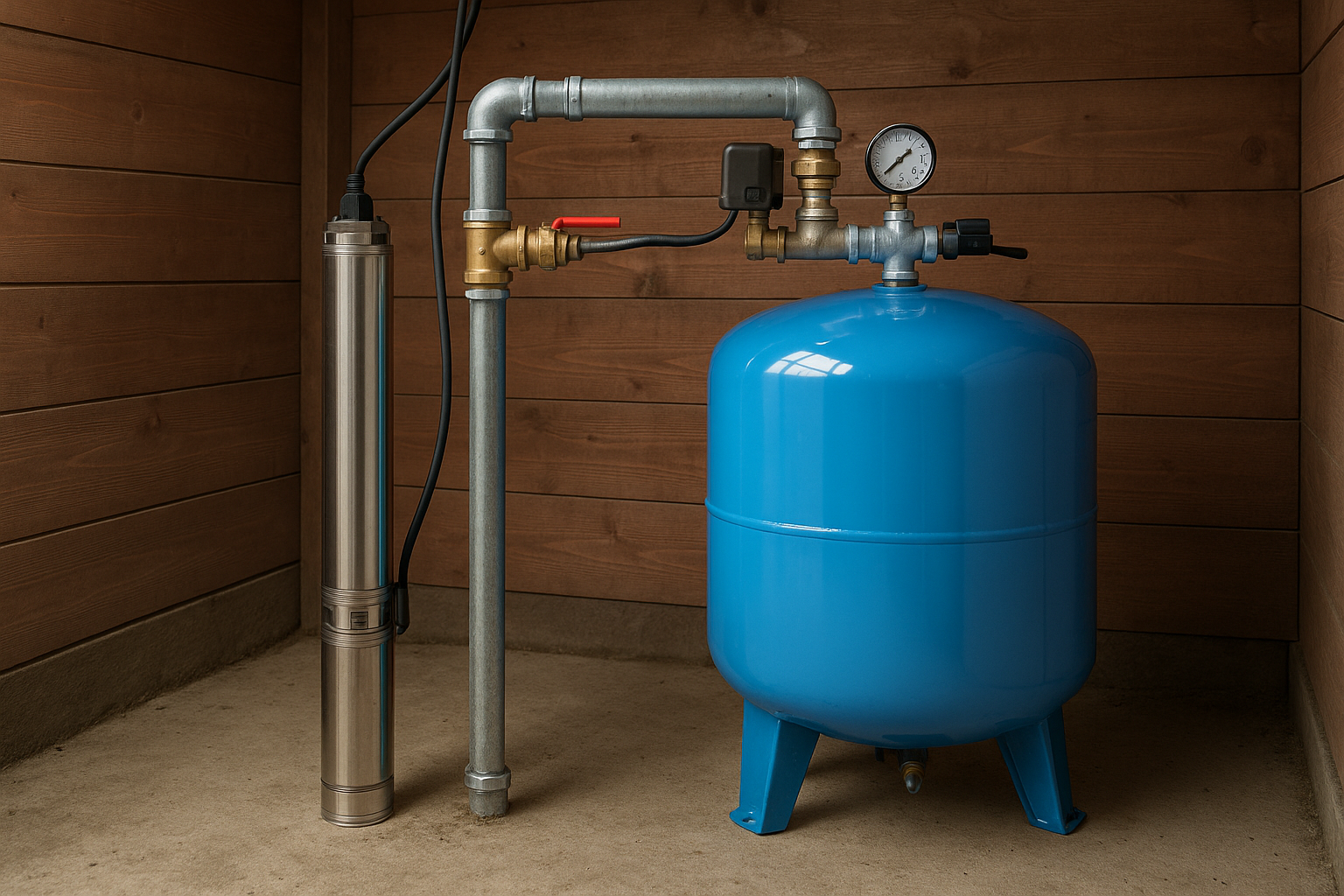
For submersible pumps, the capacitor is in the control box (usually mounted on the wall near the pressure tank). This is good news—you don't need to pull the pump to replace it.
Types of Capacitors
Start Capacitor
- Used only during startup (1-2 seconds)
- High capacitance (50-400+ microfarads)
- Black cylindrical shape typically
- Disconnected once motor reaches speed
Run Capacitor
- Stays active during operation
- Lower capacitance (5-50 microfarads)
- Metal can, oval shape often
- Improves efficiency and power factor
Combination Systems
Many well pump control boxes have both start and run capacitors working together for optimal performance.
Signs of Capacitor Failure
Pump Hums But Won't Start
Classic capacitor failure symptom. Motor tries to start, makes humming noise, but won't spin. Eventually trips breaker or overload.
Trips Breaker Immediately
Motor draws excessive current trying to start without capacitor boost. Breaker trips within seconds.
Intermittent Starting
Sometimes starts, sometimes doesn't. Capacitor may be failing gradually.
Visible Damage
- Bulging or swollen capacitor body
- Leaking oil/electrolyte
- Burn marks or discoloration
- Melted plastic
Control Box Clicking
Relay clicks but pump doesn't start. May cycle repeatedly trying to start.
Pump Runs Hot
If run capacitor fails, motor may still run but inefficiently. Draws more current, runs hotter.
How to Test a Capacitor
Visual Inspection
- Turn off power at breaker
- Open control box
- Look for bulging, leaking, burn marks
- Any visible damage = replace
Multimeter Test
- Discharge capacitor (short terminals briefly with insulated screwdriver)
- Set multimeter to capacitance (μF) mode
- Connect leads to capacitor terminals
- Compare reading to rating on capacitor label
- Within ±10% is acceptable
When to Call a Professional
- Not comfortable working with electrical
- Don't have proper testing equipment
- Test results unclear
- Pump still won't start after capacitor replacement
Replacement
Capacitor Specifications
When replacing, match these specs from the old capacitor:
- Microfarads (μF): Must match exactly or very close
- Voltage rating: Can be equal or higher, not lower
- Type: Start capacitor vs. run capacitor
Capacitor Costs
| Type | Cost |
|---|---|
| Start capacitor | $15-$50 |
| Run capacitor | $15-$40 |
| Complete control box | $100-$300 |
Professional Replacement Cost
- Service call + diagnosis: $75-$150
- Capacitor replacement: $25-$100 parts + $50-$100 labor
- Total: $150-$350
DIY Considerations
- Accessible in control box (no pump pulling needed)
- Simple replacement if you're comfortable with electrical
- Must discharge capacitor first (safety!)
- Take photo of wiring before disconnecting
We service all major pump brands including Franklin Electric, Grundfos, Goulds (Xylem), and Sta-Rite (Pentair). Our trucks carry common parts and components for same-day repairs.
Frequently Asked Questions
What does a capacitor do on a well pump?
Provides electrical boost to start the motor. Single-phase motors need this extra surge to overcome starting inertia and begin rotating.
How do I know if my well pump capacitor is bad?
Pump hums but won't start, trips breaker immediately, intermittent starting problems, or visible damage (bulging, leaking, burn marks).
How long do well pump capacitors last?
Typically 5-15 years. Heat, frequent cycling, and power surges shorten life.
Can a bad capacitor damage my pump?
Yes—running the motor without proper capacitor support causes overheating and accelerated wear. Don't repeatedly try to start a humming pump.
Where is the capacitor located?
In the control box, usually mounted on the wall near the pressure tank. Good news: you don't need to pull the pump to replace it.
Pump Won't Start?
Could be a simple capacitor issue. We can diagnose and fix it quickly.
Related Articles
Continue learning about well maintenance and troubleshooting