Well Pump Cycles Too Often? Causes & Fixes
📋 In This Guide
What's Normal?
Normal Cycling
- Pump runs for several minutes when water is used
- Turns off and stays off when not using water
- Cycles depend on tank size and water usage
- Typical: few times per hour when in use
Short Cycling (Problem)
- Pump runs for only seconds or a minute
- Cycles frequently even with small water use
- May cycle even when no water is being used
- Cycles more than every few minutes
Why It Matters
- Pump motors aren't designed for rapid starts
- Each start draws high current, generates heat
- Dramatically shortens pump life
- Wastes electricity
- Can damage pressure switch
Common Causes
By Frequency
- Waterlogged pressure tank — Most common (70%+)
- Low tank air pressure — Related to #1
- Leaks in system — Running toilets, drips
- Failing check valve — Water drains back
- Pressure switch issues — Contacts sticking
- Tank too small — For the household demand
Quick Reference
| Symptom | Likely Cause |
|---|---|
| Pump runs only seconds | Waterlogged tank |
| Cycles when no water used | Leak or bad check valve |
| Tank feels solid when tapped | Waterlogged tank |
| Pressure drops fast when pump stops | Check valve failing |
How to Diagnose
Step 1: Check the Pressure Tank
- Tap the tank from top to bottom
- Proper: Hollow at top, solid at bottom
- Waterlogged: Solid throughout or mostly
Step 2: Check Tank Air Pressure
- Turn off pump at breaker
- Open faucet to drain tank
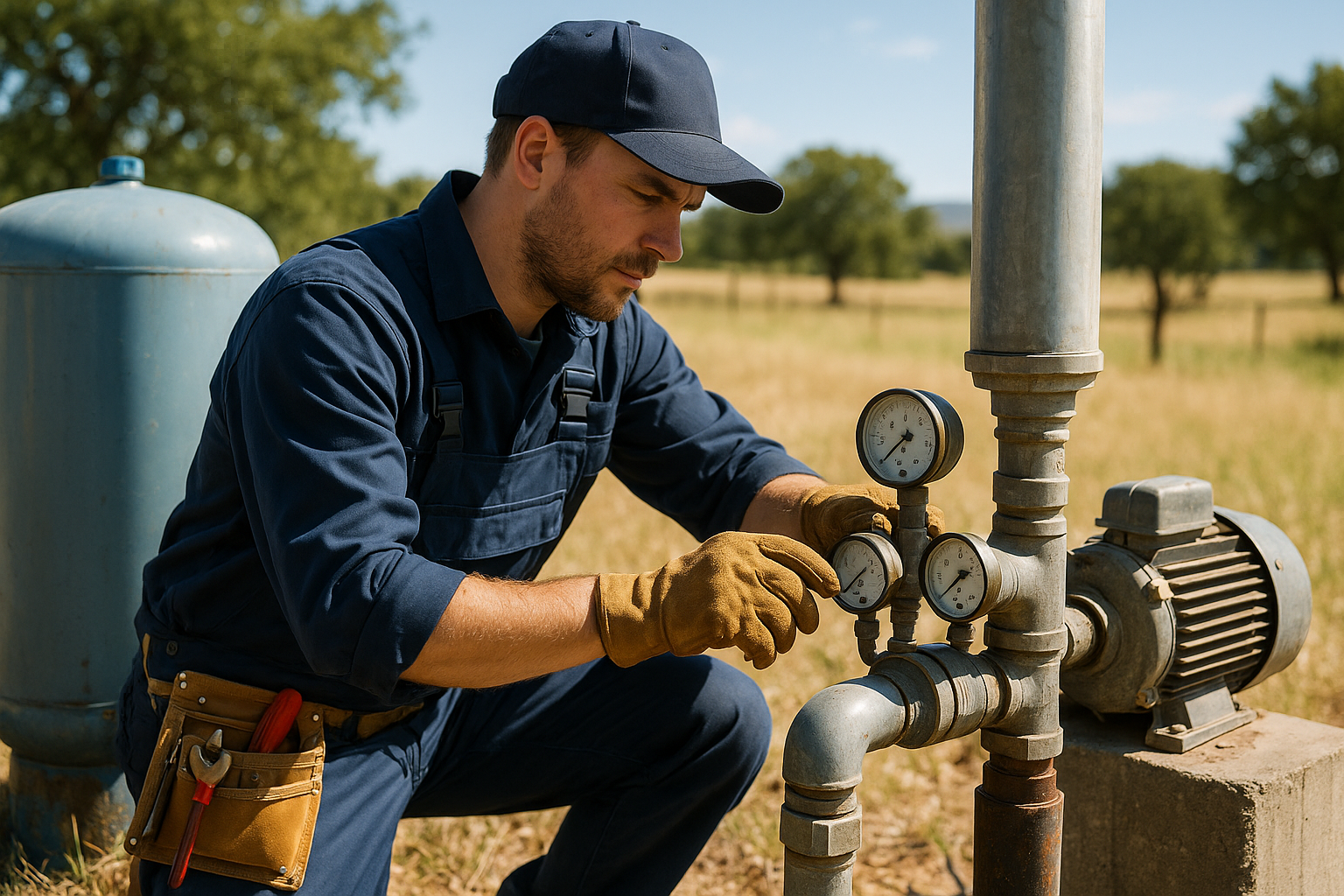
- Use tire gauge on air valve (top of tank)
- Should read 2 PSI below cut-in (e.g., 28 PSI for 30/50)
- No pressure or very low = bladder failed
Step 3: Check for Leaks
- Inspect all visible plumbing
- Check toilets (put food coloring in tank)
- Look for wet spots, drips
- Check outdoor faucets and irrigation
Step 4: Test Check Valve
- Turn off pump at breaker
- Watch pressure gauge
- If pressure drops rapidly → check valve failing
- Should hold pressure for minutes/hours
Pressure Tank Issues
Waterlogged Tank
The most common cause of short cycling. The bladder or diaphragm has failed, allowing the tank to fill completely with water instead of maintaining air cushion.
Signs
- Tank feels heavy
- Solid sound when tapped throughout
- No air pressure at valve
- Water comes out of air valve
Solution
Replace the tank. Bladder tanks cannot be repaired. Cost: $200-$600 installed.
Wrong Air Pressure
- Should be 2 PSI below cut-in pressure
- 30/50 switch → 28 PSI tank pressure
- 40/60 switch → 38 PSI tank pressure
Solution
Adjust with air compressor or tire pump (tank must be drained first).
Pressure Switch
How It Works
- Turns pump on at low pressure (cut-in)
- Turns pump off at high pressure (cut-out)
- Common settings: 30/50 or 40/60 PSI
Problems
- Contacts pitted: Erratic operation
- Contacts stuck: Pump won't start or stop
- Debris in tube: False pressure readings
- Wrong settings: Causes rapid cycling
Solutions
- Clean contacts (if accessible)
- Clear debris from sensing tube
- Replace switch ($25-$75 part)
- Adjust settings if appropriate
Leaks
Common Leak Sources
- Running toilets (most common)
- Dripping faucets
- Leaking water heater
- Underground pipe leaks
- Irrigation system
- Water softener drain
How to Check
- Turn off all water in house
- Watch pressure gauge
- If pressure drops → leak exists
- Isolate sections to find location
Hidden Leaks
- Underground: Look for wet spots, greener grass
- Slab leaks: Listen for running water sound
- May need professional leak detection
Check Valve
What It Does
Prevents water from draining back down the well when pump stops. Located in well (foot valve) or at pitless adapter.
Signs of Failure
- Pressure drops quickly when pump stops
- Pump has to rebuild pressure each cycle
- May hear water draining back
- Pump works harder than it should
Solution
- Replace check valve
- May require pulling pump if valve is downhole
- Cost: $100-$300 for above-ground; more if in well
We service all major pump brands including Franklin Electric, Grundfos, Goulds (Xylem), and Sta-Rite (Pentair). Our trucks carry common parts and components for same-day repairs.
Frequently Asked Questions
How often should a well pump cycle?
Depends on tank size and usage, but generally a few times per hour when water is being used. Cycling more than every few minutes is a problem.
Will short cycling damage my pump?
Yes. Each start is hard on the motor. Rapid cycling dramatically shortens pump life and can cause motor burnout.
Can I fix a waterlogged tank?
No. Once the bladder fails, the tank must be replaced. They're not repairable.
How do I know if my pressure tank is bad?
Tap test (solid throughout), no air pressure at valve, water from air valve, or pump short cycling all indicate a failed tank.
How much does a new pressure tank cost?
$200-$600 installed depending on size. Most homes use 20-52 gallon tanks.
Pump Cycling Too Often?
We diagnose and fix short cycling problems quickly. Protect your pump from early failure.
Related Articles
Continue learning about well maintenance and troubleshooting