Signs of Well Pump Going Bad: 9 Warning Signs (Don't Ignore #3)
📋 In This Guide
- Table of Contents
- Sign #1: Low or Fluctuating Water Pressure
- Sign #2: Pump Runs Constantly
- Sign #3: Strange Noises (Most Commonly Ignored!)
- Sign #4: Sputtering Faucets
- Sign #5: Dirty or Sandy Water
- Sign #6: High Electric Bills
- Sign #7: Rapid Cycling (Short Cycling)
- Sign #8: Air in Water Lines
- Sign #9: No Water at All
- What to Do If You Notice These Signs
- Frequently Asked Questions
- Concerned About Your Well Pump?
Sign #1: Low or Fluctuating Water Pressure
What you notice: Weak flow from faucets, shower pressure varies, water pressure changes throughout the day.
What it means: A failing pump can't maintain consistent pressure. As internal components wear, the pump struggles to push water at the rated pressure.
Could also be: Pressure tank issues, clogged filters, partially closed valve, or plumbing leak.
Quick Test
Check your pressure gauge on the tank. It should read 40-60 PSI and stay relatively stable. If it fluctuates wildly or won't reach normal pressure, the pump may be failing.
Sign #2: Pump Runs Constantly
What you notice: You can hear the pump running even when no water is being used. Electric meter spinning faster than usual.
What it means: The pump can't build enough pressure to trigger the pressure switch, so it never shuts off. This dramatically shortens pump life and increases electricity costs.
Could also be: Leak in plumbing or pressure tank, failed check valve, bad pressure switch.
⚠️ Don't Ignore This
A constantly running pump will burn out within days to weeks. This is urgent—call for service immediately.
Sign #3: Strange Noises (Most Commonly Ignored!)
What you notice: Clicking from pressure switch, humming without water flow, grinding/rattling sounds, or banging pipes (water hammer).
What each noise means:
- Clicking: Rapid on-off cycling—usually pressure tank or pressure switch issue
- Humming: Motor trying to start but can't—seized pump or electrical issue
- Grinding/Rattling: Worn bearings or sand damage—pump nearing end of life
- Banging: Water hammer from rapid cycling or failed check valve
Why people ignore it: The pump is down in the well, so strange sounds seem distant or muffled. But these sounds travel up the drop pipe and indicate serious problems.
Listen Test
Put your ear to a pipe while someone turns on a faucet. A healthy pump makes a smooth, consistent hum. Grinding, clicking, or irregular sounds indicate trouble.
Sign #4: Sputtering Faucets
What you notice: Air bursts from faucets, uneven flow, water "spits" when turned on.
What it means: The pump is drawing air along with water, usually because the water level in the well has dropped below the pump intake, or there's a crack in the drop pipe.
Could also be: Low water table (seasonal), drop pipe leak, failing check valve allowing water to drain back.
Sign #5: Dirty or Sandy Water
What you notice: Visible sand, sediment, or discoloration in water. May appear suddenly or gradually worsen.
What it means: The pump may have shifted position, the well screen could be damaged, or the pump is pulling sand from the bottom of the well. Sand destroys pump internals quickly.
Could also be: Well casing corrosion, aquifer changes, nearby construction disturbing groundwater.
⚠️ Sand Destroys Pumps Fast
If you see sand in your water, stop using the well if possible and call immediately. Sand acts like sandpaper inside the pump, causing rapid wear and potential complete failure within weeks.
Sign #6: High Electric Bills
What you notice: Electric bill increased significantly without explanation.
What it means: A failing pump works harder to deliver less water, consuming more electricity. A pump running constantly can add $50-$200/month to your electric bill.
How to check: Turn off the well pump breaker for a day (if you have water storage) and compare daily kWh usage. A healthy pump uses 1-5 kWh per day for typical household use.
Sign #7: Rapid Cycling (Short Cycling)
What you notice: Pump turns on and off every few seconds or minutes, even with minimal water use.
What it means: Usually a pressure tank problem (waterlogged tank can't hold pressure), but can also indicate pump issues. Either way, rapid cycling destroys pump motors quickly.
Could also be: Pressure switch malfunction, small leak, or undersized pressure tank.
Quick Test
Turn off all water in the house. If the pump still cycles on/off, you have a leak or check valve issue. If it stays off, the tank may be waterlogged.
Sign #8: Air in Water Lines
What you notice: Consistent air bubbles in water, especially when first turned on. Water appears milky or fizzy.
What it means: Air is entering the system, typically from low water level in the well, cracked drop pipe, or failing pump seals.
Note: Occasional air after a power outage is normal. Consistent air indicates a problem.
Sign #9: No Water at All
What you notice: Complete loss of water. Nothing from any faucet.
What it means: The pump has failed completely, there's an electrical issue, or the well has run dry.
Before calling:
- Check the circuit breaker for the well pump
- Check the pressure switch (may be stuck)
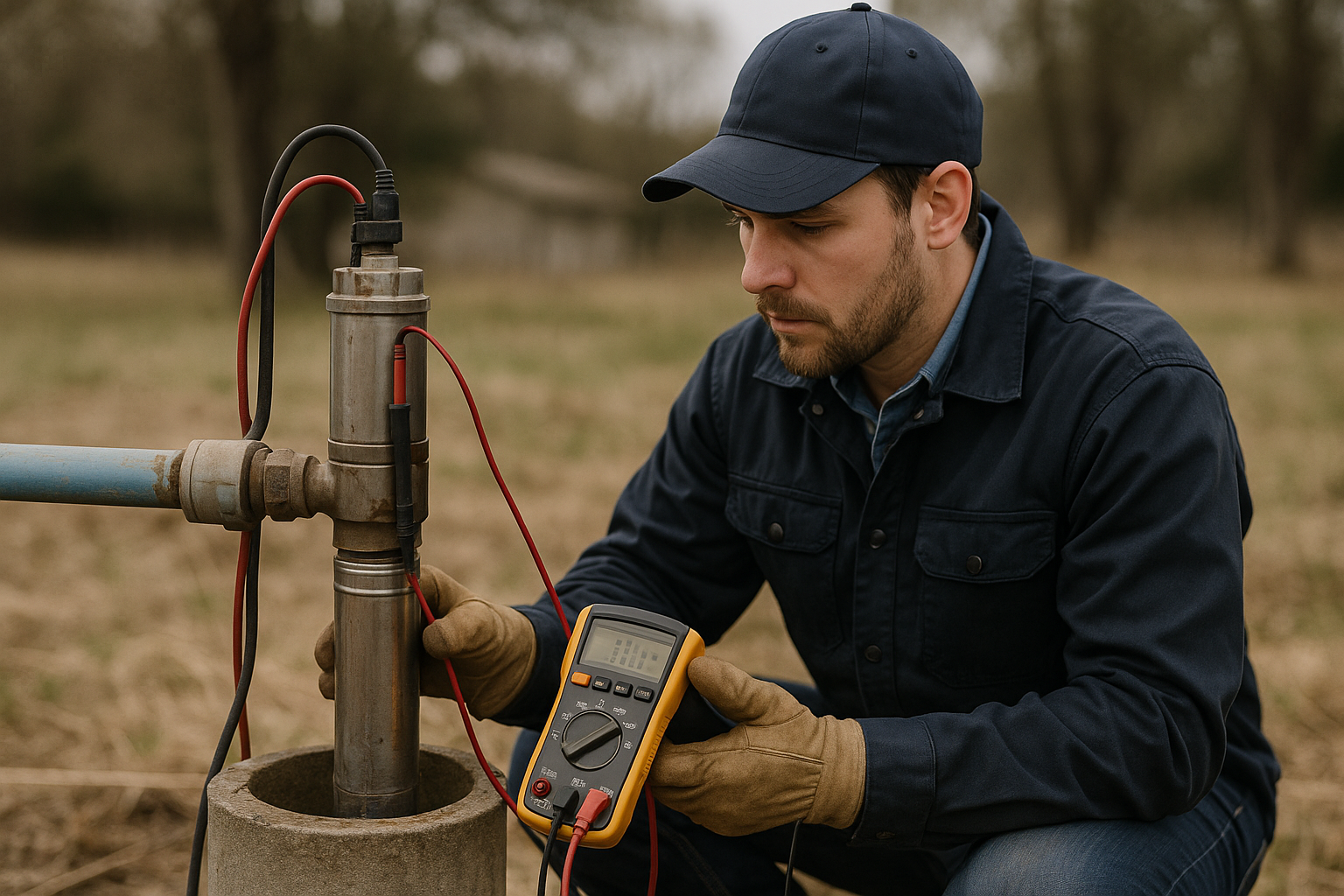
- Verify power at the well (if accessible)
If breaker keeps tripping, do NOT keep resetting it—this indicates a serious electrical issue.
What to Do If You Notice These Signs
Immediate Steps
- Document symptoms: Note when problems occur, what you hear/see
- Check the basics: Breaker, pressure gauge reading, visible leaks
- Don't reset repeatedly: If breaker trips, one reset is okay. Repeated tripping means stop and call.
- Call a professional: Well pumps require specialized equipment and knowledge
Questions to Expect
When you call, have this information ready:
- How old is your pump? (Check previous service records)
- When did symptoms start?
- Any recent changes (power outages, new equipment, etc.)?
- What does the pressure gauge read?
- Is the pump breaker on or tripped?
Repair vs. Replace
| Consider Repair If: | Consider Replace If: |
|---|---|
| Pump is less than 8 years old | Pump is 10+ years old |
| Issue is electrical (control box, wiring) | Motor or pump end failure |
| Problem is pressure tank | Multiple issues present |
| First major problem | Second or third major issue |
We service all major pump brands including Franklin Electric, Grundfos, Goulds (Xylem), and Sta-Rite (Pentair). Our trucks carry common parts and components for same-day repairs.
Frequently Asked Questions
What are the signs of a well pump going bad?
Common signs include: low or fluctuating water pressure, pump running constantly, clicking/humming sounds, sputtering faucets, dirty or sandy water, high electric bills, and rapid cycling. Most pumps show warning signs weeks before complete failure.
How long should a well pump run before shutting off?
A healthy pump should run for 1-2 minutes to fill the pressure tank, then shut off until pressure drops. Constant running or rapid cycling indicates a problem.
Why is my well pump humming but not pumping water?
A humming pump usually indicates a seized motor, failed capacitor, or low voltage. Turn off the breaker immediately to prevent motor burnout and call for service.
How long do well pumps last?
Quality submersible pumps last 10-15 years on average. Factors affecting lifespan include water quality (sand shortens life), cycling frequency, and installation quality.
Can I repair a well pump myself?
Minor above-ground repairs (pressure switch, control box) may be DIY-able. Pulling and replacing the pump requires specialized equipment and knowledge—most homeowners should hire a professional.
How much does it cost to replace a well pump?
Well pump replacement typically costs $1,500-$4,000 including pump, labor, and materials. Deep wells (300+ feet) cost more. Get a detailed quote before work begins.
Concerned About Your Well Pump?
Don't wait for complete failure. We offer same-day diagnostic service and can often identify problems before you're left without water.
Related Articles
Continue learning about well maintenance and troubleshooting