Well Pump Maintenance Schedule: When and How to Care for Your Pump
Your well pump is the heart of your water system, running thousands of cycles per year to deliver water to your home. A structured maintenance schedule helps you catch problems early, extend pump life by years, and avoid the $2,000-5,000 cost of emergency pump replacement.
Need professional help? Our licensed well technicians are here for you.
Call (760) 440-8520Monthly Monitoring Tasks
Monthly checks take just 5 minutes but provide early warning of developing problems. Make these observations part of your routine—the first of each month works well for most homeowners.
Listen to Your Pump: When your pump runs, listen for any changes in sound. A healthy submersible pump should be nearly silent from inside the house. Grinding, humming that doesn't start, or unusual vibrations indicate bearing wear or motor problems. Changes happen gradually, so monthly attention helps you notice before failure.
Monitor Water Pressure: Does pressure feel consistent throughout the month? Note if showers feel weaker, if the pump seems to run longer, or if pressure fluctuates during use. These changes often indicate pump wear, dropping water levels, or pressure tank issues developing.
Check Your Electric Bill: A sudden increase in electricity usage (without other explanations) can indicate a pump motor working harder due to wear, blockages, or dropping water levels. Pumps typically use 1-2 kWh per 1,000 gallons—significant increases warrant investigation.
Quarterly Maintenance
Every three months, perform slightly deeper checks on your system's electrical and mechanical components. These quarterly tasks catch developing problems before they cause failures.
Pressure Switch Inspection: Turn off power to the pump and remove the pressure switch cover. Look for pitting, burning, or corrosion on the contact points. Light pitting is normal; heavy deposits or melted plastic indicate the switch is failing. Clean contacts gently with fine sandpaper if needed, or replace the switch ($15-40 part) if contacts are badly worn.
Electrical Connection Check: With power OFF, visually inspect wire connections at the pressure switch and control box. Look for discoloration indicating heat, loose connections, or signs of corrosion. Burned or melted wire insulation requires immediate professional attention. Check that conduit connections are secure and waterproof seals are intact.
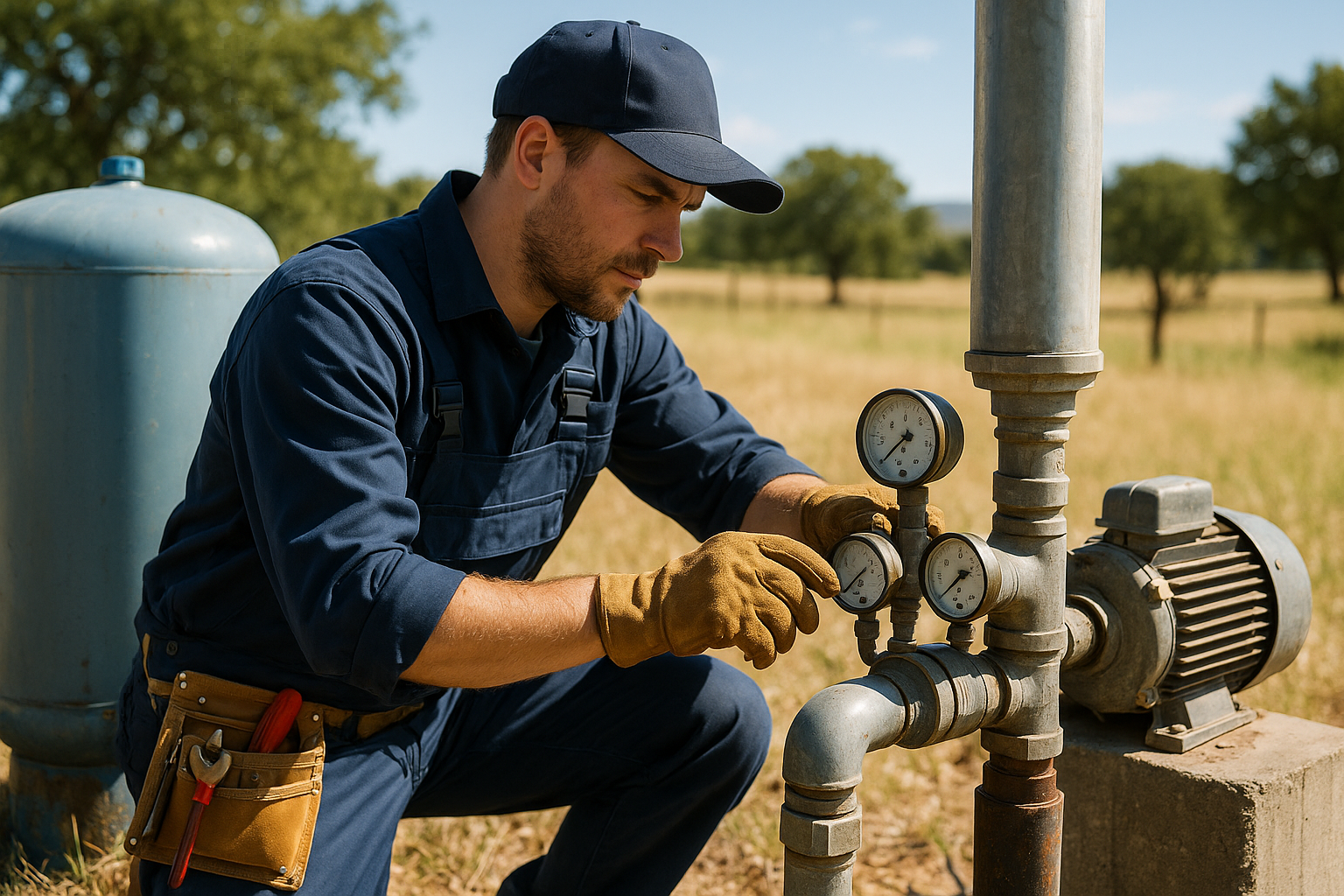
Pressure Gauge Verification: Pressure gauges can fail or become inaccurate. Compare your gauge reading against a known-good gauge (a tire pressure gauge works for a rough check at the tank air valve). If the gauge reads significantly off, replace it—they're inexpensive ($10-20) and critical for system monitoring.
Annual Deep Maintenance
Once per year, perform a thorough system evaluation. Some of these tasks require professional equipment—consider scheduling a professional inspection to cover the items you can't do yourself.
Amp Draw Testing: This is the single best indicator of pump motor health. Using a clamp meter, measure the running amps and compare to the motor nameplate rating. Amps significantly below normal suggest worn pump impellers or low water. Amps above normal indicate bearing wear, voltage problems, or pump blockage. This test requires electrical knowledge and equipment—we recommend professional testing.
Control Box Service (3-Wire Systems): If you have a 3-wire pump system (with an above-ground control box), have the capacitors tested annually. Capacitors degrade over time and weak capacitors strain the motor. Replacement capacitors cost $30-60 and can prevent $2,000+ motor failures. Control box relays should also be inspected for pitting and proper operation.
Flow Rate and Recovery Testing: Measure how much water your pump delivers and how quickly your system recovers. Fill a 5-gallon bucket while timing, then calculate GPM. Compare to previous years and your pump's rated capacity. Declining flow suggests pump wear, scaling, or dropping water levels.
Warning Signs to Watch For
Between scheduled maintenance, stay alert for these warning signs that indicate your pump needs immediate attention:
- Short Cycling: If your pump turns on and off more than 6 times per hour during normal use, you have a problem. This is usually a waterlogged pressure tank but can indicate other issues. Short cycling dramatically reduces pump life.
- Pressure Fluctuations: Pressure that bounces up and down during use, or never reaches cut-out pressure, suggests pump problems, tank issues, or a leak somewhere in the system.
- Air in Lines: Spurting or spitting at faucets indicates air entering the system—possibly from low water levels, a failing pump, or cracks in the drop pipe.
- Higher Electricity Usage: A pump working harder than normal draws more power. Check your well system if electricity bills spike without explanation.
- Sand or Sediment: New sediment in your water often indicates a failing pump, damaged screen, or well casing problems that need professional evaluation.
Frequently Asked Questions
How long should a well pump last with proper maintenance?
A properly maintained submersible well pump typically lasts 15-25 years, while jet pumps average 10-15 years. The key factors are water quality (sediment and minerals cause wear), cycling frequency (proper pressure tank sizing reduces cycles), and electrical conditions (surge protection and proper voltage). Without maintenance, pumps often fail in 8-12 years. Regular maintenance can add 5-10 years to pump lifespan.
Can I maintain a submersible pump myself or is it always a professional job?
You can handle monitoring, above-ground inspections, and control box checks yourself. However, anything involving the pump itself—which sits 100-400 feet down in your well—requires professional equipment and expertise. Pulling a submersible pump requires a hoist or crane, special tools, and knowledge of safe procedures. Above-ground components like the pressure tank, pressure switch, and control box are more DIY-accessible for basic inspections.
What maintenance can prevent my pump from burning out?
The top pump killers are: dry running (install a low-water cutoff), short cycling (proper pressure tank sizing), voltage problems (use surge protection), and sediment wear (maintain filtration if needed). Annual amp draw testing catches motors working harder than they should before they fail. Keeping your pressure tank properly charged reduces cycling, which is one of the biggest factors in pump longevity.
Get Expert Well Service
Southern California Well Service has served San Diego, Riverside, and San Bernardino counties for decades. Licensed C-57 contractor.
Call (760) 440-8520Available 24/7 for emergencies
Related Articles
Continue learning about well maintenance and troubleshooting