Well Pump Not Working? 10 Troubleshooting Steps Before Calling
📋 In This Guide
- Troubleshooting Steps
- Step 1: Check the Circuit Breaker
- Step 2: Check the Pressure Gauge
- Step 3: Listen to the Pump
- Step 4: Check the Pressure Switch
- Step 5: Check for Leaks
- Step 6: Check the Pressure Tank
- Step 7: Check the Control Box
- Step 8: Check for Power at Well
- Step 9: Check Water Level
- Step 10: When to Call a Professional
- Frequently Asked Questions
- Still No Water?
⚠️ When to Skip Troubleshooting
- Breaker keeps tripping repeatedly
- Burning smell from equipment
- Water is contaminated or discolored
- You hear grinding from the well
Call immediately: (760) 440-8520
Step 1: Check the Circuit Breaker
Time: 2 minutes | Difficulty: Easy
The most common cause of a "dead" well pump is a tripped breaker.
What to do:
- Find your electrical panel
- Look for the breaker labeled "Well Pump" or "Well"
- If it's in the middle position or "tripped," reset it by pushing fully OFF then ON
- Wait 30 seconds and check for water
If the breaker trips again:
Do NOT keep resetting it. Repeated tripping indicates a short circuit or motor problem. Call for service.
Step 2: Check the Pressure Gauge
Time: 1 minute | Difficulty: Easy
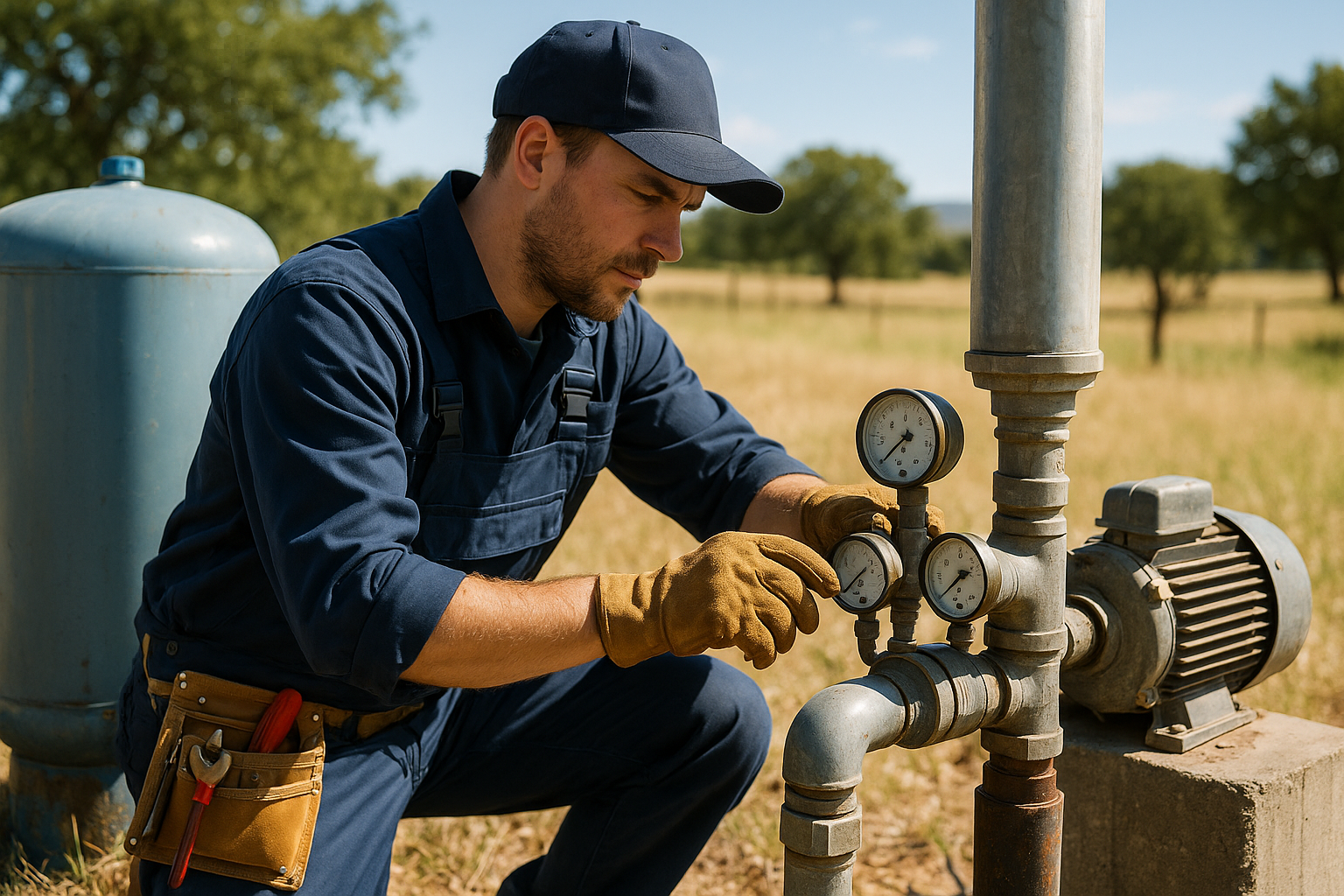
The pressure gauge on your tank tells you what's happening with your system.
Normal readings:
- 40-60 PSI: System is pressurized, may have other issues
- 0 PSI: No pressure—pump isn't running or tank is empty
- Fluctuating rapidly: Pressure tank problem
What different readings mean:
- 0 PSI + pump not running: Electrical or pump failure
- 0 PSI + pump running: Major leak or pump not pumping
- Low pressure (20-30): Tank or switch problem
Step 3: Listen to the Pump
Time: 2 minutes | Difficulty: Easy
Go to your wellhead or pressure tank and listen while someone turns on a faucet.
What you might hear:
- Nothing: Pump not receiving power or motor failed
- Humming: Motor trying to start but can't (seized or electrical issue)
- Clicking: Pressure switch cycling (usually tank problem)
- Running continuously: Leak, low water, or pump can't build pressure
- Normal run then stop: System working correctly
Step 4: Check the Pressure Switch
Time: 5 minutes | Difficulty: Moderate
The pressure switch is usually a small gray box attached to your pressure tank.
What to check:
- Remove the cover (usually just pulls off)
- Look for burned or pitted contacts
- Check for debris or insects
- Look for a reset button (small red or black)
Quick fix:
If contacts look dirty, you can gently file them with an emery board. If they're badly burned, the switch needs replacement ($50-$100 part, easy DIY).
⚠️ Caution: Turn off the breaker before touching anything inside the switch. It's 240V.
Step 5: Check for Leaks
Time: 10 minutes | Difficulty: Easy
A leak can cause the pump to run constantly or lose pressure.
Places to check:
- Around the pressure tank and fittings
- The wellhead (look for wet ground)
- Inside the house—running toilets, dripping faucets
- Irrigation system (check timer and valves)
- Water heater relief valve
Leak test:
Turn off all water in the house. Watch the pressure gauge—if it drops slowly, you have a leak somewhere.
Step 6: Check the Pressure Tank
Time: 5 minutes | Difficulty: Easy
A waterlogged pressure tank is one of the most common well system problems.
How to check:
- Tap the top of the tank—should sound hollow (air)
- Tap the middle—should sound different from top
- Tap the bottom—should sound solid (water)
Signs of waterlogged tank:
- Entire tank sounds solid when tapped
- Pump cycles on/off every few seconds
- Tank feels heavy and full
If waterlogged:
The tank bladder may have failed. This requires tank replacement ($300-$800 installed).
Step 7: Check the Control Box
Time: 5 minutes | Difficulty: Moderate
If you have a 3-wire pump, there's a control box mounted on the wall near the tank.
What to check:
- Listen for humming (indicates power reaching it)
- Look for burn marks or melted plastic
- Check for reset button and try pressing it
Control box problems often require replacement ($200-$500).
Step 8: Check for Power at Well
Time: 5 minutes | Difficulty: Advanced
If the pump isn't in your house, power could be interrupted between panel and well.
What to check:
- GFI outlets if pump is connected to one
- Disconnect switch at wellhead (if present)
- Visible wire damage (rodents, digging)
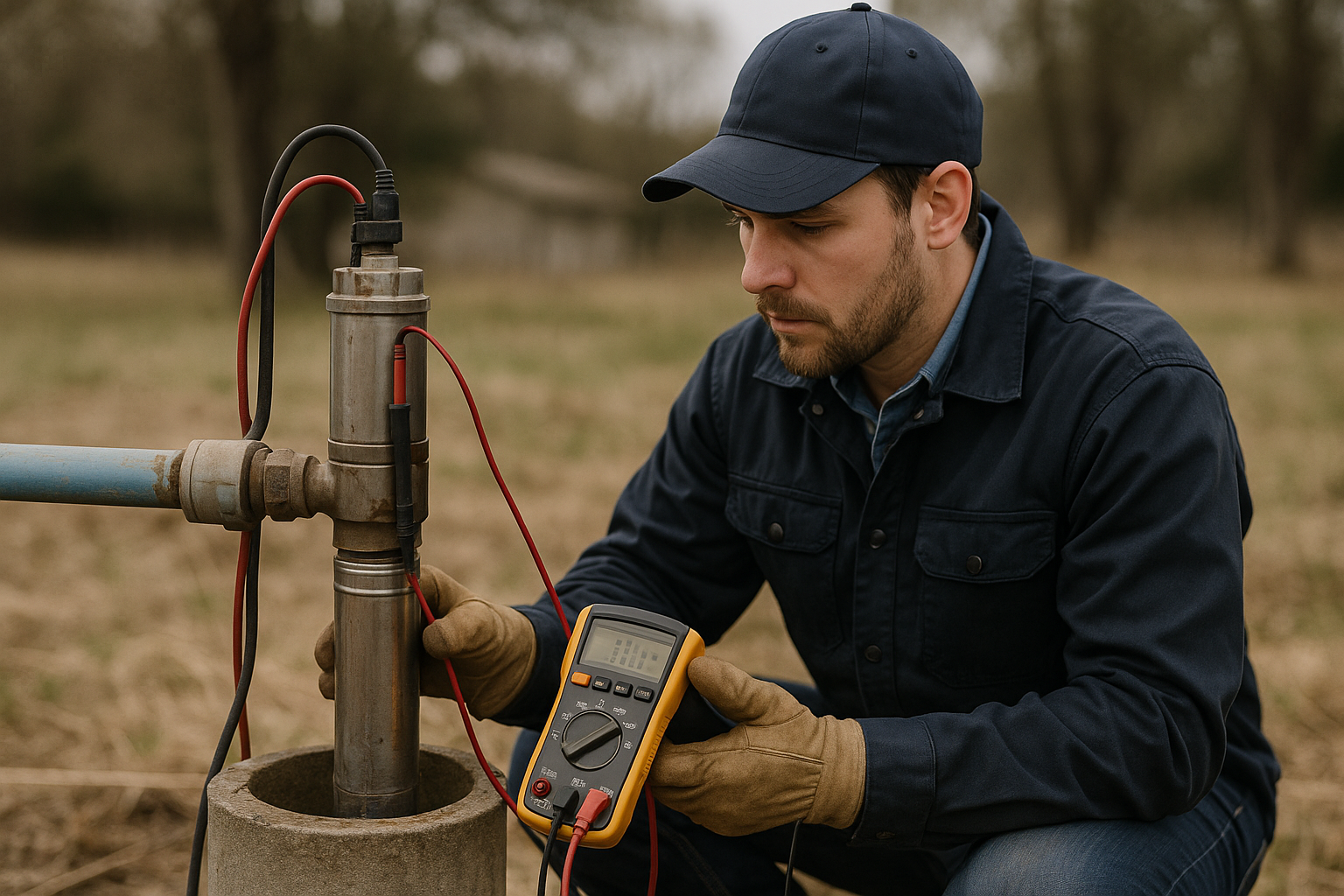
⚠️ Caution: Do not attempt to test voltage at the wellhead unless you're qualified. Call a professional.
Step 9: Check Water Level
Time: Variable | Difficulty: Advanced
If your well has run low, the pump may be drawing air.
Signs of low water:
- Air sputtering from faucets
- Sandy or muddy water
- Pump runs but little water comes out
- Problem gets worse during drought or dry season
What to do:
Turn off the pump and wait several hours for the well to recover. If the problem persists, the well may need deepening or rehabilitation.
Step 10: When to Call a Professional
Call for service if:
- Breaker keeps tripping
- Pump hums but won't start
- You smell burning
- No water after trying all steps
- Water quality has changed
- Pump is 10+ years old with problems
- You're not comfortable with electrical work
We service all major pump brands including Franklin Electric, Grundfos, Goulds (Xylem), and Sta-Rite (Pentair). Our trucks carry common parts and components for same-day repairs.
Frequently Asked Questions
Why is my well pump not working?
Common causes include tripped breaker, bad pressure switch, waterlogged tank, failed motor, or low water level. Check the breaker and pressure gauge first.
How do I reset my well pump?
Reset the circuit breaker (off then on), or press the reset button on the pressure switch. If it trips or won't reset, call for service.
Why is my well pump running but no water?
Possible causes: major leak, failed pump impeller, water level below pump, or blocked pipe. Check for leaks first.
How much does well pump repair cost?
Simple repairs (switch, control box) cost $100-$500. Pump replacement runs $1,500-$4,000 including labor.
Still No Water?
If troubleshooting didn't solve the problem, we can help. Same-day service available for well pump emergencies.
Related Articles
Continue learning about well maintenance and troubleshooting