SC By SCWS Team | February 2, 2026 | 14 min read
Well Pump Not Working? Here's What to Do Right Now
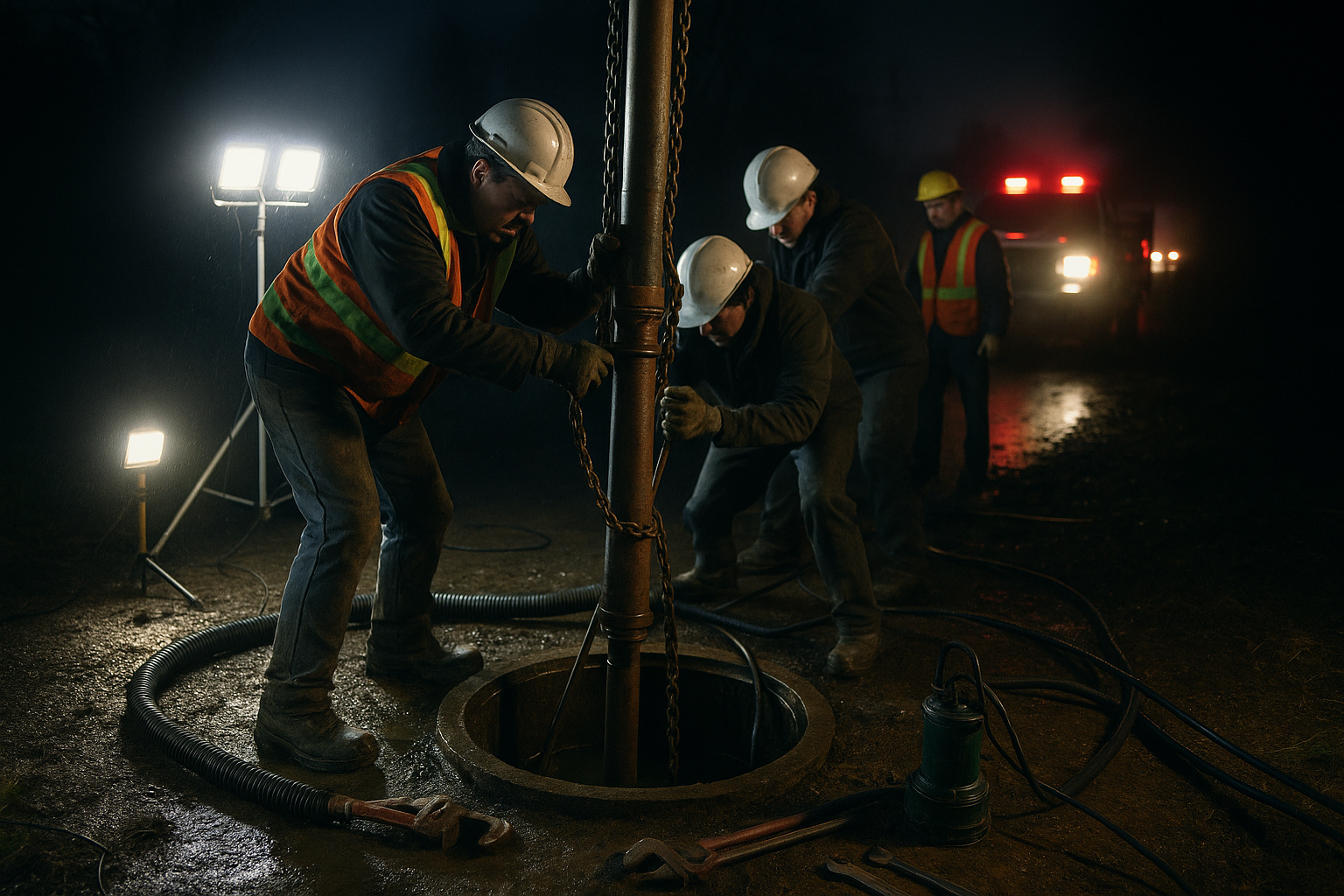
You turn on the faucet and nothing comes out. Your well pump isn't working, and you're facing an immediate crisis—no water for drinking, cooking, bathing, or flushing toilets. Before panic sets in, take a breath. Most "well pump not working" situations have identifiable causes, and many can be resolved quickly. This emergency guide walks you through exactly what to check, when to call professionals, and how to get your water flowing again.
📋 In This Guide
- Why Your Well Pump Stopped Working: Common Causes
- Immediate Troubleshooting: What to Check Right Now
- When to Call Emergency Well Service
- Emergency Repair Costs: What to Expect
- Preventing "Well Pump Not Working" Emergencies
- What NOT to Do When Your Well Pump Stops
- Frequently Asked Questions
- Related Well Pump Information
- Related Articles
🚨 WELL PUMP NOT WORKING?
(760) 440-8520
CALL NOW FOR IMMEDIATE HELP
24/7 Emergency Service • Fast Response • Expert Diagnosis
Serving San Diego County: Julian • Ramona • Escondido • Alpine • Valley Center
Why Your Well Pump Stopped Working: Common Causes
Understanding why your well pump isn't working helps you take the right immediate action. Here are the most common causes, from most to least likely:
1. Tripped Circuit Breaker (Most Common)
Symptoms: Complete silence when you open a faucet, no pump sound, pressure gauge shows zero or dropping pressure.
Why it happens: Power surges, electrical storms, pump motor drawing excess current, short in wiring, or overloaded circuit. A tripped breaker is both the best-case scenario (easy to check) and a warning sign (something caused it to trip).
What to do: Check your electrical panel. Look for the breaker labeled "well pump" or "water pump." If it's in the OFF position or between ON and OFF, you've found the problem—but don't immediately reset it. A tripped breaker often indicates an underlying electrical issue.
⚠️ CRITICAL: Don't Repeatedly Reset Breakers
If your breaker trips again immediately after resetting, or if it's the third time it's tripped, STOP. Repeated tripping indicates a serious electrical problem—possibly a short circuit or failing pump motor. Continuing to reset can cause fire or equipment damage. Turn it off and call emergency well service.
2. Failed Pressure Switch
Symptoms: Pump doesn't turn on when pressure drops, pressure gauge stuck at low reading, no clicking sound from pressure switch when you open faucets.
Why it happens: Pressure switches are electro-mechanical devices that turn your pump on at low pressure (typically 30-40 PSI) and off at high pressure (50-60 PSI). They fail from age, mineral buildup, corrosion, or moisture exposure. Average lifespan is 7-10 years.
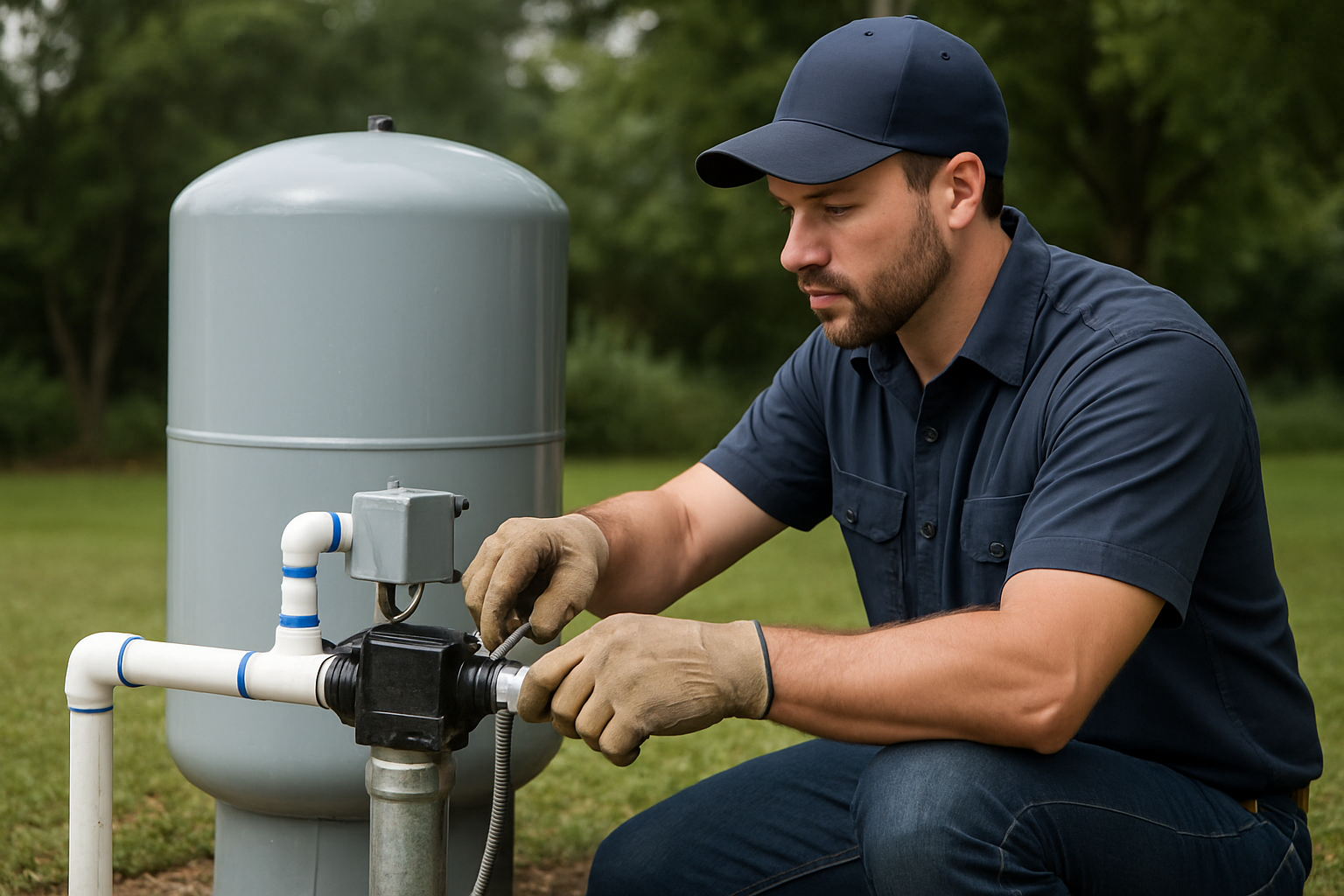
Location: Usually mounted on or near your pressure tank, with wires connected and a pressure gauge attached.
3. Burned-Out Pump Motor
Symptoms: Complete silence from the well, breaker may trip when reset, pressure gauge shows zero, no water flow at all.
Why it happens: Submersible pump motors fail from:
- Age (average lifespan 10-15 years)
- Running dry (water level dropped below pump)
- Overheating from continuous operation
- Lightning strikes
- Power surges
- Manufacturing defects
The bad news: Pump motor failure requires complete pump replacement, which means pulling hundreds of feet of pipe from your well. This is not a DIY job and typically costs $1,500-$4,500 depending on well depth.
4. Control Box Failure (Submersible Pumps)
Symptoms: No pump operation, breaker may trip, burning smell from control box area, visible damage or scorching on control box.
Why it happens: The control box houses capacitors, relays, and wiring that manage three-wire submersible pumps. Lightning, power surges, age, or moisture cause failure.
Good news: Control box replacement is relatively straightforward and doesn't require pulling the pump. Cost: $400-900 including parts and labor.
5. Waterlogged Pressure Tank
Symptoms: Pump runs briefly then stops, low water pressure, pump cycles very frequently (short-cycling), tank feels heavy and full.
Why it happens: Pressure tanks use an air bladder or air chamber to cushion water pressure. When the bladder fails or air is lost, the tank fills completely with water and can't maintain pressure. The pump can't build sufficient pressure to shut off, or the pressure switch thinks pressure is adequate when it isn't.
Test: Tap the pressure tank with your knuckle. A properly working tank sounds hollow on top (air) and solid on bottom (water). A waterlogged tank sounds solid throughout.
6. Low Water Level in Well (Seasonal)
Symptoms: Pump runs but produces little or no water, sputtering faucets, intermittent water flow, pump cycles frequently.
Why it happens: During drought or heavy use periods, groundwater levels drop. If the level falls below your pump intake, the pump draws air instead of water.
Important: Running a pump while drawing air ("running dry") destroys the motor quickly. If you suspect low water, turn off the pump immediately.
7. Electrical Wiring Problems
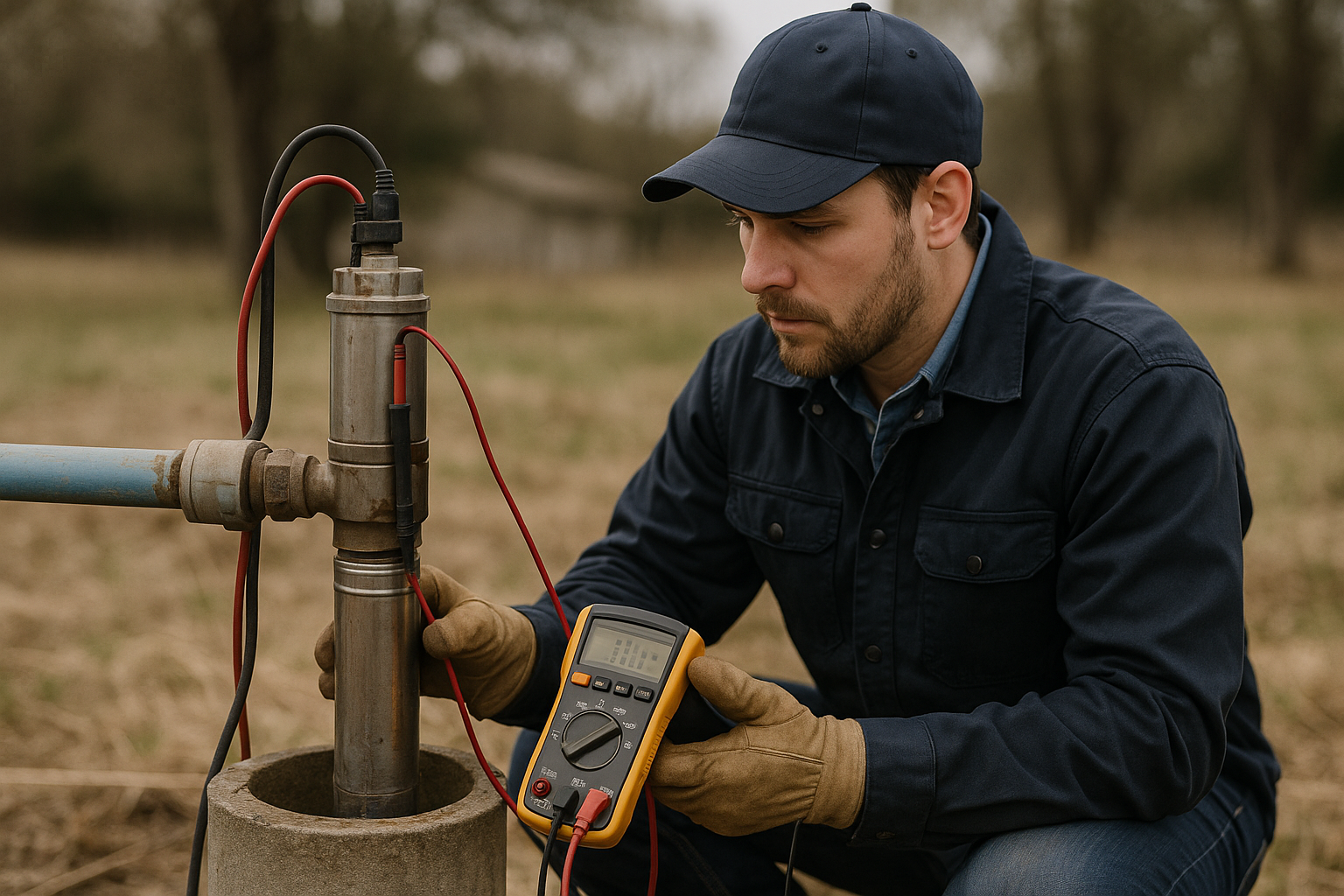
Symptoms: Intermittent pump operation, breakers trip randomly, voltage fluctuations, visible wire damage.
Why it happens: Underground wire from house to well can be damaged by:
- Rodents chewing insulation
- Ground shifting or settling
- Tree root pressure
- Water intrusion in junction boxes
- Age and deterioration
8. Broken or Separated Drop Pipe
Symptoms: Pump runs continuously but produces no water, may hear unusual sounds from well.
Why it happens: The drop pipe connects your submersible pump to the surface plumbing. Corrosion, age, or improper installation can cause separation. When this happens, water pumps into the well instead of up to your house.
Immediate Troubleshooting: What to Check Right Now
Before calling for service, take 10 minutes to check these items. Even if you can't fix the problem yourself, this information helps the repair technician diagnose faster.
Step 1: Check Your Electrical Panel (2 minutes)
- Locate your electrical panel (breaker box)
- Find the well pump breaker (usually labeled "Well," "Water Pump," or "Pump" — typically 20-30 amp)
- Check breaker position:
- Fully ON = breaker is good (problem elsewhere)
- Fully OFF or middle position = breaker tripped
- If tripped, reset ONCE: Turn fully OFF, then back ON
- Go to a faucet and listen for pump operation
Results:
- Breaker stays on, pump works: Solved! Likely was a temporary power issue. Monitor for repeated tripping.
- Breaker trips immediately: Serious electrical problem. Turn OFF and call emergency service. Do not keep resetting.
- Breaker stays on, no pump sound: Problem is not electrical panel. Continue troubleshooting.
Step 2: Check Your Pressure Gauge (1 minute)
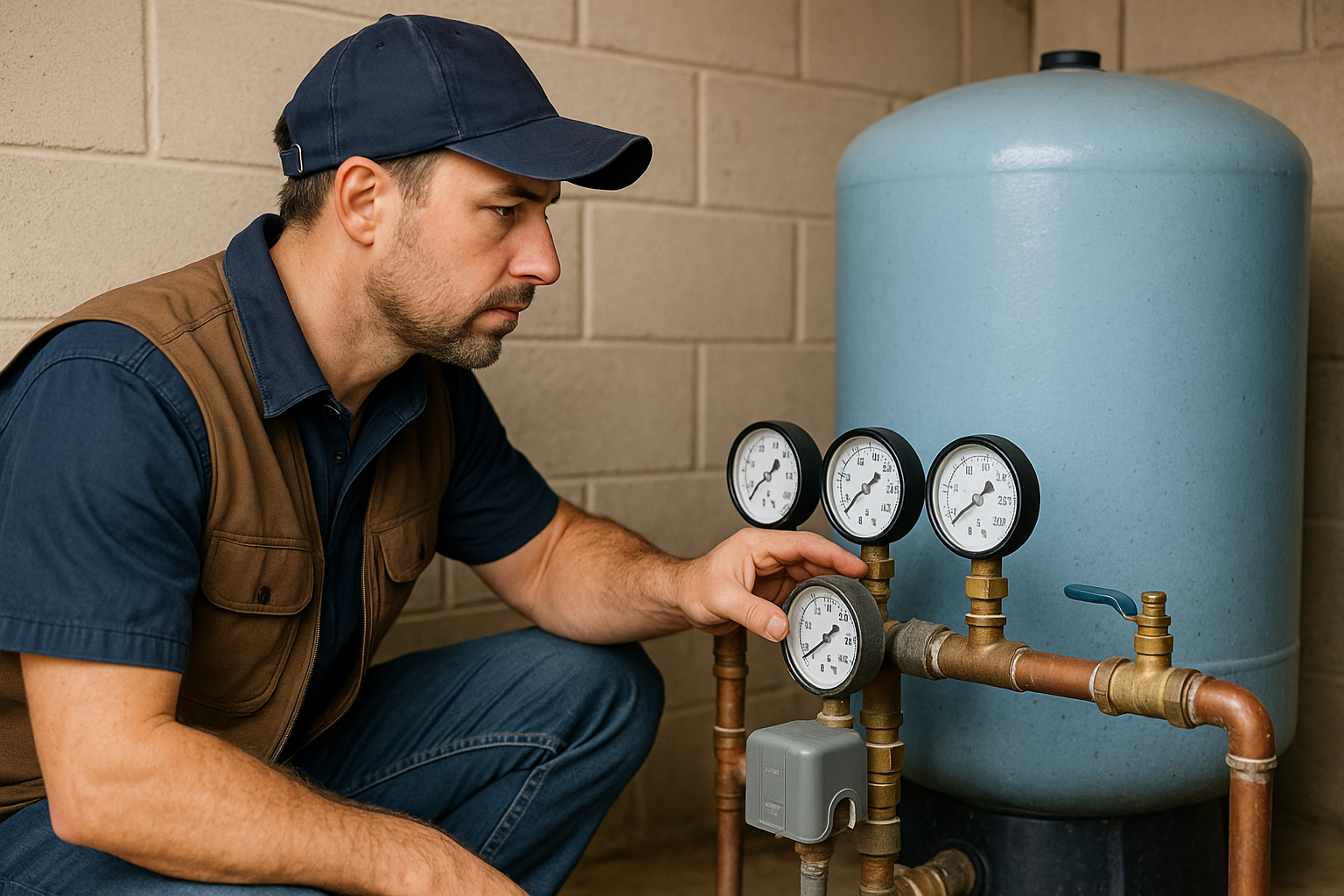
Location: Pressure gauge is typically mounted on or near the pressure tank, often attached to the pressure switch.
- Read the gauge:
- Normal: 40-60 PSI (system working correctly)
- Below 30 PSI: Pump should be running
- Zero: No pressure in system
- Open a faucet and watch the gauge:
- Pressure drops = some water remaining in tank
- Pressure stays at zero = empty system
- Listen for pump: When pressure drops below 30-40 PSI, pump should automatically start
What this tells you:
- Zero pressure, no pump sound: Electrical problem or dead pump
- Low pressure, pump won't start: Pressure switch or electrical issue
- Pressure drops, pump runs but won't build pressure: Pump failure, drop pipe problem, or dry well
Step 3: Listen for Pump Operation (2 minutes)
For submersible pumps (most common): You'll hear a faint humming or low vibration when pump runs. Listen near:
- The wellhead (pump location)
- The pressure tank
- Plumbing lines coming from well
For jet pumps (less common): Pump is in well house or basement. You'll hear obvious motor operation.
What you might hear:
- Normal humming when faucet opens: Pump is trying to run (good sign)
- Complete silence: No power to pump, or pump motor dead
- Clicking sound at pressure switch: Switch is working, but pump not responding
- Continuous running: Pump can't shut off (waterlogged tank, pressure switch problem, or pump not building pressure)
Step 4: Check the Pressure Switch (3 minutes)
Location: Small box mounted on or near pressure tank, with electrical wires and small tube connecting to tank.
- Visual inspection:
- Look for burn marks or melted plastic
- Check for moisture or corrosion
- Ensure wires are firmly connected
- Listen for clicking: When pressure drops below cut-in point (usually 30-40 PSI), you should hear a distinct CLICK as contacts close
- Safety check: Never open the switch cover with power on unless you're a licensed electrician
Signs of pressure switch failure:
- No clicking sound when pressure drops
- Visible corrosion or damage
- Burning smell
- Moisture inside switch
Step 5: Inspect Pressure Tank (2 minutes)
Simple tests (no tools required):
- Tap test: Tap the tank with your knuckle at different heights:
- Top half should sound hollow (air)
- Bottom half should sound solid (water)
- Solid sound throughout = waterlogged tank
- Rock test: Gently rock tank (if possible):
- Normal tank: Moderate weight, sloshes slightly
- Waterlogged: Very heavy, no sloshing
- Visual check: Look for:
- Rust or corrosion
- Leaks at connections
- Damaged air valve
💡 Troubleshooting Summary
After checking these five items, you should have a better idea of your problem:
- ✓ Tripped breaker that resets: Likely temporary power issue. Monitor closely.
- ✗ Breaker trips repeatedly: Emergency—call now. Electrical hazard.
- ✗ No pump sound, breaker fine: Pump motor or pressure switch failure.
- ✗ Pump runs, no water: Dry well, broken pipe, or failed pump.
- ✗ Waterlogged tank: Tank replacement needed.
When to Call Emergency Well Service
Some situations require immediate professional help. Don't wait if you experience:
Call Immediately (Don't Wait) If:
- Breaker trips repeatedly: This indicates serious electrical problems—potential fire hazard
- Burning smell: From control box, pump area, or electrical panel
- Complete water loss: No water at all from any faucet
- Pump runs continuously: Can cause motor burnout and spike electric bills
- Pump runs but no water flows: Running dry destroys pump motors fast
- Visible electrical damage: Scorched wires, melted components, sparking
- After lightning strike: Even if pump seems to work, have it inspected
- Muddy or dirty water: Suddenly (may indicate well collapse)
🚨 DON'T WAIT - CALL NOW
(760) 440-8520
24/7 Emergency Well Pump Service
Fast response • Expert diagnosis • Get your water flowing again
Schedule Service Soon (Not Immediate Emergency):
- Reduced water pressure: Water flows but noticeably weaker
- Sputtering faucets: Air in lines, intermittent flow
- Frequent pump cycling: Pump turns on/off more than normal
- Higher electric bills: Pump running more frequently
- Unusual noises: New sounds from pump area
- Aging system: Pump is 10+ years old (preventive replacement cheaper than emergency)
Emergency Repair Costs: What to Expect
Well pump repair costs vary based on the specific problem. Here's realistic pricing for common issues:
💰 Well Pump Repair Cost Guide
Diagnostic Service Call
Trip fee + diagnosis time
$150 - $300
Pressure Switch Replacement
Parts + labor
$250 - $500
Electrical Repairs
Wiring, connections, breakers
$300 - $800
Control Box Replacement
Submersible pump electrical
$400 - $900
Pressure Tank Replacement
40-80 gallon standard tank
$600 - $1,400
Pump Motor Replacement
Complete pump pull & replace
$1,500 - $4,500
*Emergency/after-hours service adds 25-50% to standard rates
Cost Factors
- Well depth: Deeper wells cost more (more pipe, longer labor time)
- Pump horsepower: Larger pumps cost more
- Accessibility: Difficult locations increase labor costs
- Time of service: Emergency/after-hours rates are higher
- Parts availability: Unusual sizes may require special ordering
Preventing "Well Pump Not Working" Emergencies
Many well pump failures are preventable with proper maintenance and attention to warning signs:
Annual Professional Inspection
A yearly well system check-up catches problems before complete failure:
- Electrical system testing (voltage, amperage, connections)
- Pressure system inspection (switch, gauge, tank)
- Flow and pressure testing
- Control box inspection
- Identification of wear indicators
Cost: $150-300 annually. Savings: Prevents $2,000+ emergency repairs.
Watch for Warning Signs
Don't ignore these symptoms—they indicate problems developing:
- Sputtering faucets: Air in system (pump losing prime or drawing air)
- Pressure drops: Gradually decreasing water pressure
- Short-cycling: Pump turns on/off frequently
- Unusual sounds: Grinding, clicking, buzzing from pump or equipment
- Cloudy water: Sudden appearance of sediment
- Higher bills: Unexplained increase in electric costs
Proactive Pump Replacement
Replace pumps based on age before catastrophic failure:
- Submersible pumps: Replace at 12-15 years
- Jet pumps: Replace at 8-12 years
- Pressure tanks: Replace at 10-15 years
Why proactive replacement saves money: Scheduled replacement costs 30-40% less than emergency service, and you can choose convenient timing instead of dealing with crisis.
Protect Against Electrical Problems
- Lightning protection: Install lightning arrestor ($150-300)
- Surge protection: Whole-house surge protector
- Dedicated circuit: Well pump should have its own breaker
- Proper wiring: Underground wire should be rated for direct burial
What NOT to Do When Your Well Pump Stops
Avoid these common mistakes that make problems worse:
❌ DON'T Make These Mistakes:
- ❌ Don't repeatedly reset tripped breakers – You can cause fire or additional equipment damage
- ❌ Don't let the pump run dry – Running without water destroys motor in minutes
- ❌ Don't ignore warning signs – Small problems become expensive emergencies
- ❌ Don't DIY electrical repairs – Well electrical is complex and dangerous
- ❌ Don't delay calling professionals – Every hour without diagnosis is an hour without water
- ❌ Don't attempt pump replacement yourself – Specialized equipment required, injury risk
Frequently Asked Questions
Why is my well pump not working?
Common reasons include tripped circuit breaker, failed pressure switch, burned-out pump motor, electrical problems, blown control box, waterlogged pressure tank, or low water level in the well. Start by checking your electrical panel for tripped breakers before calling for service.
What should I do first when my well pump stops working?
First, check your electrical panel for tripped breakers. Then inspect your pressure gauge (should read 40-60 PSI). Listen for pump operation. If the breaker is tripped or you hear no pump sound, turn off the system and call emergency well service at (760) 440-8520 to prevent further damage.
How much does it cost to fix a well pump that's not working?
Costs vary: pressure switch replacement $250-500, control box $400-900, electrical repairs $300-800, pump motor replacement $1,500-4,500 depending on depth and pump type. Emergency service calls add $200-500. Exact pricing requires diagnosis.
Can I fix a well pump myself?
You can check breakers, pressure gauge, and reset pressure switches. However, electrical work requires licensed professionals, and pump replacement involves specialized equipment. DIY attempts often cause additional damage. For anything beyond basic checks, call professional well service.
How long can a well pump not work before it's damaged?
A pump that's completely off won't sustain damage. However, a pump running dry (without water) can burn out the motor in 5-10 minutes. If you hear the pump running but have no water, shut it off immediately at the breaker and call emergency service.
Get Your Well Pump Working Again—Fast
A non-working well pump is more than an inconvenience—it's an emergency that disrupts your entire household or business. Don't spend hours troubleshooting when expert diagnosis is a phone call away. Southern California Well Service provides fast, honest emergency well pump service throughout San Diego County. We diagnose the problem quickly, explain your options clearly, and get your water flowing again as fast as possible.
24/7 Emergency Service • Same-Day Response • Expert Diagnosis • Licensed & Insured
Serving: Julian • Ramona • Escondido • Alpine • Valley Center • Borrego Springs • All San Diego County