How to Reset Your Well Pump: Step-by-Step Guide
📋 In This Guide
Waking up to no water pressure is one of the most stressful things a homeowner can experience, especially when you're on a private well. The good news is that many well pump shutdowns are caused by simple electrical trips that you can fix yourself in about five minutes. Power surges, lightning storms, and momentary utility fluctuations are all common causes of tripped breakers and pressure switch lockouts throughout San Diego, Riverside, and San Bernardino Counties.
This guide walks you through the complete reset process for both submersible and jet well pumps, explains what each component does, and — just as importantly — tells you when to stop resetting and call a professional before you cause additional damage.
When to Try a Reset
A well pump reset is appropriate when the system was running normally and then suddenly stopped due to an external event. Not every pump shutdown is a reset situation — some indicate real mechanical or electrical problems that resetting will only make worse.
Good Candidates for Reset
Try a reset when any of the following are true:
- A power outage just ended — This is the most common reason for a tripped well pump breaker. When power returns after an outage, the voltage spike can trip your breaker or cause the pressure switch to lock out. A simple reset almost always fixes this.
- The breaker tripped once — A single trip can happen from a momentary surge, a heavy electrical load starting elsewhere in the house (like an air conditioner), or a brief utility fluctuation. One reset is perfectly safe.
- Lightning struck nearby — Even a nearby lightning strike that doesn't directly hit your property can induce a surge in your well pump wiring. Check your surge protector (if installed) and try a reset.
- The system was working fine before — If you had normal water pressure yesterday and woke up to nothing today with no other symptoms, a reset is a good first step.
⚠️ Don't Keep Resetting If You See These Signs
These symptoms indicate an actual problem — resetting will not fix it and may cause additional damage:
- Breaker trips again immediately — This means there's a short circuit somewhere in the system. Repeated resetting can overheat wiring, damage the breaker, or cause a fire hazard. Stop after two attempts.
- Pump hums but doesn't spin — The motor is trying to start but can't. This is usually a bad start capacitor or a seized pump. Every second the motor hums without spinning, it's overheating. Turn it off immediately.
- Burning smell near the pressure tank or wellhead — This indicates overheated wiring, a burned-out motor, or a failing control box. Do not reset — disconnect power and call for service.
- Multiple trips in recent days — A pattern of repeated trips means something is degrading. It might be a motor winding starting to fail, corroded wire connections, or a control box going bad. Get it diagnosed before you lose the pump entirely.
- You've already reset it three or more times — If it's not staying on after two resets, resetting is not the solution.
Understanding Your Well Pump System
Before resetting anything, it helps to understand what you're working with. A residential well pump system has several components that can trip or need resetting, and knowing which one to address saves time and frustration.
The Circuit Breaker
Your well pump has a dedicated circuit breaker in your main electrical panel. It's typically a double-pole breaker (takes up two slots) rated at 20–30 amps for most residential submersible pumps, or 15–20 amps for smaller jet pumps. It should be labeled "Well Pump" or "Well" — if it's not labeled, it's the breaker that turns off your water when you flip it.
The Pressure Switch
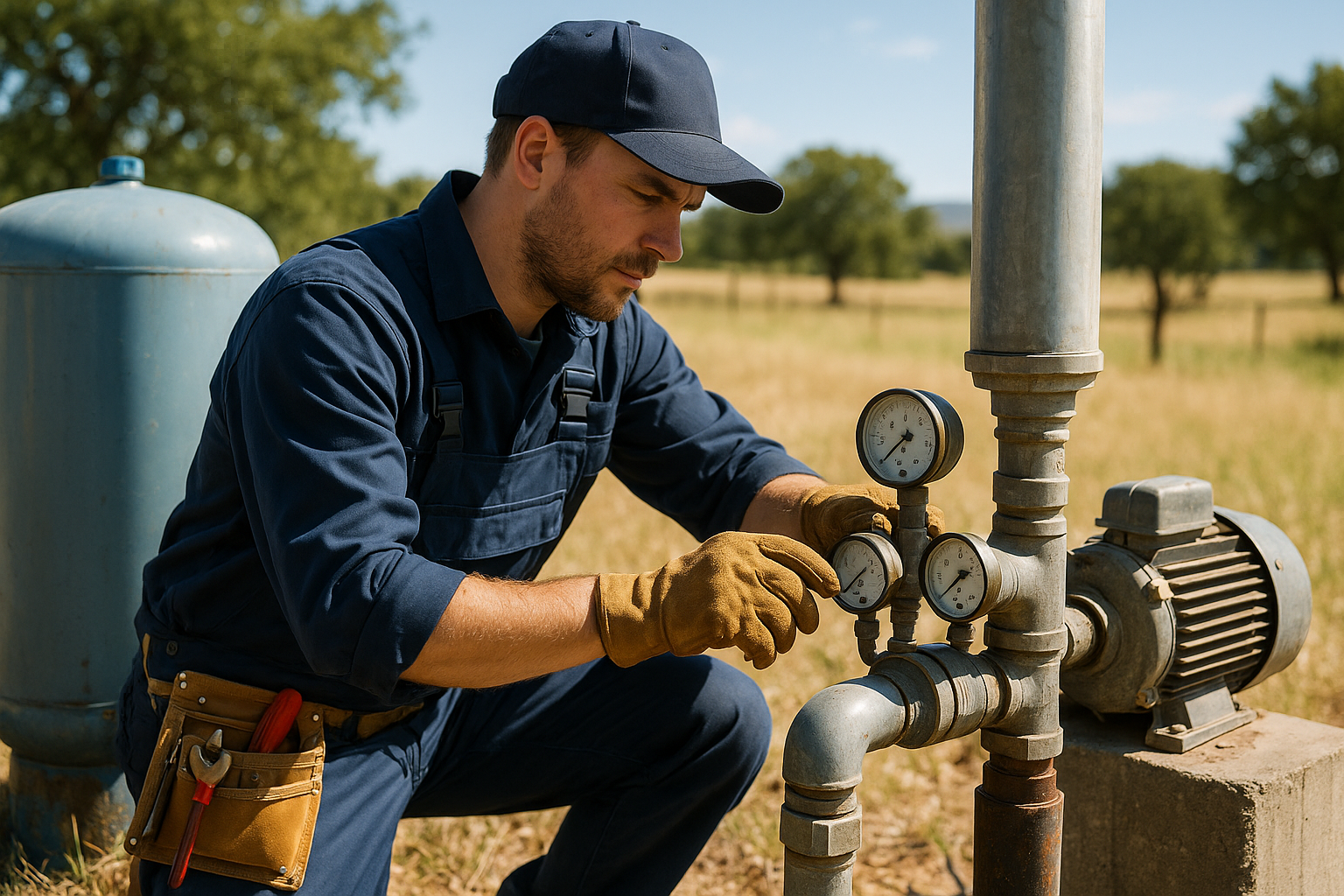
The pressure switch is a small gray or black box mounted on a fitting near your pressure tank. It monitors water pressure in the system and tells the pump when to turn on and off. Most residential systems use a 30/50 or 40/60 pressure switch — meaning the pump kicks on when pressure drops to 30 (or 40) PSI and shuts off when it reaches 50 (or 60) PSI. The pressure switch has its own internal overload protection that can trip independently of the breaker.
The Control Box (Submersible Pumps Only)
If you have a submersible pump (the most common type in Southern California deep wells), you likely have a control box mounted on the wall near the pressure tank. This gray box contains the start capacitor, run capacitor, and relay that the pump motor needs to start and run. Many control boxes have a reset button or overload protector. Franklin Electric and other major manufacturers include thermal overload protection that trips when the motor draws too much current.
The Pressure Tank
While the pressure tank doesn't have a reset function, its condition directly affects whether your pump trips. A waterlogged tank (one that's lost its air charge) causes the pump to short-cycle — turning on and off rapidly every few seconds. This rapid cycling overheats the motor and trips breakers. If your tank feels uniformly heavy when you tap on it (no hollow sound at the top), it may be waterlogged and contributing to your trip problem.
Need help right now? Our technicians diagnose and repair well pump issues throughout San Diego and Riverside Counties.
Call (760) 440-8520Step-by-Step Reset Instructions
Step 1: Locate and Reset the Circuit Breaker
Go to your main electrical panel and find the well pump breaker. A tripped breaker sits in the middle position — not fully ON and not fully OFF. This middle position is easy to miss; look carefully. To reset it properly:
- Push the breaker handle firmly to the full OFF position first. You should feel a click.
- Wait 30 seconds. This gives the pump motor and capacitors time to fully discharge.
- Push the breaker handle firmly to the ON position.
The order matters — if you try to push a tripped breaker directly to ON without going through OFF first, many breakers won't reset properly. Always go OFF first, then ON.
Step 2: Listen and Watch for Normal Operation
After resetting the breaker, go to your pressure tank and watch the pressure gauge. Here's what you should see if the reset worked:
- The pressure gauge should start climbing within 30–60 seconds
- If you have a jet pump (above ground), you should hear it running
- If you have a submersible pump, you won't hear the pump itself, but you may hear water flowing into the pressure tank
- Pressure should build steadily to the cut-off pressure (typically 50 or 60 PSI) and then the pump should shut off
Once the pump shuts off at normal cut-off pressure, open a faucet and let water run. The pressure should drop gradually, and when it hits the cut-in pressure (30 or 40 PSI), the pump should restart. If it cycles normally, your reset was successful.
Step 3: If the Breaker Holds but the Pump Doesn't Start
If the breaker stays in the ON position but no water pressure builds, the problem may be with your pressure switch or control box rather than the breaker. Move to the pressure switch reset procedure below.
Resetting the Pressure Switch
The pressure switch has its own overload protection that can trip independently of the circuit breaker. Here's how to reset it safely:
- Turn off the circuit breaker first. Never work on the pressure switch with power on. The switch carries 240 volts and can deliver a fatal shock.
- Remove the pressure switch cover. It usually pulls or pops off. On Square D and Pumptrol switches (the most common brands), it's a simple pull-off cover.
- Look for the reset lever. Inside the switch, you'll see the contact points and a small metal lever. On many switches, there's a separate reset lever or arm that you can push to re-engage the contacts. Some newer switches have a small red or black reset button.
- Press or flip the reset mechanism. If there's a lever, push it toward the contacts until you feel it click. If there's a button, press it firmly.
- Check the contacts while you're in there. Look at the contact points — the small metal pads that touch when the switch is engaged. If they're blackened, pitted, or corroded, the switch is worn out and needs replacement. Burned contacts are one of the most common pressure switch failures we see, especially in the dusty, high-mineral environments common throughout Ramona, Valley Center, and the backcountry.
- Replace the cover and restore power. Put the cover back on, then turn the breaker on. The pump should start immediately if the tank pressure is below the cut-in setting.
Resetting the Control Box (Submersible Pumps)
If you have a submersible well pump with a separate control box (common for pumps ¾ HP and larger), the control box may have its own overload reset. Franklin Electric QD and CRC control boxes, which are the most common in our service area, have a thermal overload protector that trips when the motor draws excessive current.
To reset the control box:
- Turn off the breaker and verify it's off with a voltage tester if you have one.
- Open the control box cover. It's typically secured with screws.
- Locate the overload reset button. It's usually a small red or black button on the relay or a separate reset switch. On Franklin Electric boxes, it's typically visible near the top of the unit.
- Press the reset button firmly. You should feel it click. If it doesn't stay pressed (pops back out), the overload is still tripped — wait 15 minutes for the thermal protector to cool and try again.
- Close the box, restore power, and monitor.
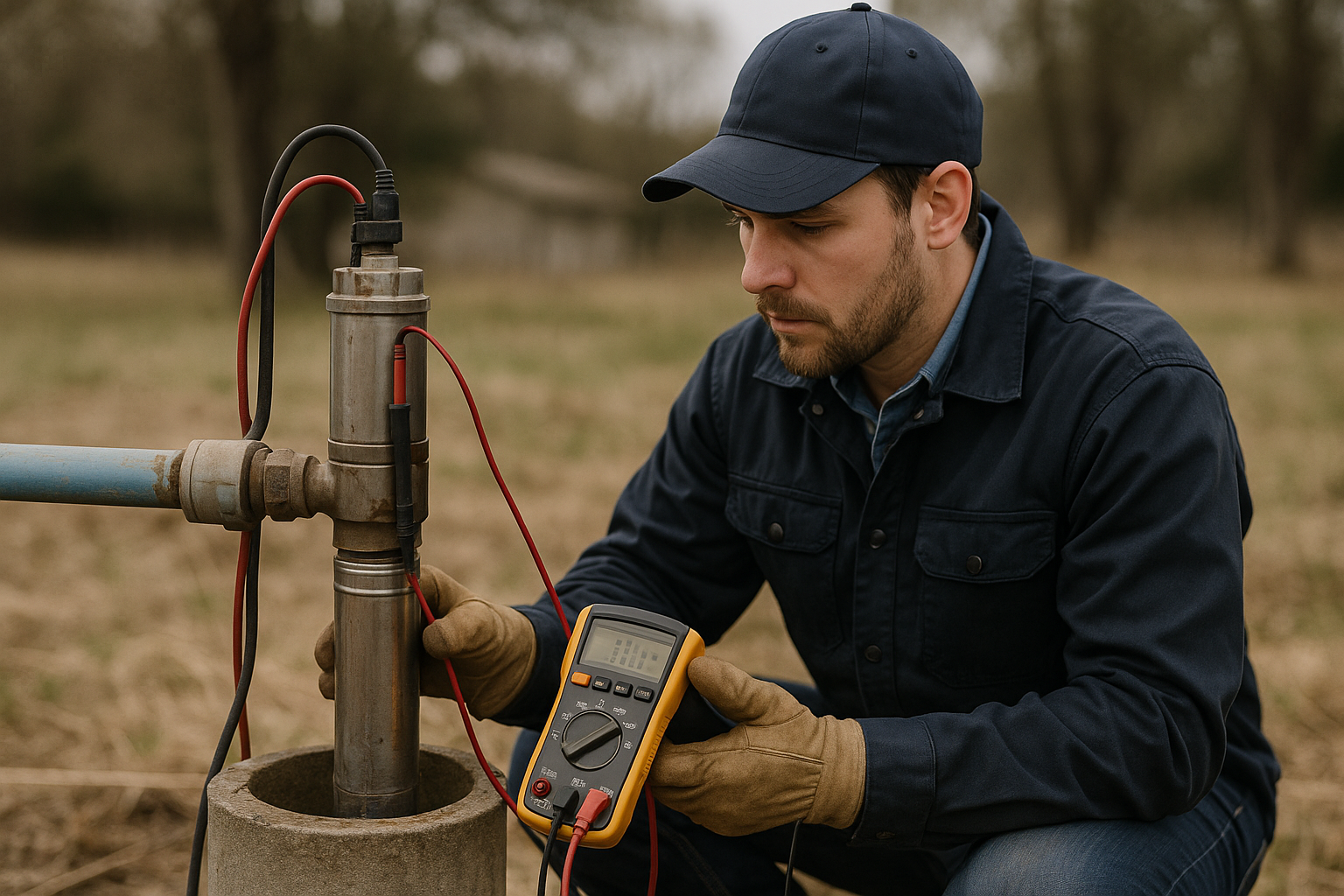
If the control box overload trips again within a few minutes, the pump motor is likely drawing too much current. This can mean a failing motor, a stuck impeller, or a wiring problem between the control box and the pump. At this point, you need a professional with an amp meter to diagnose the issue.
If Reset Doesn't Work: Diagnosing the Problem
When resetting doesn't solve the problem, the symptoms you're seeing tell you a lot about what's wrong. Here's what each symptom typically means:
Breaker Trips Again Immediately
An immediate trip (within 1–2 seconds of resetting) indicates a short circuit. The most common causes are:
- Damaged pump motor windings — The insulation on the motor wiring has broken down, creating a direct short. This is the most expensive scenario because it requires pulling the pump from the well.
- Damaged wire between the control box and pump — The submersible cable that runs down the well can develop shorts from abrasion against the well casing, corrosion, or lightning damage.
- Failed control box component — A shorted capacitor or relay in the control box can cause an immediate trip.
- Water in the wire splice — The splice connection where the above-ground wire meets the submersible cable (usually at the wellhead) can develop water intrusion that creates a short.
Do not keep resetting. Each attempt pushes high current through the short, potentially causing more damage and creating a fire hazard.
Pump Hums But Won't Spin
A humming pump is trying to start but can't overcome the resistance. Turn the power off immediately — the motor will overheat within seconds. Common causes include:
- Bad start capacitor — This is the most common cause and the cheapest fix. The start capacitor gives the motor the extra boost it needs to begin spinning. When it fails, the motor hums but can't start. Replacement cost is typically $50–$150 including labor.
- Seized pump or motor — Sand, sediment, or mineral buildup can physically prevent the impeller from turning. This is common in wells with high mineral content or sand production.
- Low voltage — If the voltage reaching the pump is too low (due to undersized wiring, a long wire run, or utility problems), the motor can't develop enough torque to start. We see this occasionally in rural areas with long distances between the electrical panel and the well.
Pump Runs But No Water Comes Out
If you can verify the pump is running (amp draw on the circuit, or you can hear a jet pump running) but no water is reaching the house, the issue is hydraulic rather than electrical:
- Water level has dropped below the pump — During drought conditions or after heavy neighborhood pumping, the water table can temporarily drop. The pump runs but has no water to push. This is especially common in the summer months in areas like Anza, Julian, and Warner Springs.
- Jet pump needs priming — If you have an above-ground jet pump and it lost its prime (air got into the suction line), it will run but not move water. You'll need to re-prime it.
- Broken pipe or fitting — A break in the pipe between the pump and the pressure tank means water is going back down the well instead of into your house.
- Check valve failure — The check valve prevents water from flowing backward down the well when the pump shuts off. If it fails, the pump has to re-fill the entire pipe column each time it starts, and may not be able to build pressure.
Preventing Future Trips
Once you've successfully reset your pump, take these steps to prevent future shutdowns. Most of these are simple, inexpensive measures that protect a pump system that may have cost $5,000–$15,000 to install.
Install Surge Protection
A whole-house surge protector or a dedicated surge protector on the well pump circuit is the single best investment you can make for your well system. Lightning strikes and utility surges are the number one cause of well pump control box failures in Southern California, particularly during our summer monsoon season when dry lightning is common in the mountains and desert areas.
A quality pump surge protector from Franklin Electric or SJE Rhombus costs $100–$250 installed and can save you thousands in control box and motor replacements. We strongly recommend them for every well system we install or service.
Maintain Your Pressure Tank
Check your pressure tank's air charge at least once a year. The air bladder inside the tank should be pre-charged to 2 PSI below your cut-in pressure (so 28 PSI for a 30/50 system, or 38 PSI for a 40/60 system). You can check this with a simple tire pressure gauge on the Schrader valve at the top of the tank — but only when the tank is empty (turn off the pump and drain the system first).
A waterlogged pressure tank causes the pump to short-cycle — turning on and off every few seconds instead of running for a normal 30–60 second cycle. Short cycling puts enormous stress on the motor, the pressure switch contacts, and the electrical system, leading to tripped breakers and premature pump failure.
Ensure Proper Wire Sizing
Undersized wiring is a hidden cause of pump trips, especially on properties where the well is far from the electrical panel. Voltage drops over long wire runs, and if the voltage at the pump drops too low, the motor draws more current to compensate, which can trip the breaker. The wire size must be matched to both the pump horsepower and the distance from the panel to the well. Franklin Electric publishes wire sizing tables that your installer should follow — if you're experiencing repeat trips, ask a technician to check the voltage at the pump versus at the panel.
Install Low-Water Protection
A low-water cutoff sensor (also called a pump saver or pump protector) monitors either the water level in the well or the pump's amp draw to detect a low-water condition. When the water level drops below the pump intake, the pump runs dry and overheats rapidly. A pump protector shuts it down before damage occurs and automatically restarts when the water level recovers. This is especially important for wells in areas with seasonal water table fluctuations, which includes much of inland San Diego and Riverside Counties.
Schedule Annual Well System Inspections
A yearly inspection by a qualified well service company catches small problems before they become emergency shutdowns. During an inspection, we check amp draw on the pump motor, verify pressure switch settings and contact condition, test the pressure tank air charge, inspect wiring connections, and measure voltage at the wellhead. These checks take about an hour and can identify a failing capacitor, corroded wire connection, or deteriorating motor before it leaves you without water.
Frequently Asked Questions
Where is the reset button on my well pump?
Most well pumps don't have a single "reset button" — the system has multiple reset points. The circuit breaker in your electrical panel is the primary reset. The pressure switch near your pressure tank may have a reset lever inside its cover. If you have a submersible pump with a separate control box, that box may have its own red or black reset button for the thermal overload protector. Check all three if the breaker reset alone doesn't get the pump running.
Why does my well pump keep tripping the breaker?
Repeated breaker trips indicate an electrical problem that resetting won't fix. The most common causes are a failing pump motor (worn insulation causing intermittent shorts), a bad capacitor in the control box, corroded wire connections at the wellhead splice, a waterlogged pressure tank causing rapid cycling, or undersized wiring. A technician with an amp clamp meter can quickly narrow down the cause by measuring the current draw at startup and during operation.
Can I damage my pump by resetting the breaker too many times?
Yes. If the pump is tripping due to a short circuit or seized motor, each reset attempt forces high current through the damaged component. This can burn out motor windings, melt wire insulation, damage the control box, or in extreme cases create a fire hazard. One or two reset attempts are safe. If it trips a third time, stop and call a professional.
How do I know if my pressure switch is bad?
Signs of a bad pressure switch include: the pump doesn't turn on even though the breaker is on and pressure is low, the pump doesn't shut off when pressure reaches the cut-off setting, you hear a buzzing or chattering sound from the switch, or you see blackened/pitted contacts when you open the cover. Pressure switches are wear items — they typically last 3–7 years and cost $25–$75 to replace. It's one of the most common and least expensive well repairs.
My pump runs continuously — is that a reset issue?
No — a continuously running pump is a different problem entirely. The pump is running because it can't reach the cut-off pressure. Common causes include a leak in the plumbing system, a failed check valve allowing water to drain back down the well, a waterlogged pressure tank, a pressure switch set incorrectly, or a failing pump that can no longer produce adequate pressure. Don't reset for this — the pump needs to be diagnosed. See our guide on well pump running constantly for detailed troubleshooting.
How long should a well pump run after resetting?
After a reset, the pump needs to refill the pressure tank. Depending on your tank size and how much pressure was lost, this typically takes 1–3 minutes for a standard 30–50 gallon pressure tank. The pump should build pressure steadily and shut off when it reaches the cut-off setting (usually 50 or 60 PSI). If it takes more than 5 minutes to build pressure, or if it never reaches cut-off, there may be an underlying issue even though the reset appeared to work.
Should I turn off the well pump during a power outage?
It's a good idea to turn off the well pump breaker during a known power outage, especially during electrical storms. When power returns, it often comes back with a voltage spike that can damage the pump's control box and motor. By having the breaker off, you can restore power on your own terms — wait a few minutes after utility power stabilizes, then turn the breaker on. This simple habit can prevent the majority of storm-related pump trips and failures.
Still Not Working? We're Here to Help
If resetting your well pump didn't solve the problem, our technicians can diagnose and repair the issue — usually the same day. We service all major pump brands including Franklin Electric, Grundfos, Goulds (Xylem), and Sta-Rite (Pentair), and our trucks carry common parts for on-the-spot repairs throughout San Diego, Riverside, and San Bernardino Counties.
Related Articles
Continue learning about well maintenance and troubleshooting