Well Pump Running Continuously Non-Stop - Causes & Fixes
Well Pump Running Continuously: Why It Won't Shut Off
A well pump that runs non-stop is a serious problem. Not only does it waste electricity and wear out the pump prematurely, but it indicates something is fundamentally wrong with your water system. In many cases, continued operation can lead to complete pump failure or a burned-out motor. Here's how to diagnose the problem and what to do about it.
How Well Pumps Should Work
In a properly functioning system, your well pump turns on when pressure drops to the "cut-in" setting (typically 30 or 40 PSI) and shuts off when pressure reaches the "cut-out" setting (typically 50 or 60 PSI). This cycle should take a few minutes of running to fill your pressure tank, then the pump should rest until you use enough water to drop pressure again.
A pump that never reaches the cut-out pressure will run indefinitely—and that's when problems start.
⚠️ Urgent: Turn Off the Pump
If your pump has been running continuously for more than 30-45 minutes, turn it off at the circuit breaker immediately. Running dry or continuously can overheat the motor, damage seals, and lead to costly pump replacement. Take action now, diagnose second.
Common Causes of Continuous Pump Operation
1. Water Leak in the System
The most common cause. If water is leaving the system as fast as the pump can deliver it, pressure never builds to the shut-off point. Look for:
- Leaking or running toilets
- Open outdoor faucets or hose bibs
- Leaking water heater or pressure tank
- Underground pipe break
- Leaking water softener or filter system
- Failed check valve allowing water to run back into well
2. Pressure Switch Problems
The pressure switch should signal the pump to stop, but it may fail to do so if:
- Contacts are welded or stuck closed
- Diaphragm is ruptured
- Switch is misadjusted or set too high
- Gauge/sensing tube is clogged
3. Worn Pump or Falling Water Level
If the pump can't deliver enough water to build pressure:
- Pump impeller or seals are worn
- Well water level has dropped below pump intake
- Drop pipe has a crack or leak
- Screen or intake is clogged
4. Waterlogged Pressure Tank
A failed bladder or completely waterlogged tank can cause issues, though this more commonly causes short cycling rather than continuous running.
Step-by-Step Diagnosis
- Turn off the pump at the breaker
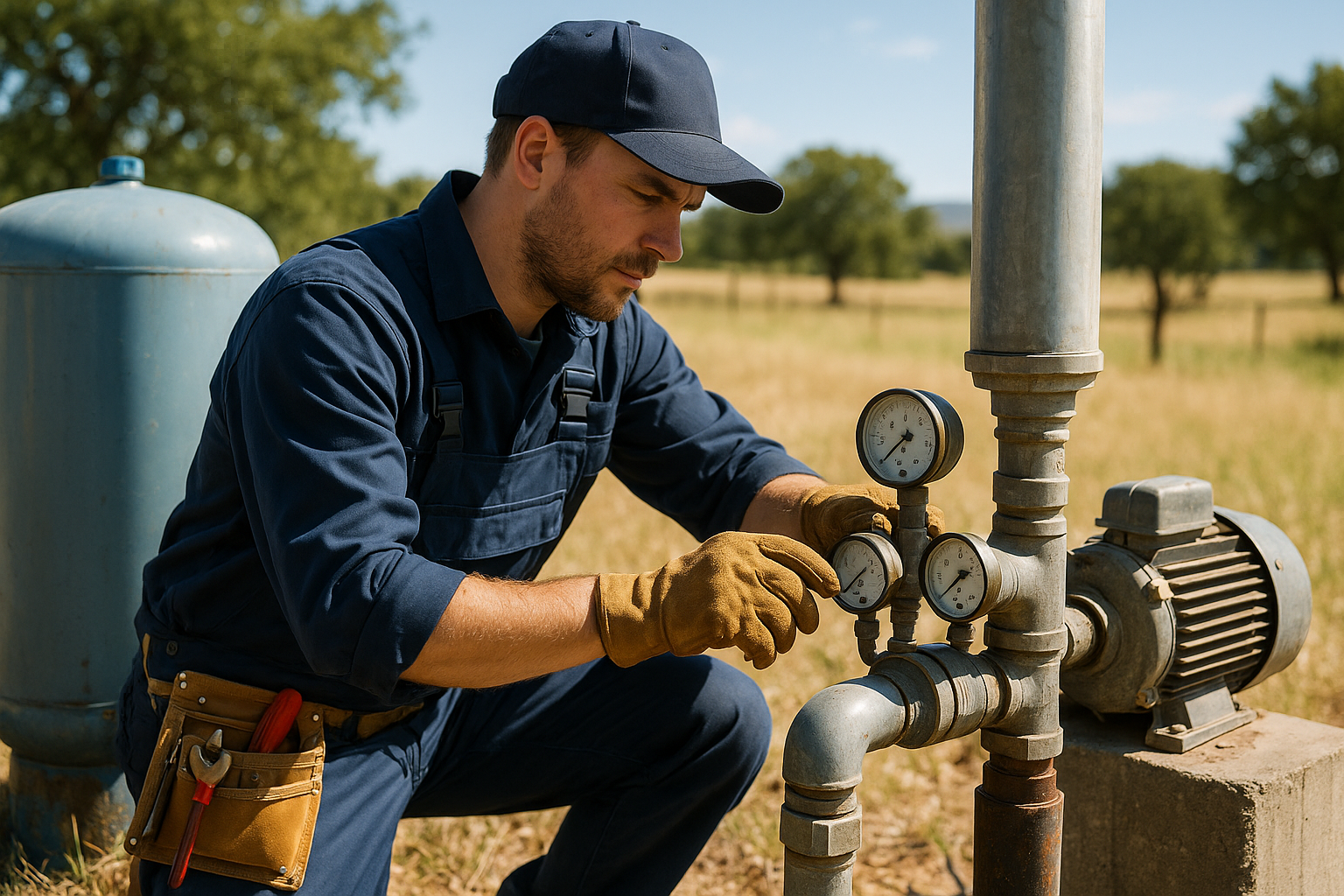
- Check pressure gauge: What does it read? If it's at or near cut-out (50-60 PSI), the switch may be stuck
- Check all fixtures: Walk through the house checking for running toilets, dripping faucets, or any water use
- Look for visible leaks: Check the pressure tank, water heater, softener, and all accessible pipes
- Check the well cap: Water spraying from the cap indicates a broken drop pipe
- Listen at the pressure switch: With pump off, tap the switch. It should click. If it doesn't, it may be stuck
- Monitor pressure: Turn pump on briefly. Does pressure build? If not, pump may be failing or well is low
Finding Hidden Leaks
If no obvious leak is visible:
- Turn off all water use in the house
- Watch the pressure gauge with pump running
- If pressure slowly builds and then stabilizes below cut-out, you likely have a leak
- The flow rate lost equals your leak rate
- Check irrigation zones, outdoor hydrants, and any underground supply lines
When to Call a Professional
Contact a well service specialist when:
- You can't find a visible leak but pump still won't build pressure
- You suspect the pump itself is failing
- The pressure switch needs replacement
- Your well may be running low on water
- You have a submersible pump (these require special equipment to service)
- The problem persists after fixing obvious issues
Temporary Solutions
While waiting for service:
- Run pump in cycles: Turn it on for 15-20 minutes to fill tank, then off to prevent overheating
- Minimize water use: Reduce demand to extend tank supply
- Don't leave unattended: A running pump left overnight can burn out
Prevention and Maintenance
- Install a pump protection relay that shuts off on low water or overheating
- Regularly check toilet flappers and faucet washers
- Inspect exposed plumbing periodically for drips
- Have your well system professionally inspected annually
- Replace pressure switches every 10-15 years proactively
Frequently Asked Questions
Can a continuously running pump damage my well?
Yes. If the pump runs the well dry, it can damage the pump and potentially harm the well itself by pulling in sand or sediment. Additionally, overworked pumps generate heat that degrades seals and windings.
How do I know if my pump is running?
For jet pumps, you can hear the motor running. For submersible pumps, listen at the pressure switch for a hum, or check the amp draw with a clamp meter at the control box. You'll also see the pressure gauge change when the pump cycles.
What if the pump runs continuously but I still have good water pressure?
This typically means you have a leak—water is leaving the system somewhere but you're using enough that the remaining supply still feels adequate. Find the leak immediately, as you're wasting significant water and electricity.
How much does it cost to fix a pump that won't shut off?
Costs vary by cause: a new pressure switch is $100-200 installed; finding and fixing a leak varies widely; a new submersible pump with installation runs $1,500-3,500 or more. Proper diagnosis before repair saves money.
Related Articles
Continue learning about well maintenance and troubleshooting