How to Choose a Well Pump: Complete Selection Guide
📋 In This Guide
Information You Need
Before Selecting a Pump, Know:
- Well depth: Total depth in feet
- Static water level: Where water sits (not pumping)
- Drawdown: How far water drops when pumping
- Well yield: GPM the well can sustain
- Casing diameter: 4", 6", etc.
- Required flow: How many GPM you need
- Pressure needs: 40/60 PSI typical
Where to Find This Info
- Well log (driller's report)
- Previous pump specifications
- Yield test results
- If unknown: professional assessment
Pump Types
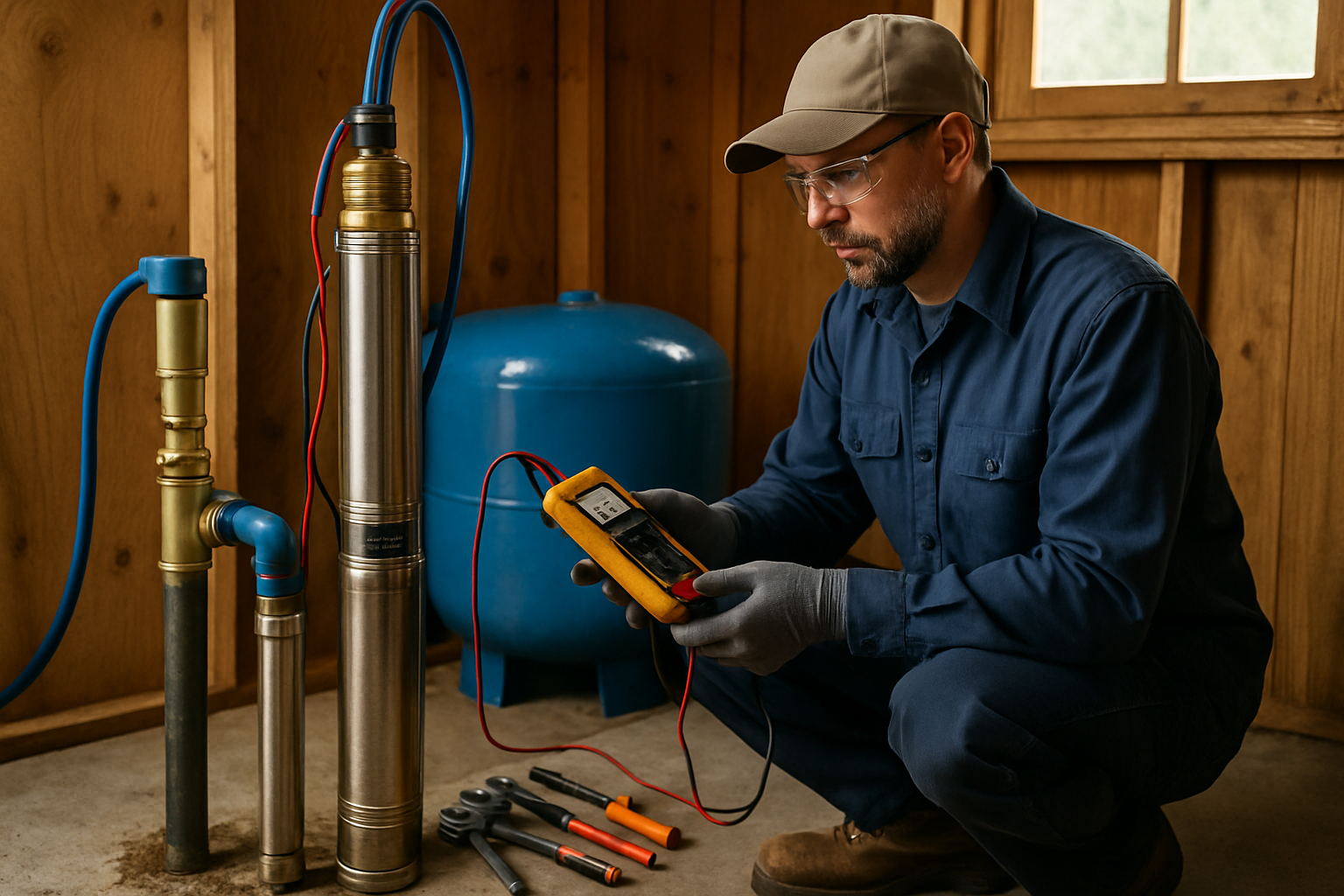
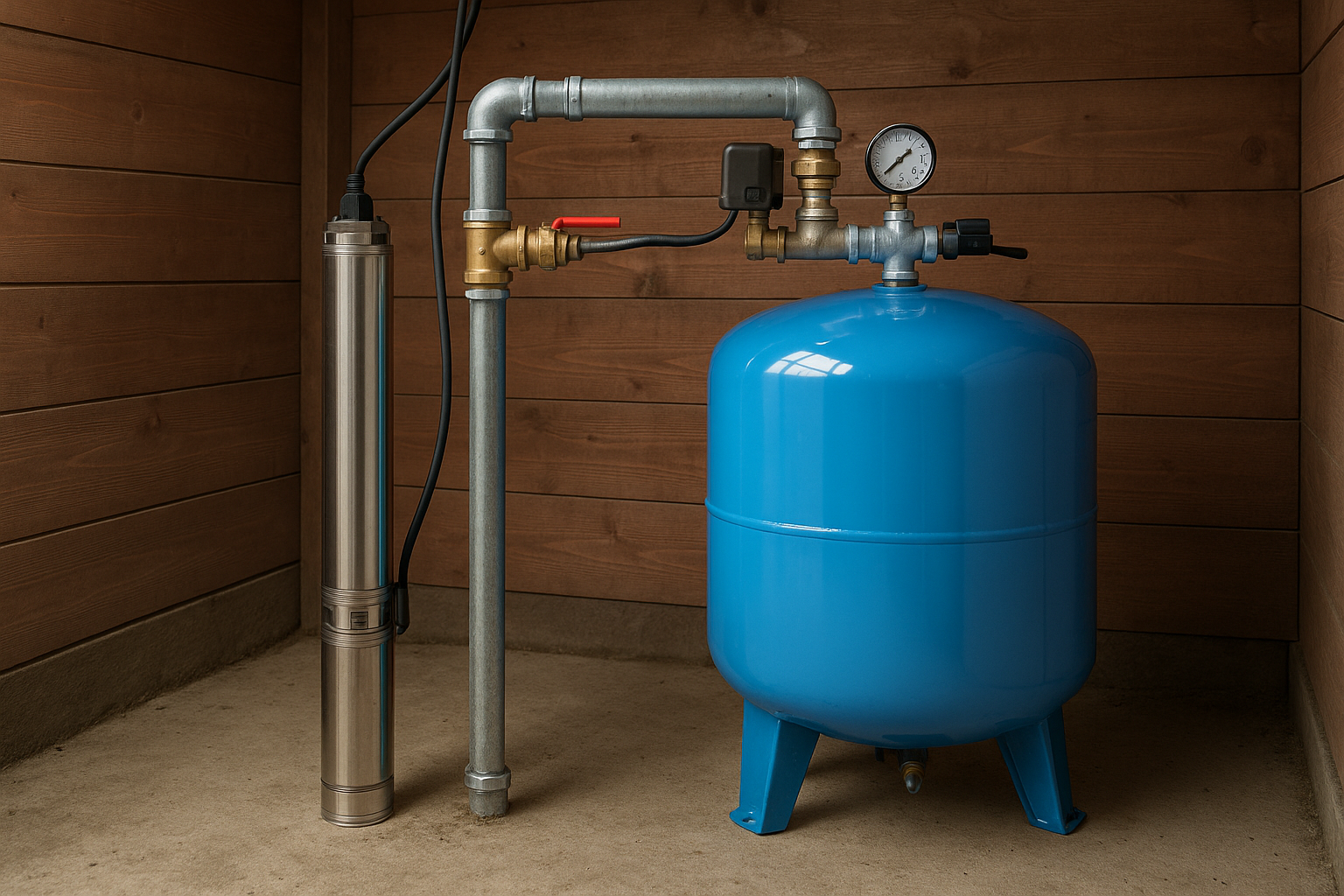
Submersible Pumps
Located underwater in the well.
Best For:
- Wells over 25 feet deep
- Most residential applications
- Deep wells (any depth)
Advantages:
- Quiet (underwater)
- Efficient (pushes, doesn't pull water)
- Self-priming
- Protected from elements
- Long life (10-15+ years)
Disadvantages:
- Harder to service (must pull from well)
- More expensive upfront
- Requires compatible casing size
Jet Pumps - Shallow Well
Located above ground, for shallow applications.
Best For:
- Wells under 25 feet deep
- Water at shallow depth
Advantages:
- Easy to service (above ground)
- Lower cost
- Simple installation
Disadvantages:
- Must stay primed
- Noisy operation
- Limited depth capacity
Jet Pumps - Deep Well
Above ground pump with jet assembly in well.
Best For:
- Wells 25-100 feet
- When submersible isn't an option
Notes:
- Uses two-pipe system
- Less common than submersible
- Easier service than submersible
Quick Comparison
| Feature | Submersible | Jet Pump |
|---|---|---|
| Depth | Any depth | Under 100 ft |
| Efficiency | Higher | Lower |
| Noise | Quiet | Audible |
| Service | Must pull pump | Accessible |
| Cost | Higher | Lower |
Flow Rate Requirements
Determining GPM Needs
Rule of thumb: 1 GPM per water fixture in home
Typical Fixture Flow:
- Shower: 2-2.5 GPM
- Faucet: 1-2 GPM
- Toilet: 3 GPM (fill)
- Dishwasher: 2 GPM
- Washing machine: 3-4 GPM
Household Size Guidelines:
| Bedrooms | Bathrooms | Recommended GPM |
|---|---|---|
| 2 | 1-2 | 6-8 GPM |
| 3 | 2 | 8-10 GPM |
| 4 | 2-3 | 10-12 GPM |
| 5+ | 3+ | 12-15 GPM |
Don't Exceed Well Yield
- Pump shouldn't pump faster than well produces
- If well yields 8 GPM, use 8 GPM pump
- Oversized pump damages well
Pump Sizing
Calculate Total Dynamic Head (TDH)
TDH determines HP needed.
TDH = Pumping level + Pressure + Friction loss
Components:
- Pumping level: Static level + drawdown + height to tank
- Pressure: PSI × 2.31 = feet of head
- Friction loss: From pipe (use tables)
HP Guidelines (Rough)
| Depth to Water | Typical HP |
|---|---|
| Under 80 ft | 1/2 HP |
| 80-150 ft | 3/4 HP |
| 150-250 ft | 1 HP |
| 250-400 ft | 1.5 HP |
| 400+ ft | 2+ HP |
Actual sizing requires pump curve analysis
Use Pump Performance Curves
- Each pump has performance curve
- Shows GPM at various head pressures
- Select pump that operates in efficient range
- Don't operate at extremes of curve
Features to Consider
2-Wire vs 3-Wire (Submersible)
- 2-Wire: Control box in motor (in well)
- 3-Wire: Control box above ground
- 3-wire easier to diagnose/repair controls
Motor Type
- Standard induction motor
- Franklin motors (quality standard)
- Variable speed (constant pressure systems)
Construction Materials
- Stainless steel impellers (most common)
- Thermoplastic impellers (budget)
- All stainless (aggressive water)
Casing Size Compatibility
- 4" well needs 4" compatible pump
- Larger casings offer more options
- Check pump diameter vs casing ID
Frequently Asked Questions
How do I know what size well pump I need?
Based on well depth, water level, required GPM, and pressure. Calculate TDH and select pump from performance curves.
Submersible or jet pump?
Submersible for wells over 25 feet. Jet pump for shallow wells. Submersible is standard for most residential wells.
Can I install a pump myself?
Surface jet pump: possible for handy homeowners. Submersible: typically requires professional equipment and knowledge.
How long do well pumps last?
Submersible: 10-15+ years. Jet pump: 8-15 years. Varies by quality, water conditions, and proper sizing.
What if I'm not sure about my well specs?
Have a professional assess your well. They can measure water level, test yield, and recommend proper sizing.
Need Pump Selection Help?
We properly size and install pumps matched to your well conditions.
Related Articles
Continue learning about well maintenance and troubleshooting