Submersible Well Pump vs Jet Pump: Which Is Better?
📋 In This Guide
How Each Pump Type Works
Submersible Pump
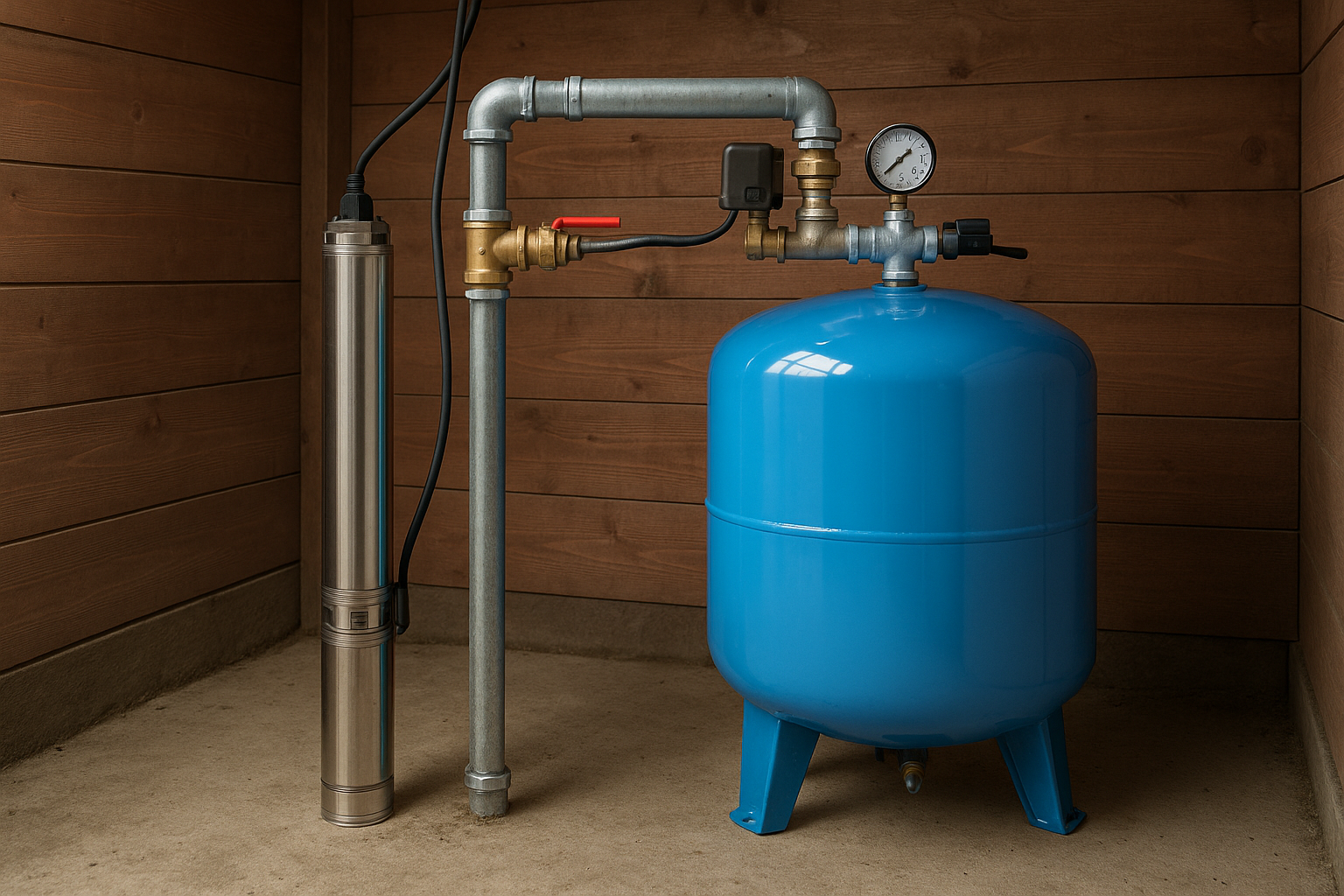
A submersible pump sits inside the well, underwater. The motor and pump are sealed in one unit. It pushes water up from below.
- Located deep in the well, below water level
- Motor is cooled by surrounding water
- Multiple impellers stack to push water up
- Works at any depth
Jet Pump
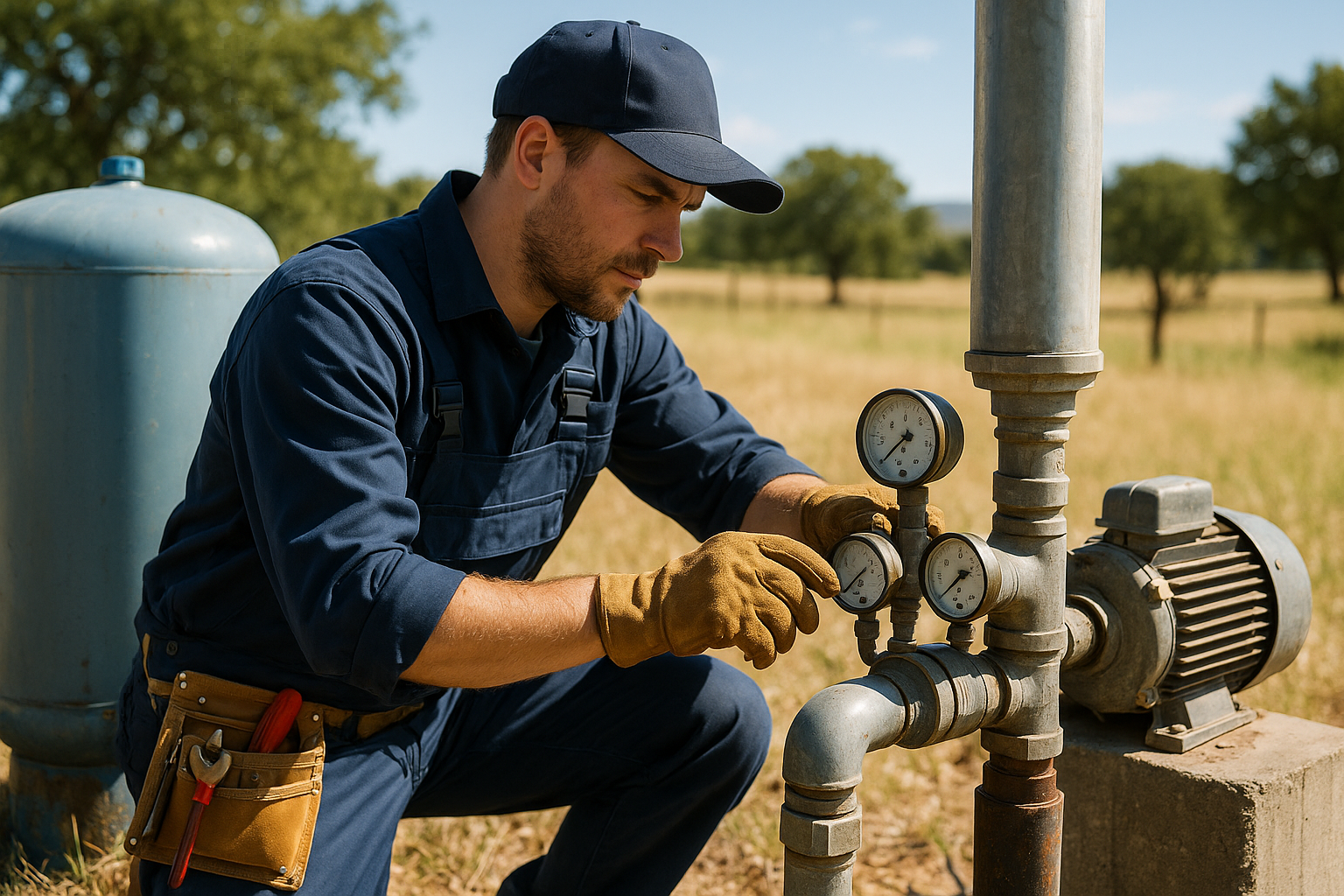
A jet pump sits above ground and pulls (creates suction to draw) water up. Uses a venturi effect in a jet assembly to create suction.
- Located in pump house or basement
- Motor is air-cooled
- Uses impeller + jet assembly
- Limited depth due to suction physics
Shallow Well Jet Pump
Single pipe system for wells under 25 feet. Jet assembly is built into pump housing.
Deep Well Jet Pump
Two-pipe system for wells 25-110 feet. Jet assembly goes down into well.
Side-by-Side Comparison
| Feature | Submersible | Jet Pump |
|---|---|---|
| Location | In well, underwater | Above ground |
| Max Depth | 400+ feet | 25-110 feet |
| Efficiency | 65-80% | 25-50% |
| Noise | Silent (underwater) | Audible |
| Lifespan | 10-15 years | 8-12 years |
| Maintenance Access | Must pull from well | Easy (above ground) |
| Self-Priming | Yes | Needs priming |
| Freeze Risk | None (below frost) | Possible (above ground) |
Pros and Cons
Submersible Pump Pros
- ✅ Works at any depth
- ✅ Much more efficient (saves electricity)
- ✅ Completely silent
- ✅ No priming needed
- ✅ No freeze protection needed
- ✅ Higher flow rates at depth
- ✅ Longer lifespan
- ✅ Can't lose prime
Submersible Pump Cons
- ❌ More expensive to install/repair (must pull from well)
- ❌ Can't easily inspect or service
- ❌ Requires specialized equipment for service
Jet Pump Pros
- ✅ Easy to access for repairs
- ✅ Simpler to diagnose problems
- ✅ Lower initial cost for shallow wells
- ✅ Homeowner can often do basic repairs
Jet Pump Cons
- ❌ Limited to shallow depths
- ❌ Much less efficient (higher electric bills)
- ❌ Audible noise when running
- ❌ Can lose prime
- ❌ Must be protected from freezing
- ❌ Lower flow rates, especially at depth
Depth Considerations
Physics of Suction
At sea level, atmospheric pressure can only push water up about 34 feet theoretically—practically about 25 feet for a pump. This is why jet pumps have depth limits.
Depth Recommendations
| Well Depth | Recommended Pump |
|---|---|
| 0-25 feet | Shallow jet pump OR submersible |
| 25-100 feet | Submersible strongly preferred |
| 100+ feet | Submersible only |
Note: Even for shallow wells, submersible pumps are often the better long-term choice due to efficiency and reliability.
Cost Comparison
Initial Installation
| Pump Type | Equipment | Installed Cost |
|---|---|---|
| Shallow jet pump | $300-$600 | $500-$1,200 |
| Deep well jet pump | $500-$1,000 | $800-$2,000 |
| Submersible (shallow) | $400-$800 | $1,000-$2,000 |
| Submersible (deep) | $600-$1,500 | $2,000-$4,500 |
Operating Costs
Submersible pumps are 50-100% more efficient. For a pump running 3 hours/day:
- Jet pump (1 HP): ~$40-60/month electricity
- Submersible (3/4 HP): ~$20-35/month electricity
- Annual savings: $150-300 with submersible
10-Year Total Cost
- Jet pump: $1,500 install + $4,800 electric + $500 maintenance = ~$6,800
- Submersible: $2,500 install + $2,400 electric + $300 maintenance = ~$5,200
Despite higher upfront cost, submersible pumps often cost less over time.
Which Should You Choose?
Choose Submersible When:
- Well is over 25 feet deep
- You want the most efficient option
- Noise is a concern
- You want "set it and forget it" reliability
- Freeze protection is difficult
Choose Jet Pump When:
- Well is under 25 feet deep
- Easy maintenance access is priority
- You're comfortable with DIY repairs
- Budget is very tight (short-term)
- Well casing is too small for submersible
Our Recommendation
For most San Diego County wells (typically 100-400 feet deep), submersible pumps are the clear choice. They're more efficient, quieter, and better suited to our deeper water tables.
Frequently Asked Questions
Which is better, submersible or jet pump?
Submersible pumps are better for most applications—more efficient, quieter, longer-lasting. Jet pumps only make sense for very shallow wells under 25 feet.
What is the maximum depth for a jet pump?
Shallow jet pumps: 25 feet. Deep well jet pumps: theoretically 90-110 feet, but efficiency drops significantly. Submersible pumps are recommended beyond 25 feet.
Why are submersible pumps more efficient?
They push water up rather than pull it. Pushing is mechanically more efficient than creating suction. Also, the motor is cooled by water, reducing heat loss.
Can I replace a jet pump with a submersible?
Usually yes, and often recommended. Check that well casing diameter accommodates the submersible pump (typically needs 4"+ casing).
How long does each pump type last?
Submersible: 10-15 years average. Jet pump: 8-12 years. Both can last longer with good water quality and proper sizing.
Need Help Choosing the Right Pump?
We'll evaluate your well and recommend the best pump type and size for your specific situation.
Related Articles
Continue learning about well maintenance and troubleshooting