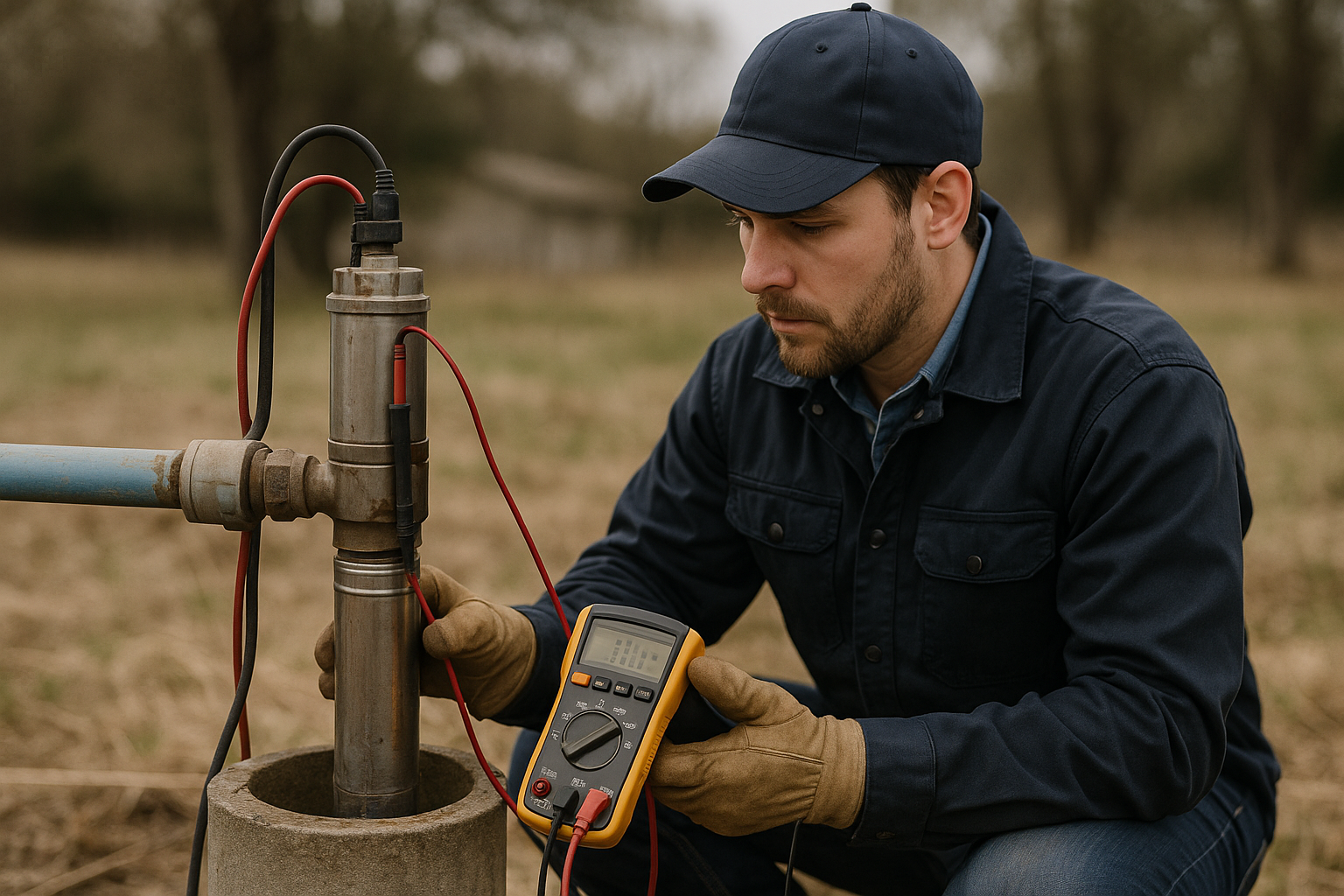
Well Pump Wiring Problems: Troubleshooting Guide
📋 In This Guide
Safety First
Critical Rules
- Turn off breaker before any work
- Verify power is off with meter
- 240V can kill—respect it
- Capacitors hold charge even when power is off
- Never work alone on electrical systems
When to Call Professional
- Not comfortable with electrical work
- Problem persists after basic checks
- Need to test motor or wiring in well
- Breaker keeps tripping
- Any signs of burning or damage
System Basics
2-Wire vs 3-Wire Systems
| Feature | 2-Wire | 3-Wire |
|---|---|---|
| Control box | Built into motor (in well) | Above ground (accessible) |
| Capacitor location | In motor | In control box |
| Diagnose/repair | Harder (pull pump) | Easier (box accessible) |
| Typical HP | 1/2 HP and under | 3/4 HP and above |
Key Components
- Breaker: Provides power, overcurrent protection
- Pressure switch: Turns pump on/off based on pressure
- Control box (3-wire): Contains capacitors and relay
- Motor: Powers the pump (down in well)
- Wiring: Connects all components
Common Problems
Quick Diagnostic
| Symptom | Likely Cause |
|---|---|
| No power at all | Tripped breaker, bad pressure switch |
| Breaker trips immediately | Short circuit, ground fault |
| Breaker trips after running | Motor overload, bad capacitor |
| Pump hums but won't start | Bad capacitor, locked rotor |
| Intermittent operation | Loose connection, failing capacitor |
| Pump runs constantly | Pressure switch, leak, low water |
Tripping Breakers
Trips Immediately
- Short circuit in wiring
- Ground fault (water in connections)
- Failed motor windings
- Damaged wire insulation
Trips After Running
- Motor overheating (working too hard)
- Bad start capacitor (motor labors on startup)
- Bad run capacitor (motor overheats)
- Low voltage (check with meter)
- Undersized breaker for load
Checking Steps
- Check breaker size matches pump requirements
- Check voltage at breaker (should be 230-240V)
- Inspect wiring for damage, burn marks
- Test capacitor (if accessible)
- Measure motor amp draw (professional)
Control Box Issues (3-Wire)
Control Box Components
- Start capacitor: Provides extra torque for startup
- Run capacitor: Improves efficiency during running
- Relay: Disconnects start capacitor after startup
- Overload: Protects motor from overheating
Signs of Failure
- Pump hums but won't start (capacitor)
- Clicking sound but no start (relay)
- Capacitor bulging or leaking
- Burn marks inside box
- Motor starts slow or weak
Testing Capacitors
- Turn off power, verify with meter
- Discharge capacitor (use resistor)
- Remove wires, note positions
- Set multimeter to capacitance (µF)
- Compare reading to rated value (within 10%)
- Replace if out of spec
Replacement Cost
- Capacitor: $20-$50
- Control box: $100-$300
- Professional replacement: $150-$400
Pressure Switch Problems
How It Works
- Senses water pressure
- Opens circuit when pressure reaches cut-off (50-60 PSI)
- Closes circuit when pressure drops to cut-in (30-40 PSI)
- Mechanical contacts do the switching
Common Issues
- Pitted contacts: Arcing wears contacts over time
- Stuck contacts: Won't open or close properly
- Wrong settings: Cut-in/out not matching tank
- Debris: Clogged sensing port
Checking Pressure Switch
- Turn off power
- Remove cover
- Inspect contacts for burning/pitting
- Check for loose wires
- Clean contacts gently if needed
- Replace if badly pitted ($25-$75)
Wiring Faults
Common Locations
- At pressure switch (vibration loosens)
- At control box connections
- Splice in well (water damage)
- Where wire exits conduit
Signs of Wiring Problems
- Intermittent operation
- Voltage drop under load
- Burn marks at connections
- Melted insulation
- Tripped GFI if present
Checking
- Inspect visible connections
- Look for discoloration, melting
- Tighten loose connections (power off)
- Measure resistance (professional)
- Megger test insulation (professional)
Wire in Well
- Hardest to diagnose
- May require pulling pump to inspect
- Water infiltration damages splices
- Use proper submersible wire splices
We service all major pump brands including Franklin Electric, Grundfos, Goulds (Xylem), and Sta-Rite (Pentair). Our trucks carry common parts and components for same-day repairs.
Frequently Asked Questions
Why does my well pump keep tripping the breaker?
Common causes: failed capacitor, worn motor, ground fault, or undersized breaker. Have a professional check amperage draw.
How do I know if my control box is bad?
Signs: pump won't start, damaged capacitor, clicking but no run, intermittent operation. Control boxes are easy to replace on 3-wire systems.
Can I replace a capacitor myself?
If comfortable with electrical work and proper safety, yes. Match µF and voltage ratings exactly. Discharge old capacitor first.
Why does my pump hum but not start?
Usually a bad start capacitor (provides startup torque) or a locked/seized pump motor.
How long do well pump capacitors last?
Typically 5-15 years. Heat and frequent cycling shorten life. Replace if pump is slow to start or trips breaker.
Electrical Issues?
We diagnose and repair well pump electrical problems safely and efficiently.
Related Articles
Continue learning about well maintenance and troubleshooting