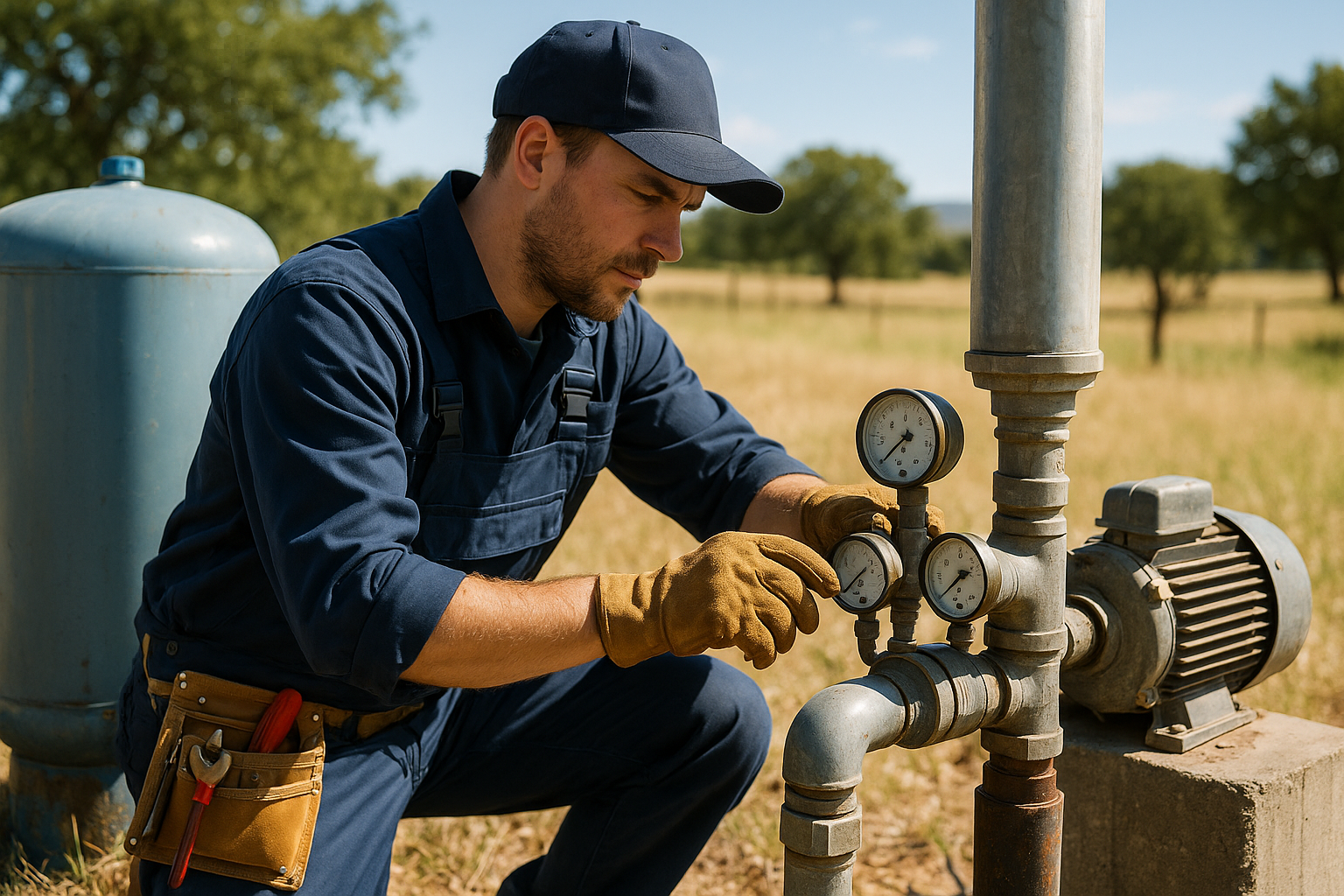
Signs Your Well Pressure Tank Is Waterlogged
Experiencing this problem right now? Call us for immediate assistance.
A waterlogged pressure tank is one of the most common well system problems. When the internal bladder fails, the tank fills completely with water, losing its ability to store pressure. The result: your pump runs constantly, cycles rapidly, and wears out prematurely. Fortunately, this problem is straightforward to diagnose and fix.
Common Causes
- Bladder Rupture: The rubber bladder inside the tank can develop holes or tears from age, water quality issues, or repeated cycling.
- Air Leak at Valve: The Schrader valve (like a tire valve) on top can leak, slowly allowing all the air to escape.
- Osmosis Through Bladder: Over time, small amounts of air can migrate through the bladder material, gradually reducing the air charge.
- Incorrect Initial Charge: If the tank was never properly charged when installed, or charged to the wrong pressure, it may not function correctly.
- Oversized or Undersized Tank: A tank that's too small for the system demand will cycle too frequently and fail prematurely.
Warning Signs to Watch For
- Pump turns on and off rapidly (every few seconds)
- Pressure fluctuates widely during water use
- Tank feels heavy and solid all the way around
- Water sprays from the air valve when pressed
- Pump runs frequently even with minimal water use
- Higher than normal electric bills
How to Fix This Problem
1. Test the Air Valve
With the pump running and tank pressurized, briefly press the air valve on top of the tank. Air should come out. If water sprays out, the bladder has failed.
2. Tap Test the Tank
Knock on the tank from top to bottom. A healthy tank should sound hollow at the top (air) and solid at the bottom (water). If it sounds solid throughout, it's waterlogged.
3. Check Tank Air Pressure
Turn off the pump and drain the tank completely by opening a faucet. Use a tire gauge to check the air pressure. It should read 2 PSI below your cut-in pressure.
4. Recharge or Replace
If the bladder is intact, you may be able to recharge the air to the proper pressure. If the bladder has failed, the tank must be replaced—bladders cannot be repaired.
5. Size Check
When replacing, consider upgrading to a larger tank. Bigger tanks mean fewer pump cycles and longer pump life.
When to Call a Professional
While some minor issues can be addressed by homeowners, well system problems often require professional diagnosis. Call Southern California Well Service if:
- You're not comfortable working with electrical systems
- The problem persists after basic troubleshooting
- You notice multiple symptoms at once
- Your well is over 10 years old and hasn't been serviced
We offer same-day emergency service throughout San Diego, Riverside, and San Bernardino counties.
We install Well-X-Trol (Amtrol) and Flexcon pressure tanks — industry-leading bladder tanks that outlast standard diaphragm models. Proper sizing with a quality tank can double your pump's lifespan.
Frequently Asked Questions
Can you fix a waterlogged pressure tank?
If the bladder is intact and only the air has leaked out, you can recharge it. If the bladder has ruptured (water comes from the air valve), the tank must be replaced.
How long do well pressure tanks last?
Quality pressure tanks typically last 10-15 years. Factors affecting lifespan include water quality, cycling frequency, and initial installation quality.
How much does it cost to replace a pressure tank?
Including installation, expect to pay $300-800 depending on tank size. Most residential applications use 20-40 gallon tanks.
What PSI should my pressure tank be?
The air charge should be 2 PSI below your cut-in pressure. For a 30/50 system (cuts in at 30), set the tank at 28 PSI. For 40/60, use 38 PSI.
Need Help Now?
Southern California Well Service provides expert well pump repair and diagnostics. We've been solving well problems across Southern California since 2006.
Call (760) 440-8520 for ServiceRelated Articles
Continue learning about well maintenance and troubleshooting