Well Water Filter Maintenance: Change Schedules and Best Practices
Water filtration protects your family's health and extends the life of your appliances—but only if filters are properly maintained. This guide covers change schedules for every type of well water filter, from basic sediment cartridges to UV sterilizers and specialty treatment systems.
Need professional help? Our licensed well technicians are here for you.
Call (760) 440-8520Sediment Filter Maintenance
Sediment filters are your first line of defense, removing sand, silt, and particulates that would otherwise clog downstream filters and damage appliances. They're also the filters that need the most frequent attention.
Change Frequency: Most sediment filters need replacement every 1-6 months, depending on your water quality. Wells with sandy or silty water may need monthly changes, while clean wells might go 6 months. Start by checking monthly until you establish your well's pattern.
Micron Ratings Matter: A 20-micron filter captures larger particles and lasts longer; a 5-micron filter catches finer sediment but clogs faster. Many systems use a staged approach: 20-micron pre-filter followed by 5-micron polishing. Replace the coarse filter more often to protect the fine one.
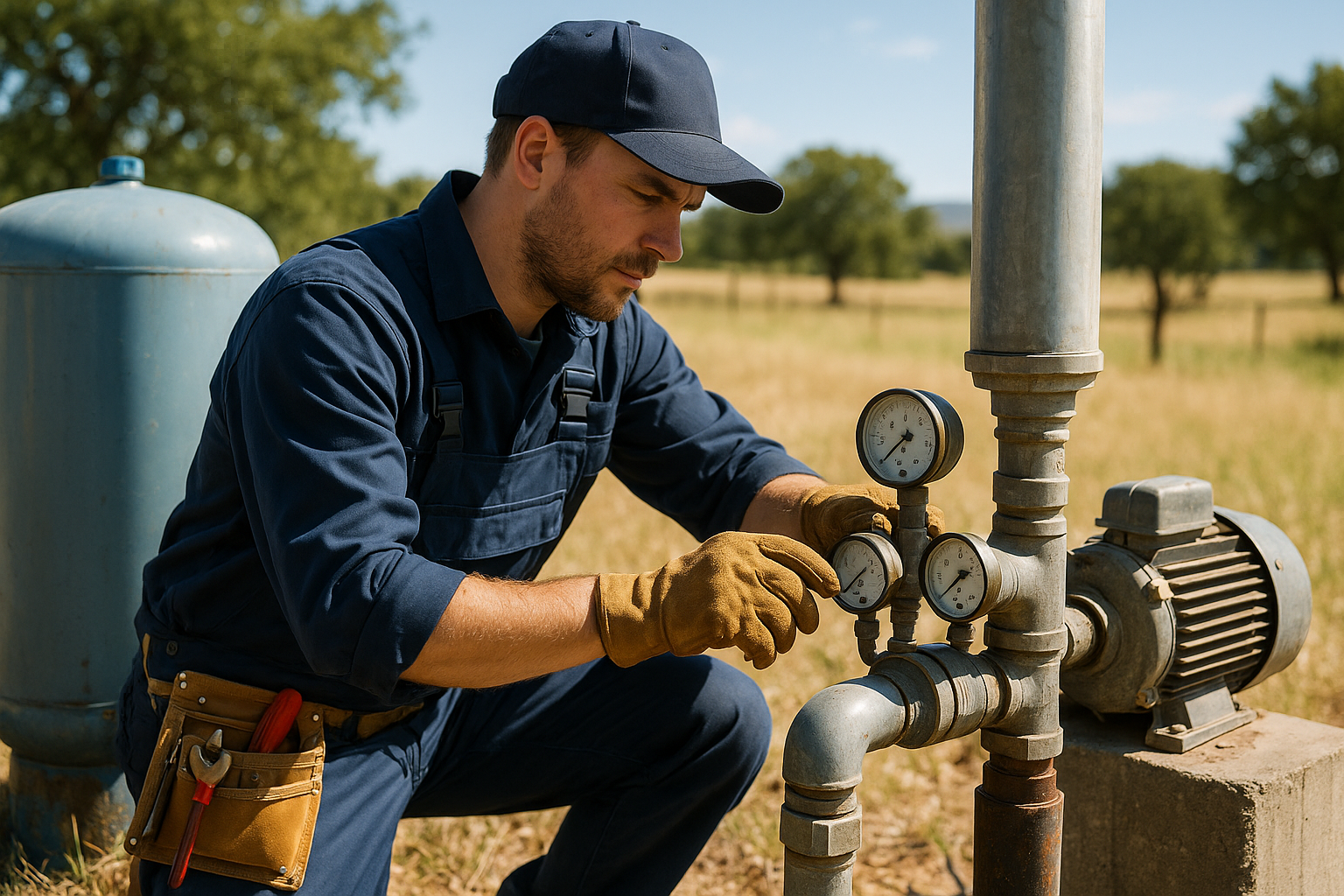
How to Check: Install a pressure gauge before and after your filter housing. A pressure drop of 5-10 PSI indicates it's time to change. You can also simply unscrew the housing and visually inspect—a new white filter that's now brown or gray is ready for replacement.
Carbon Filter Care
Carbon filters remove chlorine, pesticides, herbicides, and organic compounds that cause taste and odor problems. They work by adsorption—contaminants stick to the carbon surface until it's saturated.
Change Schedule: Carbon filters typically last 6-12 months or are rated by gallon capacity (often 10,000-20,000 gallons). A family of four using 100 gallons daily would replace a 10,000-gallon filter every 3-4 months. Track your usage if your filter has a gallon rating.
Signs of Exhaustion: When carbon is spent, taste and odor problems return. If you notice chlorine taste, musty smell, or other issues the filter was solving, it's time to replace even if the calendar says you have time left. Water conditions vary and can exhaust filters faster than expected.
GAC vs Carbon Block: Granular Activated Carbon (GAC) filters are loose carbon granules—they're cheaper but can channel (water finding easy paths through) and may harbor bacteria. Carbon block filters are compressed carbon that provides more consistent filtration. Block filters can't be backwashed; GAC filters in some whole-house systems can be backwashed to extend life.
Specialty Filter Maintenance
Many well owners have additional treatment systems beyond basic sediment and carbon. Each has its own maintenance requirements.
Iron Filters: Air-injection or chemical-feed iron filters need regular maintenance. Air-injection systems require annual check of the air injector and venturi. Chemical feed systems (chlorine or hydrogen peroxide) need solution refills every few weeks to months. All iron filters need their media bed backwashed regularly—typically daily or every few days on a timer. Check that backwash is occurring at the scheduled time.
Acid Neutralizers: Calcite (calcium carbite) neutralizers raise pH to prevent corrosion. The calcite media dissolves over time and needs topping off every 6-12 months. Check media level by opening the tank and looking inside—it should be at least half full. Corosex media (for very low pH) dissolves faster than calcite and may need more frequent refills.
UV Sterilizers: UV bulbs lose intensity over time even when they still "light up." Replace UV bulbs annually regardless of appearance. The quartz sleeve protecting the bulb should be cleaned every 6-12 months (gently with a soft cloth and vinegar) and replaced if cracked or clouded. Always turn off power before servicing UV systems.
Reverse Osmosis: RO systems have multiple filters: sediment pre-filter (6-12 months), carbon pre-filter (6-12 months), RO membrane (2-3 years), and post-filter (12 months). Follow manufacturer schedules. RO membranes last longer with good pre-filtration protecting them.
Filter System Best Practices
Good habits make filter maintenance easier and more effective.
- Keep Spares On Hand: Stock at least one replacement of each filter type you use. When you install a new filter, order its replacement immediately. This prevents gaps in filtration when life gets busy.
- Label Change Dates: Write the installation date on each filter housing or filter itself with permanent marker. This removes guesswork about when to change.
- Use Proper Tools: Filter housing wrenches make cartridge changes much easier. They cost $10-15 and save skinned knuckles. Keep o-ring lubricant on hand too.
- Sanitize Housings: When changing filters, wipe the inside of the housing and apply a thin layer of food-grade silicone lubricant to the o-ring. This ensures a good seal and makes the next change easier.
- Track Water Usage: If your filters are rated by gallons, note your water meter reading when you install new filters. This helps you predict change intervals more accurately.
We service all major pump brands including Franklin Electric, Grundfos, Goulds (Xylem), and Sta-Rite (Pentair). Our trucks carry common parts and components for same-day repairs.
Frequently Asked Questions
How do I know when my well water filter needs changing?
Watch for these signs: decreased water pressure at faucets, visible discoloration of the filter cartridge (check by unscrewing the housing), return of taste or odor issues the filter was addressing, or hitting your scheduled change interval. For whole-house sediment filters, a pressure drop of 5+ PSI indicates a clogged filter. Some systems have pressure gauges before and after the filter to make monitoring easy.
Can I clean and reuse sediment filters?
Pleated sediment filters can often be rinsed and reused 2-3 times before replacement, though capacity decreases with each cleaning. Wound string or spun poly filters cannot be effectively cleaned and should be replaced. Even reusable filters eventually need replacement when cleaning no longer restores flow. Given the low cost of most sediment filters ($5-20), replacement is usually more practical than repeated cleaning.
What happens if I don't change my water filter on time?
A clogged filter causes reduced water pressure and flow throughout your home. More importantly, an overloaded filter can release trapped contaminants back into your water or allow unfiltered water to bypass. Carbon filters become breeding grounds for bacteria once exhausted. In extreme cases, excessive pressure drop from clogged filters can damage pumps or plumbing. Regular replacement ensures your filter actually protects your water quality.
Get Expert Well Service
Southern California Well Service has served San Diego, Riverside, and San Bernardino counties for decades. Licensed C-57 contractor.
Call (760) 440-8520Available 24/7 for emergencies
Related Articles
Continue learning about well maintenance and troubleshooting