What Is Well Yield? Understanding GPM & Recovery Rate
📋 In This Guide
What Is Well Yield?
Definition
Well yield is the sustainable rate at which water can be pumped from a well, typically measured in gallons per minute (GPM) or gallons per hour (GPH).
Key Concepts
- Yield is NOT pump capacity — it's what the aquifer provides
- A bigger pump won't create more water — just pumps faster
- Yield can vary — seasonally, during drought, or over time
What Affects Yield
- Aquifer characteristics (rock type, porosity)
- Well depth and construction
- Screen/perforation design
- Water table level
- Regional groundwater conditions
What's a Good Well Yield?
Residential Guidelines
| Yield (GPM) | Rating | Suitability |
|---|---|---|
| Less than 1 | Very Low | Challenging—needs storage system |
| 1-3 | Low | Works with storage, careful management |
| 3-5 | Marginal | Adequate for small household |
| 5-10 | Adequate | Good for most homes |
| 10-20 | Good | Comfortable for larger homes |
| 20+ | Excellent | Ample for any residential use |
Water Usage Context
Average home uses 100-300 gallons per day. Peak demand (multiple showers, laundry, etc.) may require 10-15 GPM briefly. A 5 GPM well produces 7,200 gallons per day—plenty, but not all at once.
Recovery Rate Explained
What Is Recovery Rate?
Recovery rate is how quickly the water level in your well rises after pumping. It indicates how fast the aquifer replenishes your well.
Why It Matters
- Well may produce 10 GPM initially, but only sustain 5 GPM
- Continuous pumping draws down water level
- Pump must match sustainable yield, not peak rate
Pump Test Reveals True Yield
A proper pump test runs for hours, measuring both:
- Drawdown: How far water level drops during pumping
- Recovery: How fast it comes back after pumping stops
How to Test Well Yield
Professional Pump Test
- Pump at set rate for 4-24 hours
- Measure water level throughout
- Calculate sustainable yield
- Cost: $300-$800
Simple DIY Test (Rough Estimate)
- Run garden hose into 5-gallon bucket
- Time how long to fill bucket
- Calculate: 5 gallons ÷ seconds × 60 = GPM
- Note: This only measures pump output, not sustainable yield
Recovery Test
- Run water until pump can't maintain pressure
- Stop pumping
- Time how long until well recovers
- Faster recovery = better sustained yield
Solutions for Low-Yield Wells
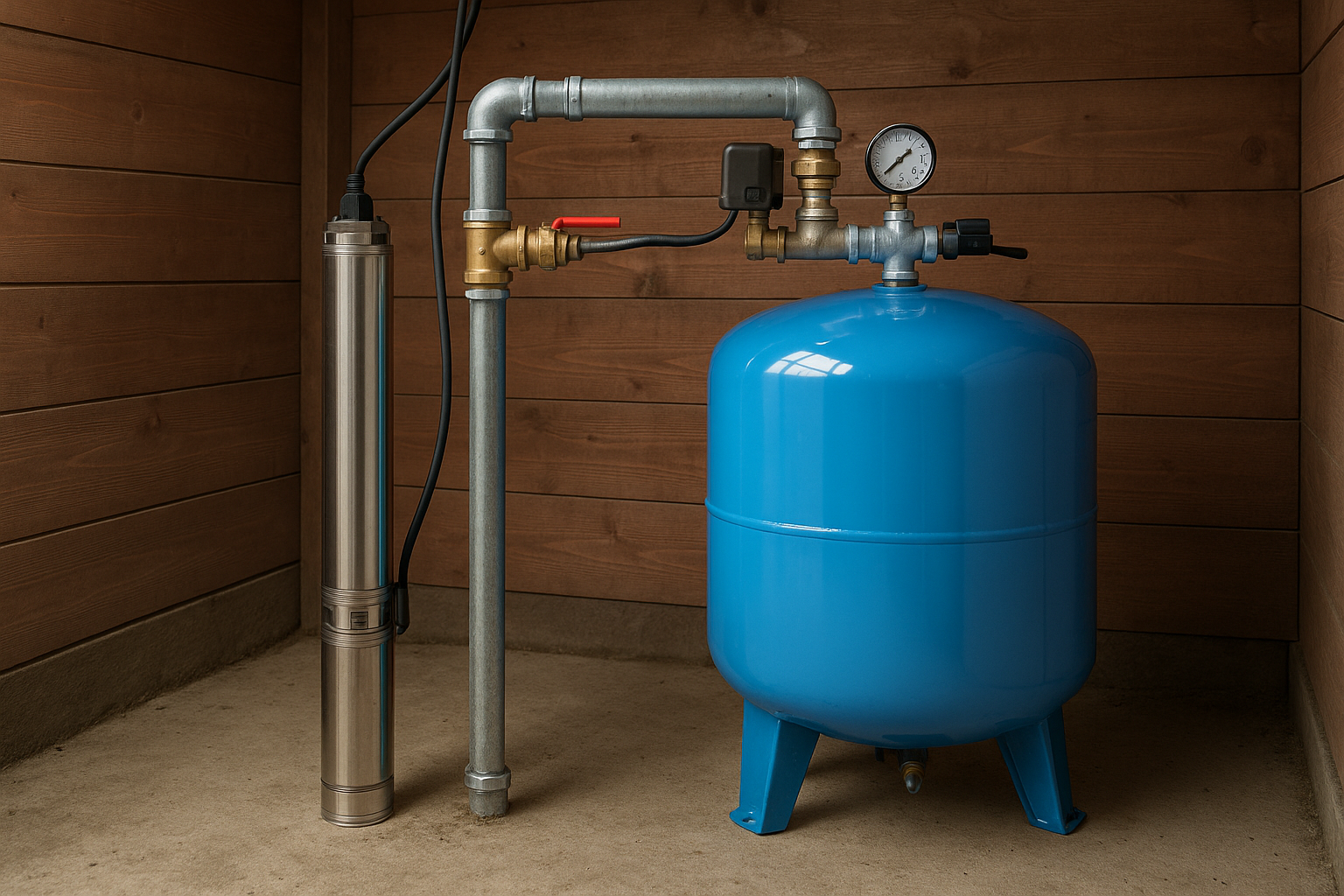
Storage Tank System
Most effective solution for low-yield wells:
- Large storage tank (500-2,500 gallons)
- Well pump slowly fills tank over time
- House draws from tank via booster pump
- Even 1 GPM = 1,440 gallons/day
- Cost: $3,000-$10,000
Cistern System
For very low yield or unreliable wells:
- Large underground or above-ground tank
- Can be supplemented with water delivery
- Cost: $5,000-$15,000
Water Conservation
- Low-flow fixtures
- Efficient appliances
- Drip irrigation instead of spray
- Stagger high-use activities
Can You Improve Well Yield?
Sometimes Yes
- Hydrofracturing: High-pressure water opens fractures in rock ($3,000-$8,000)
- Well rehabilitation: Clean clogged screens, remove sediment ($1,000-$5,000)
- Deepen well: Reach additional water-bearing zones ($5,000-$15,000)
Often No
- If aquifer is inherently low-producing
- If regional water table has declined
- In these cases, storage systems are the answer
Important Note
A bigger pump will NOT improve yield. It will just pump your existing water faster—and may pump the well dry.
We service all major pump brands including Franklin Electric, Grundfos, Goulds (Xylem), and Sta-Rite (Pentair). Our trucks carry common parts and components for same-day repairs.
Frequently Asked Questions
What is a good well yield?
For residential, 5 GPM is minimum adequate, 8-12 GPM is good, 15+ GPM is excellent. Low-yield wells can work with storage systems.
What does well yield mean?
The sustainable rate at which water can be pumped from a well, measured in gallons per minute (GPM). It's determined by the aquifer, not the pump.
Can I live on a 1 GPM well?
Yes, with a storage tank system. 1 GPM = 1,440 gallons/day. A 500-gallon tank provides adequate reserve for normal daily use.
Why did my well yield decrease?
Possible causes: drought/seasonal variation, clogged well screen, regional water table decline, or nearby pumping. A pump test and inspection can determine the cause.
Does a bigger pump increase yield?
No—yield is what the aquifer provides. A bigger pump just extracts water faster, which can actually cause problems by outrunning the aquifer.
Need to Know Your Well's Yield?
We can test your well's production and recommend solutions for low-yield situations.
Related Articles
Continue learning about well maintenance and troubleshooting