After Wildfire Well Safety: Post-Fire Inspection and Water Testing Guide
Wildfires have passed through your area—critical steps to assess well safety, potential contamination risks, and restoring safe water supply after fire damage.
📋 In This Guide
Safety First: Before Approaching Your Well
Wildfires leave hazardous conditions that can injure or kill even after the fire passes. Before inspecting your well:
- Wait for official clearance: Don't enter a fire zone until authorities declare it safe. CAL FIRE and local fire departments control access for good reason — hot spots can reignite, trees can fall without warning, and the ground itself may be unstable.
- Watch for downed power lines: Particularly dangerous near wells — the 240V line feeding your pump may be on the ground. Assume all downed lines are live. Contact SDG&E (San Diego) or SCE (Riverside/San Bernardino) before approaching.
- Wear respiratory protection: Post-fire air quality is hazardous. Ash contains heavy metals, silica, and chemicals from burned structures. An N95 mask at minimum — P100 respirator is better.
- Wear appropriate footwear: Boots with thick soles. Ash beds can hide hot coals, nails from burned structures, and broken glass.
- Stop all water use until testing is complete. Do not drink, cook with, or bathe in well water until you have test results confirming safety. Use bottled water for everything.
Visual Inspection: What to Check and What Damage Looks Like
Once it's safe to approach, systematically inspect every above-ground well component. Take photos of all damage for insurance claims — homeowner's insurance often covers fire damage to well systems.
Wellhead and Cap
- Melting or warping: PVC well caps melt at around 350°F — radiant heat from a nearby fire can damage them without direct flame contact. If the cap is deformed, debris and contaminants may have entered the well.
- Seal integrity: Check the rubber gasket inside the cap. Heat degrades rubber, potentially allowing insects, ash, and surface water to enter the well. A compromised seal costs $75-$200 to replace — critical for preventing contamination.
- Scorching: Black soot or charring on the wellhead indicates intense heat exposure. Even if components look intact, internal damage is possible.
Electrical Components
- Wiring and conduit: Melted wire insulation is an immediate safety hazard and fire risk. Do NOT attempt to power the pump if any wiring damage is visible. An electrician must inspect and repair before pump operation. Cost: $200-$800 for rewiring.
- Control box: The pump control box (for submersible pumps) is usually mounted near the wellhead or in the pump house. Check for heat damage, melted components, or water intrusion from fire suppression. Replacement: $150-$400.
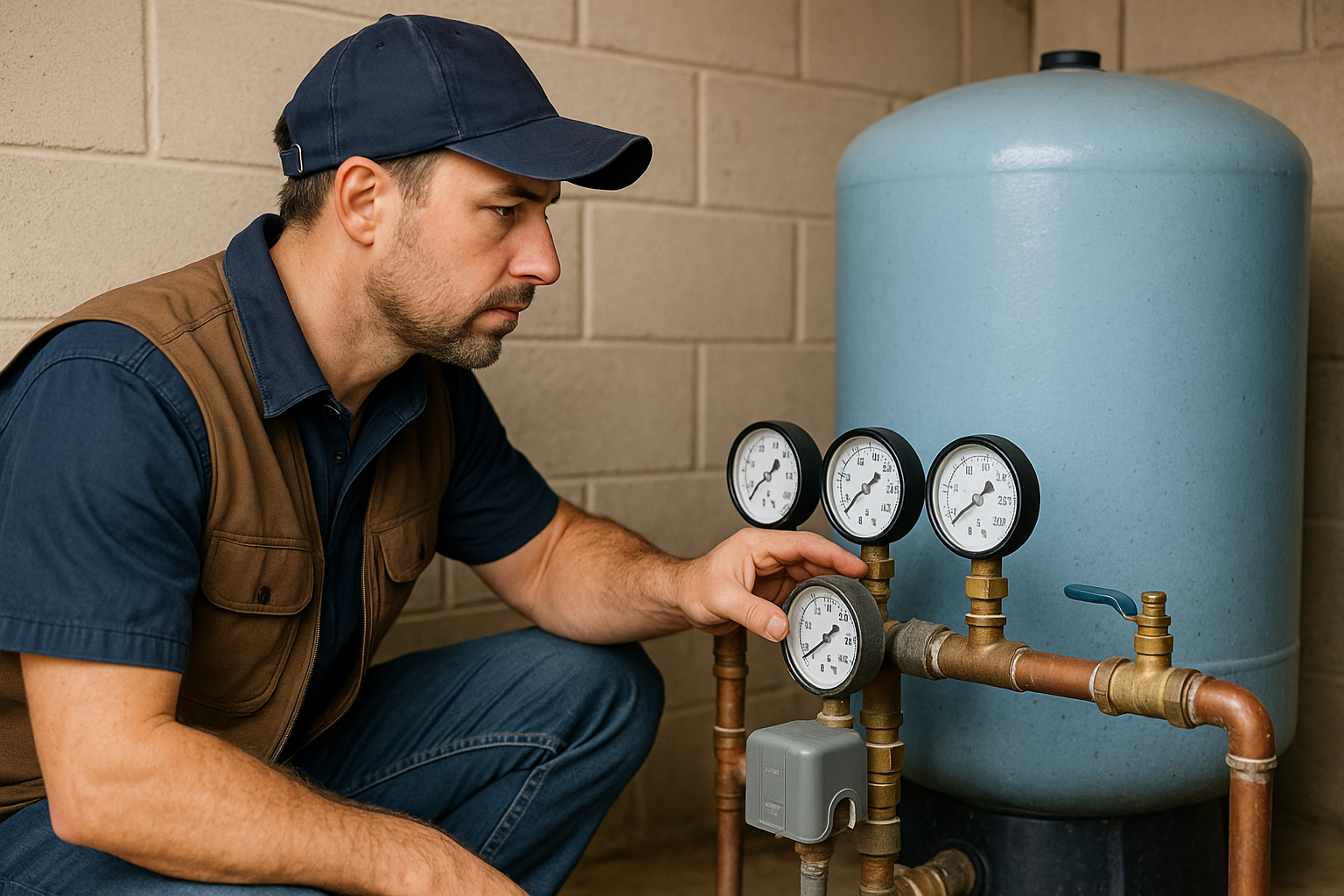
- Pressure switch: Plastic components on pressure switches melt easily. If the switch housing is deformed, replace before operating. Cost: $75-$200 installed.
Pressure Tank
- Paint scorching or blistering: Indicates intense heat exposure. The internal bladder (rubber) may be damaged even if the steel exterior looks okay. Test by checking air pressure at the Schrader valve — if the bladder has failed, you'll get water instead of air.
- Melted fittings: Plastic drain valves and PVC connections on pressure tanks melt at relatively low temperatures. Replace any deformed fittings before operating. Pressure tank replacement: $400-$1,200 installed.
Pump House / Enclosure
- Structural damage: Wooden pump houses obviously burn. Even concrete block houses can sustain damage from roof collapse. Document everything for insurance.
- Equipment inside: Treatment systems, water softeners, and filtration equipment may be heat-damaged. Carbon filter media can ignite. Check all equipment carefully before restoring power.
Piping
- PVC and CPVC pipe: These plastics melt at 150-200°F and can release toxic chemicals into the water supply. Any melted, deformed, or discolored PVC must be replaced — do not flush it and hope for the best. The chemicals leached from heat-damaged PVC include benzene and vinyl chloride (both carcinogens).
- Copper pipe: More heat-resistant but can develop pinhole leaks from thermal stress. Check for drips at all joints and fittings.
Water Testing After Wildfire: What to Test For
Standard bacteria testing is NOT sufficient after wildfires. Fire introduces a unique set of contaminants that require specialized testing:
| Test | Cost | Why It Matters After Fire |
|---|---|---|
| Coliform/E. coli bacteria | $30-$75 | Compromised well seal allows surface bacteria to enter. Damaged septic systems from nearby properties may contaminate groundwater. |
| VOC panel (benzene, toluene, xylene) | $150-$300 | Critical after fire. Burned plastic pipes, structures, and vegetation release benzene and other VOCs into soil and groundwater. These are carcinogens — undetectable by taste or smell at dangerous levels. |
| Heavy metals panel | $100-$200 | Ash from burned structures contains lead, mercury, chromium, and other metals that can leach into groundwater. Homes built before 1978 may have released lead paint into the environment. |
| Nitrates | $25-$50 | Fire removes vegetation that normally absorbs soil nitrogen. Subsequent rain flushes concentrated nitrates into groundwater. |
| PAHs (polycyclic aromatic hydrocarbons) | $200-$400 | Produced by incomplete combustion of organic material. Known carcinogens that persist in soil and groundwater. |
| Turbidity/sediment | $15-$30 | Ash infiltration causes cloudy water. Indicator that the well seal has been compromised. |
Total cost for comprehensive post-fire testing: $500-$1,100. This seems expensive until you consider that drinking benzene-contaminated water for months could cause leukemia. Many homeowner's insurance policies and FEMA disaster assistance programs cover post-fire water testing costs — ask before paying out of pocket.
When to Test
- Initial test: As soon as safe access is restored and power is available to run the pump. Flush the system for 15-20 minutes before collecting samples.
- Follow-up test (30 days): Some contaminants take weeks to migrate through soil into groundwater. A clean initial test doesn't guarantee long-term safety.
- Ongoing monitoring: Test quarterly for the first year after a nearby wildfire, then annually. Pay attention to the first heavy rain after fire — this is when the most contamination washes into aquifers.
Restoring Your Well After Fire Damage
Depending on the damage, restoration may be simple or complex:
Minor Damage (well seal compromised, no chemical contamination)
- Replace well cap and seal ($75-$200)
- Shock chlorinate the well ($200-$500)
- Flush system thoroughly
- Re-test 7-10 days after chlorination
- Total: $300-$700
Moderate Damage (melted piping, electrical damage, some contamination)
- Replace damaged PVC piping ($500-$2,000)
- Rewire electrical ($200-$800)
- Replace pressure tank if damaged ($400-$1,200)
- Shock chlorinate + extended flushing
- Install temporary carbon filtration for VOCs ($500-$1,500)
- Total: $1,500-$5,500
Severe Damage (well casing compromised, significant contamination)
- Well video inspection to assess casing ($250-$500)
- Well rehabilitation or casing repair ($2,000-$10,000)
- Permanent treatment system for persistent contamination ($2,000-$8,000)
- In worst cases: new well in unaffected location ($15,000-$45,000)
- Total: $4,000-$60,000+
Insurance and Disaster Assistance
Well damage from wildfires may be covered under several programs:
- Homeowner's insurance: Fire damage to well equipment (pump, tank, piping, electrical) is typically covered under dwelling or other structures coverage. Document everything with photos and get repair estimates in writing. File claims promptly.
- FEMA Individual Assistance: If the wildfire is declared a federal disaster (common for major SoCal fires), FEMA may provide grants for well repair/replacement not covered by insurance. Apply at disasterassistance.gov.
- SBA Disaster Loans: Low-interest loans for property repair, including well systems. Available after federal disaster declarations.
- State Drinking Water Program: California's Division of Drinking Water may provide technical assistance and emergency water connections for contaminated wells after wildfire.
Keep all receipts — water testing, bottled water purchases, temporary water hauling, hotel stays if you evacuated due to no water. These are all potentially reimbursable expenses.
Preparing Your Well for Fire Season
In Southern California, fire season isn't a question of "if" but "when." Preparation can minimize damage:
- Maintain 30+ feet of defensible space around your wellhead: Clear brush, dead vegetation, and combustible materials. This is also a CAL FIRE requirement for your home.
- Replace PVC well caps with metal: A cast aluminum or stainless steel well cap ($100-$250) won't melt from radiant heat.
- Consider a fire-rated pump house: Metal or concrete block construction protects equipment. Even a simple metal enclosure ($500-$1,500) provides significant heat protection.
- Document your well system: Take photos of all components, record pump model/serial numbers, note well depth and casing specifications. Store this documentation off-site (cloud storage, safety deposit box). This speeds insurance claims and equipment replacement dramatically.
- Install a generator hookup: After fires, power may be out for days to weeks. A generator connection ($500-$1,000 installed) lets you run your well pump for water — critical for both drinking water and fire suppression if fires return.
- Maintain adequate water storage: A 2,500-5,000 gallon storage tank ($3,000-$8,000) provides water for household use AND fire suppression. Some fire insurance policies offer discounts for homes with dedicated fire suppression water storage.
Wildfires and Wells in Southern California
Living in rural San Diego, Riverside, or San Bernardino County means coexisting with wildfire risk. Recent fires that affected well owners in our service area include:
- Highland Fire (2023): Aguanga and surrounding areas — multiple wells damaged or contaminated
- Valley Fire (2020): Alpine, Japatul Valley — dozens of homes and wells affected
- Lilac Fire (2017): Fallbrook, Bonsall — rapid-moving fire damaged above-ground well components
- Witch Creek/Guejito Fire (2007): Ramona, Julian — widespread well damage across rural north county
After each of these events, we responded to dozens of emergency well service calls. The pattern is consistent: wells that had metal caps, cleared defensible space, and documented systems recovered fastest and cheapest. Those with PVC components, no documentation, and brush growing up to the wellhead faced the most expensive repairs.
If you're in a fire-prone area (and in rural SoCal, that's nearly everywhere), invest in preparation now. A $500 prevention investment can save $10,000+ in post-fire recovery.
When to Call a Licensed Well Contractor
While some post-fire assessment can be done yourself, call a professional immediately if:
- Any visible heat damage to well components — even minor melting indicates temperatures that may have affected below-ground components
- Water appears discolored, has an unusual odor, or tastes different
- The well cap was open or compromised during the fire — debris and ash may have entered the well
- Electrical components show any damage — do not attempt to power the pump yourself
- Test results show any contamination — professional remediation is needed, not DIY
- Your well is in a burn zone even if it appears undamaged — subsurface contamination from nearby burned properties is common
- You need documentation for insurance claims — a licensed contractor's assessment carries weight with adjusters
At Southern California Well Service, we've responded to every major wildfire in our service area since 2007. We carry emergency replacement parts (caps, switches, control boxes, piping) and can deploy within 24 hours of area clearance. Call (760) 440-8520 for post-fire well assessment and emergency service.
We service all major pump brands including Franklin Electric, Grundfos, Goulds (Xylem), and Sta-Rite (Pentair). Our trucks carry common parts and components for same-day repairs.
Frequently Asked Questions
Is my well water safe after a nearby wildfire?
Don't assume it's safe. Wildfires can contaminate wells through: ash and debris infiltration, melted plastic components releasing chemicals, burned vegetation introducing benzene and other VOCs, and compromised well seals from heat damage. Test before drinking.
What contaminants can wildfires introduce to well water?
Wildfire-related contaminants include: benzene and VOCs (from burned plastics and vegetation), heavy metals (from burned structures), ash particulates, PAHs (polycyclic aromatic hydrocarbons), and bacteria (from disrupted septic systems or animal casualties). Test for a full contamination panel, not just bacteria.
Can fire damage my well even if it didn't burn?
Yes. Radiant heat can damage above-ground components without visible burning. Intense heat near wellheads can melt seals, damage electrical components, compromise plastic piping, and crack PVC casings. Inspect even if your well appears untouched.
Get Expert Help
Contact Southern California Well Service for professional assistance.
Call (760) 440-8520Serving San Diego, Riverside & San Bernardino Counties
Related Articles
Continue learning about well maintenance and troubleshooting