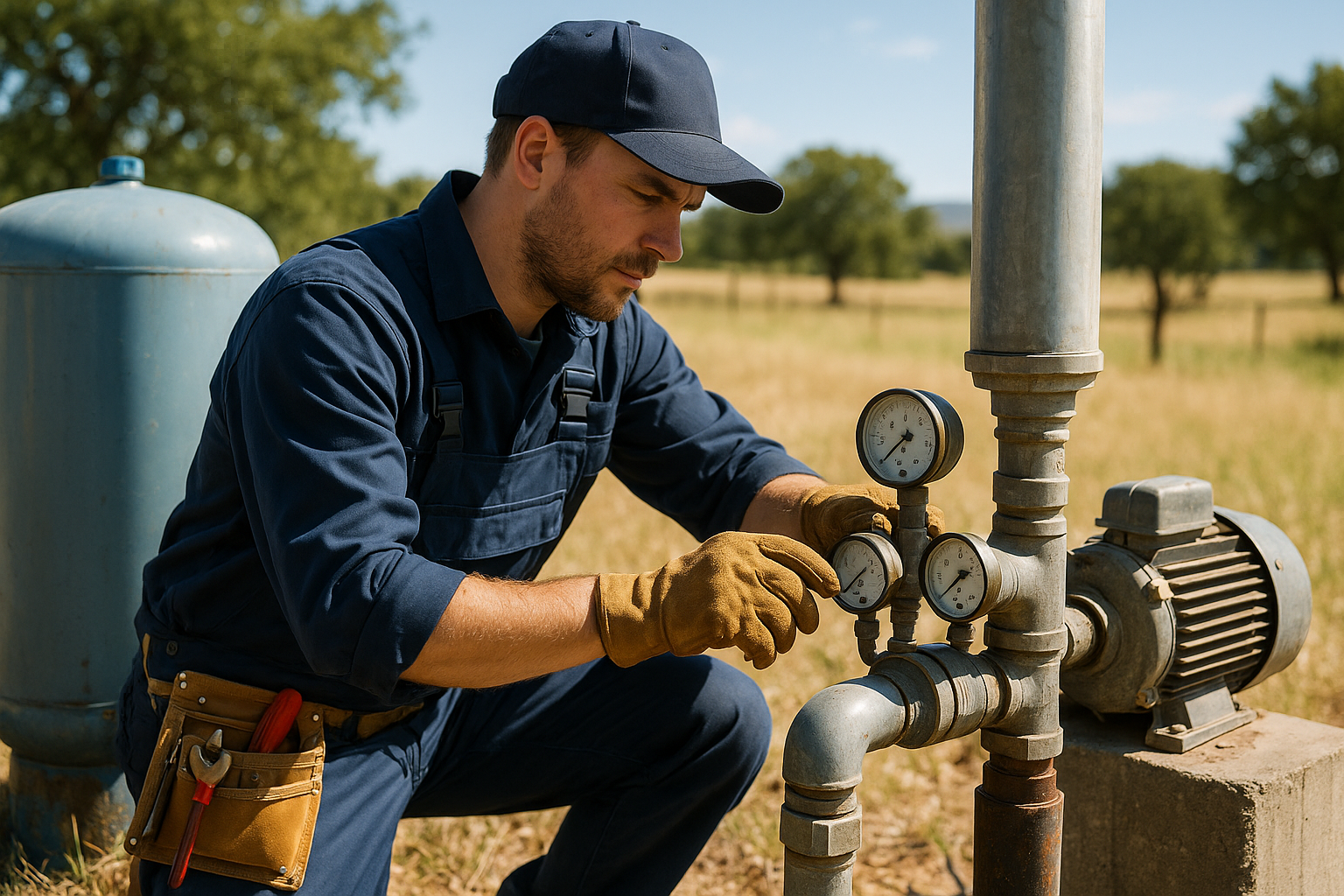
Banging Pipes When Well Pump Runs: Water Hammer Fix

That loud banging every time your well pump cycles isn't just annoying—it's water hammer, and it's slowly damaging your plumbing. Here's why it happens with well systems and how to fix it permanently.
📋 In This Guide
Water hammer getting worse? We diagnose and fix well system pressure problems throughout San Diego County.
Call (760) 440-8520What Is Water Hammer?
Water hammer is a hydraulic shock wave that occurs when moving water suddenly stops or changes direction. The technical term is "hydraulic shock."
Think of it this way: Water moving through pipes has momentum. When that flow stops suddenly—like when a pump shuts off or a valve closes quickly—all that momentum converts to pressure. That pressure spike creates the banging sound as pipes flex and vibrate.
In Well Systems, Water Hammer Typically Occurs When:
- Pump starts: Water accelerates rapidly, creating a surge
- Pump stops: Water column reverses, slamming into check valve
- Valves close quickly: Automatic sprinkler valves, washing machines
- Faucets shut off fast: Single-handle faucets, quick-close fixtures
Why Well Systems Are Prone to Water Hammer
Well systems experience more water hammer than city water for several reasons:
1. Long Pipe Runs
Deep wells may have 200-500+ feet of pipe between pump and house. That's a lot of water with a lot of momentum.
2. Pump Cycling
Unlike constant city pressure, well pumps turn on and off. Each cycle creates potential for hammer.
3. Pressure Fluctuations
Pressure swings between 40-60 PSI (typical settings) create more dramatic flow changes than steady city pressure.
4. Check Valve Location
The check valve at the wellhead stops backflow—but also creates a sudden stop point for the water column.
Common Causes and Solutions
1. Waterlogged Pressure Tank
The #1 cause of water hammer in well systems.
Your pressure tank contains an air bladder that cushions pressure changes. When it fails:
- Tank fills completely with water (waterlogged)
- No air cushion to absorb surges
- Pump cycles rapidly (short cycling)
- Every cycle creates hammer
How to check:
- Turn off pump at breaker
- Open a faucet to drain pressure
- Tap on tank with knuckles—if solid thud (not hollow), it's waterlogged
- Or check air valve at top—should hold 38-40 PSI when empty
Solution: Replace pressure tank. Cost: $300-$800 installed.
2. Missing or Failed Check Valve
Check valves prevent water from flowing backward down the well when the pump stops. Problems occur when:
- Check valve slams closed abruptly
- Multiple check valves create compounding hammer
- Check valve is worn and chattering
Solution: Install slow-closing (spring-loaded) check valve. Cost: $75-$200 installed.
3. No Water Hammer Arrestors
Arrestors are small devices that absorb pressure spikes. They contain a sealed air chamber or piston.
Where to install:
- Near pressure tank (primary location)
- At washing machine connections
- Near dishwasher
- At irrigation valve manifold
Solution: Install arrestors at problem locations. Cost: $20-$50 each + installation.
4. Loose or Unsupported Pipes
Pipes that aren't properly strapped will bang against studs and joists when hammer occurs.
Solution: Secure pipes with proper hangers every 4-6 feet. Use cushioned clamps to reduce noise.
5. High Water Pressure
If your pressure switch is set too high (above 60 PSI), hammer effects are magnified.
Solution: Adjust pressure switch to standard 40-60 PSI or 30-50 PSI range.
Water Hammer Arrestor Installation
Types of Arrestors
| Type | Best For | Cost |
|---|---|---|
| Mini arrestors (screw-on) | Washing machine, dishwasher | $15-$30 |
| In-line arrestors | Main supply lines | $30-$75 |
| Large chamber arrestors | Commercial, high-flow systems | $75-$200 |
Installation Tips
- Install as close to the source of hammer as possible
- Mount vertically (chamber up) for best performance
- Size appropriately—undersized arrestors don't work
- Some have replaceable cartridges; others are sealed-for-life
When Hammer Happens at Specific Times
When Pump Turns ON
Likely cause: Air in lines, empty pressure tank, or loose pipes near wellhead.
When Pump Turns OFF
Likely cause: Check valve slamming, water column reversal down well pipe.
When Faucet Closes
Likely cause: No arrestors, quick-closing fixtures, high pressure.
When Washing Machine/Dishwasher Runs
Likely cause: Solenoid valves close abruptly—install arrestors at appliance connections.
Random Hammer (No Apparent Trigger)
Likely cause: Thermal expansion (water heater heating), check valve chatter, or failing pressure tank.
DIY vs. Professional Repair
DIY-Friendly Fixes
- Installing mini arrestors at washing machine
- Securing loose pipes with straps
- Checking pressure tank air charge
Call a Professional For
- Pressure tank replacement
- Check valve replacement (in well)
- Pressure switch adjustment
- Diagnosing complex hammer patterns
Cost Summary
| Fix | DIY Cost | Professional Installed |
|---|---|---|
| Water hammer arrestors | $20-$50 each | $75-$150 each |
| Pressure tank replacement | $150-$300 tank | $400-$800 total |
| Slow-close check valve | $50-$100 | $150-$300 installed |
| Pipe strapping | $20-$50 materials | $100-$200 |
Stop the Banging
We diagnose water hammer causes and install proper solutions. Protect your plumbing and your peace of mind.
See our water hammer guide or pressure tank guide.
Call (760) 440-8520Serving San Diego, Riverside & San Bernardino Counties
Frequently Asked Questions
Why do my pipes bang when the well pump turns on or off?
This is water hammer—a pressure shockwave caused by sudden changes in water flow. When your pump starts or stops abruptly, moving water slams into closed valves or changes direction, creating banging. It's common in well systems and can damage pipes over time.
Can water hammer damage my plumbing?
Yes. Repeated water hammer can loosen pipe fittings, damage joints, wear out valves, and in severe cases crack pipes. It also stresses your well pump and pressure tank. Fixing it protects your entire plumbing system.
How do I stop pipes from banging with a well pump?
Solutions include: installing water hammer arrestors near the pump and at fixtures, ensuring proper pressure tank function (waterlogged tanks cause hammer), adding a slow-closing check valve, and verifying proper pipe strapping. Often a combination of fixes is needed.
Why did water hammer start suddenly?
Usually indicates something changed: pressure tank bladder failed, check valve started malfunctioning, or pressure settings were adjusted. New appliances with quick-closing valves can also trigger hammer that wasn't noticeable before.
Is water hammer an emergency?
Not usually, but don't ignore it. While the house won't flood immediately, continued hammer causes cumulative damage. Address it within a few weeks to prevent bigger problems.
Get Expert Help
Contact Southern California Well Service for water hammer diagnosis and repair.
Call (760) 440-8520Serving San Diego, Riverside & San Bernardino Counties
Related Articles
Continue learning about well maintenance and troubleshooting